Author: Stella Pham

  • Corporate Investigations in Singapore 2026: A True Test of Mettle for Boards Amidst ACRA Scrutiny

    Corporate Investigations in Singapore 2026: A True Test of Mettle for Boards Amidst ACRA Scrutiny

    [SUMMARIES]

    In 2026, Singapore’s ACRA and MAS have transitioned to a disclosure-based regime where stakeholders expect boards to independently identify and address misconduct rather than handling issues quietly.

    Under the Companies Act, directors (including nominee directors) face personal liability and disqualification risks, as a “lack of operational involvement” is no longer a valid legal defense.

    Protecting corporate integrity requires establishing independent Special Investigation Committees (SIC) and transitioning the Corporate Secretarial function from an administrative role to a strategic advisory partner.

    Implementing real-time, cloud-based bookkeeping under SFRS standards is essential to eliminate operational blind spots and maintain a verifiable digital chain of evidence for regulatory inquiries.

    Proactive audits from authorities are frequently triggered by RORC/UBO discrepancies or failing to satisfy the mandatory five-year financial record retention requirement.

    [/SUMMARIES]

    As Singapore’s regulatory landscape under ACRA and SGX RegCo continues to evolve in 2026, the expectations for corporate transparency are higher than ever. For directors, staying compliant is no longer just about checking boxes-it’s about clearly demonstrating your fiduciary responsibility. But navigating these changes doesn’t have to be overwhelming. Instead of viewing corporate investigations as stressful hurdles, we can help you approach them proactively.

    Let’s explore what these updates mean for your personal liability, and more importantly, walk through practical, actionable steps to strengthen your corporate governance and keep your business secure.

    The Evolving Landscape of Regulatory Scrutiny in Singapore

    Shifting from basic compliance to strategic governance for long-term resilience
    Shifting from basic compliance to strategic governance for long-term resilience

    In 2026, Singapore’s corporate environment is shifting rapidly. With regulatory expectations higher than ever, good governance is no longer just a compliance checkbox-it’s a business imperative. For corporate boards across the island, building a proactive and strong governance framework is now your best strategy for long-term success.

    A Shift from Reactive to Proactive Oversight from ACRA and MAS

    Led by SGX RegCo and closely monitored by ACRA and MAS, Singapore is focusing heavily on proactive disclosure. This shift has significant implications for non-listed SMEs:

    • The Trickle-Down Effect: Partners, corporate lenders, and investors now routinely look for private companies to demonstrate the same level of care and transparency as public ones.
    • Expectation of Independent Action: Stakeholders expect leadership to be proactive-addressing internal issues quickly and independently, rather than handling them quietly behind closed doors.
    • Market Positioning: Demonstrating high governance standards early shows stakeholders that you are ahead of the curve and mitigates the risk of sudden regulatory friction.

    The Significance of Mettle for Directors in the Modern Era

    In today’s environment, how a board handles internal challenges truly defines its leadership and mettle.

    • Demonstrating Confidence: Facing vulnerabilities head-on isn’t always easy, but it shows genuine confidence in your company’s operational foundations.
    • Ownership of Integrity: As a director, you simply cannot afford to delegate the defense of your company’s integrity; the responsibility starts and ends in the boardroom.
    • Strategic Advantage: Instead of seeing a compliance hurdle as a setback, taking decisive action allows you to turn a potential issue into a chance to reinforce stakeholder trust.

    Showing your mettle means proving the true strength and resilience of your company when it matters most.

    Significant Risks Beyond Standard Financial Penalties

    Compliance failures create risks beyond financial penalties
    Compliance failures create risks beyond financial penalties

    When discussing corporate compliance, it is easy to focus solely on financial fines. However, in our experience advising businesses in Singapore, the real impact of governance gaps goes much deeper than a balance sheet penalty. A corporate investigation can quickly disrupt day-to-day operations and threaten a company’s long-term stability. It is crucial to understand the hidden operational risks that businesses must proactively protect against.

    Personal Accountability and the Risk of Director Disqualification

    Directors carry a significant fiduciary responsibility – one that ACRA monitors closely. Today, the stakes are deeply personal for board members. Beyond company liability, a lapse in independent oversight can expose directors to personal legal challenges and, in severe cases, formal disqualification. A proactive governance framework is not just about protecting the company; it is about safeguarding a director’s professional legacy and future ability to lead.

    Financial Costs for Forensic Audit and Remediation

    If a regulatory inquiry occurs, fragmented financial records can become an expensive liability. Without audit – ready data, businesses are often forced to hire forensic specialists at a premium to reconstruct financial trails. Furthermore, banks and investors closely monitor “governance risk,” which can suddenly increase a company’s cost of capital. By maintaining clean, real-time ledgers, businesses avoid exorbitant remediation costs and keep investor confidence strong.

    Potential Disruptions in Corporate Bank Accounts (AML/CFT) & Work Passes

    Perhaps the most immediate risk to any SME is operational disruption. Singapore’s authorities and financial institutions react swiftly to governance red flags. Even a preliminary inquiry can trigger strict AML/CFT protocols, leading banks to freeze corporate accounts and halt cash flow. Simultaneously, the Ministry of Manpower (MOM) may pause a company’s Employment Pass (EP) and S Pass applications. Proper compliance ensures the daily operational engine – from paying suppliers to retaining global talent-continues running without friction.

    Effective Strategies for Comprehensive Corporate Compliance

    Implementing professional governance standards to businesses in Singapore
    Implementing professional governance standards to businesses in Singapore

    To navigate today’s scrutiny, boards must shift from passive containment to proactive remediation. Building a fortified compliance framework is your most effective strategy for safeguarding corporate integrity and ensuring long-term operational stability.

    Enhancing the Corporate Secretarial Function for Better Governance

    A professional corporate secretary is your primary governance gatekeeper. Transitioning this function from a simple administrative role to a strategic advisory partner is crucial for modern boards.

    A competent team ensures your board resolutions truly reflect operational realities. They help establish vital protocols, such as forming a Special Investigation Committee (SIC) of independent directors to manage conflicts of interest and demonstrate unbiased oversight to authorities.

    Implementing Real-time Bookkeeping for Financial Transparency

    Real-time accounting helps businesses stay financially transparent
    Real-time accounting helps businesses stay financially transparent

    Relying on “year-end catch-up” accounting can create unnecessary operational blind spots. In our experience, real-time, cloud-based bookkeeping under Singapore Financial Reporting Standards (SFRS) is your frontline defense against financial ambiguity.

    Continuous tracking allows your board to detect anomalies early and escalate issues to experts when necessary. During an inquiry, up-to-date financial data preserves a clear digital chain of evidence, making your position swift and easy to verify.

    The Internal Compliance Health Check: Updating RORC & UBO Registries

    Regulatory authorities today prioritize transparency in corporate structures. Conducting routine internal compliance “health checks” has become a best practice for proactive boards.

    This involves regularly auditing your Register of Registrable Controllers (RORC) and Ultimate Beneficial Owner (UBO) declarations. Since discrepancies here are primary triggers for ACRA audits, maintaining impeccable records is the simplest way to reassure partners of your commitment to lawful operations.

    Koobiz Support for Singapore Corporate Governance Excellence

    Koobiz transforms compliance into a strategic business advantage
    Koobiz transforms compliance into a strategic business advantage

    In 2026, regulatory scrutiny is no longer just a hurdle to clear-it is a true test of leadership. At Koobiz, we help you transform compliance from a legal burden into a strategic competitive advantage, protecting your board through two core pillars:

    • Strategic Corporate Secretarial: Beyond basic filings, we act as your governance gatekeepers. From RORC/UBO management to SIC advisory, we ensure your board demonstrates the high-standard independent oversight required by ACRA.
    • Precision Accounting & Bookkeeping: We eliminate operational blind spots with real-time, cloud-based bookkeeping under SFRS. By maintaining audit-ready ledgers, we safeguard your corporate bank accounts against AML/CFT red flags and preserve a clear, digital chain of evidence.

    Defend your professional integrity and secure your company’s future. Don’t wait for an audit to test your mettle. Contact Koobiz today for a confidential Compliance Health Check and ensure your board is fully prepared for the road ahead in 2026.

  • Singapore Startups Go Global – JTC LaunchPad Opens Doors to 19 Global Cities for Startups

    Singapore Startups Go Global – JTC LaunchPad Opens Doors to 19 Global Cities for Startups

    [SUMMARIES]

    JTC LaunchPad officially connects Singapore startups to 19 premier global hubs, providing unprecedented international infrastructure and mentorship.

    Rapid scaling requires rigorous governance; an incorrect entity choice (Branch vs. Subsidiary) can expose the Singapore parent company to unlimited liabilities.

    Neglecting domestic ACRA obligations or capital flow documentation can freeze operational funds and deter potential venture capital investors.

    Success requires professional Corporate Secretary support and comprehensive health checks to ensure seamless cross-border synchronization.

    Transforming complex governance into a competitive asset through optimized tax structures (DTAs) and investor-ready compliance from day one.

    [/SUMMARIES]

    Singapore’s startup ecosystem is entering an unprecedented era of global expansion. With JTC LaunchPad officially extending its network to 19 strategic cities worldwide-from San Francisco to Jakarta-the gateway for scaling your business has never been wider. However, while founders eagerly pack their bags to conquer new markets, a critical question remains: Is your corporate structure legally sound enough to handle cross-border operations without triggering fatal compliance traps back home?

    JTC LaunchPad Expands Global Network to 19 Strategic Cities

    JTC LaunchPad opens new pathways for global startup expansion
    JTC LaunchPad opens new pathways for global startup expansion

    The recent upgrades at LaunchPad @ One-North are game-changers for Singapore startups. Through new strategic partnerships, JTC has successfully bridged our local ecosystem with 19 premier global hubs. This means expanding to key markets like San Francisco, Paris, Shenzhen, or Jakarta is now more accessible than ever.

    As a growing business, you get to enjoy substantial operational perks-from premium CBD facilities and favorable rent-free periods to direct collaboration with established industry leaders. JTC provides the perfect physical launchpad and networking infrastructure to help you “start strong.”

    However, here is the reality check: while the ecosystem opens the doors, the complex responsibility of cross-border compliance, tax efficiency, and corporate governance still falls squarely on your shoulders. Is your current corporate foundation ready to support this leap without legal friction?

    The Hidden Compliance Risks in Rapid International Scaling

    Scaling internationally requires stronger governance and compliance
    Scaling internationally requires stronger governance and compliance

    Expanding your footprint through the JTC LaunchPad network to 19 global hubs is an exciting milestone. However, rapid scaling requires a solid corporate governance safety net. As you operate across borders, your compliance checklist naturally grows, bringing distinct legal and financial responsibilities that demand careful, strategic handling.

    Strategic Failure and Risks of Incorrect Corporate Structure

    When entering a new market, it’s easy to overlook the legal nuances of your setup-such as choosing between a Branch Office and a Subsidiary. This isn’t just an administrative detail; an incorrect framework can accidentally pierce your corporate liability shield. Without the right structure, you face:

    • Exposure to Unlimited Liability: Unintentionally making your Singapore parent company accountable for overseas operational debts.
    • Due Diligence Red Flags: Causing unnecessary delays or concerns for international venture capitalists during your next funding round.

    Administrative Burden Managing ACRA and Global Compliance

    When your team is intensely focused on winning foreign markets, domestic statutory duties in Singapore can easily be inadvertently overlooked. Missing deadlines for Annual General Meetings (AGMs) or Annual Return filings quickly jeopardizes your good standing with ACRA, leading to:

    • Financial Penalties: Unnecessary fines and summons for late statutory filings.
    • Tarnished Compliance Record: A compromised corporate status that alerts regulatory bodies.
    • Visa Application Roadblocks: Costly delays when you need to apply for or renew essential MOM work passes, such as the EP or EntrePass.

    Financial Chaos regarding Capital Flow and Cap Table Complexity

    Moving funds between your Singapore headquarters and international branches is rarely as simple as a standard bank transfer. To avoid having your operational capital frozen under strict global AML/KYC protocols, you need meticulously drafted Board Resolutions. Furthermore, bringing in foreign investors requires rigorous legal oversight over your equity to prevent:

    • Cap Table Fragmentation: A convoluted equity structure that makes ownership tracking and governance a significant compliance burden.
    • Deterring Institutional Investors: Complex capitalization tables that act as major red flags during your Series A or B funding rounds.

    Essential Legal Foundations for “Go-Global” Startups

    Corporate governance is key before scaling internationally
    Corporate governance is key before scaling internationally

    To leverage the JTC LaunchPad network smoothly, treat corporate governance as a strategic advantage, not just an administrative chore. Here are three foundational steps to secure your business before expanding overseas.

    The Strategic Role of a Corporate Secretary in Global Expansion

    Your Corporate Secretary is your frontline legal defense. Every overseas board decision and capital injection needs meticulous documentation. A professional ensures:

    • Regulatory Adherence: Keeping all cross-border filings strictly compliant with ACRA.
    • Investor Readiness: Maintaining transparency to easily pass rigorous VC due diligence.
    • Stakeholder Confidence: Securing trust with both local regulators and foreign investors.

    Comprehensive Compliance Health Checks for Seamless Operations

    Before committing resources abroad, a thorough compliance audit of your Singapore HQ is vital. Resolving hidden tax or statutory issues upfront guarantees:

    • Uninterrupted Capital Flows: Preventing global banks from freezing cross-border transfers.
    • Operational Continuity: Expanding smoothly without administrative roadblocks back home.

    Strategic Company Formation and Tax Optimization

    Simply registering a company abroad isn’t enough. You need expert guidance to choose the right structure (e.g., Branch Office vs. Subsidiary). An optimized setup empowers you to:

    • Maximize DTA Benefits: Fully leverage Singapore’s network of Double Taxation Agreements.
    • Minimize Tax Liabilities: Legally reduce your global corporate tax burden.
    • Protect Profit Repatriation: Channel net profits back to your Singapore HQ safely.

    Common Questions When Expanding via JTC LaunchPad Network

    Can a Singapore Subsidiary Benefit from Local Incentives in 19 Cities?

    Yes, provided you choose the correct legal structure (Subsidiary vs. Branch) to meet specific local grant criteria. A strategic setup ensures you qualify for destination-based incentives while remaining compliant with Singaporean headquarters’ regulations.

    Is Tax Residency Impacted When Operating in Multiple Global Cities?

    Operating globally risks double taxation; thus, maintaining Singapore “Management and Control” is vital. Professional secretarial records and board resolutions are essential to legally substantiate your tax residency status and protect your profits.

    How Long Does It Take to Set Up a Compliant International Structure?

    While Singapore incorporation takes only 1-3 days, full international alignment requires 2-4 weeks. We recommend a “Compliance Health Check” one month prior to any global expansion to ensure seamless legal synchronization across markets.

    Koobiz: Your Trusted Partner in International Expansion

    Koobiz simplifies compliance for seamless global expansion
    Koobiz simplifies compliance for seamless global expansion

    While JTC LaunchPad provides the infrastructure to scale, navigating global regulations is a different challenge. Koobiz acts as your strategic partner in Singapore, transforming complex compliance into a seamless foundation for your international growth.

    We build a resilient framework designed to protect your assets and attract venture capital from day one:

    • Strategic Structure: Expert guidance on Subsidiary vs. Branch setups to optimize your global position.
    • Proactive Governance: Ensuring 100% compliance with ACRA and IRAS through professional Corporate Secretary services.
    • Operational Mobility: Streamlining bank account openings and Workpass applications to eliminate administrative friction.

    Our mission is to ensure your Singapore HQ remains a robust anchor for your global journey, turning compliance into your competitive advantage.

    Ready to scale safely across 19 global cities? Contact Koobiz today for a Professional Compliance Audit and strategic expansion consultation.

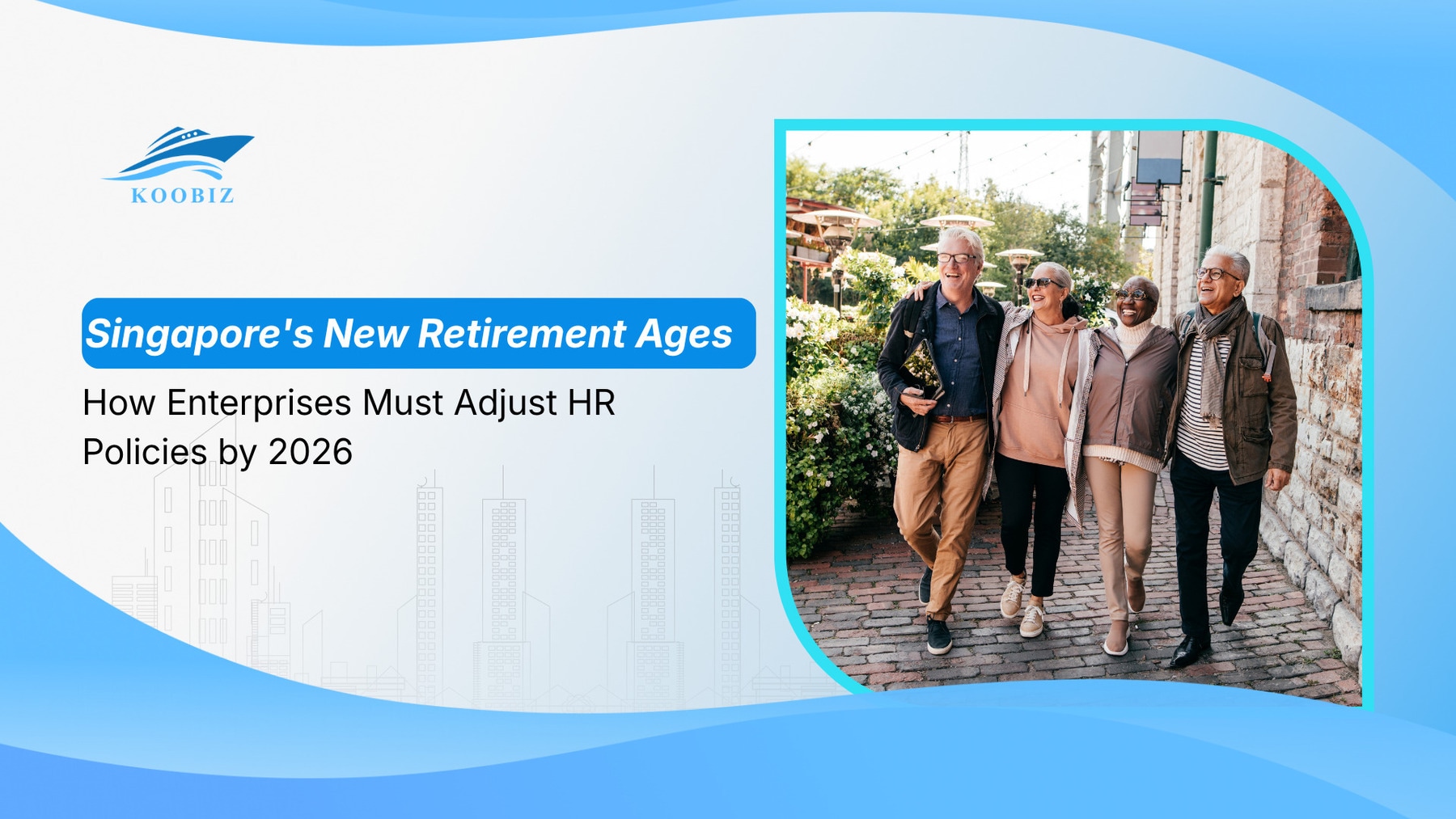
  • Singapore’s New Retirement Ages: How Enterprises Must Adjust HR Policies by 2026

    Singapore’s New Retirement Ages: How Enterprises Must Adjust HR Policies by 2026

    [SUMMARIES]

    Starting July 1, 2026, Singapore’s statutory retirement age will rise to 64 and the re-employment age to 69, alongside synchronized CPF contribution hikes.

    Failing to align HR policies exposes businesses to “Unlawful Dismissal” claims and risks losing foreign worker quotas if the new S$1,800 LQS is not met.

    Enterprises must proactively update handbooks and issue written re-employment offers at least six months in advance to ensure full compliance.

    To offset rising labor costs, companies should leverage the 70% Job Redesign+ grant and maximize the Senior Employment Credit (SEC) through 2027.

    Conducting a comprehensive HR audit and formalizing statutory documentation is essential to navigate these transitions while maximizing available government financial buffers.

    [/SUMMARIES]

    The Ministry of Manpower’s (MOM) 2026 mandate to raise the statutory retirement and re-employment ages represents a critical compliance milestone for employers across Singapore. Failing to proactively update your HR policies exposes the business to legal liabilities and increased operational costs. This briefing provides an essential roadmap to ensure your enterprise achieves full regulatory alignment ahead of the July 1, 2026 deadline.

    2026 MOM Updates: Raising the Statutory Retirement and Re-employment Ages

    MOM raises retirement and re-employment age in 2026
    MOM raises retirement and re-employment age in 2026

    Staying ahead of Singapore’s evolving employment laws is essential for your business’s smooth operation. Recently, MOM announced a major policy shift through the “Unlocking Career Longevity” initiative to help companies retain senior talent.

    For your enterprise, this update is more than just a compliance hurdle. It represents a strategic opportunity to keep your most seasoned experts on board while ensuring your HR policies align perfectly with the latest legal standards.

    The New Milestones: Retirement at 64, Re-employment up to 69

    The most crucial date for your HR planning is July 1, 2026. On this day, Singapore’s statutory Retirement Age officially increases from 63 to 64, while the Re-employment Age rises from 68 to 69.

    This change legally alters the minimum age at which you can retire a staff member and extends your obligation to offer re-employment to eligible employees. While you will need to update employment contracts soon, it ensures your business maintains the continuity of experienced talent.

    Synchronized CPF Contribution Rate Hikes for Senior Workers

    As career spans extend, retirement safety nets must grow accordingly. Starting in 2027, the following adjustments will apply:

    • Workers aged above 55 to 60: Contribution rates will increase by 1.5 percentage points.
    • Workers aged above 60 to 65: Contribution rates will increase by 1 percentage point.

    Managing rising payroll costs is a priority for every owner, which is why the government is providing a financial cushion. The CPF Transition Offset will be extended through December 2027, covering 50% of the increase in your employer contributions for that year.

    Strategic HR Adjustments: 3 Immediate Steps for Enterprises

    Proactive HR strategies help businesses navigate policy changes
    Proactive HR strategies help businesses navigate policy changes

    Navigating the 2026 transition requires a proactive approach. To mitigate “Unlawful Dismissal” risks and rising payroll costs, your enterprise should implement this three-step strategy immediately.

    Updating Employee Handbooks and Employment Contracts

    Your first line of defense is robust documentation. Ensure all internal policies and individual contracts are synchronized with the new statutory milestones to avoid compliance gaps:

    • Update Retirement Clauses: Explicitly revise any mention of retirement at 63 to reflect the new age of 64.
    • Formalize Re-employment: Issue written re-employment offers to eligible staff at least 6 months before they reach 64.
    • Audit Payroll: Verify that all local staff meet the new S$1,800 LQS threshold to safeguard your foreign worker quota.

    Implementing Job Redesign and Workplace Adjustments

    Simply extending employment is not enough-you must transform the work itself to maintain productivity. The Ministry of Manpower (MOM) has introduced the Enterprise Workforce Transformation Package (EWTP) for this purpose.

    Leverage the Job Redesign+ (WDG(JR+)) grant starting March 2026, which provides up to 70% support (capped at S$150,000). Use these funds to adopt AI tools or ergonomic equipment, allowing senior workers to focus on high-value mentoring.

    Leveraging Government Incentives for Senior Workers

    Singapore provides substantial financial buffers to help businesses absorb higher CPF and employment costs. Factor these incentives into your 2026-2027 financial forecasts:

    • Senior Employment Credit (SEC): Maximize wage support of up to 7% for workers aged 69 and above through December 2027.
    • CPF Transition Offset: Utilize the 50% government co-funding to cushion the 2027 employer contribution hikes.
    • Flexible Work Grants: Consider part-time re-employment to improve retention and qualify for additional workplace flexibility incentives.

    Frequently Asked Questions about Singapore’s 2026 Retirement Age

    As businesses prepare for the upcoming changes, several common questions arise regarding the scope and enforcement of the Retirement and Re-employment Act (RRA).

    Can an employer retire an employee before 64?

    No. Retiring an SC or PR before age 64 (as of July 2026) is illegal under the RRA. Violations may lead to “Unlawful Dismissal” claims, mandatory reinstatement, or heavy financial compensation.

    Are Foreign Employees (EP/S Pass) covered by this new law?

    No. Statutory ages apply only to Singapore Citizens and PRs. For EP or S Pass holders, retirement follows the individual employment contract, though fair practices are recommended to avoid disputes.

    What if the company cannot find a suitable role for re-employment?

    The employer must provide a one-off Employment Assistance Payment (EAP) if no role is found after a genuine search. Utilizing Job Redesign grants is advised to create viable roles and avoid these payouts.

    Koobiz Corporate Secretary: Ensuring Your Business Stays Compliant with MOM Regulations

    Strategic HR compliance in Singapore with Koobiz corporate secretary
    Strategic HR compliance in Singapore with Koobiz corporate secretary

    In an era of shifting labor laws and tightening manpower quotas, a Corporate Secretary’s role extends far beyond administrative filing. At Koobiz, we act as your strategic compliance partner, shielding your business from the complex risks of the 2026 transition.

    Our specialized services ensure your enterprise stays ahead of the July 1, 2026 deadline through targeted support:

    • HR Compliance Audits: We review Board Resolutions and internal Handbooks to align with the new 64-year retirement age and S$1,800 LQS requirements.
    • Grant & Offset Advisory: Our experts streamline your applications for Senior Employment Credit (SEC) and Job Redesign+ grants, maximizing your access to government funding.
    • Statutory Documentation: We provide standardized legal templates for re-employment offers and CPF strategies, preventing costly disputes at TADM or the ECT.

    Is your enterprise ready for July 2026? Don’t wait for a compliance audit to find gaps in your policy. Contact Koobiz today for a Compliance Health Check to secure your business’s future and maintain operational excellence.

  • A Fair & Prosperous Workplace: The New Competitive Edge for Enterprises in Singapore 2026

    A Fair & Prosperous Workplace: The New Competitive Edge for Enterprises in Singapore 2026

    [SUMMARIES]

    The Local Qualifying Salary (LQS) will increase to $1,800 in July 2026, directly impacting how businesses calculate and maintain their foreign worker quotas.

    The Workplace Fairness Legislation (WFL) is transitioning into strict statutory law, making objective, transparent HR documentation a mandatory legal requirement.

    Escalating base wages coupled with upcoming mandatory CPF contribution hikes will significantly increase the total cost of employment for all enterprises.

    Employers can strategically offset these rising payroll expenses by maintaining strict compliance to secure up to 30% government co-funding through the PWCS.

    To sustain profit margins in a high-cost environment, companies must leverage WSS and JR+ grants to pivot toward productivity-led, AI-ready workforce models.

    [/SUMMARIES]

    In 2026, Singapore’s shift from Workplace Fairness guidelines to strict statutory laws is changing the game for employers. With the Local Qualifying Salary (LQS) rising to $1,800, businesses face the dual challenge of managing higher costs while protecting vital foreign worker quotas. At Koobiz, we help you turn this complex compliance shift from a daunting administrative burden into your greatest advantage for sustainable growth.

    The 2026 Workforce Update: New Regulatory Standards

    The Ministry of Manpower (MOM) has articulated a clear vision for 2026: a “Changed World” where business transformation is inseparable from worker empowerment. This roadmap is built on raising the floor for local wages while introducing rigorous legal frameworks to ensure parity and professionalism across all sectors.

    LQS Benchmark: Increasing to $1,800 Monthly Salary

    Singapore raises LQS benchmark from July 2026
    Singapore raises LQS benchmark from July 2026

    The most immediate shift for employers is the recalibration of the Local Qualifying Salary (LQS). Effective July 1, 2026, the LQS will rise from $1,600 to $1,800. This benchmark is not merely a wage suggestion; it is the fundamental requirement for a local employee to count as a “full headcount” in the calculation of an enterprise’s foreign worker quota.

    For businesses heavily reliant on S Pass or Work Permit holders, meeting this $1,800 threshold is critical to maintaining operational capacity and avoiding immediate quota shortages.

    The Workplace Fairness Legislation (WFL): Shifting from Guidelines to Law

    2026 marks the year that the Tripartite Guidelines on Fair Employment Practices evolve into the Workplace Fairness Legislation (WFL). This is a historic shift from soft guidelines to enforceable statutory law. The WFL introduces strict protections against discrimination based on age, race, gender, disability, and family status.

    For enterprises, this means that internal HR policies and recruitment processes are no longer just matters of “best practice”- they are matters of legal compliance subject to mediation and significant penalties for non-adherence.

    Strategic Career Pathways for Skilled Labor

    Recognizing that “hands-on” roles remain essential to Singapore’s economic evolution, MOM is partnering with trade associations to create diverse pathways to success. A key example is the Memorandum of Understanding (MOU) with the Specialists Trade Alliance of Singapore (STAS), which pilots structured career progression and professional development models for the electrical trade.

    By formalizing these frameworks, the government ensures that skilled tradespeople have clear upward mobility, helping enterprises retain high-quality, specialized talent in a tightening labor market.

    The Ripple Effect: Operational & Financial Risks for Enterprises

    Policy changes may increase operational and financial risks
    Policy changes may increase operational and financial risks

    For the strategic decision-maker, the 2026 mandates represent a dual-layer exposure. We are seeing a fundamental shift where workforce structural changes and escalating overheads can rapidly compromise operational margins if not addressed with preemptive precision.

    Foreign Worker Quota Risks Amidst LQS Changes

    The recalibration to an $1,800 LQS introduces a “Quota Compression” risk that threatens the very scalability of your workforce. In the Singaporean context, your capacity to leverage foreign talent is inextricably linked to local headcount valuation. Any local employee earning below the new threshold effectively loses 50% of their “headcount power,” potentially triggering an immediate, involuntary reduction in your S Pass and Work Permit eligibility. This operational friction often manifests as a sudden inability to renew critical talent, leading to project delivery failures and a diminished competitive stance.

    Escalating Payroll Costs and Mandatory CPF Overhead

    Beyond the surface-level wage hike, enterprises must navigate a structural upward trajectory in the Total Cost of Employment (TCE). Every salary increment carries a compounding effect through higher mandatory employer CPF contributions, creating a sustained pressure on monthly cash flow. Coupled with the scheduled 2027 CPF rate increases for the senior workforce aged 55–65, these regulatory headwinds test the limits of traditional operational models. Survival in this high-cost environment demands an urgent pivot toward high-value, productivity-led growth to preserve fiscal sustainability.

    Strategic Re-calibration: Compliance as a Growth Lever

    In the current high-cost environment, forward-thinking enterprises must view compliance as a strategic investment rather than a cost center. By proactively aligning operations with government fiscal incentives, businesses can mitigate rising overheads and build a more resilient workforce.

    Capitalizing on 30% PWCS Government Co-funding

    To cushion the fiscal impact of the $1,800 LQS transition, the Progressive Wage Credit Scheme (PWCS) serves as a vital financial bridge. Through 2028, eligible enterprises can secure up to 30% in government co-funding for wage increments provided to lower-wage staff. However, maximizing this subsidy requires more than just administrative filing; it demands absolute precision in payroll auditing and the timely settlement of CPF contributions. Any lapse in these accounting disciplines can lead to a direct forfeiture of these critical subsidies.

    Leveraging WSS Grants for Workforce Upskilling

    Workforce upskilling drives productivity in high-cost environments
    Workforce upskilling drives productivity in high-cost environments

    As labor costs rise, productivity remains the only sustainable defense for maintaining profit margins. The enhanced Workfare Skills Support (WSS) and the new Job Redesign+ (JR+) grants-which offer up to 70% support capped at $150,000 – provide a strategic opportunity to transform your human capital. We recommend that enterprises utilize these grants to pivot toward AI-ready workforce models, ensuring that higher wages are justified by significantly higher output and a reduced reliance on manual, labor-intensive roles.

    Regulatory Resilience via Professional Corporate Secretary

    The transition of fairness guidelines into statutory law (WFL) mandates a new level of board-level accountability. A professional Corporate Secretary acts as the architect of your company’s legal defense, institutionalizing the “Paper Trail” necessary to navigate this new era. From standardizing employment contracts to ensure zero-tolerance for discrimination to formalizing board resolutions on salary adjustments, this layer of professional governance shields the enterprise from litigation and preserves its reputation as a fair, audit-ready employer in the eyes of MOM.

    Koobiz Empowering Singapore Startups to Scale Safely

    Koobiz supports safe and strategic scaling for Singapore startups
    Koobiz supports safe and strategic scaling for Singapore startups

    Navigating the 2026 regulatory shifts requires a holistic strategy that bridges the gap between legal standing and financial integrity. Koobiz empowers Singaporean businesses to scale with confidence through a seamless ecosystem of Expert Company Formation, Precision Accounting & Bookkeeping, and Strategic Work Pass Advisory.

    By ensuring your corporate foundation is robust and your financial records are meticulously audit-ready, we transform compliance from a complex burden into your greatest strategic asset. This allows you to focus on high-value growth while we safeguard your operational resilience in Singapore’s evolving economy.

  • Singapore Job Vacancies 2025: Insights for Employers and Businesses Planning Local Operations

    Singapore Job Vacancies 2025: Insights for Employers and Businesses Planning Local Operations

    [SUMMARIES]

    Newly created positions accounted for 49.3% of all job vacancies in 2025, up from 45.7% in 2024, driven mainly by business expansion.

    Demand remains strong for technology and engineering roles, including software developers, data scientists, AI engineers, and systems analysts.

    Employers broadened hiring criteria, with academic qualifications no longer the main factor in 79.6% of vacancies.

    Overall hiring difficulties eased, though specialised PMET roles continue to take longer to fill, while remote-capable positions increased.

    [/SUMMARIES]

    The latest data from the Ministry of Manpower indicates that Singapore’s labour market stayed competitive in 2025, with a higher number of job vacancies compared to the previous year. Labour demand is gradually shifting towards growth areas, as firms create more new positions to support business expansion.

    For foreign entrepreneurs and SMEs considering Singapore company formation, these patterns highlight where opportunities exist for building teams and the growing importance of skills-based recruitment when setting up operations locally.

    Labour Demand Driven by Business Expansion

    Hiring: 49.3% new roles due to expansion, concentrated in ICT and digital specialists
    Hiring: 49.3% new roles due to expansion, concentrated in ICT and digital specialists

    Newly created roles made up 49.3% of vacancies in 2025 (an increase from 45.7% in 2024). This growth was heavily concentrated in key sectors, with above-average shares in:

    • Information & Communications (74.2%)
    • Professional Services (58.2%)
    • Financial & Insurance Services (54.0%)

    Technological advancements continue to drive demand for skilled professionals. Specifically, there is a robust need for digital and advanced manufacturing roles, including:

    • Software, web, multimedia, and game developers
    • Data scientists and systems analysts
    • AI and machine-learning engineers
    • Infrastructure and engineering professionals

    The Shift to Skills-Based Hiring

    Employers are increasingly placing greater emphasis on practical skills and competencies rather than traditional academic qualifications. In fact, qualifications were not the primary hiring criterion in 79.6% of vacancies.

    Skill is key: 79.6% of vacancies do not require academic qualifications
    Skill is key: 79.6% of vacancies do not require academic qualifications

    This shift has allowed businesses to hire faster, access a wider talent pool, and improve overall employee performance. When looking at experience levels, the vacancies span a wide range:

    • 31.5% required no prior experience.
    • 20.2% needed at least one year of experience.
    • 51.1% targeted mid-level candidates with 2 to 5 years of relevant exposure.

    While the proportion of vacancies remaining unfilled for six months or longer fell to 17.1% overall, it edged up slightly for PMET (Professionals, Managers, Executives, and Technicians) roles to 16.0%. Specialised positions in software development and data science remain among the harder-to-fill roles due to their highly specific technical requirements.

    Remote Work Trends and Local Talent Preference

    The modern workplace continues to evolve. Remote-capable jobs rose to 22.7% of all vacancies in 2025.

    At the same time, employer intent to recruit from overseas declined to 16.5%. This indicates a strong preference for hiring local talent whenever suitable candidates are available. While firms are expected to maintain a cautious approach to hiring in the near term, early 2026 indicators suggest a modest improvement in hiring sentiment.

    Strategic Workforce Planning for SMEs

    For SMEs in Singapore, these labour market signals reinforce the value of proactive workforce planning. Professional accounting and bookkeeping services can assist with accurate payroll forecasting and compliance as businesses scale their teams in line with evolving hiring trends.

    As Singapore’s economy adapts to structural changes and technological shifts, staying informed about vacancy patterns helps businesses align their growth strategies with available talent. Entrepreneurs exploring Singapore company formation or those already operating locally can greatly benefit from expert guidance to integrate these insights into their HR and compliance frameworks.

    Ready to set up your business?

    Contact the Koobiz team for professional support with Singapore company formation, corporate secretary services, accounting solutions, and other corporate needs to navigate talent and operational requirements with confidence.

  • New CPF Life-Cycle Investment Scheme in 2028: What Business Owners Need to Know

    New CPF Life-Cycle Investment Scheme in 2028: What Business Owners Need to Know

    [SUMMARIES]

    Launch Timeline: The CPF Board is introducing a new voluntary life-cycle investment scheme in the first half of 2028 to complement existing CPFIS options.

    Product Features: The scheme will feature simplified, low-cost, diversified products with automatic age-based rebalancing and phased liquidation towards retirement.

    Provider Selection: Commercial product providers will be selected, with industry engagement beginning in March 2026 and providers announced in the first half of 2027.

    Member Benefits: This gives CPF members willing to accept some investment risk a more hands-off approach to potentially higher long-term returns.

    [/SUMMARIES]

    Expanding Retirement Pathways in Singapore

    The CPF Board has announced plans to introduce a new investment scheme in the first half of 2028. Responding to recommendations from the CPF Advisory Panel, this initiative aims to offer CPF members an additional, accessible retirement savings pathway.

    For foreign entrepreneurs and SMEs establishing operations in Singapore, understanding these CPF-related developments is highly valuable. It provides crucial context when structuring competitive employee benefits or planning personal finances as company directors.

    CPF investment and retirement savings in Singapore in 2028
    CPF investment and retirement savings in Singapore in 2028

    How the New Life-Cycle Investment Products Work

    The upcoming scheme targets members who are comfortable taking some investment risk for potentially higher long-term returns, but who prefer not to actively manage their own portfolios.

    Three core mechanics of CPF investment
    Three core mechanics of CPF investment

    Participants will gain access to simplified, low-cost, and diversified life-cycle investment products offered by selected commercial providers. Key mechanics include:

    • Automatic Asset Rebalancing: The products automatically adjust asset allocation along a “glidepath.” They shift from higher-risk assets (such as equities) to lower-risk assets (such as bonds) as the member ages.
    • Phased Liquidation: As members approach their target date (e.g., the Payout Eligibility Age of 65), the assets undergo phased liquidation.
    • Account Transfers: Proceeds from this liquidation will first be transferred to the member’s Retirement Account up to the Full Retirement Sum. Any remaining amount will be directed to the Ordinary Account.

    Participation in this new scheme remains entirely voluntary, and existing CPF Investment Scheme (CPFIS) eligibility criteria will continue to apply.

    Provider Selection and Timeline

    To keep choices straightforward and avoid decision paralysis, the CPF Board intends to select only two to three reputable product providers. These providers will offer a limited number of options with strictly capped all-in fees.

    Furthermore, the Government will provide time-limited support to help launch the scheme and assist members in understanding whether it suits their financial goals.

    • March 2026: Industry engagement begins.
    • First Half of 2027: Selected providers will be officially announced.

    This timeline gives businesses and individuals sufficient runway to evaluate the new option as part of their broader financial planning.

    What This Means for SMEs and Foreign Entrepreneurs

    For SMEs operating in Singapore, staying informed about CPF policy changes is foundational to effective human resource and financial management. As Singapore strengthens its retirement savings ecosystem, these developments offer business owners greater flexibility in long-term planning.

    Professional accounting and bookkeeping services can help companies accurately handle CPF contributions and explore how such life-cycle schemes might fit into overall employee compensation and retention strategies. Entrepreneurs considering or already operating through a Singapore company can benefit from expert advice on integrating these CPF matters into their corporate and personal financial frameworks.

    Contact the Koobiz team for professional support with Singapore company formation, corporate secretary services, accounting solutions, and other corporate needs to ensure your business remains compliant and well-positioned amid evolving policies.

  • Singapore’s 2026 Manpower Policy Updates: Practical Guidance for Employers and Businesses

    Singapore’s 2026 Manpower Policy Updates: Practical Guidance for Employers and Businesses

    [SUMMARIES]

    Foreign Talent & Visas: Expect higher minimum qualifying salaries for EP and S Passes from 2027, streamlined levy tiers, and a new ONE Pass (AI and Tech) track.

    Business Grants: Access the Enterprise Workforce Transformation Package for up to 70% funding on job redesign and productivity initiatives.

    Senior Workers: Retirement and re-employment ages will rise in July 2026, accompanied by CPF contribution adjustments and extended wage support.

    [/SUMMARIES]

    The Ministry of Manpower (MOM) has presented a clear framework to help businesses and workers adapt to economic shifts. Announced on 3 March 2026, these measures provide foreign entrepreneurs and SMEs with greater predictability around labour policies, talent strategies, and skills investment.

    Understanding these updates is a critical step when planning a business setup in Singapore or scaling local operations. The new policies are structured around three core pillars.

    Pillar 1: Empowering Local Talent and Senior Workers

    Supporting Singaporean talent and senior workers
    Supporting Singaporean talent and senior workers

    The first pillar focuses on supporting Singaporeans across all career stages, from fresh graduates to senior workers. To build confidence in emerging technologies, eligible learners completing selected SkillsFuture courses will receive six months of free access to premium AI tools by the second half of 2026.

    Additionally, a new statutory board—Workforce and Skills Singapore—will merge existing agencies to deliver seamless career guidance and training.

    Key changes for employers managing older workers include:

    • Retirement Age Increase: Rising to 64 (retirement) and 69 (re-employment) from 1 July 2026.
    • Senior Employment Credit: Extended until December 2027, offering up to 7% wage support for workers aged 69 and above.
    • CPF Contribution Hikes: Employer rates for workers aged 55–60 and 60–65 will rise by 1.5 and 1 percentage point respectively from 2027. This is supported by a one-year extension of the CPF Transition Offset (covering 50% of the increase).

    Pillar 2: Driving Business Transformation and Global Talent

    Driving Business Transformation & Global Talent
    Driving Business Transformation & Global Talent

    The second pillar focuses on equipping businesses for the future while remaining open to top-tier global professionals. For SMEs managing work pass applications, structured visa support will be essential to navigate the following regulatory changes:

    • Higher Work Pass Salaries: Minimum qualifying salaries will increase to S$6,000 for Employment Pass (EP) and S$3,600 for S Pass for new applications starting 1 January 2027 (and renewals from 1 January 2028).
    • New Tech Visa: A new ONE Pass (AI and Tech) track will replace the existing Tech.Pass from January 2027 to attract elite global talent.
    • Expanded NTS List: The Non-Traditional Source (NTS) Occupation List will add eight new roles in social services, food services, and air transport by September 2026.
    • Streamlined Levies: The levy framework will combine the bottom two tiers in the Manufacturing and Services sectors. R2 work permit levies in Marine and Process sectors will rise gradually from 2028.
    • Transformation Grants: The SkillsFuture Workforce Development Grant (Job Redesign+) launches in March 2026, covering up to 70% of project costs (capped at S$150,000) for reskilling and AI adoption.

    Pillar 3: Fostering Inclusive Career Pathways

    Fostering Inclusive Career Pathways
    Fostering Inclusive Career Pathways

    The final pillar emphasises fair and inclusive career progression across all wage levels.

    • Local Qualifying Salary (LQS): The baseline salary will rise to S$1,800 from 1 July 2026.
    • Progressive Wage Credit Scheme: Extended to 2028 with 30% co-funding. The qualifying wage increase threshold will also be raised by S$200 from 2027 to help employers offset wage costs.
    • Workfare Skills Support: Allowances for both long-form and short courses will be enhanced.

    Maintaining Compliance and Seamless Corporate Services

    These coordinated policies create a supportive environment for businesses by balancing workforce development with operational flexibility. However, adapting to new CPF rates, levy calculations, and work pass thresholds requires precise HR and payroll management.

    As Singapore continues to evolve its employment landscape, staying aligned with these updates allows businesses to build resilient operations. Entrepreneurs exploring Singapore company formation can benefit immensely from expert guidance to integrate these policies seamlessly.

    Contact the Koobiz team for professional support with company formation, corporate secretary services, accounting solutions, and visa assistance to navigate these 2026 manpower developments with confidence.

  • Singapore Food Services Progressive Wage Model: Understanding Wage Increases from 2026 to 2028

    Singapore Food Services Progressive Wage Model: Understanding Wage Increases from 2026 to 2028

    [SUMMARIES]

    Entry-level monthly baseline wages will rise from S$2,220 in 2026 to S$2,500 by 2028, with year-on-year increments of up to S$145.

    The schedule aligns with other PWM sectors starting in July each year, simplifying compliance for employers operating across multiple industries.

    Expanded training options and enhanced Workfare Skills Support (WSS) schemes will help workers upskill while providing greater flexibility for employers.

    [/SUMMARIES]

    The recent acceptance by the Singapore Government of recommendations from the Tripartite Cluster for the Food Services Industry (TCF) introduces a structured approach to wage progression in one of the city-state’s key employment sectors.

    For SMEs and foreign entrepreneurs exploring business setup in Singapore—particularly in the fast-paced food and beverage (F&B) space—these updates provide greater predictability around labour costs and workforce development.

    Staying informed on such employment policies is crucial for operational planning and ensuring local compliance during your Singapore company formation process.

    What is the 2026-2028 Food Services PWM Schedule?

    Salary Increase in Singapore F&B Sector: 2026-2029
    Salary Increase in Singapore F&B Sector: 2026-2029

    On 16 March 2026, the Government officially accepted the TCF’s recommendations for the Food Services Progressive Wage Model (PWM). First introduced in March 2023, the model protects and uplifts more than 53,000 full-time and part-time workers across the sector.

    The newly approved three-year schedule runs from 1 July 2026 to 30 June 2029. It sets out clear baseline gross wage requirements that will increase annually.

    To maintain alignment with the majority of other PWM sectors, all food services wage adjustments will take effect from 1 July each year. This strategic timing gives employers operating across multiple PWM-covered industries additional lead time to adjust payroll systems and administrative processes efficiently.

    Approved Wage Requirements by Category

    From 1 July 2026, the entry-level PWM wage requirement rises to S$2,220 per month (up from the previous S$2,080). The baseline monthly gross wage will then progress to S$2,500 by 2028, delivering consistent year-on-year increases of up to S$145.

    To make forecasting easier for your F&B business, here is the breakdown of the mandatory wage increments:

    Category A: Quick Services (QS)

    (Applies to Quick Services Food Establishments & Supermarkets with ready-to-eat food stations)

    Job Role 1 July 2026 2027 2028
    Food/Drink Stall Assistant S$2,220 S$2,360 S$2,500
    Kitchen Assistant (QS) / Counter Attendant S$2,295 S$2,435 S$2,575
    Cook (QS) S$2,470 S$2,610 S$2,750

    Note: Hourly rates for part-time workers (under 35 hours per week) must be adjusted accordingly based on these baseline figures.

    Category B: Full-Service (FS)

    (Applies to Full-Service Food Establishments, Caterers, and Central Kitchens)

    Job Role 1 July 2026 2027 2028
    Kitchen Assistant (FS) / Waiter S$2,320 S$2,460 S$2,600
    Cook (FS) S$2,520 S$2,660 S$2,800
    Waiter Supervisor S$2,875 S$3,020 S$3,165

    Enhanced Training Grants and Workforce Support

    Training Support & Workforce Skills Enhancement
    Training Support & Workforce Skills Enhancement

    To support workforce development alongside wage increases, the TCF has expanded the list of acceptable Workforce Skills Qualification (WSQ) training modules. These fulfil the minimum PWM training requirement of two modules per worker. Relevant qualifications from Institutes of Higher Learning and Private Education Institutions are now officially recognised.

    In addition, the Workfare Skills Support (WSS) scheme has been enhanced to assist employers and employees:

    • WSS (Level-Up): Self-sponsored trainees pursuing longer programmes can receive training allowances of up to S$18,000 per year (full-time) or S$3,600 per year (part-time).
    • Absentee Payroll: Employers sponsoring staff upskilling may qualify for Absentee Payroll support.
    • WSS (Basic): Shorter courses under this enhanced tier offer S$10.50 per hour in training allowances starting 1 July 2026.

    Impact on F&B Business Setup in Singapore

    For foreign entrepreneurs and SMEs establishing operations in Singapore, these structured increases allow for highly accurate payroll budgeting.

    Integrating these requirements into your financial forecasting is essential. Engaging professional accounting and bookkeeping services can help ensure accurate payroll processing and ongoing regulatory compliance as part of your broader corporate services in Singapore.

    Understanding how labour regulations interact with overall business compliance forms an important part of successful long-term operational planning. As Singapore continues to refine its labour policies to support both workers and businesses, proactive compliance remains your best strategy for sustainable operations.

    Need Help Navigating F&B Compliance in Singapore?

    Entrepreneurs considering business setup in Singapore or those already managing local entities can benefit from expert guidance on integrating these requirements into their HR and payroll frameworks. Contact the Koobiz team for professional support with Singapore company formation, corporate secretary services, accounting solutions, and other corporate needs to help navigate regulatory updates with confidence.

  • IRAS Crackdown on GST Refund Fraud: Practical Implications for Compliant Business Operations in Singapore

    IRAS Crackdown on GST Refund Fraud: Practical Implications for Compliant Business Operations in Singapore

    [SUMMARIES]

    IRAS carried out coordinated raids at over 20 locations on 17 March 2026.

    The operation resulted in one arrest and the seizure of 179 luxury watches valued at more than $1 million.

    Preliminary investigations point to fictitious purchases, inflated transactions, and shell companies in logistics and wholesale trade sectors.

    In 2025 alone, IRAS audited more than 1,300 GST refund claims and recovered over $100 million in taxes and penalties.

    Deliberate fraud carries severe penalties of up to three times the tax undercharged, fines of $10,000, and imprisonment of up to seven years.

    [/SUMMARIES]

    Recent enforcement actions by the Inland Revenue Authority of Singapore (IRAS) serve as an important signal for entrepreneurs and SMEs exploring opportunities in Singapore.

    As the city-state remains a preferred hub for international business setup, these developments underscore the authorities’ commitment to protecting the integrity of the Goods and Services Tax (GST) system.

    For foreign business owners, maintaining transparent financial records and legitimate transaction evidence is not only a regulatory requirement but also a practical safeguard against unintended scrutiny during company operations.

    What Happened During the Raids

    IRAS arrests people and seizes watches for GST fraud
    IRAS arrests people and seizes watches for GST fraud

    On 17 March 2026, IRAS tax investigators executed searches across more than 20 business premises and residential addresses as part of ongoing probes into suspected GST refund fraud.

    One 56-year-old female suspect was arrested in connection with one case, while seven other individuals are assisting with inquiries related to separate matters. Authorities seized critical evidence, including:

    • Accounting records and electronic devices.
    • 179 luxury watches (estimated value exceeding $1 million).

    The individual in question is alleged to have fabricated purchases, overstated transaction values, and submitted false tax invoices to support improper refund claims.

    Early findings also identify involvement from businesses in the logistics and wholesale trade sectors, with some cases reportedly linked to the use of shell companies.

    Why Governance Matters Early On

    For entrepreneurs setting up a new entity, these cases illustrate why proper Singapore company formation and ongoing corporate governance matter.

    Engaging professional corporate services Singapore early helps establish clear ownership structures and documentation practices that align with regulatory expectations, reducing the risk of any association with non-compliant arrangements.

    IRAS Audit Approach to GST Refund Claims

    IRAS uncovers GST fraud, recovers $100M
    IRAS uncovers GST fraud, recovers $100M

    IRAS applies a risk-based audit programme supported by data analytics to review GST refund submissions and confirm adherence to applicable rules. A GST refund arises when a registered business has paid more GST on its purchases than it has collected from customers.

    Uncovering the Fraud

    In 2025, auditors examined the claims of more than 1,300 businesses, identifying various forms of non-compliance such as unsupported documentation and incorrect filings.

    These efforts resulted in the recovery of over $100 million in taxes and penalties.

    While many issues stem from inadequate internal controls rather than intentional misconduct, the audits also uncover deliberate attempts to misuse the refund mechanism. Professional accounting and bookkeeping support can assist SMEs in Singapore by ensuring that all input tax claims are backed by complete and accurate records.

    Consequences of GST Fraud and Available Remedies

    Severe Penalties

    Deliberate fraud is treated as a serious offence. Upon conviction, offenders face:

    • A penalty equal to three times the tax undercharged.
    • A fine of up to $10,000.
    • Imprisonment of up to seven years.

    Businesses implicated in such schemes may encounter further regulatory measures. IRAS encourages voluntary disclosure of any errors in past submissions, which can lead to reduced penalties when treated as a mitigating factor.

    Cash Rewards for Informants

    Business owners and individuals are also invited to report suspected irregularities or correct previous mistakes through the channels provided on the IRAS website.

    Informants who supply information leading to tax recovery may receive a cash reward of up to 15 percent of the amount recovered, capped at $100,000, with full confidentiality assured.

    Secure Your Business from Day One

    Businesses considering or already operating in Singapore benefit from proactive compliance strategies that align with current enforcement priorities.

    For tailored guidance on Singapore company formation, corporate secretary duties, accounting and bookkeeping, or other essential corporate services Singapore, the team at Koobiz stands ready to assist.

    We invite you to reach out to us to explore how structured professional assistance can help secure your operations while fully meeting all regulatory standards.

  • Singapore Achieves Record-Low Workplace Injury Rates in 2025: Practical Insights for Business Owners

    Singapore Achieves Record-Low Workplace Injury Rates in 2025: Practical Insights for Business Owners

    [SUMMARIES]

    Singapore’s fatal workplace injury rate reached a record low of 0.96 per 100,000 workers in 2025.

    Major injury rates also achieved new lows, now incorporating data on platform workers under the 2025 Platform Workers Act.

    Construction and manufacturing sectors posted safety improvements, with targeted efforts driving reductions in incidents.

    The strong performance underscores Singapore’s appeal for international businesses seeking a secure operating environment.

    [/SUMMARIES]

    Entrepreneurs and SMEs evaluating Singapore company formation will find the latest workplace safety and health figures particularly encouraging. In 2025 the country posted its lowest-ever fatal and major injury rates, strengthening its position as a secure and well-regulated location for business setup Singapore.

    These results stem from sustained collaboration across government, employers, unions and industry partners, creating a stable foundation that reduces operational risk for foreign investors and local enterprises alike.

    Singapore’s workplace safety and health performance advanced markedly last year:

    • The fatal injury rate fell to a record 0.96 per 100,000 workers.
    • The major injury rate (excluding platform workers) reached an all-time low of 15.7 per 100,000.
    • Including platform workers, the major injury figure stood at 17.7 per 100,000—the first year non-fatal injury data for this group has been captured since the Platform Workers Act took effect on 1 January 2025.

    These outcomes place Singapore alongside leading nations such as the Netherlands, the United Kingdom, Germany and Sweden, each of which has consistently recorded fatality rates below 1.0 per 100,000 workers. The progress reflects the collective commitment of all stakeholders to building and maintaining a culture of excellence in workplace safety and health.

    Sectoral Performance

    Workplace Safety 2025: Construction, Manufacturing, Transportation
    Workplace Safety 2025: Construction, Manufacturing, Transportation

    Construction, manufacturing and transportation & storage together accounted for more than half of fatal and major injuries, yet each sector registered meaningful gains or identified clear areas for improvement.

    Sector / Industry 2024 Rate 2025 Rate Key Trend / Driver of Change
    Construction 31.0 26.3 Safety pauses & stricter enforcement
    Metalworking (Mfg) 46.4 36.0 Targeted machinery safety focus
    Transportation & Storage 18.4 23.8 Increase driven by slips, trips & vehicular incidents

    Construction

    In construction, the combined fatal and major injury rate per 100,000 workers declined from 31.0 in 2024 to 26.3 in 2025. The improvement follows:

    • Greater safety ownership within the sector.
    • Safety pauses initiated by the Multi-Agency Workplace Safety and Health Taskforce.
    • Stepped-up enforcement by the Ministry of Manpower.

    Small-scale works (additions, alterations, and renovations) continued to represent over 60 percent of incidents in the sector. Authorities plan further upstream measures through an ongoing review of the bizSAFE framework to place stronger emphasis on companies’ safety performance.

    Manufacturing

    Manufacturing achieved an all-time low combined injury rate of 28.8 per 100,000 workers.

    • A 22 percent reduction in the metalworking industry—from 46.4 to 36.0 per 100,000 workers—drove much of this result.
    • This success was supported by targeted enforcement on machinery safety and noise hazards, together with heightened industry awareness.

    Transportation & Storage

    The transportation & storage sector recorded a rate of 23.8 per 100,000 workers, up from 18.4 the previous year.

    • Primary causes: Slips, trips, falls, and vehicular incidents.

    The Ministry of Manpower will continue partnering with industry to strengthen fleet safety management, promote safer driving behaviours and reinforce compliance with safe vehicle operation standards.

    For SMEs and foreign entrepreneurs undertaking Singapore company formation, these sectoral trends highlight the value of early alignment with local safety requirements. Professional corporate services Singapore can assist in embedding compliant workplace safety and health practices from the outset, helping new businesses meet Ministry of Manpower expectations efficiently.

    Platform Worker Safety

    Platform Safety 2025: 84.6 injury rate, new Act
    Platform Safety 2025: 84.6 injury rate, new Act

    The elevated injury rate in this sector reflects the unique demands of platform work and explains Singapore’s decision to introduce the Platform Workers Act. Key statistics for 2025 include:

    • Total Incidents: 2 fatalities and 74 major injuries.
    • Combined Rate: 84.6 per 100,000 platform workers.
    • Primary Causes: Delivery work occurring while operating vehicles or active mobility devices on public roads and paths, with two-wheeled vehicles carrying an elevated risk.

    Effective from 1 January 2025, the legislation extends injury compensation under the Work Injury Compensation Act and safety protections under the Workplace Safety and Health Act. Work-related injuries involving platform workers must now be reported to the Ministry of Manpower, enabling more accurate monitoring and response.

    To strengthen safeguards, several initiatives are underway:

    • An Approved Code of Practice for Platform Services provides practical guidance to operators and workers.

    • The Platform Workers Trilateral Group (formed in 2025) brings together government, platform operators and worker representatives.
    • A dedicated Platform Worker Safety Workgroup has been established to examine risk factors and develop targeted measures, including better safety incentives, recognition of positive outcomes, and enhanced road-safety awareness.

    Strengthening a Culture of WSH Excellence

    Although Singapore’s workplaces rank among the safest globally, continued vigilance remains essential as economic activity and associated risks evolve. Employers, contractors and workers must keep safety at the centre of daily operations and organisational culture. The Ministry of Manpower will work with tripartite partners to further build capabilities through the adoption of workplace safety and health technologies and more effective risk management practices.

    Businesses considering or already engaged in business setup Singapore benefit from this supportive regulatory environment. With professional guidance on corporate secretary and compliance matters, new and growing companies can confidently meet evolving safety obligations while focusing on sustainable growth.

    Organisations seeking clarity on how these workplace safety and health developments affect their Singapore operations are welcome to contact Koobiz. Our team provides expert support across company formation, corporate secretary services, accounting and bookkeeping, and related advisory solutions tailored to international entrepreneurs and SMEs. Reach out today to discuss how we can help you establish and maintain a compliant, low-risk presence in Singapore’s dynamic business landscape.