Category: Accounting & Bookkeeping

  • Corporate Investigations in Singapore 2026: A True Test of Mettle for Boards Amidst ACRA Scrutiny

    Corporate Investigations in Singapore 2026: A True Test of Mettle for Boards Amidst ACRA Scrutiny

    [SUMMARIES]

    In 2026, Singapore’s ACRA and MAS have transitioned to a disclosure-based regime where stakeholders expect boards to independently identify and address misconduct rather than handling issues quietly.

    Under the Companies Act, directors (including nominee directors) face personal liability and disqualification risks, as a “lack of operational involvement” is no longer a valid legal defense.

    Protecting corporate integrity requires establishing independent Special Investigation Committees (SIC) and transitioning the Corporate Secretarial function from an administrative role to a strategic advisory partner.

    Implementing real-time, cloud-based bookkeeping under SFRS standards is essential to eliminate operational blind spots and maintain a verifiable digital chain of evidence for regulatory inquiries.

    Proactive audits from authorities are frequently triggered by RORC/UBO discrepancies or failing to satisfy the mandatory five-year financial record retention requirement.

    [/SUMMARIES]

    As Singapore’s regulatory landscape under ACRA and SGX RegCo continues to evolve in 2026, the expectations for corporate transparency are higher than ever. For directors, staying compliant is no longer just about checking boxes-it’s about clearly demonstrating your fiduciary responsibility. But navigating these changes doesn’t have to be overwhelming. Instead of viewing corporate investigations as stressful hurdles, we can help you approach them proactively.

    Let’s explore what these updates mean for your personal liability, and more importantly, walk through practical, actionable steps to strengthen your corporate governance and keep your business secure.

    The Evolving Landscape of Regulatory Scrutiny in Singapore

    Shifting from basic compliance to strategic governance for long-term resilience
    Shifting from basic compliance to strategic governance for long-term resilience

    In 2026, Singapore’s corporate environment is shifting rapidly. With regulatory expectations higher than ever, good governance is no longer just a compliance checkbox-it’s a business imperative. For corporate boards across the island, building a proactive and strong governance framework is now your best strategy for long-term success.

    A Shift from Reactive to Proactive Oversight from ACRA and MAS

    Led by SGX RegCo and closely monitored by ACRA and MAS, Singapore is focusing heavily on proactive disclosure. This shift has significant implications for non-listed SMEs:

    • The Trickle-Down Effect: Partners, corporate lenders, and investors now routinely look for private companies to demonstrate the same level of care and transparency as public ones.
    • Expectation of Independent Action: Stakeholders expect leadership to be proactive-addressing internal issues quickly and independently, rather than handling them quietly behind closed doors.
    • Market Positioning: Demonstrating high governance standards early shows stakeholders that you are ahead of the curve and mitigates the risk of sudden regulatory friction.

    The Significance of Mettle for Directors in the Modern Era

    In today’s environment, how a board handles internal challenges truly defines its leadership and mettle.

    • Demonstrating Confidence: Facing vulnerabilities head-on isn’t always easy, but it shows genuine confidence in your company’s operational foundations.
    • Ownership of Integrity: As a director, you simply cannot afford to delegate the defense of your company’s integrity; the responsibility starts and ends in the boardroom.
    • Strategic Advantage: Instead of seeing a compliance hurdle as a setback, taking decisive action allows you to turn a potential issue into a chance to reinforce stakeholder trust.

    Showing your mettle means proving the true strength and resilience of your company when it matters most.

    Significant Risks Beyond Standard Financial Penalties

    Compliance failures create risks beyond financial penalties
    Compliance failures create risks beyond financial penalties

    When discussing corporate compliance, it is easy to focus solely on financial fines. However, in our experience advising businesses in Singapore, the real impact of governance gaps goes much deeper than a balance sheet penalty. A corporate investigation can quickly disrupt day-to-day operations and threaten a company’s long-term stability. It is crucial to understand the hidden operational risks that businesses must proactively protect against.

    Personal Accountability and the Risk of Director Disqualification

    Directors carry a significant fiduciary responsibility – one that ACRA monitors closely. Today, the stakes are deeply personal for board members. Beyond company liability, a lapse in independent oversight can expose directors to personal legal challenges and, in severe cases, formal disqualification. A proactive governance framework is not just about protecting the company; it is about safeguarding a director’s professional legacy and future ability to lead.

    Financial Costs for Forensic Audit and Remediation

    If a regulatory inquiry occurs, fragmented financial records can become an expensive liability. Without audit – ready data, businesses are often forced to hire forensic specialists at a premium to reconstruct financial trails. Furthermore, banks and investors closely monitor “governance risk,” which can suddenly increase a company’s cost of capital. By maintaining clean, real-time ledgers, businesses avoid exorbitant remediation costs and keep investor confidence strong.

    Potential Disruptions in Corporate Bank Accounts (AML/CFT) & Work Passes

    Perhaps the most immediate risk to any SME is operational disruption. Singapore’s authorities and financial institutions react swiftly to governance red flags. Even a preliminary inquiry can trigger strict AML/CFT protocols, leading banks to freeze corporate accounts and halt cash flow. Simultaneously, the Ministry of Manpower (MOM) may pause a company’s Employment Pass (EP) and S Pass applications. Proper compliance ensures the daily operational engine – from paying suppliers to retaining global talent-continues running without friction.

    Effective Strategies for Comprehensive Corporate Compliance

    Implementing professional governance standards to businesses in Singapore
    Implementing professional governance standards to businesses in Singapore

    To navigate today’s scrutiny, boards must shift from passive containment to proactive remediation. Building a fortified compliance framework is your most effective strategy for safeguarding corporate integrity and ensuring long-term operational stability.

    Enhancing the Corporate Secretarial Function for Better Governance

    A professional corporate secretary is your primary governance gatekeeper. Transitioning this function from a simple administrative role to a strategic advisory partner is crucial for modern boards.

    A competent team ensures your board resolutions truly reflect operational realities. They help establish vital protocols, such as forming a Special Investigation Committee (SIC) of independent directors to manage conflicts of interest and demonstrate unbiased oversight to authorities.

    Implementing Real-time Bookkeeping for Financial Transparency

    Real-time accounting helps businesses stay financially transparent
    Real-time accounting helps businesses stay financially transparent

    Relying on “year-end catch-up” accounting can create unnecessary operational blind spots. In our experience, real-time, cloud-based bookkeeping under Singapore Financial Reporting Standards (SFRS) is your frontline defense against financial ambiguity.

    Continuous tracking allows your board to detect anomalies early and escalate issues to experts when necessary. During an inquiry, up-to-date financial data preserves a clear digital chain of evidence, making your position swift and easy to verify.

    The Internal Compliance Health Check: Updating RORC & UBO Registries

    Regulatory authorities today prioritize transparency in corporate structures. Conducting routine internal compliance “health checks” has become a best practice for proactive boards.

    This involves regularly auditing your Register of Registrable Controllers (RORC) and Ultimate Beneficial Owner (UBO) declarations. Since discrepancies here are primary triggers for ACRA audits, maintaining impeccable records is the simplest way to reassure partners of your commitment to lawful operations.

    Koobiz Support for Singapore Corporate Governance Excellence

    Koobiz transforms compliance into a strategic business advantage
    Koobiz transforms compliance into a strategic business advantage

    In 2026, regulatory scrutiny is no longer just a hurdle to clear-it is a true test of leadership. At Koobiz, we help you transform compliance from a legal burden into a strategic competitive advantage, protecting your board through two core pillars:

    • Strategic Corporate Secretarial: Beyond basic filings, we act as your governance gatekeepers. From RORC/UBO management to SIC advisory, we ensure your board demonstrates the high-standard independent oversight required by ACRA.
    • Precision Accounting & Bookkeeping: We eliminate operational blind spots with real-time, cloud-based bookkeeping under SFRS. By maintaining audit-ready ledgers, we safeguard your corporate bank accounts against AML/CFT red flags and preserve a clear, digital chain of evidence.

    Defend your professional integrity and secure your company’s future. Don’t wait for an audit to test your mettle. Contact Koobiz today for a confidential Compliance Health Check and ensure your board is fully prepared for the road ahead in 2026.

  • Singapore’s New Retirement Ages: How Enterprises Must Adjust HR Policies by 2026

    Singapore’s New Retirement Ages: How Enterprises Must Adjust HR Policies by 2026

    [SUMMARIES]

    Starting July 1, 2026, Singapore’s statutory retirement age will rise to 64 and the re-employment age to 69, alongside synchronized CPF contribution hikes.

    Failing to align HR policies exposes businesses to “Unlawful Dismissal” claims and risks losing foreign worker quotas if the new S$1,800 LQS is not met.

    Enterprises must proactively update handbooks and issue written re-employment offers at least six months in advance to ensure full compliance.

    To offset rising labor costs, companies should leverage the 70% Job Redesign+ grant and maximize the Senior Employment Credit (SEC) through 2027.

    Conducting a comprehensive HR audit and formalizing statutory documentation is essential to navigate these transitions while maximizing available government financial buffers.

    [/SUMMARIES]

    The Ministry of Manpower’s (MOM) 2026 mandate to raise the statutory retirement and re-employment ages represents a critical compliance milestone for employers across Singapore. Failing to proactively update your HR policies exposes the business to legal liabilities and increased operational costs. This briefing provides an essential roadmap to ensure your enterprise achieves full regulatory alignment ahead of the July 1, 2026 deadline.

    2026 MOM Updates: Raising the Statutory Retirement and Re-employment Ages

    MOM raises retirement and re-employment age in 2026
    MOM raises retirement and re-employment age in 2026

    Staying ahead of Singapore’s evolving employment laws is essential for your business’s smooth operation. Recently, MOM announced a major policy shift through the “Unlocking Career Longevity” initiative to help companies retain senior talent.

    For your enterprise, this update is more than just a compliance hurdle. It represents a strategic opportunity to keep your most seasoned experts on board while ensuring your HR policies align perfectly with the latest legal standards.

    The New Milestones: Retirement at 64, Re-employment up to 69

    The most crucial date for your HR planning is July 1, 2026. On this day, Singapore’s statutory Retirement Age officially increases from 63 to 64, while the Re-employment Age rises from 68 to 69.

    This change legally alters the minimum age at which you can retire a staff member and extends your obligation to offer re-employment to eligible employees. While you will need to update employment contracts soon, it ensures your business maintains the continuity of experienced talent.

    Synchronized CPF Contribution Rate Hikes for Senior Workers

    As career spans extend, retirement safety nets must grow accordingly. Starting in 2027, the following adjustments will apply:

    • Workers aged above 55 to 60: Contribution rates will increase by 1.5 percentage points.
    • Workers aged above 60 to 65: Contribution rates will increase by 1 percentage point.

    Managing rising payroll costs is a priority for every owner, which is why the government is providing a financial cushion. The CPF Transition Offset will be extended through December 2027, covering 50% of the increase in your employer contributions for that year.

    Strategic HR Adjustments: 3 Immediate Steps for Enterprises

    Proactive HR strategies help businesses navigate policy changes
    Proactive HR strategies help businesses navigate policy changes

    Navigating the 2026 transition requires a proactive approach. To mitigate “Unlawful Dismissal” risks and rising payroll costs, your enterprise should implement this three-step strategy immediately.

    Updating Employee Handbooks and Employment Contracts

    Your first line of defense is robust documentation. Ensure all internal policies and individual contracts are synchronized with the new statutory milestones to avoid compliance gaps:

    • Update Retirement Clauses: Explicitly revise any mention of retirement at 63 to reflect the new age of 64.
    • Formalize Re-employment: Issue written re-employment offers to eligible staff at least 6 months before they reach 64.
    • Audit Payroll: Verify that all local staff meet the new S$1,800 LQS threshold to safeguard your foreign worker quota.

    Implementing Job Redesign and Workplace Adjustments

    Simply extending employment is not enough-you must transform the work itself to maintain productivity. The Ministry of Manpower (MOM) has introduced the Enterprise Workforce Transformation Package (EWTP) for this purpose.

    Leverage the Job Redesign+ (WDG(JR+)) grant starting March 2026, which provides up to 70% support (capped at S$150,000). Use these funds to adopt AI tools or ergonomic equipment, allowing senior workers to focus on high-value mentoring.

    Leveraging Government Incentives for Senior Workers

    Singapore provides substantial financial buffers to help businesses absorb higher CPF and employment costs. Factor these incentives into your 2026-2027 financial forecasts:

    • Senior Employment Credit (SEC): Maximize wage support of up to 7% for workers aged 69 and above through December 2027.
    • CPF Transition Offset: Utilize the 50% government co-funding to cushion the 2027 employer contribution hikes.
    • Flexible Work Grants: Consider part-time re-employment to improve retention and qualify for additional workplace flexibility incentives.

    Frequently Asked Questions about Singapore’s 2026 Retirement Age

    As businesses prepare for the upcoming changes, several common questions arise regarding the scope and enforcement of the Retirement and Re-employment Act (RRA).

    Can an employer retire an employee before 64?

    No. Retiring an SC or PR before age 64 (as of July 2026) is illegal under the RRA. Violations may lead to “Unlawful Dismissal” claims, mandatory reinstatement, or heavy financial compensation.

    Are Foreign Employees (EP/S Pass) covered by this new law?

    No. Statutory ages apply only to Singapore Citizens and PRs. For EP or S Pass holders, retirement follows the individual employment contract, though fair practices are recommended to avoid disputes.

    What if the company cannot find a suitable role for re-employment?

    The employer must provide a one-off Employment Assistance Payment (EAP) if no role is found after a genuine search. Utilizing Job Redesign grants is advised to create viable roles and avoid these payouts.

    Koobiz Corporate Secretary: Ensuring Your Business Stays Compliant with MOM Regulations

    Strategic HR compliance in Singapore with Koobiz corporate secretary
    Strategic HR compliance in Singapore with Koobiz corporate secretary

    In an era of shifting labor laws and tightening manpower quotas, a Corporate Secretary’s role extends far beyond administrative filing. At Koobiz, we act as your strategic compliance partner, shielding your business from the complex risks of the 2026 transition.

    Our specialized services ensure your enterprise stays ahead of the July 1, 2026 deadline through targeted support:

    • HR Compliance Audits: We review Board Resolutions and internal Handbooks to align with the new 64-year retirement age and S$1,800 LQS requirements.
    • Grant & Offset Advisory: Our experts streamline your applications for Senior Employment Credit (SEC) and Job Redesign+ grants, maximizing your access to government funding.
    • Statutory Documentation: We provide standardized legal templates for re-employment offers and CPF strategies, preventing costly disputes at TADM or the ECT.

    Is your enterprise ready for July 2026? Don’t wait for a compliance audit to find gaps in your policy. Contact Koobiz today for a Compliance Health Check to secure your business’s future and maintain operational excellence.

  • A Fair & Prosperous Workplace: The New Competitive Edge for Enterprises in Singapore 2026

    A Fair & Prosperous Workplace: The New Competitive Edge for Enterprises in Singapore 2026

    [SUMMARIES]

    The Local Qualifying Salary (LQS) will increase to $1,800 in July 2026, directly impacting how businesses calculate and maintain their foreign worker quotas.

    The Workplace Fairness Legislation (WFL) is transitioning into strict statutory law, making objective, transparent HR documentation a mandatory legal requirement.

    Escalating base wages coupled with upcoming mandatory CPF contribution hikes will significantly increase the total cost of employment for all enterprises.

    Employers can strategically offset these rising payroll expenses by maintaining strict compliance to secure up to 30% government co-funding through the PWCS.

    To sustain profit margins in a high-cost environment, companies must leverage WSS and JR+ grants to pivot toward productivity-led, AI-ready workforce models.

    [/SUMMARIES]

    In 2026, Singapore’s shift from Workplace Fairness guidelines to strict statutory laws is changing the game for employers. With the Local Qualifying Salary (LQS) rising to $1,800, businesses face the dual challenge of managing higher costs while protecting vital foreign worker quotas. At Koobiz, we help you turn this complex compliance shift from a daunting administrative burden into your greatest advantage for sustainable growth.

    The 2026 Workforce Update: New Regulatory Standards

    The Ministry of Manpower (MOM) has articulated a clear vision for 2026: a “Changed World” where business transformation is inseparable from worker empowerment. This roadmap is built on raising the floor for local wages while introducing rigorous legal frameworks to ensure parity and professionalism across all sectors.

    LQS Benchmark: Increasing to $1,800 Monthly Salary

    Singapore raises LQS benchmark from July 2026
    Singapore raises LQS benchmark from July 2026

    The most immediate shift for employers is the recalibration of the Local Qualifying Salary (LQS). Effective July 1, 2026, the LQS will rise from $1,600 to $1,800. This benchmark is not merely a wage suggestion; it is the fundamental requirement for a local employee to count as a “full headcount” in the calculation of an enterprise’s foreign worker quota.

    For businesses heavily reliant on S Pass or Work Permit holders, meeting this $1,800 threshold is critical to maintaining operational capacity and avoiding immediate quota shortages.

    The Workplace Fairness Legislation (WFL): Shifting from Guidelines to Law

    2026 marks the year that the Tripartite Guidelines on Fair Employment Practices evolve into the Workplace Fairness Legislation (WFL). This is a historic shift from soft guidelines to enforceable statutory law. The WFL introduces strict protections against discrimination based on age, race, gender, disability, and family status.

    For enterprises, this means that internal HR policies and recruitment processes are no longer just matters of “best practice”- they are matters of legal compliance subject to mediation and significant penalties for non-adherence.

    Strategic Career Pathways for Skilled Labor

    Recognizing that “hands-on” roles remain essential to Singapore’s economic evolution, MOM is partnering with trade associations to create diverse pathways to success. A key example is the Memorandum of Understanding (MOU) with the Specialists Trade Alliance of Singapore (STAS), which pilots structured career progression and professional development models for the electrical trade.

    By formalizing these frameworks, the government ensures that skilled tradespeople have clear upward mobility, helping enterprises retain high-quality, specialized talent in a tightening labor market.

    The Ripple Effect: Operational & Financial Risks for Enterprises

    Policy changes may increase operational and financial risks
    Policy changes may increase operational and financial risks

    For the strategic decision-maker, the 2026 mandates represent a dual-layer exposure. We are seeing a fundamental shift where workforce structural changes and escalating overheads can rapidly compromise operational margins if not addressed with preemptive precision.

    Foreign Worker Quota Risks Amidst LQS Changes

    The recalibration to an $1,800 LQS introduces a “Quota Compression” risk that threatens the very scalability of your workforce. In the Singaporean context, your capacity to leverage foreign talent is inextricably linked to local headcount valuation. Any local employee earning below the new threshold effectively loses 50% of their “headcount power,” potentially triggering an immediate, involuntary reduction in your S Pass and Work Permit eligibility. This operational friction often manifests as a sudden inability to renew critical talent, leading to project delivery failures and a diminished competitive stance.

    Escalating Payroll Costs and Mandatory CPF Overhead

    Beyond the surface-level wage hike, enterprises must navigate a structural upward trajectory in the Total Cost of Employment (TCE). Every salary increment carries a compounding effect through higher mandatory employer CPF contributions, creating a sustained pressure on monthly cash flow. Coupled with the scheduled 2027 CPF rate increases for the senior workforce aged 55–65, these regulatory headwinds test the limits of traditional operational models. Survival in this high-cost environment demands an urgent pivot toward high-value, productivity-led growth to preserve fiscal sustainability.

    Strategic Re-calibration: Compliance as a Growth Lever

    In the current high-cost environment, forward-thinking enterprises must view compliance as a strategic investment rather than a cost center. By proactively aligning operations with government fiscal incentives, businesses can mitigate rising overheads and build a more resilient workforce.

    Capitalizing on 30% PWCS Government Co-funding

    To cushion the fiscal impact of the $1,800 LQS transition, the Progressive Wage Credit Scheme (PWCS) serves as a vital financial bridge. Through 2028, eligible enterprises can secure up to 30% in government co-funding for wage increments provided to lower-wage staff. However, maximizing this subsidy requires more than just administrative filing; it demands absolute precision in payroll auditing and the timely settlement of CPF contributions. Any lapse in these accounting disciplines can lead to a direct forfeiture of these critical subsidies.

    Leveraging WSS Grants for Workforce Upskilling

    Workforce upskilling drives productivity in high-cost environments
    Workforce upskilling drives productivity in high-cost environments

    As labor costs rise, productivity remains the only sustainable defense for maintaining profit margins. The enhanced Workfare Skills Support (WSS) and the new Job Redesign+ (JR+) grants-which offer up to 70% support capped at $150,000 – provide a strategic opportunity to transform your human capital. We recommend that enterprises utilize these grants to pivot toward AI-ready workforce models, ensuring that higher wages are justified by significantly higher output and a reduced reliance on manual, labor-intensive roles.

    Regulatory Resilience via Professional Corporate Secretary

    The transition of fairness guidelines into statutory law (WFL) mandates a new level of board-level accountability. A professional Corporate Secretary acts as the architect of your company’s legal defense, institutionalizing the “Paper Trail” necessary to navigate this new era. From standardizing employment contracts to ensure zero-tolerance for discrimination to formalizing board resolutions on salary adjustments, this layer of professional governance shields the enterprise from litigation and preserves its reputation as a fair, audit-ready employer in the eyes of MOM.

    Koobiz Empowering Singapore Startups to Scale Safely

    Koobiz supports safe and strategic scaling for Singapore startups
    Koobiz supports safe and strategic scaling for Singapore startups

    Navigating the 2026 regulatory shifts requires a holistic strategy that bridges the gap between legal standing and financial integrity. Koobiz empowers Singaporean businesses to scale with confidence through a seamless ecosystem of Expert Company Formation, Precision Accounting & Bookkeeping, and Strategic Work Pass Advisory.

    By ensuring your corporate foundation is robust and your financial records are meticulously audit-ready, we transform compliance from a complex burden into your greatest strategic asset. This allows you to focus on high-value growth while we safeguard your operational resilience in Singapore’s evolving economy.

  • Singapore Job Vacancies 2025: Insights for Employers and Businesses Planning Local Operations

    Singapore Job Vacancies 2025: Insights for Employers and Businesses Planning Local Operations

    [SUMMARIES]

    Newly created positions accounted for 49.3% of all job vacancies in 2025, up from 45.7% in 2024, driven mainly by business expansion.

    Demand remains strong for technology and engineering roles, including software developers, data scientists, AI engineers, and systems analysts.

    Employers broadened hiring criteria, with academic qualifications no longer the main factor in 79.6% of vacancies.

    Overall hiring difficulties eased, though specialised PMET roles continue to take longer to fill, while remote-capable positions increased.

    [/SUMMARIES]

    The latest data from the Ministry of Manpower indicates that Singapore’s labour market stayed competitive in 2025, with a higher number of job vacancies compared to the previous year. Labour demand is gradually shifting towards growth areas, as firms create more new positions to support business expansion.

    For foreign entrepreneurs and SMEs considering Singapore company formation, these patterns highlight where opportunities exist for building teams and the growing importance of skills-based recruitment when setting up operations locally.

    Labour Demand Driven by Business Expansion

    Hiring: 49.3% new roles due to expansion, concentrated in ICT and digital specialists
    Hiring: 49.3% new roles due to expansion, concentrated in ICT and digital specialists

    Newly created roles made up 49.3% of vacancies in 2025 (an increase from 45.7% in 2024). This growth was heavily concentrated in key sectors, with above-average shares in:

    • Information & Communications (74.2%)
    • Professional Services (58.2%)
    • Financial & Insurance Services (54.0%)

    Technological advancements continue to drive demand for skilled professionals. Specifically, there is a robust need for digital and advanced manufacturing roles, including:

    • Software, web, multimedia, and game developers
    • Data scientists and systems analysts
    • AI and machine-learning engineers
    • Infrastructure and engineering professionals

    The Shift to Skills-Based Hiring

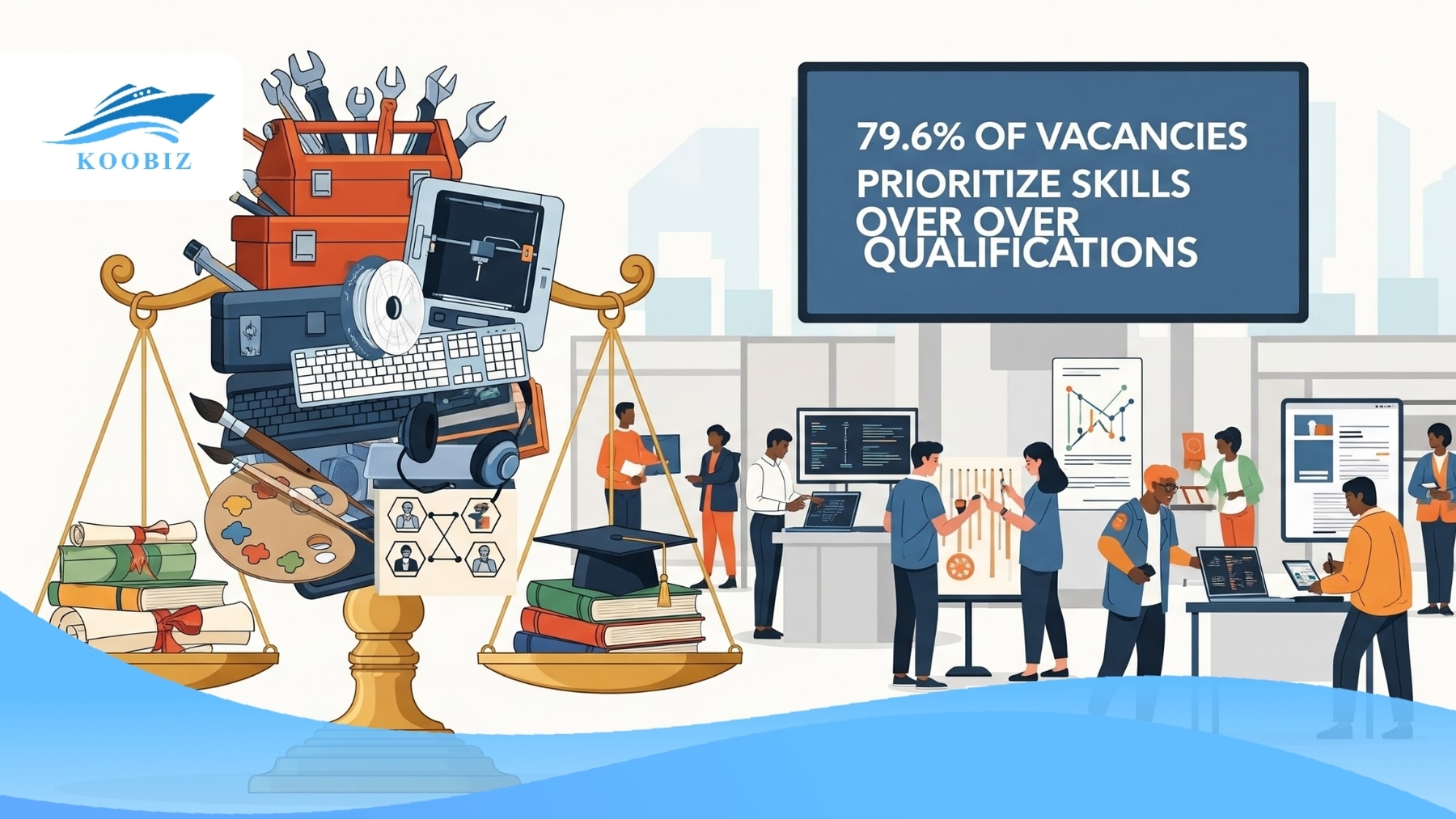
    Employers are increasingly placing greater emphasis on practical skills and competencies rather than traditional academic qualifications. In fact, qualifications were not the primary hiring criterion in 79.6% of vacancies.

    Skill is key: 79.6% of vacancies do not require academic qualifications
    Skill is key: 79.6% of vacancies do not require academic qualifications

    This shift has allowed businesses to hire faster, access a wider talent pool, and improve overall employee performance. When looking at experience levels, the vacancies span a wide range:

    • 31.5% required no prior experience.
    • 20.2% needed at least one year of experience.
    • 51.1% targeted mid-level candidates with 2 to 5 years of relevant exposure.

    While the proportion of vacancies remaining unfilled for six months or longer fell to 17.1% overall, it edged up slightly for PMET (Professionals, Managers, Executives, and Technicians) roles to 16.0%. Specialised positions in software development and data science remain among the harder-to-fill roles due to their highly specific technical requirements.

    Remote Work Trends and Local Talent Preference

    The modern workplace continues to evolve. Remote-capable jobs rose to 22.7% of all vacancies in 2025.

    At the same time, employer intent to recruit from overseas declined to 16.5%. This indicates a strong preference for hiring local talent whenever suitable candidates are available. While firms are expected to maintain a cautious approach to hiring in the near term, early 2026 indicators suggest a modest improvement in hiring sentiment.

    Strategic Workforce Planning for SMEs

    For SMEs in Singapore, these labour market signals reinforce the value of proactive workforce planning. Professional accounting and bookkeeping services can assist with accurate payroll forecasting and compliance as businesses scale their teams in line with evolving hiring trends.

    As Singapore’s economy adapts to structural changes and technological shifts, staying informed about vacancy patterns helps businesses align their growth strategies with available talent. Entrepreneurs exploring Singapore company formation or those already operating locally can greatly benefit from expert guidance to integrate these insights into their HR and compliance frameworks.

    Ready to set up your business?

    Contact the Koobiz team for professional support with Singapore company formation, corporate secretary services, accounting solutions, and other corporate needs to navigate talent and operational requirements with confidence.

  • New CPF Life-Cycle Investment Scheme in 2028: What Business Owners Need to Know

    New CPF Life-Cycle Investment Scheme in 2028: What Business Owners Need to Know

    [SUMMARIES]

    Launch Timeline: The CPF Board is introducing a new voluntary life-cycle investment scheme in the first half of 2028 to complement existing CPFIS options.

    Product Features: The scheme will feature simplified, low-cost, diversified products with automatic age-based rebalancing and phased liquidation towards retirement.

    Provider Selection: Commercial product providers will be selected, with industry engagement beginning in March 2026 and providers announced in the first half of 2027.

    Member Benefits: This gives CPF members willing to accept some investment risk a more hands-off approach to potentially higher long-term returns.

    [/SUMMARIES]

    Expanding Retirement Pathways in Singapore

    The CPF Board has announced plans to introduce a new investment scheme in the first half of 2028. Responding to recommendations from the CPF Advisory Panel, this initiative aims to offer CPF members an additional, accessible retirement savings pathway.

    For foreign entrepreneurs and SMEs establishing operations in Singapore, understanding these CPF-related developments is highly valuable. It provides crucial context when structuring competitive employee benefits or planning personal finances as company directors.

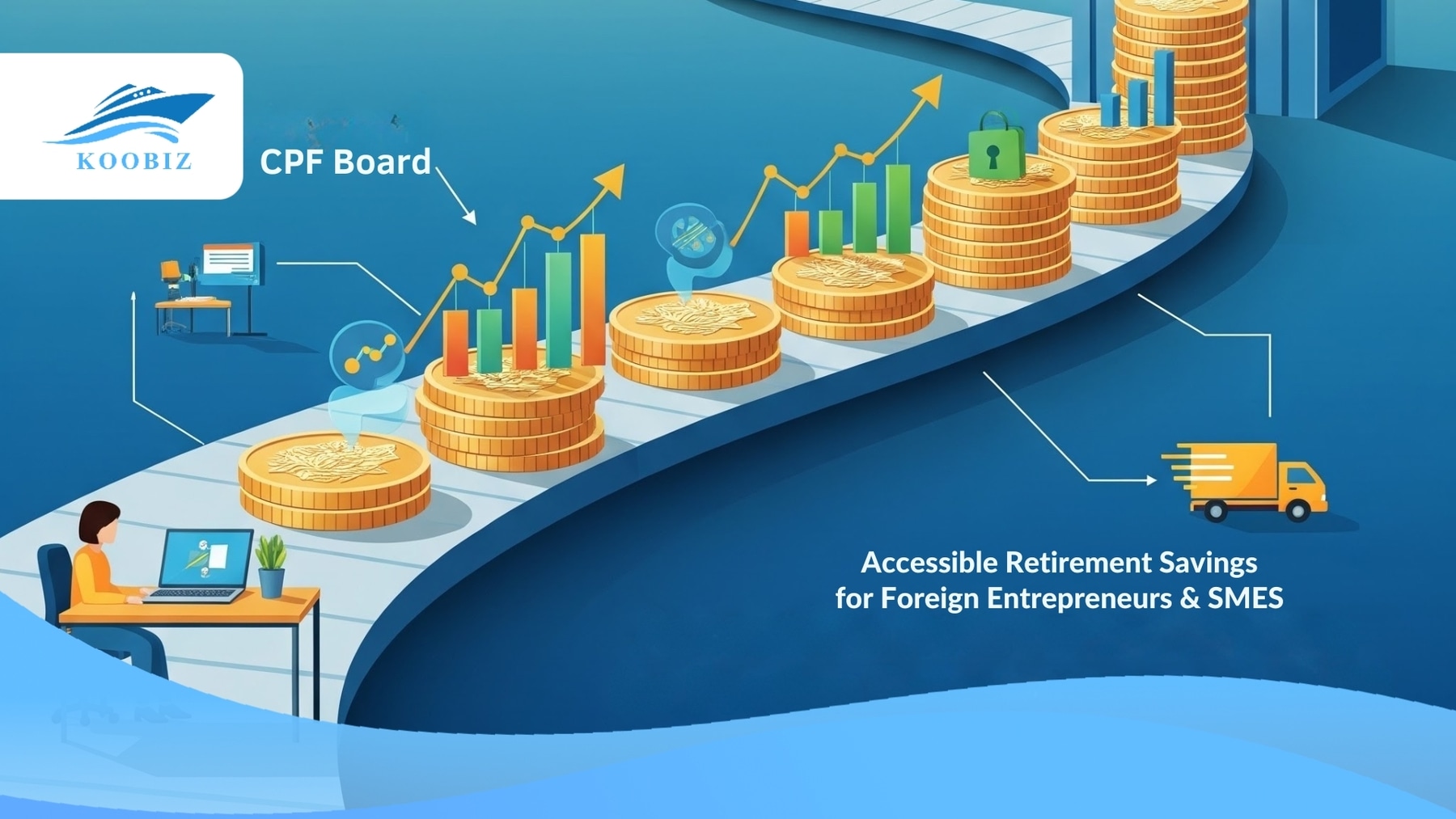
    CPF investment and retirement savings in Singapore in 2028
    CPF investment and retirement savings in Singapore in 2028

    How the New Life-Cycle Investment Products Work

    The upcoming scheme targets members who are comfortable taking some investment risk for potentially higher long-term returns, but who prefer not to actively manage their own portfolios.

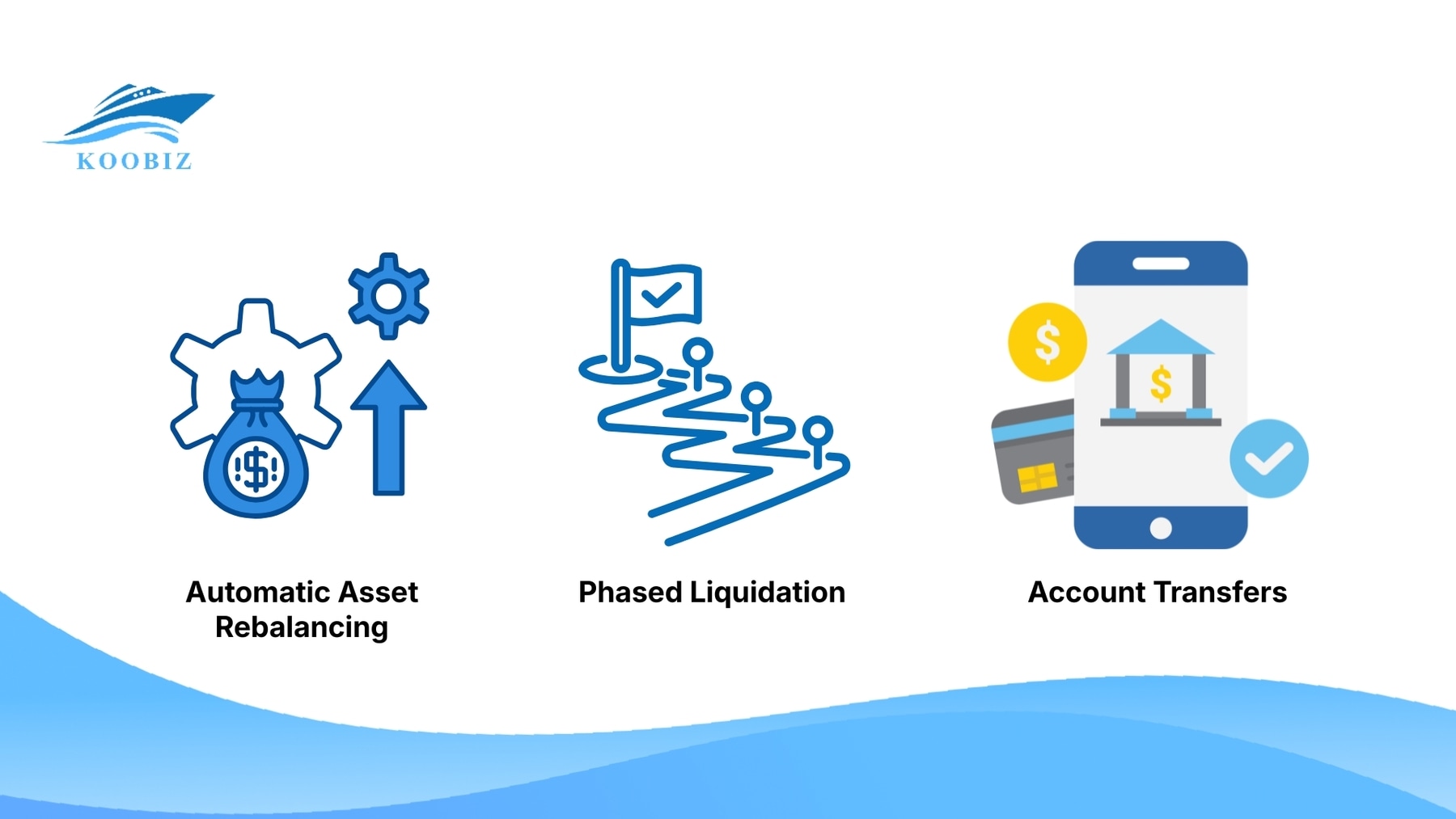
    Three core mechanics of CPF investment
    Three core mechanics of CPF investment

    Participants will gain access to simplified, low-cost, and diversified life-cycle investment products offered by selected commercial providers. Key mechanics include:

    • Automatic Asset Rebalancing: The products automatically adjust asset allocation along a “glidepath.” They shift from higher-risk assets (such as equities) to lower-risk assets (such as bonds) as the member ages.
    • Phased Liquidation: As members approach their target date (e.g., the Payout Eligibility Age of 65), the assets undergo phased liquidation.
    • Account Transfers: Proceeds from this liquidation will first be transferred to the member’s Retirement Account up to the Full Retirement Sum. Any remaining amount will be directed to the Ordinary Account.

    Participation in this new scheme remains entirely voluntary, and existing CPF Investment Scheme (CPFIS) eligibility criteria will continue to apply.

    Provider Selection and Timeline

    To keep choices straightforward and avoid decision paralysis, the CPF Board intends to select only two to three reputable product providers. These providers will offer a limited number of options with strictly capped all-in fees.

    Furthermore, the Government will provide time-limited support to help launch the scheme and assist members in understanding whether it suits their financial goals.

    • March 2026: Industry engagement begins.
    • First Half of 2027: Selected providers will be officially announced.

    This timeline gives businesses and individuals sufficient runway to evaluate the new option as part of their broader financial planning.

    What This Means for SMEs and Foreign Entrepreneurs

    For SMEs operating in Singapore, staying informed about CPF policy changes is foundational to effective human resource and financial management. As Singapore strengthens its retirement savings ecosystem, these developments offer business owners greater flexibility in long-term planning.

    Professional accounting and bookkeeping services can help companies accurately handle CPF contributions and explore how such life-cycle schemes might fit into overall employee compensation and retention strategies. Entrepreneurs considering or already operating through a Singapore company can benefit from expert advice on integrating these CPF matters into their corporate and personal financial frameworks.

    Contact the Koobiz team for professional support with Singapore company formation, corporate secretary services, accounting solutions, and other corporate needs to ensure your business remains compliant and well-positioned amid evolving policies.

  • Singapore Food Services Progressive Wage Model: Understanding Wage Increases from 2026 to 2028

    Singapore Food Services Progressive Wage Model: Understanding Wage Increases from 2026 to 2028

    [SUMMARIES]

    Entry-level monthly baseline wages will rise from S$2,220 in 2026 to S$2,500 by 2028, with year-on-year increments of up to S$145.

    The schedule aligns with other PWM sectors starting in July each year, simplifying compliance for employers operating across multiple industries.

    Expanded training options and enhanced Workfare Skills Support (WSS) schemes will help workers upskill while providing greater flexibility for employers.

    [/SUMMARIES]

    The recent acceptance by the Singapore Government of recommendations from the Tripartite Cluster for the Food Services Industry (TCF) introduces a structured approach to wage progression in one of the city-state’s key employment sectors.

    For SMEs and foreign entrepreneurs exploring business setup in Singapore—particularly in the fast-paced food and beverage (F&B) space—these updates provide greater predictability around labour costs and workforce development.

    Staying informed on such employment policies is crucial for operational planning and ensuring local compliance during your Singapore company formation process.

    What is the 2026-2028 Food Services PWM Schedule?

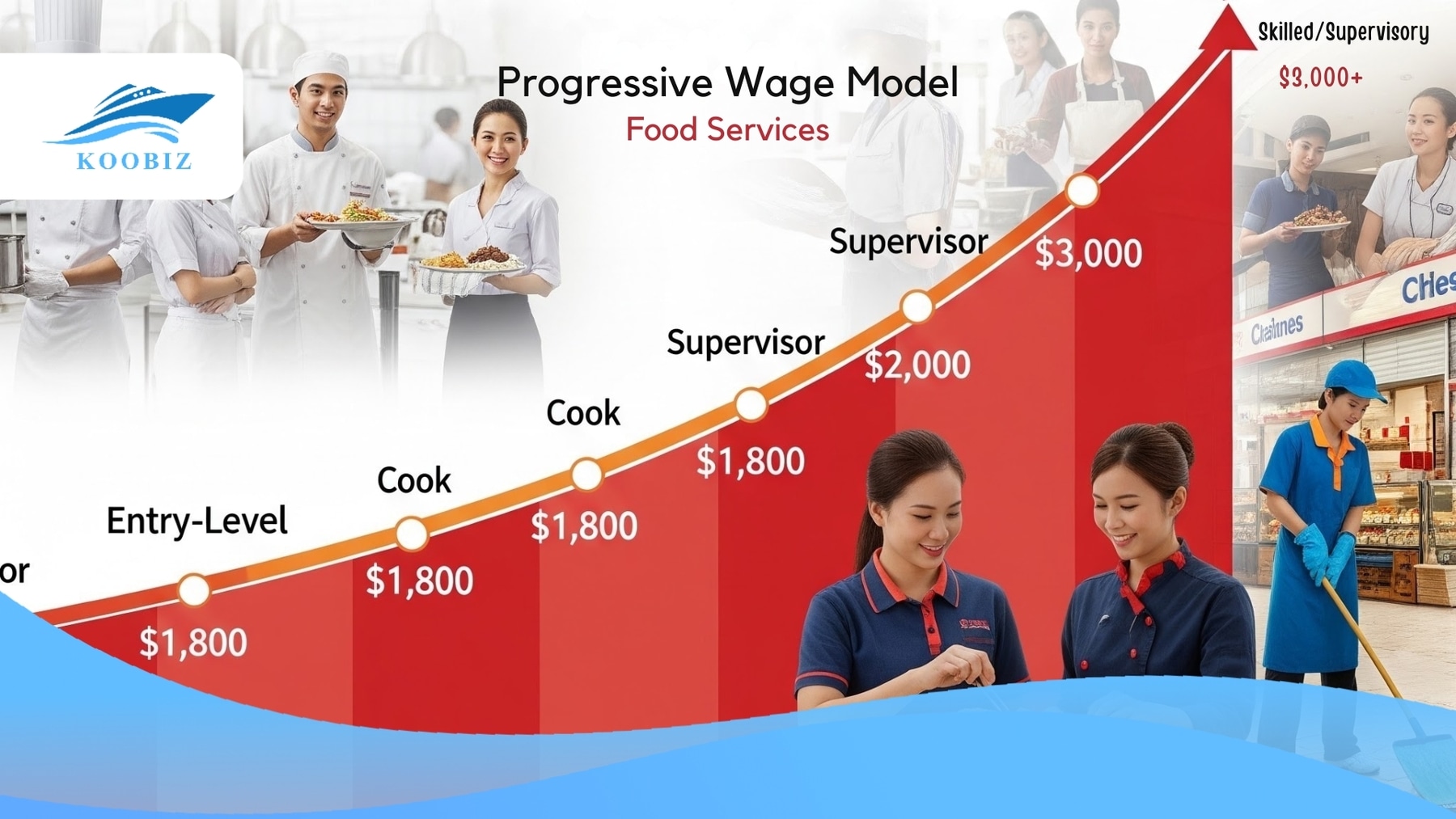
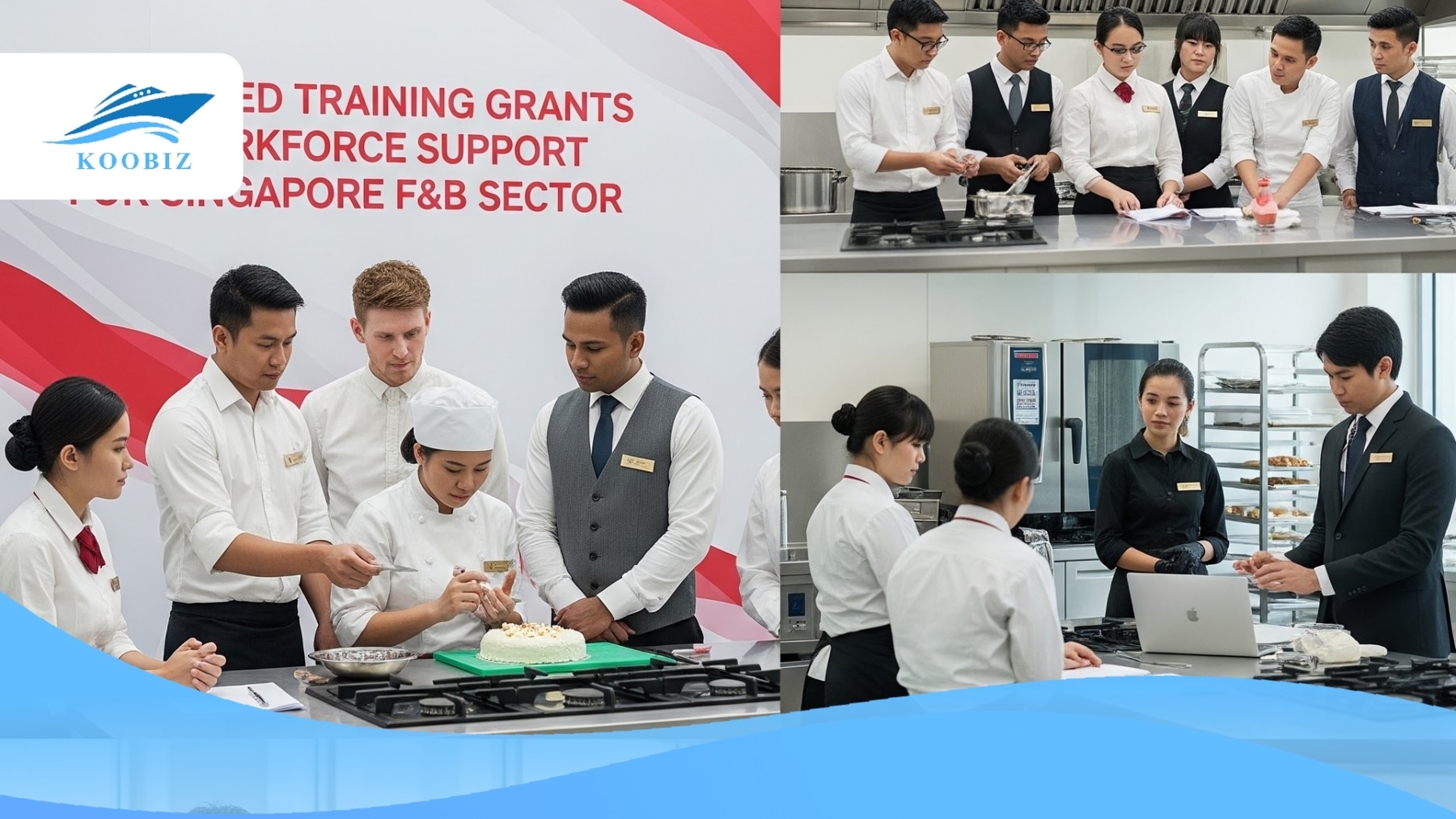
    Salary Increase in Singapore F&B Sector: 2026-2029
    Salary Increase in Singapore F&B Sector: 2026-2029

    On 16 March 2026, the Government officially accepted the TCF’s recommendations for the Food Services Progressive Wage Model (PWM). First introduced in March 2023, the model protects and uplifts more than 53,000 full-time and part-time workers across the sector.

    The newly approved three-year schedule runs from 1 July 2026 to 30 June 2029. It sets out clear baseline gross wage requirements that will increase annually.

    To maintain alignment with the majority of other PWM sectors, all food services wage adjustments will take effect from 1 July each year. This strategic timing gives employers operating across multiple PWM-covered industries additional lead time to adjust payroll systems and administrative processes efficiently.

    Approved Wage Requirements by Category

    From 1 July 2026, the entry-level PWM wage requirement rises to S$2,220 per month (up from the previous S$2,080). The baseline monthly gross wage will then progress to S$2,500 by 2028, delivering consistent year-on-year increases of up to S$145.

    To make forecasting easier for your F&B business, here is the breakdown of the mandatory wage increments:

    Category A: Quick Services (QS)

    (Applies to Quick Services Food Establishments & Supermarkets with ready-to-eat food stations)

    Job Role 1 July 2026 2027 2028
    Food/Drink Stall Assistant S$2,220 S$2,360 S$2,500
    Kitchen Assistant (QS) / Counter Attendant S$2,295 S$2,435 S$2,575
    Cook (QS) S$2,470 S$2,610 S$2,750

    Note: Hourly rates for part-time workers (under 35 hours per week) must be adjusted accordingly based on these baseline figures.

    Category B: Full-Service (FS)

    (Applies to Full-Service Food Establishments, Caterers, and Central Kitchens)

    Job Role 1 July 2026 2027 2028
    Kitchen Assistant (FS) / Waiter S$2,320 S$2,460 S$2,600
    Cook (FS) S$2,520 S$2,660 S$2,800
    Waiter Supervisor S$2,875 S$3,020 S$3,165

    Enhanced Training Grants and Workforce Support

    Training Support & Workforce Skills Enhancement
    Training Support & Workforce Skills Enhancement

    To support workforce development alongside wage increases, the TCF has expanded the list of acceptable Workforce Skills Qualification (WSQ) training modules. These fulfil the minimum PWM training requirement of two modules per worker. Relevant qualifications from Institutes of Higher Learning and Private Education Institutions are now officially recognised.

    In addition, the Workfare Skills Support (WSS) scheme has been enhanced to assist employers and employees:

    • WSS (Level-Up): Self-sponsored trainees pursuing longer programmes can receive training allowances of up to S$18,000 per year (full-time) or S$3,600 per year (part-time).
    • Absentee Payroll: Employers sponsoring staff upskilling may qualify for Absentee Payroll support.
    • WSS (Basic): Shorter courses under this enhanced tier offer S$10.50 per hour in training allowances starting 1 July 2026.

    Impact on F&B Business Setup in Singapore

    For foreign entrepreneurs and SMEs establishing operations in Singapore, these structured increases allow for highly accurate payroll budgeting.

    Integrating these requirements into your financial forecasting is essential. Engaging professional accounting and bookkeeping services can help ensure accurate payroll processing and ongoing regulatory compliance as part of your broader corporate services in Singapore.

    Understanding how labour regulations interact with overall business compliance forms an important part of successful long-term operational planning. As Singapore continues to refine its labour policies to support both workers and businesses, proactive compliance remains your best strategy for sustainable operations.

    Need Help Navigating F&B Compliance in Singapore?

    Entrepreneurs considering business setup in Singapore or those already managing local entities can benefit from expert guidance on integrating these requirements into their HR and payroll frameworks. Contact the Koobiz team for professional support with Singapore company formation, corporate secretary services, accounting solutions, and other corporate needs to help navigate regulatory updates with confidence.

  • New EP & S Pass Salary Benchmarks: Critical Compliance for Enterprises in 2027-2028

    New EP & S Pass Salary Benchmarks: Critical Compliance for Enterprises in 2027-2028

    [SUMMARIES]

    New EP applications must meet the S$6,000 threshold and S Pass candidates must earn at least S$3,600 starting January 1, 2027, with renewals following on January 1, 2028.

    Meeting the minimum salary no longer guarantees approval as the COMPASS C1 criteria mandates your payroll align with the 65th percentile of local PMET wages in your sector.

    Failing to recalibrate salaries for key personnel earning near old thresholds will trigger a “talent vacuum” through renewal rejections in 2028, causing severe operational paralysis.

    Enterprises with constrained budgets should optimize non-salary COMPASS pillars, such as nationality diversity and local hiring, to secure necessary approval points.

    Businesses can leverage the Job Redesign+ grant to receive up to 70% government funding, capped at S$150,000, to boost productivity and offset these mandatory salary hikes.

    [/SUMMARIES]

    With the Ministry of Manpower (MOM) officially raising the bar for Employment Pass (EP) and S Pass salaries starting in 2027, businesses face a new set of compliance and financial challenges. This update breaks down the essential figures and timelines you need to know to protect your workforce and sustain your growth in a higher-productivity economy.

    MOM Update: New Salary Thresholds for EP & S Pass Holders

    On March 3, 2026, MOM announced increased salary benchmarks to maintain the quality of the foreign workforce. To achieve this, the Ministry has mandated new minimum qualifying salary hikes. These figures serve as the baseline “floor” for eligibility, with higher thresholds applicable to older candidates and those in the Financial Services sector:

    Pass Type Current Minimum Salary New Minimum Salary (From 2027)
    Employment Pass (EP) S$5,600 S$6,000
    S Pass S$3,300 S$3,600

    Proactive Insight: Enterprises should brace for a long-term upward trajectory; the S Pass threshold is projected to reach S$4,000 – S$4,500 by 2030.

    Critical Implementation Timeline

    MOM has provided a dual-phase “runway” to allow businesses sufficient time for financial and manpower restructuring. Compliance will be assessed based on the following milestones:

    • New Pass Applications: Effective from January 1, 2027.
    • Pass Renewals: Effective from January 1, 2028.

    This structured implementation means that while new hires will be affected immediately in 2027, companies have an additional year to evaluate and adjust salaries for existing pass holders before their 2028 renewals.

    Beyond Payroll: The Strategic Risks to Your Business

    Secure your company's future with our strategic legal risk assessments
    Secure your company’s future with our strategic legal risk assessments

    For Singapore enterprises, the 2027-2028 salary hike is not a localized payroll issue; it is a fundamental shift in business cost structures.

    The “Profit Margin Squeeze” & Budgeting Crisis

    Elevating the salary floor to S$6,000 (EP) and S$3,600 (S Pass) directly inflates fixed overheads. For SMEs, these mandatory adjustments can erode projected profit margins if not integrated into 2027-2028 fiscal planning. Furthermore, businesses must navigate the “wage-push” effect: raising salaries for foreign professionals often triggers a ripple effect, necessitating upward adjustments for local staff to maintain internal pay equity.

    The COMPASS C1 Benchmark Tension

    Under the Complementarity Assessment Framework (COMPASS), meeting the minimum salary is no longer enough. Criterion 1 (C1) benchmarks an applicant’s salary against the 65th percentile of local PMET wages within your specific sector. As the baseline rises, the “market median” shifts. Firms that fail to proactively recalibrate compensation packages risk scoring zero on the C1 pillar, leading to pass rejections even if they technically meet the S$6,000 threshold.

    Risk of Key Personnel Loss

    The 2028 renewal window represents a critical “talent cliff.” High-value employees currently earning near the current thresholds may suddenly become ineligible for renewal. Losing institutional knowledge and specialized expertise due to a compliance oversight is a strategic failure that can stall long-term projects and weaken market position.

    The EP or S Pass Rejection and Non-Renewal Risk: Operational Disruption

    In Singapore’s meritocratic labor market, a work pass rejection is a threat to operational continuity. A rejected renewal often grants the holder only a short stay (typically 30 days) to exit the country, creating a “talent vacuum” characterized by:

    • Project Stagnation: Sudden vacancies in leadership roles halt deliverables and disrupt client commitments.
    • Inflated Replacement Costs: The cost of urgent headhunting and retraining far exceeds a proactive salary adjustment.
    • Regulatory Scrutiny: Repeated rejections may flag the company for closer MOM monitoring in future applications.

    Expert Strategies to Navigate the 2027-2028 Transition

    Proactive compliance ensures business stability during legislative shifts
    Proactive compliance ensures business stability during legislative shifts

    Preparation is the definitive defense against regulatory shifts. To maintain compliance and operational stability, Koobiz recommends the following strategic steps:

    Execute a 360° Workforce Health Audit

    The first phase involves a deep-dive review of your current foreign talent pool. Proactivity is key to preventing a “talent cliff” in 2028.

    • Identify Vulnerabilities: Categorize all EP and S Pass holders whose current compensation falls below the upcoming S$6,000 and S$3,600 thresholds.
    • Strategic Expiry Mapping: Prioritize passes expiring after January 1, 2028, as these will be the first to require the new benchmarks for successful renewal.
    • Fiscal Forecasting: Quantify the total cost of aligning “at-risk” personnel with the new standards and integrate these projections into your 2027-2028 manpower budgets.

    Optimize COMPASS Scores via Non-Salary Pillars

    While Salary (C1) is a primary factor, the COMPASS framework offers multiple pathways to success. If drastic salary hikes are not commercially viable, you must strengthen other pillars to secure the necessary points:

    • Nationality Diversity (C3): Mitigate concentration risk. A diverse workforce can yield essential bonus points under the Diversity criterion.
    • Local Employment Support (C4): With the Local Qualifying Salary (LQS) rising to S$1,800 in July 2026, investing in local PMETs not only fulfills corporate responsibility but significantly boosts your COMPASS standing.
    • Strategic Priority (C5/C6): Leverage bonus points if your enterprise operates within sectors on the Strategic Priorities List or if your employees possess niche skills on the Shortage Occupation List (SOL).

    Tactical Salary & Role Re-engineering

    Rather than simply inflating payroll, look for strategic ways to restructure compensation and productivity.

    • Consolidate Fixed Components: Evaluate converting variable allowances into the “Fixed Monthly Salary.” MOM’s assessment primarily hinges on the fixed component for eligibility.
    • Leverage Enterprise Grants: Capitalize on the Enterprise Workforce Transformation Package (EWTP) and the Job Redesign+ grant (March 2026). By re-engineering roles to improve productivity, you can justify higher salaries while receiving government support of up to 70% (capped at S$150,000).
    • Phased Incremental Adjustments: Implement a “staircase” approach to salary increases over the next 18 months to mitigate sudden cash flow shocks at the point of renewal.

    Secure Your Future in Singapore with Koobiz’s Compliance Shield

    Protect your business assets through Koobiz’s trusted Singaporean legal shield
    Protect your business assets through Koobiz’s trusted Singaporean legal shield

    At Koobiz, we understand that these regulatory shifts are more than just figures on a spreadsheet, they are pivotal milestones for your company’s growth and stability in Singapore. As the 2027-2028 deadlines approach, leaving your compliance to chance is a risk your business should not have to take.

    Our integrated approach serves as a comprehensive “Compliance Shield” for your enterprise:

    • Bespoke Visa & Work Pass Advisory: Our specialists go beyond administrative filing. We analyze your workforce data, simulate COMPASS scores, and architect long-term renewal pathways to ensure your key talent remains an integral part of your team.
    • Strategic Accounting & Payroll Excellence: We assist in recalibrating your payroll structures and manpower budgets. By integrating MOM’s new salary benchmarks into your fiscal planning, we ensure your business remains profitable while meeting every regulatory mandate.

    Don’t let the 2027-2028 changes catch you off guard. Secure your operational continuity and talent pipeline today. Contact Koobiz now for a 360° Workforce Health Audit. Let us transform these regulatory challenges into your competitive advantage.

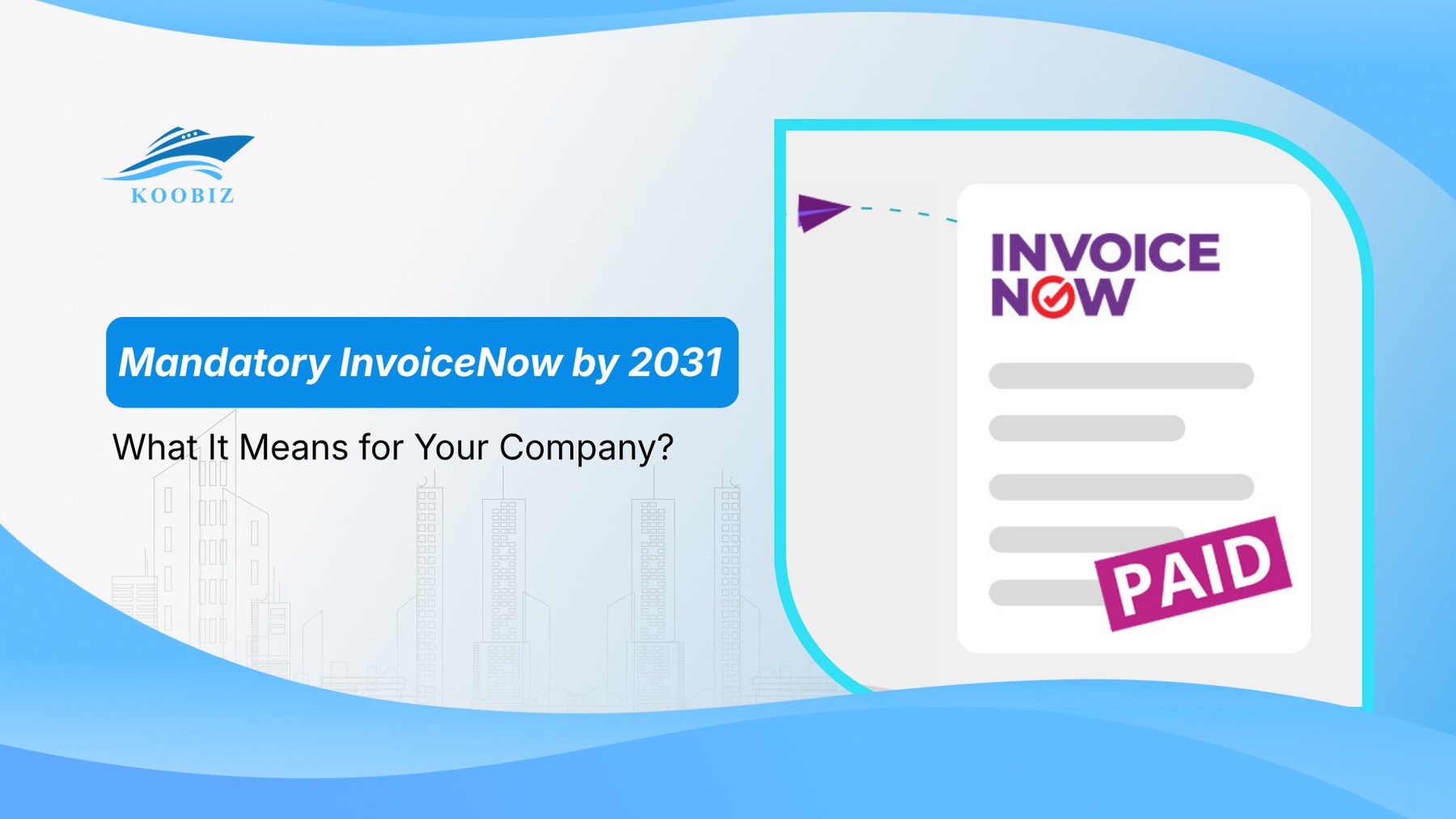
  • Mandatory InvoiceNow for All GST-Registered Businesses by 2031: What It Means for Your Company

    Mandatory InvoiceNow for All GST-Registered Businesses by 2031: What It Means for Your Company

    [SUMMARIES]

    All GST-registered businesses must adopt InvoiceNow for direct IRAS submissions through a phased rollout from Nov 2025 to Apr 2031.

    Post-deadline, invoices not transmitted via the Peppol network will be deemed invalid, leading to the rejection of GST input tax claims.

    Digital integration enables IRAS to perform instant cross-verification between buyers and sellers, flagging discrepancies immediately instead of during year-end audits.

    Early adopters can secure government grants of up to S$1,000 for SMEs and S$5,000 for larger firms, including free software for smaller enterprises.

    Adoption of the Peppol standard allows your business to seamlessly integrate with international jurisdictions using similar e-invoicing systems, such as the EU, Australia, and Japan.

    [/SUMMARIES]

    Following the COS Debate 2026, the Singapore Government is mandating InvoiceNow for all GST-registered businesses to automate tax submissions to IRAS. This shift replaces manual processing with digital efficiency, accelerating payment cycles and streamlining compliance for over 90,000 firms.

    Timeline for InvoiceNow Implementation in Singapore

    The GST InvoiceNow Requirement is being phased progressively to allow businesses-from SMEs to MNCs-adequate lead time to align their IT refresh cycles with these new compliance standards.

    Effective Date Affected Taxable Entities
    1 Nov 2025 Newly incorporated companies opting for voluntary GST registration.
    1 Apr 2026 All new voluntary GST registrants, irrespective of incorporation date or legal structure.
    1 Apr 2028 All new compulsory GST-registrants AND existing GST-registered businesses with annual supplies <= S$200,000.
    1 Apr 2029 Existing GST-registered businesses with annual taxable turnover <= S$1 million.
    1 Apr 2030 Existing GST-registered businesses with annual taxable turnover <= S$4 million.
    1 Apr 2031 All remaining GST-registered businesses (Annual supplies > S$4 million).

    What is InvoiceNow and the Peppol Network?

    Managed by the Infocomm Media Development Authority (IMDA), InvoiceNow is Singapore’s nationwide e-invoicing network based on the international Peppol standard.

    Unlike legacy methods such as transmitting PDF invoices via email which still necessitate manual data entry, InvoiceNow facilitates the direct exchange of structured digital data between disparate accounting systems. For your organization, this ensures that upon invoice issuance, data is transmitted instantaneously to both the counterparty and IRAS, effectively eliminating human error and accelerating GST audit and refund processes.

    Why This Transition Matters for Your Business Compliance

    Future-proof your business compliance with our professional InvoiceNow guidance
    Future-proof your business compliance with our professional InvoiceNow guidance

    In Singapore’s evolving landscape, tax compliance is shifting toward real-time transparency. Adopting InvoiceNow is no longer optional; it is a statutory mandate essential for maintaining your company’s standing with IRAS.

    Enhanced Audit Scrutiny

    Direct data transmission provides IRAS with instantaneous transaction visibility. This enables automated cross-verification between buyers and sellers. Any discrepancies that previously surfaced only during periodic audits will now be flagged immediately, significantly increasing the likelihood of targeted queries for inconsistent data.

    Input Tax Claim Risks

    The most critical financial risk lies in your GST input tax claims. Beyond the deadlines, invoices not sent via InvoiceNow may be deemed invalid for GST purposes. This could lead to the rejection of tax credits, directly inflating your liabilities and straining your corporate cash flow.

    Operational Transition Costs

    While grants of up to S$1,000 for SMEs and S$5,000 for larger firms are available, the “cost of delay” is substantial. Waiting until 2031 risks rushed integration, premium vendor rates due to surging demand, and potential operational downtime during the mandatory switch-over.

    Proactive Steps to Stay Compliant and Efficient

    Implementing InvoiceNow for seamless regulatory compliance in Singapore
    Implementing InvoiceNow for seamless regulatory compliance in Singapore

    To navigate the 2031 mandate effectively, businesses must move beyond reactive compliance. Taking proactive steps now allows you to leverage government support while optimizing your internal financial infrastructure.

    Assess System Compatibility

    The priority is verifying if your current accounting or ERP solution is “InvoiceNow-ready.” Consult the IMDA-accredited IRSP list to confirm compatibility. If you utilize an in-house enterprise solution, you must engage an accredited Access Point Provider (AP) to establish a secure connection to the Peppol network. Ensuring your software can transmit structured data directly to IRAS is the cornerstone of the new GST requirement.

    Early Adoption Strategy

    The Singapore government is incentivizing early movers with significant financial support. SMEs can access InvoiceNow-Ready Solutions for free until March 2031 and may be eligible for a new grant of up to S$1,000 to defray operational costs. Larger businesses adopting the system ahead of their 2031 deadline can receive a grant of up to S$5,000. Beyond financial incentives, early adoption allows your team to refine digital workflows in a low-pressure environment, ensuring seamless GST filing long before it becomes mandatory.

    Digitalize Bookkeeping Workflows

    Seamlessly connect your business with global e-invoicing standards
    Seamlessly connect your business with global e-invoicing standards

    The transition to InvoiceNow is the perfect opportunity to eliminate manual bottlenecks. By digitalizing your bookkeeping, you automate the reconciliation of purchase and sales invoices. This reduces human error, shortens payment cycles, and positions your business to integrate globally with jurisdictions using similar e-invoicing standards, such as the EU, Australia, and Japan.

    Future-Proof Your Business with Koobiz Accounting & Bookkeeping Services

    Navigating the 2031 InvoiceNow mandate requires more than just new software; it demands a robust digital accounting strategy. At Koobiz, we provide end-to-end Accounting & Bookkeeping services specifically engineered to align with Singapore’s evolving tax landscape.

    • Integrated Regulatory Solutions: We deploy IMDA-accredited, InvoiceNow-ready systems to automate your invoicing and GST filings, ensuring 100% compliance with the 2026-2031 roadmap.
    • Proactive Risk Mitigation: Our experts manage the technical integration with the Peppol network, shielding your business from the risks of rejected input tax claims and costly manual reconciliation errors.
    • Scalable Strategic Growth: From Company Formation to complex tax management, we streamline your back-office operations, empowering you to scale effectively in Singapore’s digital economy.

    Don’t wait for the mandatory deadline. Contact Koobiz today for a Compliance Health Check and secure a seamless digital future for your enterprise.

  • IRAS Tax Season 2026: Direct Tax Bills for 1 Million Taxpayers – What Business Owners Need to Know

    IRAS Tax Season 2026: Direct Tax Bills for 1 Million Taxpayers – What Business Owners Need to Know

    [SUMMARIES]

    Starting mid-March 2026, IRAS will issue Direct NOAs to 1 million taxpayers based on employer-submitted AIS data.

    Automated billing means any clerical error in your payroll is instantly exposed to employees and tax authorities, triggering immediate audits.

    April 18, 2026, is the final cutoff for all tax filings and adjustments; missing this leads to severe statutory penalties.

    Inaccurate reporting carries heavy financial penalties and places personal legal accountability on both Directors and Company Secretaries.

    Secure your business by auditing Form IR8A/Appendix 8A now and transitioning to monthly digital bookkeeping with Koobiz.

    [/SUMMARIES]

    The YA 2026 tax season marks a significant milestone in Singapore’s digital tax transformation. While promising a seamless experience for individuals, this shift introduces a new level of transparency and regulatory scrutiny for employers. As the Inland Revenue Authority of Singapore (IRAS) takes the lead in issuing direct bills, the accuracy of your corporate data submission now sits at the very heart of tax compliance.

    The Shift to Direct Billing: IRAS Simplifies Taxation for 1 Million Individuals

    Starting from mid-March 2026, IRAS will issue direct tax bills-officially known as the Direct Notice of Assessment (Direct NOA) to approximately 1 million taxpayers. This initiative is a major expansion of the No-Filing Service (NFS), designed to automate the tax process for a significant portion of the workforce.

    What is Direct Billing?

    Tax filing is going automated, accuracy now depends on AIS data
    Tax filing is going automated, accuracy now depends on AIS data

    Under this mechanism, eligible taxpayers receive their finalized tax bills directly without having to file a manual return. IRAS calculates these tax liabilities using data-driven automation, transitioning from a “self-declaration” model to a proactive “direct assessment” model.

    The Source of Truth: The Auto-Inclusion Scheme (AIS)

    The integrity of these direct bills relies entirely on third-party data. For most employees, the “source of truth” is the Auto-Inclusion Scheme (AIS). Consequently, the figures appearing on an employee’s tax bill are a direct reflection of the salary, bonus, and benefits-in-kind submitted by your company to the myTax Portal.

    Key Timeline for YA 2026:

    • 1 March – AIS Deadline: All employers under the AIS must submit employee income data to IRAS. This data generates the Direct NOAs.
    • Mid-March 2026: IRAS commences the issuance of digital and paper NOAs.
    • Notification: Taxpayers are alerted via SMS or email once their NOA is available for viewing.
    • The 30-Day Objection Window: Upon receiving the NOA, individuals have 30 days to review the figures. Any discrepancy reported by an employee typically triggers a secondary verification of the employer’s original AIS submission.
    • 18 April 2026 – The Final Filing & Amendment Deadline: This is the critical cutoff for two groups:
      • NFS Recipients: Must complete any manual adjustments (e.g., adding rental income or tax reliefs) via myTax Portal.
      • Non-AIS Employees & Self-Employed: Individuals whose employers are not under the AIS must manually file their full tax returns by this date to avoid late filing penalties.

    The “Visibility Trap”: Why Direct Billing Increases Scrutiny on Your Business

    Direct billing increases transparency and scrutiny on your data
    Direct billing increases transparency and scrutiny on your data

    For employees, direct billing is a seamless upgrade. For business owners, however, it functions as a “Visibility Trap.” Because IRAS now leverages your corporate data to bill individuals directly, reporting errors are no longer buried in paperwork – they are delivered straight to your employees’ mobile devices, creating an immediate feedback loop with the tax authorities.

    The Risk of Data Mismatch

    With 1 million taxpayers receiving their NOAs, every dollar will be scrutinized. If an employee’s tax bill is inflated due to a clerical error in your AIS submission or Form IR8A, they will likely file an immediate objection. In this digital era, a “Data Mismatch” is a high-priority red flag. An employee dispute can trigger IRAS’s automated systems to cross-verify your company’s internal ledgers, often escalating into a comprehensive corporate audit.

    Administrative Burden & Reputational Risk

    Incorrect filings do more than just invite regulatory heat; they erode your internal corporate culture. Discrepancies lead to employee frustration and a loss of trust in management. In Singapore’s competitive talent landscape, being perceived as a firm that “fails at payroll” is a significant reputational liability that can hamper recruitment and retention.

    Compliance Penalties & Director’s Liability

    Under the Singapore Income Tax Act, the legal onus for accurate reporting rests squarely on the company’s leadership. IRAS maintains a stringent stance on enforcement, as evidenced by recent data:

    • Evidence of Enforcement: For YA 2025 alone, IRAS collected over S$5 million in penalties from close to 37,000 taxpayers who failed to pay their income tax on time. This highlights IRAS’s commitment to taking firm action against non-compliance.
    • Statutory Penalties: Beyond late payment penalties (typically 5% on unpaid tax), IRAS has the authority to impose composition fines for failing to file accurate AIS returns or for late submissions.
    • Director’s & Secretary’s Liability: Both the Director and Company Secretary are responsible for ensuring rigorous statutory compliance. Failure to maintain accurate records can lead to legal complications, including travel restriction orders or legal action against the company’s officers.
    • Operational Impacts: Persistent compliance failures can jeopardize Employment Pass (EP) renewals for expatriate talent and negatively affect the company’s standing with government authorities and financial institutions.

    Proactive Compliance: 3 Critical Steps for Business Owners This Tax Season

    Secure your business growth with expert-led tax compliance strategies
    Secure your business growth with expert-led tax compliance strategies

    To navigate the YA 2026 tax season without falling into the “Visibility Trap,” business owners must shift from reactive fixes to proactive governance.

    Step 1: Conduct a Pre-Submission Payroll & Form IR8A Audit

    Do not wait for an IRAS query to review your figures. Perform a rigorous internal audit of your 2025 payroll records before finalizing them in the myTax Portal. Key focus areas include:

    • Benefits-in-Kind: Ensure housing, car allowances, and insurance premiums are accurately valued and reported under Appendix 8A.
    • Director’s Fees: Confirm that fees are reported in the correct Year of Assessment (YA), strictly based on the date they were voted and approved.
    • Stock Options: Properly account for gains from ESOP or ESPP plans as per Appendix 8B.

    Step 2: Transition to Monthly Digital Bookkeeping

    Manual “shoebox accounting” remains the primary source of clerical errors. Migrating your financial records to a cloud-based digital system allows for real-time reconciliation. Accurate monthly records ensure that your year-end AIS submission is a verified reflection of your actual financial activity.

    Step 3: Synchronize with Your Corporate Secretary’s Records

    Tax compliance is intrinsically linked to corporate governance. Your Corporate Secretary ensures that all board resolutions-especially those regarding director compensation-are legally documented. Any discrepancy between secretarial records and tax filings is a major “red flag” that may lead IRAS to disallow tax-deductible expenses.

    Koobiz – Your Integrated Partner for Accounting & Bookkeeping in Singapore

    At Koobiz, we understand that tax compliance is not just about numbers; it’s about protecting your business’s reputation. Our integrated accounting and secretarial services ensure your AIS submissions are audit-ready long before the tax season begins. Let us turn the “Visibility Trap” into a benchmark of your corporate excellence. Contact Koobiz today for a Complimentary Tax Compliance & Payroll Health Check!

  • Financial Statement in Singapore: 4 Types of Financial Statements Every Company Should Know

    Financial Statement in Singapore: 4 Types of Financial Statements Every Company Should Know

    [SUMMARIES]

    Every Singapore company must prepare four mandatory financial reports in strict compliance with SFRS standards.

    Private firms qualify for audit exemption if they meet at least two of the ‘Small Company’ criteria, such as capping revenue or total assets at S$10 million.

    Non-listed companies are required to hold an AGM within 6 months and file Annual Returns within 7 months of their financial year-end.

    Most companies must file in the mandatory XBRL format to avoid ACRA enforcement actions and tiered fines.

    Maintaining accurate financial records is a strategic necessity for measuring business performance and securing future funding.

    [/SUMMARIES]

    Running a business in Singapore requires navigating a robust regulatory landscape governed by ACRA and IRAS. However, maintaining accurate financial statements is more than just a matter of compliance – it is a strategic tool for unlocking your company’s growth potential. From the four essential types of reports to filing deadlines and step-by-step preparation, this guide provides everything you need to stay ahead.

    What is a Financial Statement?

    A financial statement reflects your company's true health
    A financial statement reflects your company’s true health

    A financial statement is a formal record that provides a structured overview of a company’s financial activities and performance over a specific period. In Singapore’s business environment, these statements are far more than mere documentation; they are vital for:

    • Strategic Management: Monitoring profitability, controlling cash flow, and driving data-backed business decisions.
    • Securing Funding: Demonstrating financial stability to attract potential investors or secure credit facilities from banks.
    • Statutory Compliance: Fulfilling mandatory annual filing requirements with ACRA and tax obligations with IRAS.

    In short, an accurate financial statement is a non-negotiable asset for measuring success and ensuring your business remains in good standing.

    What are the 4 Types of Financial Statements?

    The four pillars of financial reporting
    The four pillars of financial reporting

    Under the Singapore Financial Reporting Standards (SFRS), a complete set of financial statements provides a multi-dimensional view of a company’s financial health. To ensure statutory compliance and facilitate informed decision-making, directors and stakeholders rely on these four primary components:

    Statement of Financial Position (Balance Sheet)

    The Balance Sheet provides a point-in-time snapshot of a company’s financial standing, typically at the end of the financial year (FYE). It details:

    • Assets: Resources owned (cash, inventory, property).
    • Liabilities: Obligations owed (loans, accounts payable).
    • Equity: The shareholders’ residual interest. This statement is essential for evaluating a company’s liquidity, solvency, and overall net worth.

    Statement of Comprehensive Income (Profit and Loss Statement)

    This statement summarizes revenues, costs, and expenses incurred over a specific reporting period. By deducting total expenses from total revenue, it reveals the net profit or loss. It is the primary tool for assessing a company’s operational efficiency and earnings sustainability.

    Statement of Cash Flows

    While the income statement tracks profitability, the Cash Flow Statement tracks the actual inflow and outflow of cash. It categorizes movements into:

    • Operating Activities: Cash from core business functions.
    • Investing Activities: Cash used for or generated from assets/investments.
    • Financing Activities: Cash flow related to debt, equity, and dividends. It is a critical indicator of a company’s short-term viability and its ability to fund operations without external capital.

    Statement of Changes in Equity

    This document outlines the movements in a company’s equity over the reporting period. It reconciles the opening and closing balances by detailing:

    • Net profits or losses.
    • Dividend distributions.
    • Issuance or redemption of shares. It provides transparency into how profits are either distributed to shareholders or reinvested into the business.

    Which Accounting Standard is Used in Singapore?

    Navigating the SFRS and IFRS frameworks for global comparability
    Navigating the SFRS and IFRS frameworks for global comparability

    To maintain its status as a leading global financial hub, Singapore enforces a strict, transparent, and internationally recognized accounting framework. All companies incorporated in Singapore are required to prepare their financial statements in accordance with these standards, which are regulated by the Accounting Standards Council (ASC).

    Singapore Financial Reporting Standards (SFRS)

    The default accounting framework for businesses in Singapore is the SFRS. It is closely modeled after the International Financial Reporting Standards (IFRS), ensuring that financial statements prepared in Singapore are globally comparable, reliable, and transparent. Unless specifically exempted, all Singapore-registered companies must comply with SFRS when preparing their annual financial reports.

    SFRS for Small Entities

    To reduce the administrative burden and compliance costs for smaller businesses, the ASC introduced the SFRS for Small Entities. This framework offers simplified reporting requirements. A company is eligible to adopt this standard if it meets at least two of the following three criteria for two consecutive financial years:

    • Total annual revenue is not more than S$10 million.
    • Total gross assets is not more than S$10 million.
    • Total number of employees is not more than 50.

    Adopting the SFRS for Small Entities is optional. Eligible companies can still choose to file under the full SFRS if preferred by their management or investors.

    When IFRS is Applicable

    While SFRS is the mandatory domestic standard, the International Financial Reporting Standards (IFRS) may be applicable or preferred in specific corporate scenarios:

    • Subsidiaries of Foreign Multinationals: If a Singapore company is a subsidiary of an overseas parent company that uses IFRS, it may adopt IFRS to align financial statements for easier group consolidation.
    • Companies Listed on International Exchanges: Singapore companies seeking to list or already listed on certain foreign stock exchanges may be required to prepare their financial statements under IFRS to satisfy international investors and foreign regulatory bodies.

    ACRA Financial Statements Requirements

    Understanding ACRA’s mandatory filing criteria
    Understanding ACRA’s mandatory filing criteria

    ACRA enforces strict reporting rules to uphold corporate transparency. Mastering these requirements is crucial to avoid severe penalties and streamline your annual filing process.

    Who Needs to Prepare vs. File?

    While every Singapore-incorporated company must prepare an annual financial statement, the rules for filing differ:

    • Filing Required: Most public and private companies must submit their financial statements alongside their Annual Return.
    • Filing Exempted: Solvent Exempt Private Companies (EPCs) (private companies with max 20 individual shareholders) are exempt from filing. However, they must still prepare and retain these records for potential ACRA/IRAS audits.

    Audit Exemption Criteria

    Statutory audits can be costly. Fortunately, private companies are audit-exempt if they qualify as a “Small Company” by meeting at least two of these three criteria for the past two consecutive financial years:

    • Annual revenue $\le$ S$10 million.
    • Total gross assets $\le$ S$10 million.
    • Full-time employees $\le$ 50.

    Note: Audit-exempt companies must still prepare an unaudited financial statement compliant with SFRS.

    The XBRL Format Requirement

    To facilitate digital data analysis, ACRA requires many companies to file statements in XBRL (eXtensible Business Reporting Language) format:

    • Full XBRL: Mandatory for public companies and most non-EPCs.
    • Simplified XBRL: Available for smaller non-EPCs meeting specific financial thresholds.
    • Exempt from XBRL: Solvent EPCs are generally exempt but may need to submit a PDF copy or Financial Highlights depending on their status.

    Deadlines and Penalties for Financial Statements

    Timely submission is vital for maintaining your company’s “Good Standing” status. Delayed filings incur unnecessary costs and regulatory scrutiny.

    Important Deadlines (AGM & AR)

    Compliance timelines depend on your Financial Year End (FYE):

    Requirement Non-Listed Companies Listed Companies
    Annual General Meeting (AGM) Within 6 months post-FYE Within 4 months post-FYE
    Annual Return (AR) Filing Within 7 months post-FYE Within 5 months post-FYE

    Note: Financial statements must be approved at the AGM before AR filing with ACRA.

    Penalties for Non-Compliance

    ACRA enforces strict penalties for late submissions. Directors are personally liable for ensuring statutory obligations are met.

    • Late Filing Fees: Ranging from S$300 to S$600 per breach.
    • Enforcement Actions: Unresolved defaults may lead to Composition Sums or Court Summons.
    • Director Liability: Prosecution, fines up to S$5,000, or disqualification for repeat offenders (3 or more convictions within 5 years).
    • Striking Off: Persistent non-compliance may result in the company being struck off the register.

    A clean compliance record is essential for maintaining business reputation and accessing government grants or credit facilities.

    How to Prepare and File Financial Statements in Singapore: Step-by-Step

    A clear 6-step roadmap from document collection to successful ACRA and IRAS filing
    A clear 6-step roadmap from document collection to successful ACRA and IRAS filing

    Navigating the financial reporting process requires precision and a clear understanding of SFRS. Follow these six essential steps to ensure your company remains compliant.

    Step 1: Collect Accounting Documents

    Gather all supporting financial records for the financial year. This includes sales invoices, purchase receipts, bank statements, payroll records, and loan agreements. Organized documentation is the foundation of an accurate financial statement.

    Step 2: Record and Classify Transactions

    Enter all gathered data into your accounting system. Transactions must be categorized according to the Singapore Chart of Accounts. Ensure accruals, prepayments, and depreciation are properly adjusted to reflect the true financial position of the business.

    Step 3: Prepare Financial Statements

    Draft the four core components: the Balance Sheet, Profit and Loss Statement, Cash Flow Statement, and Statement of Changes in Equity. These must include necessary Notes to the Accounts, providing detailed breakdowns of specific line items as required by SFRS.

    Step 4: Audit (if required)

    If your company does not meet the “Small Company” audit exemption criteria, you must appoint an independent Public Accountant registered with ACRA to audit your financial statements. The auditor will issue an opinion on whether the statements provide a “true and fair” view of the company’s finances.

    Step 5: Convert to XBRL

    Once finalized, financial data must be mapped and converted into XBRL format. Using ACRA’s BizFinx portal, this digital tagging ensures your data is compatible with regulatory analysis systems.

    Step 6: File with ACRA and IRAS

    The final step involves two separate submissions:

    1. ACRA: File your financial statements (in XBRL or PDF as required) together with the Annual Return (AR).
    2. IRAS: Submit the financial statements as part of your Corporate Income Tax Return (Form C or C-S) to fulfill your tax obligations.

    Common Mistakes When Preparing Financial Statements in Singapore

    To ensure seamless compliance and avoid ACRA investigations or tax penalties, directors should avoid these frequent pitfalls:

    • Data Discrepancies: XBRL data must strictly match the financial statements approved during the AGM.
    • Wrong Framework: Using “SFRS for Small Entities” without meeting the specific eligibility criteria.
    • Revenue Misrecognition: Failing to align revenue recognition with SFRS standards for milestones or long-term projects.
    • Missing Disclosures: Omitting crucial “Notes to the Accounts” such as depreciation policies or related-party transactions.
    • Cash-based Accounting: Singapore requires the accrual basis of accounting; recording transactions only when cash moves is a common error.
    • Inaccurate XBRL Mapping: Using generic tags instead of specific concepts from the ACRA taxonomy.

    Should You Prepare Financial Statements In-house or Outsource in Singapore?

    Choosing between in-house management and professional outsourcing is a strategic decision. Given Singapore’s complex regulatory environment, outsourcing is often the most efficient choice for SMEs and MNC subsidiaries.

    The Challenges of In-house Preparation

    Maintaining an internal team involves significant overheads, including salaries, training, and software costs. Furthermore, as SFRS and XBRL taxonomy evolve, in-house staff may struggle to maintain compliance, increasing the risk of errors and late-filing penalties.

    The Strategic Value of Outsourcing

    Partnering with a professional firm offers distinct advantages:

    • Specialized Expertise: Access to professionals deeply versed in SFRS and ACRA requirements.
    • Cost Efficiency: Significant reduction in overhead costs compared to a full-time finance department.
    • Risk Mitigation: Ensure 100% accuracy in XBRL tagging, protecting directors from personal liability.

    Partner with Koobiz for Seamless Compliance

    At Koobiz, we provide expert accounting and filing services tailored to the Singapore corporate landscape. We ensure your financial statement is fully compliant with ACRA and IRAS, serving as a reliable roadmap for your business growth. Focus on your core operations and let Koobiz handle the complexities of compliance. Contact Koobiz today for a professional consultation and streamline your financial reporting.