Blog

  • Claim Your 2026 Working Mother Relief: Guide to WMCR Amounts, Eligibility & Tax CapsQuick Summary

    Claim Your 2026 Working Mother Relief: Guide to WMCR Amounts, Eligibility & Tax CapsQuick Summary

    [SUMMARIES]

    Two-Tier System: Children born before 2024 qualify for percentage-based relief; those born on or after Jan 1, 2024, receive fixed-dollar relief.

    2026 Relief Amounts: Fixed rates for new children are $8,000 (1st), $10,000 (2nd), and $12,000 (3rd+).

    Critical Limits: Combined QCR/HCR and WMCR are capped at $50,000 per child, while the total personal relief cap remains $80,000.

    Eligibility: Available to working mothers who are married, divorced, or widowed with Singapore citizen children.

    Koobiz Support: Koobiz provides expert tax advisory to help working mothers navigate complex filing requirements in Singapore.

    [/SUMMARIES]

    The Working Mother’s Child Relief (WMCR) rewards women who stay in the workforce. As we approach the 2026 Year of Assessment (YA), the transition from percentage-based to fixed-dollar claims—originally announced in Budget 2024 and effective from YA 2025—is now fully integrated. Feeling unsure about how tax relief works for working mothers? You’re not alone. This guide explains the Working Mother’s Child Relief (WMCR) in simple terms. Whether you’re planning for your first child or have several, we’ll break down the 2026 rules—what you can claim, who is eligible, and how to get the most out of this benefit with help from Koobiz.

    What is the Working Mother’s Child Relief (WMCR) in 2026?

    Think of WMCR as a thank-you from the tax system. It’s a special deduction for working mums with Singaporean children. This deduction directly lowers the amount of your salary that gets taxed, which means you pay less tax overall. It’s designed to support mothers who balance a career and family.

    Eligibility Criteria: Who Can Claim in YA 2026?

    To qualify for Working Mother’s Child Relief (WMCR), you must meet these conditions:

    • Mother’s Status: You must be a working mother who is married, divorced, or widowed (single, never-married mothers do not qualify).
    • Child’s Citizenship: Your child must be a Singapore Citizen as of 31 December 2025.
      • Note: If your child was born before 1 Jan 2024 but only became a citizen on or after 1 Jan 2024, they qualify for the Fixed Dollar relief, not the percentage system.
    • Child’s Age & Education: Your child must be under 16 years old in 2025. If the child is 16 or older, they must be studying full-time at an approved educational institution.
    • Child’s Income: Your child’s annual income in 2025 must not exceed $8,000.
      • Note: This income limit excludes scholarships, bursaries, and internships compulsory for their course.

    Understanding the “Earned Income” Requirement

    A key element of the working mother relief is the “earned income” clause, which requires the mother to have earned taxable income from work, a trade, a business, or a profession in the previous year. Passive earnings—such as stock dividends, rental income, or interest from savings—do not count toward WMCR eligibility. Koobiz often tells clients that “earned income” is calculated after allowable expenses but before applying any personal reliefs.

    For example, if a mother is a freelancer or runs a business, the qualifying amount is her net trade income. This distinction matters because if a mother’s only income comes from investments, she cannot claim WMCR even if all other family criteria are met. More precisely, the “earned income” must be positive; if the business incurs a loss in that year, the relief cannot be used.

    How Much Can You Claim? (Fixed vs. Percentage Rates)

    In 2026, there are two primary methods for calculating the working mother relief: a percentage-based system for children born before 2024 and a fixed-dollar system for children born on or after January 1, 2024. This two-track design aims to create a more progressive tax framework by delivering larger benefits to lower- and middle-income families while limiting the relief available to ultra-high earners.

    Because the policy shift, parents with multiple children need to identify which child falls into which category, since the resulting tax savings can differ markedly between the two systems.

    For Children Born/Adopted Before 1 Jan 2024 (Percentage System)

    For children who were born or adopted prior to the 2024 pivot (and were citizens at birth or before 2024), the “Old WMCR” rules apply. In this system, the amount of working mother relief you can claim is a direct percentage of your earned income based on the child’s order:

    • 1st Child: 15% of the mother’s earned income.
    • 2nd Child: 20% of the mother’s earned income.
    • 3rd Child and beyond: 25% of the mother’s earned income.
    • Cap Note: The total WMCR claim across all children is capped at 100% of the mother’s earned income.

    For instance, a mother earning $100,000 with a child born in 2022 would claim $15,000 in relief. This percentage-based approach remains quite advantageous for mothers in the upper-middle-income range, but it is still limited by an $80,000 total personal relief cap and a $50,000 cap per child.

    For Children Born/Adopted On or After 1 Jan 2024 (Fixed Dollar System)

    The biggest reform starting in YA 2025 affects children born on or after January 1, 2024 (or those who become citizens after that date). Under the new regime, the working mother relief is a fixed dollar amount, independent of the mother’s income. This means that two mothers with the same eligible child—one earning $5,000 per month and the other $20,000 per month—would receive the same tax deduction for that child.

    Child Order Relief Amount (Fixed)
    1st Child $8,000
    2nd Child $10,000
    3rd Child & Beyond $12,000

    Specifically, this change was designed to be more equitable. For a first child born in 2025, the mother will claim a flat $8,000 in her 2026 tax filing. To begin the comparison, a mother earning $40,000 a year actually benefits more from the fixed $8,000 than she would have from the 15% ($6,000) under the old system.

    Step-by-Step: How to Claim WMCR on myTax Portal

    Claiming is done online through the IRAS myTax portal. Follow this simple process to ensure your working mother relief is accurately reflected in your 2026 tax bill:

    1. Log in to myTax PortalUse your Singpass to access the myTax portal.
    2. Navigate to “Deductions & Reliefs”Go to the section for “Deductions, Reliefs and Rebates.” If you are a repeat claimant, your WMCR claims from the previous year should be pre-filled.
    3. Update or Verify Child Details
      • First-Time Claimants: If you had a child in late 2025, verify their details are listed. If not, manually enter their name, ID, and Date of Birth.
      • Repeat Claimants: Ensure all eligible children are still listed. The system will automatically apply the new Fixed Dollar rates for children born on or after 1 Jan 2024.
    4. Allocate Qualifying Child Relief (QCR) or Handicapped Child Relief (HCR)Decide how to split the relief with your spouse.
      • QCR: $4,000 per child.
      • HCR: $7,500 per child (if the child has a disability).Use the portal’s “Relief Checker” to see if it is better for the higher earner to claim the QCR/HCR or to share it. Note that WMCR is exclusive to the mother and cannot be transferred.
    5. Review Caps and CalculationsBefore submitting, check two critical limits:
      • Per-Child Cap: Ensure QCR/HCR + WMCR does not exceed $50,000 per child.
      • Total Relief Cap: Ensure your total personal reliefs do not exceed $80,000.
    6. Submit Your DeclarationOnce verified, submit your tax filing. Keep a copy of the acknowledgment for your records.

    Common Filing Errors to Avoid

    • Income Thresholds: Ensure your child did not earn more than $8,000 in 2025 (excluding scholarships).
    • Double Claims: Check that you are not double-claiming relief if you changed employers; “earned income” is the total from all sources.

    The $80,000 Cap: Is Your Tax Relief Being “Squeezed”?

    Yes, the working mother relief is often constrained by the $80,000 personal relief cap, especially for high-earning mothers or those with several children. This cap sets the maximum total of all personal reliefs—such as CPF relief, Earned Income Relief, Life Insurance Relief, and WMCR—that a person may claim in a single Year of Assessment.

    How to “Stack” WMCR with QCR/HCR and GCR

    To start the sequence, you first apply the Qualifying Child Relief (QCR) or Handicapped Child Relief (HCR). After that, you add the working mother relief (WMCR) on top. If you are a working mother whose parents or grandparents help care for your children, you may also claim the Grandparent Caregiver Relief (GCR). In short, the stacking order is: QCR/HCR first, WMCR next, and GCR last (where eligible).

    1. QCR or HCR: $4,000 (QCR) or $7,500 (Handicapped Child Relief).
    2. WMCR: $8,000 to $12,000 (Fixed) or % based.
    3. GCR: $3,000.
      • Requirement: Caregiver must be a non-working grandparent, parent, parent-in-law, or grandparent-in-law providing full-time care.
    4. CPF Relief: (Up to $20,400 for most employees).

    If the total of QCR (or HCR) plus WMCR and other personal reliefs reaches $80,000, any additional deductions are forfeited. Tax specialists at Koobiz typically advise that, in such scenarios, the husband should claim the full QCR to preserve the mother’s WMCR relief for her own use.

    Strategies for High-Earners

    For high-earning mothers, the 2024 shift to fixed-dollar WMCR amounts was effectively a government move to reduce “tax shielding” for those in the 22% or 24% tax brackets. In response, these mothers need to be more strategic with other deductions. For example, if WMCR plus CPF contributions already hit the $80,000 cap, making voluntary CPF top-ups or SRS (Supplementary Retirement Scheme) contributions offers no additional tax relief.

    Real-Life Scenarios: WMCR in Action

    To better understand how these rules affect your wallet, let’s look at two realistic examples comparing the percentage-based and fixed-dollar systems.

    Case Study A: The “Mixed System” Family

    Profile: Sarah earns $96,000 annually ($8,000/month). She has two Singapore Citizen children:

    • Lucas (Born 2021): 1st Child (Percentage System)
    • Chloe (Born 2025): 2nd Child (Fixed Dollar System)

    Her Relief Calculation:

    1. Lucas (15% of $96,000): $14,400
    2. Chloe (Fixed Rate for 2nd Child): $10,000
    3. Total WMCR Claim: $24,400

    Analysis: Sarah benefits from a hybrid approach: since Lucas was born before 2024, she retains the higher deduction percentage for him. For Chloe, she receives a flat $10,000 regardless of her income.

    Case Study B: The High Earner Hitting the Cap

    Profile: Linda earns $200,000 annually. She has one child born in 2025 (1st Child).

    Her Relief Calculation:

    • CPF Relief (Approx Max): $20,400
    • Earned Income Relief: $1,000
    • QCR: $4,000
    • WMCR (Fixed Rate for 1st Child): $8,000

    Total Reliefs: $33,400

    Analysis: Linda is well below the $80,000 cap and can claim her full relief amount. However, notice the difference: Under the old system, 15% of her $200,000 salary would have been a $30,000 deduction. The new fixed system ($8,000) significantly reduces her tax savings, which is the intended policy shift for higher income brackets.

    New for 2026: Shared Parental Leave and Your Career

    The April 2026 expansion of the Shared Parental Leave (SPL) scheme represents a major shift in the working mother relief landscape by allowing up to 10 weeks of leave to be shared between both parents. This initiative has indirect but significant implications for a mother’s taxable “earned income.”

    Impact of 10-Week SPL on Taxable Income

    If a mother takes Government-Paid Parental Leave (GPPL) funding, that income is still treated as part of her earned income for tax purposes. More importantly, if she shares 10 weeks of leave with the father, her total time away from work decreases, which could allow her to earn more performance-based bonuses or commissions. This increase in earned income would raise the base used for the percentage-based WMCR (for older children).

    About Koobiz Service

    Singapore’s tax system—especially with the 2026 updates—can be overwhelming for busy working mothers and business owners. Our mission is to provide seamless, professional support to help you maximize your financial potential.

    Our core services include:

    • Company Formation: Expert guidance on setting up your business in Singapore.

    • Tax & Accounting: Specialized tax planning, including optimization of working mother relief.
    • Audit Services: Comprehensive audit solutions to ensure regulatory compliance.

    Visit us at koobiz.com to schedule a consultation with our tax specialists today.

    Frequently Asked Questions

    1. Can I claim WMCR if my child was born overseas?

    Yes, provided the child is a Singapore Citizen. If the child was not a citizen at birth, they must have obtained citizenship by December 31, 2025, to qualify for the 2026 YA.

    2. Can I claim for a stillborn child?

    Yes, to determine the “child order” for subsequent children. While you cannot claim recurring relief, it moves your next living child up in order (e.g., from 1st to 2nd relief amount).

    3. Can a father claim WMCR if the mother is not working?

    No. WMCR is exclusive to working mothers. However, the father can claim the Qualifying Child Relief (QCR).

  • Find Tax-Deductible Charities in Singapore: 2026 IPC List for 250% Tax Deduction

    Find Tax-Deductible Charities in Singapore: 2026 IPC List for 250% Tax Deduction

    [SUMMARIES]

    250% Tax Deduction Confirmed: The enhanced 250% tax deduction for qualifying donations to Institutions of a Public Character (IPCs) has been extended until 31 December 2026.

    Auto-Inclusion via NRIC/UEN: Providing your NRIC (for individuals) or UEN (for businesses) allows the donation to be automatically transmitted to IRAS for tax deduction purposes, subject to IRAS validation.

    Sector-Specific Giving: Hundreds of verified IPCs operate across sectors such as healthcare, education, social services, and animal welfare for the 2026 Year of Assessment.

    New 2026 Schemes: Includes the Overseas Humanitarian Assistance Tax Deduction Scheme (OHAS) and the digital process for donating CDC Vouchers to IPCs for tax relief.

    [/SUMMARIES]

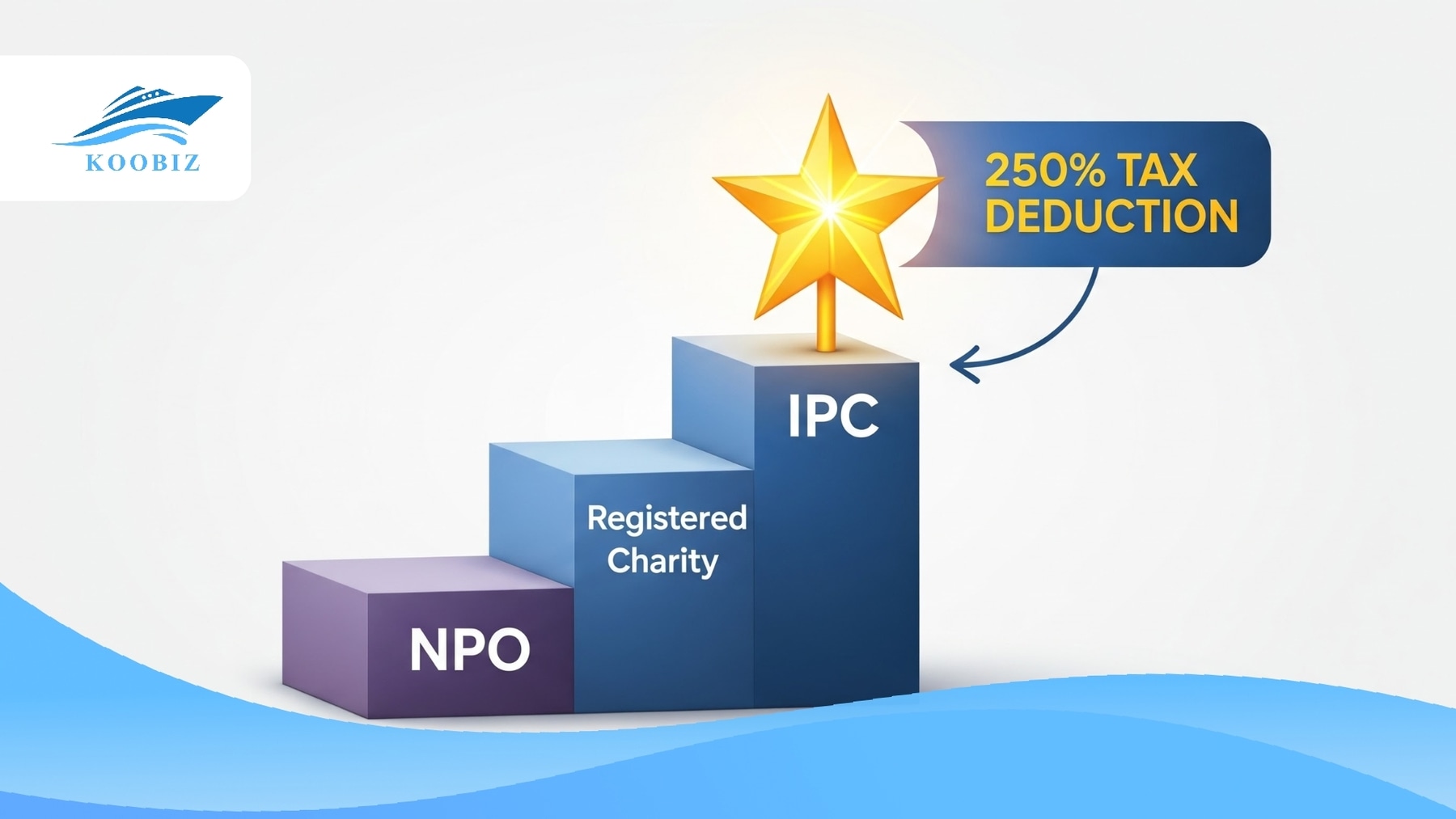
    Finding a comprehensive list of tax-deductible charities Singapore is a priority for many taxpayers looking to maximize their fiscal efficiency while supporting meaningful causes in 2026. Understanding the intersection between charitable giving and tax compliance is particularly important for high-net-worth individuals and growing businesses. The Inland Revenue Authority of Singapore (IRAS) provides a 250% tax deduction for qualifying donations made to Institutions of a Public Character (IPCs), subject to verification of IPC status.

    It is essential to distinguish between a registered charity and an IPC, as only donations to IPCs qualify for tax deduction under Singapore tax law. Following this distinction, donors should explore the various sectors—ranging from mental health to environmental sustainability—to find an organization that aligns with their values. The sections below outline the charitable landscape for the 2026 Year of Assessment, including guidance on claiming tax deductions and applicable government schemes.

    What are Tax Deductible Charities (IPCs) in Singapore?

    A tax-deductible charity in Singapore refers to an Institution of a Public Character (IPC). An IPC is a registered charity or approved organisation authorised to issue tax-deductible receipts for qualifying donations. Specifically, these organizations are approved by the Commissioner of Charities to receive tax-deductible gifts because their activities generally benefit the Singapore community as a whole rather than being confined to specific private interests.

    The 250% Tax Deduction Rule for 2026

    TThe 250% tax deduction is a government tax incentive designed to encourage charitable giving, allowing a 2.5× deduction on qualifying donations made to approved IPCs.Specifically, for every $1 donated to a verified IPC, the donor is entitled to a $2.50 deduction from their total taxable income, significantly reducing the final tax payable for the Year of Assessment.

    The Singapore government has officially extended this enhanced 2.5× tax deduction until 31 December 2026. This extension provides taxpayers with certainty when planning their charitable contributions. According to research by the National Volunteer & Philanthropy Centre (NVPC), this deduction scheme has been a primary driver for a steady increase in individual giving across the city-state.

    IPC vs. Registered Charity: Why the Distinction Matters

    Understanding the difference between a registered charity and an Institution of a Public Character (IPC) is essential for effective tax planning in Singapore.While both do good work, their financial implications for the donor differ significantly.

    Feature Registered Charity Institution of a Public Character (IPC)
    Tax Deductible Receipts No Yes (250% tax deduction, subject to IRAS rules)
    Donor Benefit Social impact only Social impact + tax deduction
    Total Number (Approx.) 2,000+ ~600 – 700
    Status Validity Generally permanent Temporary; requires periodic re-application and strict audits
    Action Required None specifically Must verify UEN on Charity Portal before donating

    Donations to non-IPC charities do not qualify for tax deduction, even though they support charitable causes. IPC status is granted only to organizations that meet stringent governance and transparency standards set by the Commissioner of Charities. As IPC status is reviewed periodically, donors should verify that the IPC status is active on the Charity Portal before making a donation.

    Master List of 2026 Tax Deductible Charities by Sector

    Choosing a charity from a verified list of tax-deductible charities in Singapore allows donors to support specific causes such as mental health, elderly care, or animal welfare. Below is a sample table of well-known IPCs across various sectors to assist with UEN verification and sector identification.

    Verified IPC Table (Sample Selection)

    Organization Name Sector UEN Primary Focus
    Singapore Cancer Society Health S61SS0147C Cancer screening & patient support
    Community Chest Social Service 198303417W Centralized fund for 100+ agencies
    SPCA Singapore Animal Welfare S61SS0060B Animal rescue and welfare services
    Dementia Singapore Health S90SS0113A Support for dementia patients/carers
    Limitless (Singapore) Mental Health T16SS0155G Youth mental health therapy
    Assisi Hospice Health 198904732D Inpatient and home palliative care
    Beyond Social Services Youth 198601668M Breaking the cycle of poverty
    Sree Narayana Mission Community S48SS0001K Nursing homes and welfare programs
    Metta Welfare Assoc. Social Service S92SS0053E Special education and disability care
    ACRES Environment T01SS0121B Wildlife rescue and conservation

    Health & Medical Support

    The health sector includes IPCs focused on disease prevention, hospice care, and medical research. These organisations typically require substantial funding for medical equipment and specialised patient care, and therefore often receive significant corporate donations.

    • Singapore Cancer Society (SCS): Focuses on cancer screening, patient support, and financial assistance.
    • Assisi Hospice: Provides palliative care for patients with life-limiting illnesses.
    • Renal Welfare Foundation: Assists kidney failure patients with dialysis-related costs and patient welfare support.

    Social Welfare & Community Services

    Social Welfare IPCs are organizations that provide a safety net for the vulnerable. Many of these charities work in coordination with the Ministry of Social and Family Development (MSF) to deliver essential social services.

    • Community Chest (NCSS): The fundraising and grant-disbursement arm of the National Council of Social Service.
    • Wicare Support Group: Wicare Support Group: An IPC providing bereavement and grief support programmes for widows.
    • Food from the Heart: A food charity that distributes essential groceries and hot meals to the needy.

    Youth, Education & Mental Health

    Youth and Education IPCs focus on skill development and mental resilience. In recent years, increased public awareness has led to greater funding attention on mental health initiatives.

    • Limitless (Singapore): Limitless (Singapore): An IPC focused on youth mental health support and suicide prevention programmes.
    • SAYANG Singapore: An IPC focused on providing educational therapy for underprivileged children with learning disabilities.
    • School Endowment Funds: Donations made to local universities such as NUS and NTU to support scholarships and educational programmes.

    How to Claim Your 2026 Tax Deduction: Step-by-Step

    Claiming a tax deduction in Singapore is a fully digital process involving three key steps: verifying the IPC status, providing your identification details, and reviewing your IRAS tax assessment.

    For Individual Donors (NRIC/FIN)

    For individual donors, the tax deduction is generally applied automatically once the IPC submits your NRIC or FIN details to IRAS. Specifically, you do not need to declare the donation in your income tax return; the IPC submits the records electronically to IRAS.

    Select a Verified Charity:Ensure the organization has a valid IPC status by checking the Charity Portal before making your donation.

    Provide Identity Number:Enter your NRIC or FIN clearly during the donation process (e.g., on Giving.sg, via PayNow, or bank transfer) to allow the charity to log the transaction.

    Automatic Assessment:Once processed, IRAS will reflect the 250% tax deduction in your electronic tax assessment. Physical receipts are not required, provided the donation details are successfully transmitted.

    For Corporate Donors (UEN)

    Corporate tax deductions are calculated at the business level and follow a similar “Auto-Inclusion” scheme, but with additional options for volunteering.

    Identify an IPC:Choose a charity with valid IPC status that aligns with your corporate CSR goals.

    Provide Company UEN:Supply your company’s Unique Entity Number (UEN) at the point of donation. The IPC will transmit this data to IRAS for tax assessment.

    Verify Deduction:Review your corporate tax assessment to confirm that the 250% tax deduction has been applied based on the IPC’s submission.

    Leverage the Corporate Volunteer Scheme (CVS):

    1. Send Employees: Deploy staff to volunteer at an IPC.
    2. Record Costs: Track basic wages and related expenses incurred during the volunteering period.
    3. Claim Relief: Claim a 250% tax deduction on qualifying volunteer-related costs, subject to the S$250,000 cap per Year of Assessment, against the company’s taxable income.

    Advanced Giving: CDC Vouchers and Overseas Humanitarian Aid

    In 2026, advanced charitable giving may involve the following specialised tax incentive schemes:

    Donating 2026 CDC Vouchers to IPCs

    Residents can pledge their CDC vouchers to participating IPCs via the official CDC portal. Once the vouchers are donated, their value is converted into a cash grant for the IPC, and the donor may qualify for a 250% tax deduction based on the value donated, subject to IRAS conditions.

    The Overseas Humanitarian Assistance Tax Deduction Scheme (OHAS)

    OHAS allows a 100% tax deduction for donations made towards approved overseas emergency humanitarian assistance.This scheme encourages support for global disaster relief through local intermediaries like the Singapore Red Cross. Note that OHAS deductions are capped at 40% of the donor’s statutory income.

    Philanthropy Tax Incentive Scheme (PTIS) for Family Offices

    The Philanthropy Tax Incentive Scheme (PTIS) allows qualifying Single Family Offices (SFOs) to claim a 100% tax deduction on approved overseas donations made through authorised intermediaries, capped at S$5 million or 40% of statutory income, whichever is lower.

    Maximizing Your Relief: Caps and Carry-Forwards

    Understanding the $80,000 Personal Income Tax Relief Cap

    The $80,000 personal income tax relief cap is a cumulative limit on the total amount of tax relief an individual can claim. This cap includes reliefs such as charitable donations, CPF contributions, life insurance relief, and the Supplementary Retirement Scheme (SRS).

    Carrying Forward Unused Deductions

    Charitable donation tax deductions cannot be carried forward. Any unused portion of the donation deduction that cannot be utilised due to insufficient income or the S$80,000 relief cap will be forfeited. Accordingly, donors should plan the timing and quantum of large donations carefully to maximise the available tax benefit within the relevant Year of Assessment.

    About Koobiz Services

    At Koobiz, we pride ourselves on being the premier partner for entrepreneurs and philanthropists in the Asia-Pacific region. Our core services include:

    • Company Formation: Specialized Singapore company incorporation for residents and foreigners.
    • Banking Advisory: Expert guidance on opening corporate bank accounts in Singapore.
    • Tax & Accounting: Comprehensive tax planning, including the optimization of charitable deductions.
    • Audit & Compliance: Ensuring your business meets all ACRA and IRAS requirements.

    Visit us at koobiz.com to learn how we can help you make a bigger impact while protecting your bottom line.

    Frequently Asked Questions

    1. How do I know if a charity is tax-deductible?

    Verify the organization’s IPC status by searching their name or UEN on the official Charity Portal (charities.gov.sg). Only IPCs can issue tax-deductible receipts.

    2. Is the 250% tax deduction available for all types of donations?

    It primarily applies to cash donations. It can also apply to donations of shares, artifacts, and land, provided they meet specific valuation requirements set by IRAS.

    3. Can I get a tax deduction for donating to an overseas charity?

    Generally, no. Donations must be made to local IPCs. The only exception is the OHAS pilot scheme for approved overseas emergency aid via local intermediaries.

    4. What happens if I forget to provide my NRIC when donating?

    The IPC will not be able to submit your donation for “Auto-Inclusion.” You must contact the charity immediately to provide your details.

    5. Does the $80,000 tax relief cap apply to companies?

    No, the $80,000 cap is a personal income tax relief cap. Companies are not subject to this specific limit.

  • Determine Your Singapore Tax Residency: 2026 Guide for Expats & Companies

    Determine Your Singapore Tax Residency: 2026 Guide for Expats & Companies

    Advisory Note: Information is current as of January 2026. Tax regulations are subject to change; always verify with the Inland Revenue Authority of Singapore (IRAS) for the latest updates.

    [SUMMARIES]

    Individual Status: Determined primarily by the 183-day rule, with additional concessions for stays straddling 2 or 3 calendar years.

    Corporate Status: Hinges on the “Control and Management” test, focusing on where the Board of Directors makes strategic decisions.

    Tax Advantages: Residents benefit from progressive tax rates (0–24%), personal tax reliefs, and full access to Singapore’s extensive DTA network.

    Compliance: 2026 updates require stricter economic substance requirements for foreign-owned entities and physical presence for virtual board meetings to maintain residency.

    [/SUMMARIES]

    Determining your tax residency in Singapore is the foundational step for any expat or business owner looking to optimize their fiscal obligations in 2026. Whether you are a professional moving on an Employment Pass or a multinational establishing a regional hub, your residency status dictates your tax rates, eligibility for exemptions, and access to international treaties. Koobiz offers this comprehensive guide to help you navigate the complexities of the Inland Revenue Authority of Singapore (IRAS) regulations, ensuring your financial planning remains both compliant and efficient.

    Next, we must distinguish between the rules governing individuals and those governing corporate entities. To understand better, let’s explore the specific criteria that qualify a person or a company as a Singapore tax resident. Following this, we will dive into the advantages of holding a Certificate of Residence (COR) and how you can apply for one through the expertise of Koobiz.

    What Defines Individual Tax Residency in Singapore for 2026?

    A Singapore tax resident is generally defined as a Singapore Citizen or Permanent Resident who resides in Singapore, or a foreign individual who stays or works in Singapore for at least 183 days in a calendar year.

    Individual tax residency is crucial because it determines whether you are taxed at progressive resident tax rates or a flat non-resident rate. Importantly, tax residency status is reviewed annually and reassessed for each Year of Assessment (YA), as highlighted by Koobiz.

    The 183-Day Rule: Quantitative Presence

    The most common way for foreigners to qualify for Singapore tax residency is by meeting the 183-day quantitative threshold. This rule counts the total number of days you are physically present in the country during a calendar year (January 1 to December 31).

    • Inclusion of partial days: Any stay for even part of a day counts as a full day.
    • Work-related travel: Days spent outside Singapore for business travel or personal leave may still be counted toward the 183 days, provided your primary employment is based in Singapore.
    • Public holidays and weekends: These are fully included in the count.

    According to a 2025 study by the Singapore Tax Academy, over 85% of Employment Pass holders qualify as Singapore tax residents under the 183-day rule, enabling access to lower progressive tax rates.

    Administrative Concessions: The 2-Year and 3-Year Rules

    For individuals whose employment spans across two or three calendar years, IRAS provides specific administrative concessions. These are particularly useful for those who arrive late in the year and do not meet the 183-day requirement for that specific year but remain in Singapore for a significant duration thereafter.

    Concession Qualification Criteria Residency Outcome
    2-Year Concession Stay or work in Singapore for at least 183 days in total over two continuous calendar years. Considered a tax resident for both years.
    3-Year Concession Stay or work in Singapore for three consecutive years, even if the 183-day test is not met in the first or third year. Considered a tax resident for all three years.

    In practice, these concessions are commonly applied to help individuals obtain tax clearance and claim excess tax refunds. More specifically, these rules ensure that short-term assignments do not unfairly penalize foreigners with the higher non-resident flat tax rate.

    Special Considerations: Digital Nomads and Retirees

    As work patterns evolve, IRAS has clarified rules for non-traditional residents. The table below outlines how Singapore tax residency is assessed for these groups:

    Profile Residency Trigger Key Tax Implication
    Digital Nomads Physical presence of 183 days or more in a calendar year while working remotely. Income derived from employment exercised in Singapore is generally considered Singapore-sourced and taxable.
    Retirees Qualitative factors, such as establishing a permanent home or intention to settle. Generally exempt from tax on foreign-sourced income (FSIE) and capital gains, making it tax-efficient.

    Corporate Tax Residency in Singapore: The “Control and Management” Test

    A Singapore tax resident company is a corporate entity where the “control and management” of its business is exercised within Singapore. In practice, this refers to where the Board of Directors convenes to make strategic and high-level decisions, rather than where day-to-day operations are carried out.

    Additionally, the residency of a company is not determined solely by its place of incorporation. As a result, a company incorporated in Singapore may still be treated as a non-resident if its strategic decisions are made outside Singapore, for example, at a foreign parent company’s headquarters.

    Virtual Board Meetings: 2026 Physical Presence Rules

    From 2026 onward, IRAS has clarified its position on the impact of virtual board meetings on corporate tax residency. While digital meetings are permitted, tax residency in Singapore is only maintained if a significant portion of the decision-making process remains anchored in the city-state.

    • The 50% Rule: According to explicit IRAS Guidance, at least 50% of the voting directors must be physically present in Singapore during the virtual meeting to validate that strategic decisions are made locally.
    • Chairman’s Location: Alternatively, the Chairman of the Board must be physically in Singapore to lead the strategic discussion.
    • Local Quorum: A Singapore-based quorum must be established to demonstrate that the company’s “nerve centre” is located in Singapore.

    Stricter Rules for Foreign-Owned Investment Holding Companies

    For foreign-owned investment holding companies, the bar for residency is higher. IRAS requires these entities to demonstrate “Economic Substance” to prevent the use of Singapore as a mere conduit for tax avoidance.

    In practice, for a holding company to be granted a Certificate of Residence (COR), it is generally expected to employ at least one Singapore-resident executive director and one local key employee, such as a CFO or senior manager. According to a 2026 compliance report by the Ministry of Finance, these substance requirements have been tightened to align with global BEPS 2.0 standards, ensuring that only genuine business operations benefit from Singapore’s tax treaties.

    Comparison: Singapore Tax Resident vs. Non-Resident Tax Treatment (YA 2026)

    Singapore tax resident status offers access to progressive tax rates and a wide range of reliefs, while non-resident taxation is generally based on flat rates with limited exemptions.

    To illustrate the financial impact of your status, we must compare the specific tax liabilities for the 2026 Year of Assessment. The table below summarizes how residency status directly affects an individual’s tax exposure.

    Feature Tax Resident (2026) Non-Resident (2026)
    Employment Income Progressive (0% – 24%) Flat 15% or Resident Rate (Whichever is higher)
    Director’s Fees Progressive (0% – 24%) Flat 24%
    Personal Tax Reliefs Eligible (CPF, SRS, Life Insurance) Not Eligible
    Tax Rebates (e.g., SG60) Tax Resident (YA 2026) Non-Resident (YA 2026)
    Withholding Tax Generally not applicable Applicable to certain income types
    Foreign Sourced Income Exempt (with conditions) Generally exempt

    For example, a tax resident earning $100,000 may face an effective tax rate of approximately 5.6%, whereas a non-resident would be taxed at a flat 15% ($15,000).This drastic difference highlights why tax residency is highly sought after by high-earning professionals and business owners. Furthermore, residents can claim a wide range of reliefs, such as the Earned Income Relief and Spouse Relief, which further reduce the taxable base.

    According to data from IRAS Budget 2025, the increase of the top marginal tax rate to 24% for income exceeding $1 million affects only the top 1% of resident taxpayers, while the flat 24% rate for non-resident directors applies from the first dollar of income.

    How to Apply for a Singapore Certificate of Residence (COR) in 2026

    There are two main methods for obtaining a Certificate of Residence (COR), depending on whether you are applying as a business or an individual. Both methods result in an official document confirming tax residency, although the application channels differ.

    1. For Companies: Apply via the IRAS myTax Portal (Corporate Tax).
    2. For Individuals: Apply via the myTax Portal (Individual Income Tax).

    Once tax residency has been established, the next practical step is to apply for a Certificate of Residence. This document is essential for claiming benefits under Singapore’s 90+ Double Taxation Agreements (DTAs).

    Documentation Requirements for Companies

    Applying for a COR as a company requires rigorous documentation to prove that control and management are local. Koobiz typically assists clients in preparing the following supporting documents:

    • Board Minutes: Detailed records showing that strategic decisions were made in Singapore.
    • Attendance Logs: Proof of physical presence of directors during board meetings.
    • Economic Substance Evidence: Employment contracts for local staff and local office rental agreements.
    • Financial Statements: To show that the company is actively engaged in business.

    In summary, while the COR application process is digital, the underlying economic substance ultimately determines approval. According to research by the International Fiscal Association (Singapore Branch) in 2025, COR rejection rates for shell companies increased by 30% due to the lack of local executive directors.

    Emerging Compliance: BEPS 2.0 and Economic Substance in 2026

    A company may be subject to the 15% Global Minimum Tax if it belongs to a Multinational Enterprise (MNE) group with consolidated annual revenues exceeding €750 million.

    Regarding the global tax landscape, Singapore has implemented the Domestic Top-up Tax (DTT) and the Income Inclusion Rule (IIR) as part of the BEPS 2.0 Pillar Two framework. As a result, even where Singapore tax residency is established, the effective tax rate may be “topped up” to 15% for entities within large MNE groups.

    The Impact of Nominee Directors on Singapore Tax Residency Status

    A common pitfall for foreign investors is relying solely on a nominee director to satisfy Singapore tax residency requirements. While a nominee director fulfills the legal requirement of the Companies Act, IRAS often views this as insufficient for “Control and Management.”

    In particular, where a nominee director lacks genuine decision-making authority and merely follows instructions from offshore owners, IRAS may deny the issuance of a Certificate of Residence (COR). Koobiz recommends appointing at least one resident Executive Director who is actively involved in the company’s strategic direction to safeguard your tax residency status.

    Singapore Tax Residency for Variable Capital Companies (VCCs)

    The Variable Capital Company (VCC) is a specialised corporate structure commonly used by fund managers and investment vehicles.

    • Single Tax Residence: Even if a VCC has multiple sub-funds, it only needs to satisfy the control and management test once at the umbrella level.
    • Sub-fund Benefits: Once the umbrella VCC is deemed a resident, all its sub-funds can enjoy the benefits of Singapore’s DTA network.

    This structure makes the VCC an incredibly efficient vehicle for regional investment. According to the Monetary Authority of Singapore (MAS) 2025 Year-End Review, the “umbrella-level residency” rule has been a key driver behind the 40% growth in VCC registrations among Asian family offices.

    Common Singapore Tax Residency Myths and FAQs

    There are 4 main myths surrounding tax residency Singapore: the “60-day rule” exemption, the impact of remote work, the status of Singapore citizens abroad, and the permanence of residency status.

    To clarify these misconceptions, it is necessary to examine several common edge cases that frequently cause confusion among taxpayers. The sections below address these scenarios by outlining the relevant characteristics and qualifying factors.

    Myth 1: Working in Singapore for less than 60 days means no tax liability.

    Reality: While you may be exempt from tax on employment income if you work in Singapore for 60 days or less, this does not apply to company directors or public entertainers. In addition, directors’ fees are taxed at a flat rate of 24%, regardless of the number of days spent in Singapore.

    Myth 2: Remote work for a foreign company does not count as Singapore-sourced income.

    Reality: If you are physically located in Singapore while performing your work, that income is generally considered sourced in Singapore. If you remain in Singapore for more than 183 days while working remotely, you are generally treated as a tax resident and may be required to report foreign-sourced income remitted into Singapore, subject to the FSIE rules.

    Myth 3: Singapore citizens are always treated as tax residents.

    Reality: Tax residency is determined based on whether an individual is “ordinarily resident” in Singapore. For example, a Singapore citizen who lives and works permanently in London and visits Singapore only briefly each year would likely be treated as a non-resident for that specific Year of Assessment.

    Myth 4: Once classified as a tax resident, residency status is permanent.

    Reality: Once classified as a tax resident, residency status is permanent. If you move away or your company moves its board meetings to another country, your tax residency in Singapore can be lost in the following year.

    According to a 2025 study by the Tax Governance Institute, nearly 20% of remote workers in Singapore incorrectly assumed they were exempt from local filing, leading to significant penalties during IRAS audits.

    About Koobiz Services

    At Koobiz, we specialise in the intricacies of the Singapore business ecosystem. Our mission is to provide seamless advisory services for entrepreneurs and corporations looking to thrive in one of the world’s most competitive tax environments.

    Our core services include:

    • Company Formation: Expert guidance on setting up your Singapore entity to ensure immediate compliance and optimal structure for tax residency in Singapore.
    • Banking Account Advisory: Strategic support in opening and maintaining corporate bank accounts in Singapore’s leading financial institutions.
    • Tax & Accounting: Comprehensive tax planning, GST filing, and Year of Assessment preparation to maximise your reliefs and minimize liabilities.
    • Audit Services: Ensuring your financial records meet the highest standards of transparency and regulatory requirements.

    For personalised assistance with your Certificate of Residence application or to review your corporate substance requirements for 2026, visit us at koobiz.com.

    Frequently Asked Questions

    1. Can I be a tax resident of two countries at once?

    Yes, this is known as dual residency. It occurs when both countries claim you as a resident under their domestic laws. In such cases, the “tie-breaker” rules in the Double Taxation Agreement (DTA) between Singapore and the other country will determine which nation has the primary right to tax you.

    2. What happens if I leave Singapore before the 183-day mark?

    If you are a foreigner leaving Singapore, your employer must notify IRAS via Form IR21 (Tax Clearance) at least one month before your departure. You will be taxed as a non-resident (flat 15% or progressive resident rates, whichever is higher) unless you qualify under the 2-year or 3-year concessions mentioned earlier.

    3. Does owning property in Singapore make me a tax resident?

    Owning property is a qualitative factor that suggests you “ordinarily reside” in Singapore, but it does not override the quantitative 183-day rule for foreigners. For Citizens and PRs, having a permanent home in Singapore is a strong indicator of residency.

    4. How long does it take to get a Certificate of Residence (COR)?

    If the application is straightforward and all “Control and Management” criteria are met, IRAS typically processes COR applications within 7 to 14 working days through the myTax portal.

    5. Are dividends taxed for Singapore residents?

    Most dividends paid by Singapore-resident companies are under the one-tier corporate tax system, meaning they are tax-exempt in the hands of the shareholders (both resident and non-resident).

  • Understand What Is TIN Number in Singapore: NRIC, FIN and UEN Explained

    Understand What Is TIN Number in Singapore: NRIC, FIN and UEN Explained

    [SUMMARIES]

    Unified Identity: In Singapore, your TIN is generally your NRIC (for citizens/PRs), FIN (for foreigners), or UEN (for businesses).

    No Application Needed: Most residents and entities are automatically assigned these numbers upon registration; separate tax numbers are rare.

    Global & Local Use: This number is mandatory for local tax filing, opening bank accounts, and international forms like the US W-8BEN.

    Instant Verification: You can retrieve and verify your TIN securely via the Singpass app or the myTax Portal.

    [/SUMMARIES]

    Navigating local compliance starts with one question: what is tin number? In 2026, the Tax Identification Number (TIN) is the digital DNA of your fiscal identity, used by the Inland Revenue Authority of Singapore (IRAS) to track tax obligations. Whether you are an individual or a business partner of Koobiz, your TIN is the gateway to financial services.

    Singapore streamlines this by using existing IDs—NRIC for locals and UEN for businesses—as the official Tax Reference Number (TRN). Below, we explore the definitions and applications of these numbers to ensure you remain fully compliant.

    What is a TIN Number in the Singapore Context?

    A Tax Identification Number (TIN) is a unique alphanumeric identifier issued by a national tax authority to track tax obligations, income, and government identification for individuals and business entities. In Singapore, the term “TIN” is technically referred to as the Tax Reference Number (TRN), which is used by IRAS for all income tax, GST, and corporate tax matters.

    The TIN is a core identifier for fiscal interactions, ensuring that all transactions—from employment income to corporate distributions—are attributed to the correct legal person. In the 2026 Singapore’s digital economy, your TIN is integrated into the national Singpass ecosystem and functions as a key underlying component of your financial administration.

    Is the TIN different from my NRIC or FIN?

    For the vast majority of individuals residing in the Lion City, the TIN is not a separate number you need to apply for; rather, it is your NRIC (National Registration Identity Card) or FIN (Foreign Identification Number). Singapore citizens and Permanent Residents (PRs) use their NRIC as their default TIN whereas foreign professionals holding Employment Passes or S-Passes use their FIN for tax identification purposes.

    This integrated ID system significantly reduces administrative errors compared to countries that maintain separate social security and tax identification registries, streamlining cross-border verification.

    The Role of TIN in 2026 Financial Transactions

    The TIN functions as the primary identifier for all financial transactions and is relied upon by banks and government agencies. It is required for opening personal bank accounts, making CPF (Central Provident Fund) contributions, and accessing government subsidies such as GST vouchers or the Assurance Package.

    As banking security evolved, the TIN is now verified instantly via real-time API calls to the MyInfo database. This means that when you provide your NRIC or FIN to a financial institution, they are simultaneously verifying your tax residency and identity status to ensure compliance with Anti-Money Laundering (AML) laws.

    Identification of TIN Types: Individual vs. Business

    There are three main types of identification numbers in Singapore categorized by the residency status of the individual or the legal nature of the entity. Identifying which category you fall into is essential because using the wrong format can lead to rejected tax filings or delays in business operations.

    TIN Type Full Name Category Primary Audience
    NRIC National Registration Identity Card Individual Singapore Citizens & Permanent Residents
    FIN Foreign Identification Number Individual Foreigners (EP, S-Pass, Long-term Pass)
    UEN Unique Entity Number Business Registered Companies, LLPs, Societies

    Identifying the correct TIN type is the first thing our consultants at Koobiz verify when assisting clients with company formation or tax advisory. Transitioning from individual status to business ownership requires a shift in which number you use for different fiscal purposes.

    For Singapore Citizens and PRs: The NRIC

    The NRIC is the primary identification number for all Singaporeans, and it follows a specific format that denotes the era of the holder’s birth or registration, followed by seven digits and a final checksum letter (e.g., S1234567A).

    • Prefix S: Used for citizens and PRs born before January 1, 2000.
    • Prefix T: Used for citizens and PRs born on or after January 1, 2000.

    Your NRIC remains your TIN as long as you maintain your citizenship or residency status.

    For Foreign Professionals: The FIN

    The Foreign Identification Number (FIN) is assigned to foreigners who have a long-term pass by the Ministry of Manpower (MOM) or the Immigration and Checkpoints Authority (ICA). The FIN system now utilizes three main prefixes to manage the volume of residents.

    • Prefix F: Issued to foreigners who were granted passes before January 1, 2000.
    • Prefix G: Issued to foreigners who were granted passes between January 1, 2000, and December 31, 2021.
    • Prefix M: The newest series introduced on January 1, 2022, to accommodate the increasing number of foreign professionals in the digital and tech sectors.

    For Corporate Entities: The Unique Entity Number (UEN)

    The Unique Entity Number (UEN) is the 9 or 10-digit identification number for all registered entities in Singapore, including local companies, LLPs, and societies. For businesses, the UEN serves as the single identifier for interactions with ACRA, IRAS, and Singapore Customs.

    How to Find and Verify Your TIN in 2026

    Finding your TIN in Singapore is straightforward regarding your identification status and access to digital government services. For most residents, if you hold a valid identity card or work pass, you already have a TIN. For Koobiz clients, tax information no longer requires manual record searches. The following step-by-step guides are the most efficient ways to retrieve and verify your number.

    Do I Need to Apply for a Separate TIN?

    The answer is No for most individuals and businesses because the TIN is automatically issued upon the successful registration of your identity or entity. However, there are rare exceptions where IRAS may issue an “ASGD” (Assigned) number for specific cases where an individual is not eligible for an NRIC or FIN but has tax obligations in Singapore.

    If you are a non-resident who owns property in Singapore and derives rental income, you may need to apply for an Income Tax Reference Number through the IRAS portal. In summary, if you have a Singpass account, you already have a TIN; if you are an overseas investor without an ID, you must contact IRAS to have a number assigned.

    Step-by-Step Retrieval Guide

    If you need to retrieve your TIN for an official form or banking application, follow the steps below corresponding to your status.

    For Individuals (Using Singpass App)

    1. Launch App: Open the Singpass app on your mobile device.
    2. Access Digital IC: Tap on the Digital IC card located on the home screen.
    3. Authenticate: Use your fingerprint, face ID, or passcode to verify your identity.
    4. Reveal: Tap the “Show details” button or the eye icon next to the masked number. This unmasked NRIC or FIN is your official Tax Reference Number.

    For Businesses (Using myTax Portal)

    1. Visit Portal: Go to mytax.iras.gov.sg.
    2. Log In: Select “Business Tax” and log in using your Singpass (Corppass) credentials.
    3. Select Entity: If you are an authorized officer for multiple entities, select the correct UEN from the dropdown list.
    4. View Dashboard: Your company’s UEN and current tax balance will be displayed clearly at the top of the dashboard.

    For Public Verification (Checking a Vendor)

    1. Visit Directory: Go to uen.gov.sg or bizfile.gov.sg.
    2. Search: Enter the company name in the search bar.
    3. Verify: The system will display the valid UEN and entity status (e.g., “Live”), confirming the business is registered and active.

    Understanding TIN Formats and Checksum Verification

    Comparing TIN formats is essential to distinguish between individual and corporate identifiers and avoid errors in official documentation. While all TINs in Singapore are alphanumeric, the individual format (NRIC/FIN) and the business format (UEN) follow distinct structures that reflect their administrative origins.

    Understanding these formats allows you to manually verify if a number is valid before submitting it for a cross-border transaction. Whereas, at Koobiz, we use automated tools to validate every UEN or FIN provided by our clients.

    Individual Format: #0000000@

    The individual format (NRIC and FIN) always consists of nine characters: one prefix letter, seven digits, and one trailing checksum letter. The seven digits are a unique serial number, while the final letter is calculated based on a mathematical formula to prevent transcription errors.

    To illustrate, an NRIC might look like S1234567A. The trailing letter ‘A’ is not random; it is the result of a specific weightage applied to the digits. This format is recognized worldwide by financial institutions, ensuring that your tax identity is unique and verifiable across international borders.

    Business Format: YYYYNNNNNC vs. NNNNNNNNC

    Older entities (registered before 2009) typically have an 8-digit number followed by a letter, while newer entities use a 10-character string that begins with the year of registration.

    Criteria Old UEN Format Modern UEN Format (Post-2009)
    Length 9 Characters 10 Characters
    Structure NNNNNNNNC (e.g., 12345678A) YYYYNNNNNC (e.g., 202612345G)
    Advantage Simplified for older systems High transparency (Year of birth)

    The modern 10-digit UEN is now the standard for new businesses, immediately identifying them as contemporary entities. Checksum Calculation Basics

    Verifying a TIN often involves a checksum calculation. While the specific algorithms are technical, understanding the logic helps in spotting obvious errors.

    TIN Type Format Example Checksum Logic
    NRIC/FIN S1234567A Weighted sum of digits + prefix offset, Modulo 11 determines the letter.
    UEN (Old) 12345678A Weighted sum of digits, Modulo 11 determines the final letter.
    UEN (New) 202612345G Year prefix + Serial Number + Weighted Modulo 11 check.

    Global Compliance and the 2026 Regional Shift

    In the globalized world of 2026, your Singaporean TIN is not just for local use; it is a critical component of international tax compliance. Specifically, your TIN wins on cross-border transparency, while neighboring countries’ systems are still catching up to the optimal ID Convergence model that Singapore has mastered.

    Let’s look at how the TIN interacts with foreign tax authorities and the emerging trends in Southeast Asia. This transition from a purely local identifier to a global compliance tool of a firm like Koobiz becomes invaluable for expat entrepreneurs and multinational corporations.

    Using your Singapore TIN for US Tax (Form W-8BEN)

    For Singapore-based freelancers or investors receiving income from the United States, providing your NRIC or FIN as a “Foreign Tax Identifying Number” on Form W-8BEN is mandatory. This allows you to claim tax treaty benefits (if applicable) and prevents the US Internal Revenue Service (IRS) from withholding the standard 30% of your income.

    Providing your UEN as the TIN is recommended as a Business Entity. Following the implementation of enhanced reporting standards, failure to provide a valid TIN often results in an automatic freeze of US-sourced payments until the identity is verified.

    Regional Trend: Vietnam’s PIN Transition (2025-2026)

    One of the most significant shifts in the region is the Vietnam PIN Transition, which officially replaced dedicated tax codes with a 12-digit Personal Identification Number (PIN) starting July 1, 2025. By 2026, this system will be fully implemented, mirroring Singapore’s model of using a single ID for all government interactions.

    As of 2026, this streamlined system is easing the administrative burden on cross-border business setups and facilitating faster entity verification across the region.

    TIN and the Common Reporting Standard (CRS)

    The TIN is the primary data point exchanged under the Common Reporting Standard (CRS), a global framework for the automatic exchange of financial account information. Singapore along with over 100 other jurisdictions uses the TIN to ensure all residents with offshore accounts are accurately reporting their income to their home tax authority.

    In summary, your TIN is the link that connects your bank accounts worldwide to your tax residency in Singapore. In reality, tax authorities increasingly use data matching algorithms to flag discrepancies between global account balances and reported income using the TIN as the primary search key.

    About Koobiz Services

    At Koobiz, we understand that navigating tax identification and compliance is the backbone of a successful business. Our team of specialists provides end-to-end support for entrepreneurs and corporations looking to establish or optimize their presence in Singapore and beyond.

    Our core services include:

    • Company Formation: Seamless incorporation in Singapore, including immediate UEN/TIN issuance. Learn more at koobiz.com
    • Banking Account Advisory: Assistance in opening corporate bank accounts in Singapore with full KYC and TIN documentation support.
    • Tax and Accounting: Comprehensive tax filing services for individuals and businesses, ensuring you leverage all available deductions.
    • Audit and Compliance: Keeping your entity in good standing with IRAS and ACRA through professional audit services.

    Visit koobiz.com to schedule a consultation with our Contextual Flow specialists today.

    Frequently Asked Questions

    1. Is my TIN number confidential?

    While your NRIC/FIN is used for many government services, you should treat it as sensitive information. Only provide your TIN to legitimate financial institutions, government agencies, and verified business partners to prevent identity theft.

    2. What happens if I use the wrong TIN on a tax form?

    Using an incorrect TIN can lead to significant delays in processing your tax return or a rejection of your filing by IRAS. In 2026, most digital portals like the myTax Portal will auto-populate your TIN to minimize these errors.

    3. I am an expat leaving Singapore; what happens to my TIN?

    Your FIN serves as your TIN until you complete your tax clearance (Form IR21). Even after you leave, the number remains associated with your records in the IRAS database should you have future tax liabilities or returns.

    4. Can a business have more than one TIN?

    No, a business entity in Singapore is assigned a single Unique Entity Number (UEN) that serves as its identification for all government and tax purposes. If you operate multiple companies, each will have its own distinct UEN.

    5. How do I update my TIN details if I change my citizenship status?

    If you transition from a FIN holder to a Singapore Citizen or PR, your NRIC will become your new TIN. You should update your records with IRAS and your bank to ensure your tax history is correctly merged under your new identity.

    Disclaimer: This article is for general informational purposes only and does not constitute professional legal or tax advice. Regulations and tax laws are subject to change. Please consult with the Inland Revenue Authority of Singapore (IRAS) or a qualified tax professional at Koobiz for advice specific to your situation. Last updated: January 2026.

  • Understanding What is MOM: Ministry of Manpower Singapore Guide for Employers (Work Passes & Regulations)

    Understanding What is MOM: Ministry of Manpower Singapore Guide for Employers (Work Passes & Regulations)

    [SUMMARIES]

    Definition: MOM is the government ministry responsible for manpower policy formulation and implementation in Singapore, distinct from family terms.

    Core Functions: It manages work passes (EP, S Pass, WP), enforces the Employment Act, and oversees Workplace Safety and Health (WSH).

    Compliance: Employers must navigate quotas, levies, and fair employment practices (TAFEP) to operate legally.

    Digital Tools: Platforms like myMOM Portal and EP eService are mandatory for transaction management.

    Strategic Partner: Koobiz supports businesses in navigating these regulations during company incorporation and setup.

    [/SUMMARIES]

    For international investors, MOM (Ministry of Manpower) is the critical regulatory body governing Singapore’s workforce, distinct from the family term. It controls your ability to hire talent and operate legally through three pillars: issuing Work Passes (EP, S Pass), enforcing the Employment Act, and ensuring Workplace Safety. Understanding these regulations is non-negotiable for business success. At Koobiz, we guide companies through these complexities during Singapore incorporation and corporate setup, ensuring you remain compliant from day one.

    MAIN CONTENT

    What is the Ministry of Manpower (MOM) in Singapore?

    The Ministry of Manpower (MOM) is the primary government authority in Singapore dedicated to formulating and implementing labor policies. It acts as the architect of the nation’s workforce, balancing business needs with employee protection.

    MOM Singapore: Policy, Regulation, Social Security
    MOM Singapore: Policy, Regulation, Social Security

    Key Roles:

    • Policy Maker: Sets regulations for a productive and inclusive workforce.
    • Regulatory Guardian: Enforces the Employment Act and Workplace Safety rules.
    • Immigration Controller: Manages all work passes (EP, S Pass, WP) for foreign talent.
    • Social Security Manager: Oversees the Central Provident Fund (CPF) contributions.

    For businesses incorporating via Koobiz, MOM is the critical regulatory body governing your ability to hire and operate after ACRA registration.

    What are the Key Responsibilities of MOM?

    3 core responsibilities of MOM Singapore
    3 core responsibilities of MOM Singapore

    MOM has three core responsibilities that define its operational scope: managing the foreign workforce, enforcing employment practices, and regulating workplace safety and health.

    Specifically, these responsibilities act as the framework within which every Singaporean company must operate.

    • Workforce Management: This involves controlling the inflow of foreign manpower to ensure it complements the local workforce through the use of setting quotas, levies, and qualifying criteria for various passes.
    • Employment Practices: MOM oversees the Employment Act to ensure that employment terms—such as salary payment, public holidays, and termination clauses—are fair and adhered to by all employers.
    • Workplace Safety and Health (WSH): The ministry enforces strict safety protocols to minimize industrial accidents across industries, particularly in high-risk sectors like construction and marine..

    These pillars ensure that Singapore remains a competitive yet regulated hub for global business.

    Main Types of Work Passes Issued by MOM

    3 Types of Singapore work passes (EP, S, WP)
    3 Types of Singapore work passes (EP, S, WP)

    There are three primary categories of work passes issued by MOM: the Employment Pass (EP), S Pass, and Work Permit, classified according to salary levels and skill sets.

    Navigating these categories is essential for strategic hiring. At Koobiz, we often advise clients on the specific nuances of each pass to ensure successful applications.

    Employment Pass (EP)

    The Employment Pass is designed for foreign professionals, managers, and executives earning a high fixed monthly salary.

    • Target Audience: High-earning professionals and senior management.
    • Salary Threshold (2026): Minimum SGD 5,600 (General) or SGD 6,200 (Financial Services). This increases with age, reaching up to SGD 10,700 (General) or SGD 11,800 (Financial) for candidates aged 45+.
    • Key Features: No foreign worker levy and no quota requirement. However, it is subject to the COMPASS (Complementarity Assessment Framework) scoring system.
    • Relevance: This is the most common pass for business owners and directors incorporating companies in Singapore.

    S Pass

    The S Pass is intended for mid-level skilled staff.

    • Target Audience: Technicians and specialized administrators.
    • Salary Threshold (2026): Minimum SGD 3,300 (General) or SGD 3,800 (Financial Services).
    • Key Features: Subject to a quota (Dependency Ratio Ceiling), a Sub-Quota, and requires the employer to pay a monthly Foreign Worker Levy (Standardized at SGD 650).
    • Relevance: Useful for operational roles that require specific technical skills but do not meet EP salary criteria.

    Work Permit (WP)

    The Work Permit is for semi-skilled foreign workers in the construction, manufacturing, marine shipyard, process, or services sector.

    • Target Audience: Blue-collar workers from approved source countries.
    • Key Features: Strict quota limitations, security bonds, and levy requirements.
    • Relevance: Heavily regulated with restrictions on bringing dependents.

    Is MOM Approval Required for All Foreign Employees?

    Yes, MOM approval is strictly required for any non-resident individual intending to work in Singapore, without exception. As this requirement is absolute and binary and engaging a foreigner without a valid work pass constitutes an offense under the Employment of Foreign Manpower Act.

    • The Regulatory Stance: Even for short-term assignments or unpaid internships, specific notifications or passes (like the Work Holiday Pass or Miscellaneous Work Pass) are needed.
    • Consequences of Non-Compliance: Employers facing conviction can be fined up to SGD 30,000, imprisoned for up to 12 months, and barred from hiring foreign workers in the future.
    • Koobiz Insight: We strongly advise clients to secure the In-Principle Approval (IPA) before the employee arrives in Singapore to avoid entry denial.

    Therefore, compliance starts before the employee sets foot in the office.

    What is the Employment Act under MOM Regulations?

    The Employment Act is Singapore’s main labor law that provides for the basic terms and conditions of employment for employees covered by the Act which serves as the legal baseline that contracts cannot override.

    • Coverage: It covers both local and foreign employees working under a contract of service with an employer. This includes full-time, part-time, and temporary staff.
    • Key Provisions: It mandates payment of salary (within 7 days of the salary period), overtime pay (for workmen and non-workmen earning below specific caps), annual leave, and sick leave entitlements.
    • Exclusions: It does not cover seafarers, domestic workers, and statutory board employees, who are covered by other specific regulations.

    Understanding this Act is crucial because any contract term that is less favorable than the Act is null and void.

    Navigating MOM Compliance and Digital Services

    Beyond the basic definitions, successful business operations in Singapore require mastering the MOM’s digital infrastructure and compliance nuances. This section explains how to interact with MOM efficiently with Koobiz assisting clients in setting up these corporate accounts (Corppass) to ensure you can access these portals immediately upon incorporation.

    What is the Difference Between Employment Pass and S Pass?

    The Employment Pass (EP) is superior regarding operational freedom (no quota/levy), while the S Pass is more restrictive and costly due to levies and quotas.

    Comparing these two reveals the strategic hierarchy of Singapore’s visa system:

    Feature Employment Pass (EP) S Pass
    Quota System None. No quota limit. Yes. Limited by DRC & Sub-Quota (e.g., max 10% in Services).
    Cost Implication The employer pays salary only. Salary plus Standardized Levy (SGD 650/month).
    Eligibility COMPASS Framework (Points-based). Strict salary and qualification requirements.
    Salary Threshold Min SGD 5,600 (General) Min SGD 3,300 (General)

    This distinction drives the hiring strategy: companies often strive to qualify key staff for EP to avoid the administrative burden of the S Pass.

    How to Calculate the Foreign Worker Levy (FWL) and Quota?

    The calculation of the Foreign Worker Levy (FWL) and quota follows a precise 4-step formula based on your local workforce strength.

    This mechanism ensures that companies contribute to the local economy before hiring foreign staff.

    • Step 1: Calculate Your Local Workforce (LQS Count)You must determine how many “valid” local employees you have based on the Local Qualifying Salary (LQS).
      • 1 Count: Singapore Citizen/PR earning ≥ SGD 1,600/month.
      • 0.5 Count: Singapore Citizen/PR earning SGD 800 to < SGD 1,600/month.
    • Step 2: Identify Your Sector’s Quota (DRC)Apply the Dependency Ratio Ceiling (DRC) specific to your industry.
      • Services Sector: 35% Total DRC (Max 35% foreign), but only 10% can be S Pass (Sub-Quota).
      • Construction: 83.3% (Ratio 1 Local : 5 Foreigners).
      • Manufacturing: 60%.
      • Marine Shipyard / Process: 77.8% / 83.3%.
    • Step 3: Calculate Maximum Foreign WorkersUse the formula: Total Foreign Workers = (Local Count x DRC) / (1 – DRC).
      • Example (Services Sector): To hire 1 S Pass holder (under the 10% sub-quota), you need approximately 9 Local Full-Time Employees.
      • Calculation: (9 locals * 10%) / (100% – 10%) = 0.9 / 0.9 = 1 S Pass.
    • Step 4: Determine Your Levy Tier
      • S Pass: Standardized at SGD 650 (Tier 1).
      • Work Permit: Tiered based on how close you are to the maximum DRC.

    While MOM provides an online calculator, Koobiz advises running these projections before hiring to avoid costly “over-quota” rejections.

    What is the Role of TAFEP in Relation to MOM?

    TAFEP (Tripartite Alliance for Fair and Progressive Employment Practices) acts as the promoter of fair employment, working in tandem with MOM to investigate discrimination complaints.

    While MOM serves as the enforcement authority, TAFEP functions as the oversight body.

    • Fair Consideration Framework: Before applying for an EP, companies must often advertise the job on MyCareersFuture for 14 days to give locals a fair chance. TAFEP monitors this.
    • Discrimination: If a company is flagged by TAFEP for discriminatory hiring (based on age, gender, nationality), MOM can curtail their work pass privileges.
    • Relationship: TAFEP sets the guidelines; MOM executes the penalties.

    How to Use myMOM Portal and EP eService?

    The myMOM Portal and EP eService (formerly EP Online) are the designated digital platforms for all work pass transactions and corporate data management.

    Accessing these portals requires a CorpPass account, which Koobiz helps set up during the company formation process.

    • EP eService: It is used specifically for application, renewal, and cancellation of Employment Passes and S Passes and enables immediate status checks.
    • myMOM Portal: A newer, integrated dashboard that offers a holistic view of the company’s workforce, quota balance, and levy bills.
    • Key Function: These portals are essential for carrying out regulatory compliance in practice. Without access, a business cannot perform its HR functions.

    About Koobiz

    Navigating the Ministry of Manpower’s regulations is just one piece of the puzzle when establishing a business in Singapore.

    At Koobiz (koobiz.com), we provide a comprehensive suite of corporate services tailored for the Singapore market. From company incorporation and opening corporate bank accounts to managing tax, accounting, and auditing, we ensure your business is compliant from Day One. Let us handle the regulatory complexities so you can focus on growth.

  • Employment Act Guide: Who is Covered vs Excluded?

    Employment Act Guide: Who is Covered vs Excluded?

    [SUMMARIES]

    Universal Coverage: The Act covers all employees (local and foreign) under a contract of service, regardless of whether they are full-time, part-time, or temporary.

    Key Exclusions: Seafarers, domestic workers, and civil servants are explicitly excluded and governed by separate regulations.

    The PME Distinction: Managers and Executives are covered for core provisions (like dismissal) but are excluded from Part IV (hours and overtime) if they earn over $4,500.

    Salary Thresholds: Part IV protection applies strictly to workmen earning up to $4,500 and non-workmen earning up to $2,600.

    Contract Type Matters: Only a “Contract of Service” qualifies for protection; a “Contract for Service” (Freelancers) does not.

    [/SUMMARIES]

    Understanding the scope of Singapore’s Employment Act is essential, but often misunderstood.. At Koobiz, where we support businesses with Singapore incorporation and ongoing compliance, we simplify these legal boundaries for employers and founders. This guide definitively answers who is covered under the Employment Act versus excluded, clarifying salary thresholds for PMEs and Workmen to help you navigate rights and obligations with confidence.

    What is the Singapore Employment Act?

    Labor law, contract, employee protection & justice
    Labor law, contract, employee protection & justice

    The Singapore Employment Act (Chapter 91) is the country’s primary labour law, setting out the minimum terms and conditions for anyone employed under a contract of service. It functions as a legal safety net, ensuring that no employment agreement can provide terms that are less favourable than those prescribed by the Ministry of Manpower (MOM).

    Key Provisions of the Act:

    • Minimum Standards: Establishes the baseline for working hours, overtime, and leave entitlements.
    • Contract Validity: Any contract term less favorable than the Act is legally null and void.
    • Scope: Covers rights regarding public holidays, sick leave, maternity protection, and termination notice.
    • Purpose: Designed to prevent exploitation and maintain industrial harmony between employers and employees.

    For businesses incorporating in Singapore through Koobiz, aligning internal HR policies with these definitions is the first step toward compliance.

    Who is Covered Under the Employment Act?

    The Employment Act generally covers every employee engaged under a contract of service with an employer, including both local Singaporeans and foreign employees. Specifically, this grouping encompasses the following categories, provided they do not fall into specific exclusion groups:

    • Full-time Employees: Permanent staff working standard hours.
    • Part-time Employees: Staff working less than 35 hours a week.
    • Temporary Employees: Staff hired for a short-term period.
    • Contract Employees: Staff engaged for a specific project or fixed term.

    Over the years, the Ministry of Manpower has expanded the Act’s scope to protect most of the workforce. While high-income earners were once excluded, recent amendments have removed these limits. Today, anyone in a genuine employer–employee relationship,defined by control, payment, and mutual obligations, is covered by the Act’s core provisions.

    These core protections include timely salary payment, safeguards against wrongful dismissal, and statutory leave entitlements. As a result, the Employment Act now applies to the vast majority of private-sector employees in Singapore, regardless of working hours or employment arrangement.

    Who is Excluded from the Employment Act?

    3 groups excluded from the Singapore Employment Act
    3 groups excluded from the Singapore Employment Act

    Three specific groups are explicitly excluded from the Employment Act. These exclusions exist because these roles are governed by their own specific legislative acts or the private nature of the employment makes the general Act unsuitable:

    • Seafarers: They are covered under the Merchant Shipping (Maritime Labour Convention) Act, which is specifically tailored to the unique nature of maritime work and international standards.
    • Domestic Workers: They are excluded because working in a private household makes regulating specific hours of work (a key component of the Employment Act) practically difficult. Instead, they are covered under the Employment of Foreign Manpower Act.
    • Statutory Board Employees & Civil Servants: Their terms of employment are guided by the Public Service Division, which offers its own comprehensive set of benefits and regulations distinct from the private sector.

    Are Managers and Executives (PMEs) Covered?

    PME: Core Protections (Yes), Part IV (No)
    PME: Core Protections (Yes), Part IV (No)

    Yes, all Managers and Executives (PMEs) are covered by the Employment Act, but their coverage is limited to “Core Provisions.” They are explicitly excluded from Part IV provisions (working hours and overtime), regardless of their salary level.

    It is helpful to view PME coverage as having two distinct layers:

    1. Core Protections (YES): Since April 2019, all PMEs are covered for core rights. This includes protection against wrongful dismissal, timely payment of salary, paid public holidays, paid sick leave, and maternity/childcare leave.
    2. Part IV Protections (NO): PMEs are not entitled to overtime pay, statutory rest days, or regulated hours of work. The law assumes that PME roles are “outcome-based” rather than “time-based,” meaning they are paid for the responsibilities they hold rather than the specific hours they clock.

    Who qualifies as a PME? A PME is an employee with executive or supervisory functions. This typically includes those with authority over hiring, discipline, termination, and performance reviews, as well as professionals with specialized tertiary education (e.g., lawyers, accountants, doctors).

    Important Note on Public Holidays: All PMEs are entitled to paid public holidays. If required to work on a public holiday, they must receive either an extra day’s salary or a replacement day off, regardless of income level.

    Understanding Part IV Coverage: Salary Thresholds

    Part IV Salary Thresholds: Workmen $4500, Non-workmen $2600
    Part IV Salary Thresholds: Workmen $4500, Non-workmen $2600

    Part IV protection depends on salary tiers: Workmen earning up to $4,500 and Non-workmen earning up to $2,600 are eligible for overtime and rest day protections. In contrast to the general provisions that apply to everyone, Part IV is a specific subset of the Act designed to protect vulnerable employees from excessive working hours.

    This comparison of salary thresholds creates a two-tier system within the workforce. If an employee falls under Part IV, they are legally entitled to 1.5 times their hourly basic rate of pay for overtime work and one rest day per week. Employers cannot ask them to work more than 12 hours a day or 72 hours of overtime a month without a specific exemption. Koobiz often advises clients on structuring salary packages to clearly define who falls into these categories to avoid future disputes.

    Who qualifies as a ‘Workman’?

    A Workman is a distinct category under the Employment Act, referring to employees whose roles are primarily physical in nature. This includes artisans, apprentices, and individuals engaged in operating vehicles for transport. The classification is based on the substance of the work performed, not the job title on paper.

    Specifically, “manual labor” implies that the employee spends more than 50% of their time performing physical tasks. This includes roles like cleaners, construction workers, bus drivers, and machine operators. For these employees, the salary threshold for Part IV coverage is significantly higher ($4,500) than for non-workmen, reflecting the physical toll of their work and the necessity for strict regulation of their rest periods.

    Coverage for ‘Non-Workmen’

    Non-workmen are employees under a contract of service who do not fit the definition of a workman, typically performing white-collar or administrative roles. However, unlike workmen, non-workmen are only covered under Part IV if their basic monthly salary is $2,600 or less.

    To illustrate, a junior administrative assistant earning $2,500 would be entitled to overtime pay and rest day protections. However, a senior administrator earning $2,800 would conceptually “graduate” out of Part IV protection, even though they are not a Manager or Executive. They would still be covered by the core provisions of the Act (sick leave, dismissal protection) but would no longer be legally entitled to overtime pay under the statutory law.

    Practical Examples: Coverage Scenarios

    To bring these rules to life, let’s look at three common employment scenarios. These examples illustrate how job scope and salary interact to determine specific rights regarding overtime and working hours.

    Scenario A: The Marketing Manager (PME)

    Profile: Sarah is a Marketing Manager earning $5,000/month. She often works late to meet campaign deadlines.

    • Coverage Status: She is covered under the Core Provisions (sick leave, dismissal protection) but excluded from Part IV.
    • Implication: Her employer is not legally required to pay her overtime for late nights. However, she is protected by the Act if she is fired without due cause or if her salary is withheld.

    Scenario B: The Administrative Assistant (Non-Workman)

    Profile: John is an Admin Assistant earning $2,500/month. His boss asks him to stay back on Saturdays to file paperwork.

    • Coverage Status: He is a Non-Workman earning below the $2,600 threshold. He is fully covered, including Part IV provisions.
    • Implication: John is legally entitled to 1.5x overtime pay for work beyond 44 hours a week or for work done on his rest day. If his salary were $2,800, he would lose this overtime entitlement.

    Scenario C: The Site Supervisor (Workman)

    Profile: Ali is a Construction Site Supervisor earning $4,000/month. His role involves manual supervision and operation of machinery (more than 50% of his time).

    • Coverage Status: He is classified as a Workman. Since he earns below the $4,500 threshold for workmen, he is fully covered, including Part IV.
    • Implication: Despite his relatively high salary compared to John (Scenario B), Ali’s manual job scope grants him strict overtime rights that Sarah (the Manager) does not have.

    Contract of Service vs Contract for Service

    Employees work under a Contract of Service (covered), while freelancers and independent contractors work under a Contract for Service (excluded). This distinction is the legal boundary that separates an employee entitled to CPF and statutory benefits from a self-employed individual who is not.

    To clearly visualize the differences, refer to the comparison table below based on MOM’s “Control” and “Economic Reality” tests:

    Key Factor Contract of Service (Employee) Contract for Service (Freelancer)
    Coverage Covered under Employment Act Excluded from Employment Act
    Control Employer decides working hours and how work is done You decide your own schedule and methods of work
    Equipment Employer provides tools and equipment You provide your own tools and equipment
    Financial Risk Employer bears the business risk You bear the profit and loss risk
    Subcontracting You cannot subcontract your duties You can often hire others to do the work
    Payment Paid a fixed salary for time/role Paid a fee for specific results/projects

    At Koobiz, we emphasize that simply labeling a contract as “freelance” does not make it so; if the reality of the work mimics the “Contract of Service” column, the courts may deem it as such, making the employer liable for missing benefits.

    Special Coverage Scenarios

    Interns and probationers fall into unique categories depending on the nature of their contract and the educational institution involved. While they are often viewed as temporary or learning roles, the law applies specific tests to determine their coverage.

    Are Interns Covered?

    Interns are generally not covered by the Employment Act if the internship is part of a compulsory academic requirement from a recognized educational institution. In this specific grouping, the primary objective is education rather than employment.

    However, if the internship is voluntary, from a non-recognized school, or continues after graduation, it is likely treated as a Contract of Service. In such cases, the “intern” is regarded as an employee and entitled to statutory benefits like annual and sick leave. Simply calling a role an “internship” does not remove legal obligations.

    Are Employees on Probation Covered?

    Yes, employees on probation are covered under the Employment Act from their very first day of employment. There is a common misconception that statutory rights only kick in after confirmation, but the law makes no distinction between “probationary” and “confirmed” staff regarding core coverage.

    Specifically, while they are covered, eligibility for certain benefits has a vesting period. For example, paid annual leave and paid sick leave entitlements typically require the employee to have served for at least 3 months. However, protection against unauthorized salary deductions, payment timeliness, and public holiday pay applies immediately. If an employer wishes to terminate a probationer, they must still follow the notice period agreed upon in the contract or the minimums set by the Act.

    About Koobiz

    Navigating Singapore’s employment laws is only one dimension of running a successful business. Koobiz is your trusted partner for entering and operating in the Singapore market. We provide comprehensive Corporate Services, including Singapore Company Incorporation, Corporate Secretary services, and professional assistance with opening corporate bank accounts in Singapore.

    Beyond incorporation, our team of experts manages your Tax, Accounting, and Audit compliance, ensuring your business operations remain legally sound and financially optimized. Whether you are a foreign entrepreneur establishing an Asian headquarters or a local startup seeking dependable compliance support, Koobiz delivers tailored solutions that streamline administrative burdens and reduce regulatory risk, so you can focus fully on scaling and growing your business in Singapore with confidence.

    Visit us at Koobiz.com to learn more about how we can support your business journey in Singapore.

  • How to Deregister GST in Singapore: Voluntary vs Compulsory Cancellation Guide for Businesses

    How to Deregister GST in Singapore: Voluntary vs Compulsory Cancellation Guide for Businesses

    [SUMMARIES]

    Mandatory vs. Optional: Deregistration is compulsory if your business stops operating or is transferred. It is voluntary if your taxable turnover falls below S$1 million.

    The Process: All applications must be submitted online through the myTax Portal; paper forms are generally not accepted.

    Form F8: Once approved, you must file the final GST return (Form F8) within one month from the end of the prescribed accounting period.

    Deemed Supply: GST may be payable on business assets held on your last day of registration if the total GST exceeds S$10,000.

    [/SUMMARIES]

    Knowing how to deregister GST in Singapore is a critical compliance step for businesses facing operational changes like downsizing, restructuring, or ceasing operations. The process involves more than just a simple cancellation; you must determine if you qualify for Compulsory or Voluntary deregistration, settle liabilities, and file the final Form F8. At Koobiz,we guide clients through every stage of this IRAS process,from assessing eligibility to managing deemed supply risks, so you can exit the GST system smoothly, avoid penalties, and close this chapter with confidence.

    Is GST Deregistration Mandatory or Optional for Your Business?

    GST Illustration: Mandatory, Voluntary & S$1M Threshold
    GST Illustration: Mandatory, Voluntary & S$1M Threshold

    It depends. GST deregistration is mandatory if your business ceases operations, but it is optional if your business continues with a turnover below S$1 million.

    To help you quickly determine your obligations, here are the key points regarding your status:

    • Compulsory Triggers: You have no choice but to cancel if you stop making taxable supplies (e.g., closing down, selling the business, or changing entity type).
    • Strict Deadline: For compulsory cases, you must apply within 30 days. Failure to do so is an offense under IRAS regulations.
    • Voluntary Option: If your business is active but sales have dropped below S$1 million, you can choose to deregister to save on administrative compliance costs.
    • The Trade-off: Deregistering voluntarily means you lose the ability to claim Input Tax refunds on expenses.

    Koobiz advises reviewing your projected turnover for the next 12 months carefully before opting for voluntary deregistration, as re-registering shortly after can be costly and disruptive.

    Compulsory vs. Voluntary Cancellation: Criteria and Eligibility

    Compulsory cancellation applies when a business ceases to exist or make supplies, whereas voluntary cancellation is available for active businesses whose turnover falls below the S$1 million threshold.

    Although both routes result in the same outcome, the end of GST filing obligations, the conditions for eligibility and the lock-in periods are very different. The comparison table below highlights these key distinctions to help you determine which category your business falls under.

    Feature Compulsory Cancellation Voluntary Cancellation
    Who is it for? Businesses that have stopped operations or changed ownership structure. Active businesses with reduced revenue (Turnover < S$1 million).
    Trigger Scenarios 1. Cessation of Business: Stopped making taxable supplies.

    2. Transfer of Business: Business sold or transferred (e.g., Sole Prop to Pte Ltd).

    3. Change in Constitution: Partnership dissolution or formation changes.

    1. Revenue Drop: Annual taxable turnover is projected to be less than S$1 million in the next 12 months.

    2. Commercial Reasons: Reducing administrative compliance costs.

    Application Deadline Strict. Must apply within 30 days of the triggering event. Flexible. Can apply anytime once eligibility criteria are met.
    Key Restrictions None. Immediate cancellation required. 2-Year Lock-in: If you originally registered voluntarily, you must remain registered for at least 2 years before cancelling.
    Financial Consequence Penalties apply for late notification. You lose the ability to claim Input Tax on business expenses (e.g., rental, utilities).

    Koobiz frequently assists clients with a practical cost-benefit analysis. If most of your customers are GST-registered, they can reclaim the GST you charge. By deregistering voluntarily, you may offer lower prices, but you will lose the ability to recover GST paid on your operating costs and expenses.

    Step-by-Step Guide to Deregister GST via myTax Portal

    The method for deregistering GST involves a digital application via the myTax Portal, consisting of identifying the effective date, submitting relevant turnover data, and receiving an official notification.

    Paper forms are no longer accepted—IRAS now processes all cancellation requests digitally for speed and audit clarity. Follow this simple three-step approach to ensure your submission is accurate and approved without delays.

    Step-by-Step Guide to Deregister GST via myTax Portal
    Step-by-Step Guide to Deregister GST via myTax Portal

    Step 1: Prepare Necessary Documents and Information

    Before logging into the portal, you must gather specific financial data to ensure your application is not rejected or delayed due to insufficient information.

    To start, ensure you have the following readily available:

    • Singpass (Corppass) Access: Ensure you are authorized to access the “GST” e-Services for your company.
    • Date of Cessation/Change: The exact date your business stopped making supplies or when turnover dropped.
    • Turnover Figures: The value of taxable supplies for the past 12 months and the projected value for the next 12 months.
    • Asset Details: A list of business assets held, including their market value, as this impacts your final tax liability.

    Having this data structured—a service Koobiz provides for our accounting clients—streamlines the actual submission process significantly.

    Step 2: Navigate and Submit via myTax Portal

    Once your data is ready, the submission process on the portal is straightforward but requires attention to detail regarding the “Effective Date of Cancellation.”

    Follow these specific actions:

    1. Log in: Go to myTax Portal and log in using your Singpass.
    2. Navigate: Select GST > Apply for Cancellation of GST from the main menu.
    3. Select Reason: Fill in the correspondence details and select the reason for cancellation (Voluntary or Compulsory).
    4. Input Data: Enter the requested financial figures and asset details prepared in Step 1.
    5. Submit: Review the declaration carefully and click submit.

    Step 3: Monitor Status and Continue Filing

    After submission, IRAS typically processes the request within 1 to 10 working days. You will receive a notification letter and, if registered for e-Notifications, an SMS or email. It is vital to continue filing your regular GST returns until you receive the official approval letter stating your last day of registration.

    Understanding Your Final GST Return (Form F8) Obligations

    Final GST Return (Form F8) and Deemed Supply
    Final GST Return (Form F8) and Deemed Supply

    Form F8 is the final GST return that covers the period from your last regular return up to your effective date of deregistration.

    This is not merely another routine submission; it serves as the formal “tax clearance” document where all remaining GST matters are finalized.

    What is Form F8 and When is it Due?

    Upon approval of your cancellation, IRAS will issue a specifically designated return called Form F8. This form is critical because it acts as the closing ledger for your GST account.

    • Filing Deadline: Unlike standard returns which are due one month after the accounting period, the Form F8 is strictly due one month after the end of the prescribed final accounting period mentioned in the approval letter.
    • Content: It must include the total value of supplies made up to the last day of registration.
    • Outstanding Liabilities: You must account for output tax on all taxable supplies made before the cancellation date, even if you haven’t issued the invoice or received payment yet.

    Many businesses wrongly believe that submitting a deregistration application allows them to stop filing immediately. This is incorrect. Koobiz consistently reminds clients that all compliance duties remain fully in effect until the final Form F8 is lodged and any GST due is paid.

    Beyond the mechanics of filing, it is equally important to understand the financial consequences of leaving the GST system. The most technically challenging element of this stage is how IRAS treats the business assets you still hold—a concept referred to as Deemed Supply.

    Handling Business Assets and ‘Deemed Supply’ Upon Deregistration

    Deemed Supply is a provision where assets held by a business upon deregistration are treated as if they were sold, requiring the business to account for output tax on their Open Market Value.

    This rule ensures that businesses do not gain an unfair tax advantage by claiming input tax on assets (like machinery, vehicles, or inventory) and then deregistering to use them tax-free. If you have claimed input tax on these items, IRAS essentially “claws back” that benefit upon your exit.

    How to Calculate Output Tax on Remaining Assets

    To determine if you owe money under this rule, you must assess the value of all your taxable assets on the last day of registration.

    Handling Business Assets and 'Deemed Supply' Upon Deregistration
    Handling Business Assets and ‘Deemed Supply’ Upon Deregistration

    The calculation follows a specific threshold:

    • The S$10,000 Threshold: You need to calculate the GST chargeable on the Open Market Value (OMV) of all your assets. If the total GST amount is more than S$10,000, you must account for this tax in your Form F8.
    • Exemption: If the total GST amount calculated is S$10,000 or less, you do not need to account for output tax. This is a relief provided to small businesses to reduce the burden of deregistration.
    • Input Tax Condition: Deemed supply only applies to assets where input tax was previously claimed (or could have been claimed). If you bought an asset from a non-GST registered supplier and never claimed input tax, it is excluded from this calculation.

    Koobiz accountants often assist in valuing inventory and fixed assets to determine if clients cross this S$10,000 threshold, ensuring accurate reporting in the Form F8.

    Exceptions for Transfer of Business as a Going Concern (TOGC)

    There is, however, an important exception to the Deemed Supply rule, when a business is not shutting down, but being transferred to a new owner.

    If your business is transferred as a Going Concern (TOGC) to another GST-registered person (or a person who becomes registered immediately), the assets transferred are excluded from the deemed supply calculation.

    • Condition: The business must be capable of separate operation, and the assets must be used by the transferee to carry on the same kind of business.
    • Benefit: This relieves the cash flow burden of paying GST on the transfer of the entire business assets.

    Under IRAS’s TOGC guidelines, this relief is only available if the proper documentation and notifications are in place. Meeting these requirements ensures the transferor is not required to account for unnecessary output tax on the business transfer.

    Real-World Scenarios: GST Deregistration in Action

    To show how these rules work in practice, here are three common situations faced by Singapore businesses. These examples highlight the key decisions and financial implications involved.

    Disclaimer: The following are illustrative examples only. Please consult IRAS or a qualified tax professional for advice specific to your business.

    Scenario 1: The Retail Closure (Compulsory Cancellation)

    • Situation: “FashionSg Pte Ltd” decides to close its physical outlet and cease business operations entirely on 31 March 2026 due to rising rental costs.
    • Action: The director is legally required to submit the cancellation application via myTax Portal by 30 April 2026 (within 30 days of cessation).
    • Outcome: IRAS approves the cancellation effective 31 March 2026. The company must file its final Form F8 for the period from 1 January to 31 March 2026. It must also account for GST on any unsold inventory held as of 31 March 2026 if the total GST exceeds S$10,000.

    Scenario 2: The Consultant’s Pivot (Voluntary Cancellation)

    • Situation: “TechSolve,” a consultancy firm, registered for GST voluntarily in January 2024. By June 2026, their annual turnover has stabilized at S$600,000 as they downsize their client base.
    • Action: Since they have fulfilled the 2-year lock-in period (Jan 2024 – Jan 2026), they are eligible to deregister.
    • Decision: TechSolve performs a cost-benefit analysis. They realize they have minimal taxable expenses (no office rental, few subscriptions) and their clients are mostly non-GST registered. Deregistering will lower their administrative burden without significantly impacting their costs. They proceed to apply.

    Scenario 3: The Asset Trap (Deemed Supply Calculation)

    • Situation: A logistics company is deregistering. On their last day of registration, they still own a delivery van (Open Market Value: S$80,000) and warehouse equipment (Open Market Value: S$40,000). Both items were claimed for input tax previously.
    • Calculation:
      • Total Value of Assets = S$120,000
      • GST at 9% = S$10,800
    • Result: Since the calculated GST (S$10,800) is **more than S$10,000**, the company must account for this full amount in their final Form F8 and pay it to IRAS.
    • Contrast: If the total GST amount had been S$9,000, the company would not need to pay any output tax on these assets.

    Special Circumstances for GST Cancellation

    There are several unique scenarios, such as the death of a sole proprietor or corporate insolvency, that trigger specific deregistration protocols outside the standard process.

    While these are considered “rare attributes” within GST administration, they are crucial for executors, liquidators, and legal representatives managing the business’s affairs.

    Deregistration due to Sole Proprietor’s Death or Incapacity

    When a sole proprietor passes away, the GST registration does not end automatically if the business continues under an executor or administrator.

    • The Process: The personal representative (executor or administrator) must inform IRAS. If they continue to run the business to wind it up or sell it, they are liable for the GST registration during that interim period.
    • Finalization: Eventually, when the business assets are distributed or the business ceases, the representative must file for cancellation.

    Cancellation during Liquidation or Receivership

    For companies entering liquidation (winding up) or receivership, the responsibility for GST compliance shifts to the appointed liquidator or receiver.

    • Liquidator’s Role: The liquidator is responsible for filing the Form F8 and settling GST liabilities from the realized assets.
    • Priority of Debt: GST liabilities are often considered preferential debts in insolvency proceedings.
    • Koobiz advises that in such complex scenarios, professional tax advice is mandatory to ensure the liquidator does not incur personal liability for non-compliance.

    Consequences of Failing to Deregister on Time

    Yes, there are significant legal and financial penalties for failing to notify IRAS of a cessation of business or failing to submit the final Form F8 on time.

    IRAS takes non-compliance seriously to maintain the integrity of the tax system.

    • Late Notification: Failing to apply for cancellation within 30 days of ceasing business is an offence.
    • Late Filing of Form F8: Similar to regular returns, late filing attracts a penalty of S$200 per month for every month the return remains outstanding (capped at S$10,000).
    • General Penalties: In severe cases of negligence or evasion, prosecution may occur, leading to fines up to S$5,000 and possible imprisonment.

    Conversely, timely deregistration ensures a clean slate. It allows the business owners to close the entity legally or pivot to a new venture without the baggage of unresolved tax debts.

    Conclusion

    GST deregistration in Singapore is not a simple administrative click. From identifying whether cancellation is voluntary or compulsory, to handling Deemed Supply and completing the final Form F8, each stage requires precision. Whether you are winding down operations or restructuring for the future, compliance is essential to avoid penalties and achieve peace of mind.

    At Koobiz, we specialize in supporting businesses through every stage of their lifecycle in Singapore. From company incorporation and opening bank accounts to tax planning and GST deregistration, our team of experts ensures your administrative burden is minimized. If you are unsure about your eligibility for cancellation or need assistance calculating your final tax liabilities, Koobiz is here to guide you through a seamless exit from the GST system.

    Visit Koobiz.com today for professional consultation on your Singapore business needs.

  • Avoid Singapore Employment Pass Rejection (2025): Higher Salary & COMPASS Approval Odds

    Avoid Singapore Employment Pass Rejection (2025): Higher Salary & COMPASS Approval Odds

    [SUMMARIES]

    MOM Policy Shift: Transitioning from Volume to ‘Complementary Quality,’ prioritizing complementary talent through the COMPASS framework.

    Salary Benchmarks: Meeting the baseline qualifying salary ($5,600) is no longer a safe harbor; applicants must now align with age-graduated benchmarks, which can exceed $10,500 for experienced professionals.

    COMPASS Scoring Optimization: Securing approval necessitates an equilibrium of 40 points across Foundational Criteria (C1-C4) and Bonus Criteria.

    Statutory Credential Verification: Mandatory third-party background audits are now essential for claiming points under the Qualifications (C2) pillar.

    Evidence-Driven Appeals: Success hinges on remediating specific point deficits rather than a simple administrative resubmission of original data.

    [/SUMMARIES]

    Securing a work visa in Singapore has evolved from a purely clerical submission into a meritocratic selection process for high-caliber talent. To avoid Singapore Employment Pass rejection in 2025, applicants and employers must navigate a complex landscape defined by significantly higher qualifying salaries and the multi-dimensional COMPASS scoring system.

    At Koobiz, we have observed a distinct shift in how the Ministry of Manpower (MOM) evaluates applications. It is no longer enough to simply hire a foreigner; companies must prove that the candidate serves as a complementary talent to bridge domestic skill gaps. This guide will provide an analytical breakdown of rejection metrics, analyze the top reasons for failure, and provide a strategic roadmap to ensure your application meets the stringent 2025 criteria, covering everything from salary benchmarking to the appeal process.

    Is the Singapore Employment Pass Rejection Rate Increasing in 2025?

    The effective Singapore Employment Pass rejection rate is experiencing a noticeable upward trend for non-compliant applications, driven by a triad of regulatory shifts: escalated salary benchmarks, the comprehensive deployment of the COMPASS framework, and intensified verification protocols.

    Singapore EP rejection rate 2025 increasing
    Singapore EP rejection rate 2025 increasing

    While the Ministry of Manpower (MOM) does not publish a live official Singapore employment pass rejection rate, industry reports and historical data indicate that well-prepared, fully compliant applications still enjoy a high success rate (maintaining a high-yield success rate of approx. 90% for pre-validated profiles via the SAT.). However, the “effective” rejection rate is much higher for applicants who fail to navigate the new 2025 standards.

    Specific trends contributing to rejections include:

    • FCF Compliance Breaches: Scrutiny over advertising integrity and discriminatory hiring.
    • “Weak Singaporean Core” Flags: Companies with a low ratio of local professionals compared to industry peers are facing tougher scrutiny under the COMPASS C4 criteria.
    • Re-evaluating ‘Qualified’ Status:Previously, meeting the minimum salary might have secured a pass; today, that same salary results in rejection if the candidate scores poorly on the COMPASS framework (e.g., degree from an unaccredited institution) or if the hiring firm lacks diversity.

    Strategic Implication: While the approval rate for high-caliber global talent remains stable, the probability of non-approval has escalated significantly for marginal profiles that fail to demonstrate high complementarity or strictly adhere to the new age-graduated salary curves and diversity mandates. Understanding these macro-trends is the prerequisite for recalibrating your talent acquisition strategy to survive the stringent 2025 vetting process.

    Top 5 Reasons for EP Application Rejection

    Reasons for EP Application Rejection
    Reasons for EP Application Rejection

    There are five primary categories for EP application rejection: Insufficient Salary relative to age, Low COMPASS scores, Fair Consideration Framework (FCF) violations, Adverse Company Track Record, and Documentation discrepancies.

    To navigate the application successfully, one must first understand the specific pitfalls that trigger a denial. These reasons often overlap, creating a compound effect that sinks an application.

    Section 1: Inadequate Salary Alignment (The Age-Graduated Curve)

    The most common misconception is that paying the baseline salary serves as a safe harbor. This is a critical misconception. This is false. MOM applies a progressive wage model where the required salary increases with age. Senior applicants are subject to elevated wage parity requirements because they are expected to command a senior-level salary (often double the base) to compete with local talent of similar experience.

    Section 2: COMPASS Point Deficits (Failure to reach 40-point threshold)

    Even with a high salary, an application can fail if it does not secure the mandatory 40-point equilibrium under the Complementarity Assessment Framework (COMPASS). Common failures include submitting credentials from non-accredited institutions (resulting in 0 points for C2 Qualifications) or joining a firm that already has a high concentration of the candidate’s nationality (0 points for diversity).

    Section 3: FCF Advertising Breaches (MyCareersFuture Compliance)

    Under the Fair Consideration Framework (FCF), employers must advertise the job on MyCareersFuture for at least 14 days to ensure priority access for the local resident talent pipeline. Rejections frequently occur when MOM detects that the advertisement is perceived as a procedural formality or ‘ghost posting’.—for instance, if the job description was tailored specifically to the pre-selected foreigner, or if local applicants were ignored without valid justification.

    Section 4: Adverse Corporate Composition (The “Singaporean Core” Test)

    The hiring company’s compliance history and workforce profile are pivotal vetting factors. If the company has a “weak Singaporean core” (low ratio of local staff compared to industry peers) or has been flagged for discriminatory hiring practices previously, MOM acts as a gatekeeper. In our experience at Koobiz, we often advise clients to review their local workforce composition before submitting new EP applications to avoid this red flag.

    Section 5: Statutory Credential Verification & Data Integrity

    Simple administrative errors can trigger severe administrative friction or immediate disqualification. Discrepancies between the resume and the application form, unclear job descriptions, or mismatched educational certificates can cause processing delays or outright rejection. MOM has implemented intensified auditing protocols for document authenticity.

    Strategic Calibration: Optimizing the COMPASS Scoring Matrix

    The COMPASS framework serves as the primary meritocratic gateway, requiring a minimum 40-point equilibrium where an application must score at least 40 points across four foundational criteria and two bonus criteria to qualify.

    Navigating this framework is the core regulatory benchmark governing the vetting process. COMPASS utilizes a compensatory scoring logic—where a deficit in one pillar can be remediated by a surplus in another

    COMPASS Points Breakdown

    Criteria 20 Points (Exceeds Expectations) 10 Points (Meets Expectations) 0 Points (Below Expectations)
    C1: Salary (Individual) Top 90th percentile of specific sector 65th to 90th percentile of sector Below 65th percentile
    C2: Qualifications (Individual) Top-tier institution (Top 100 global or equivalent) Degree-equivalent qualification No degree-equivalent qualification
    C3: Diversity (Firm-Related) Candidate’s nationality is <5% of firm’s PMETs Candidate’s nationality is 5%–25% Candidate’s nationality is ≥25%
    C4: Support for Local Employment (Firm-Related) Firm is in top 50th percentile of local PMET share Firm is in 20th–50th percentile Firm is below 20th percentile

    Small Firm Exemption: Firms with fewer than 25 PMETs automatically score 10 points on both C3 (Diversity) and C4 (Support for Local Employment) by default.

    Bonus Criteria (The Threshold Breakers)

    If an application fails to reach 40 points on the foundational criteria above, it can reach approval via Strategic Bonus Integration:

    • C5 (Skills Bonus): Up to 20 points if the job is on the Shortage Occupation List (SOL) (e.g., niche technical domains or high-growth sectors under the SOL).
    • C6 (Strategic Economic Priorities): 10 points if the firm participates in selected government programs demonstrating innovation or internationalization.

    By understanding this grid, Koobiz helps clients perform a predictive scoring audit and profile calibration. If a candidate only scores 10 on Salary and 10 on Qualifications, but the firm scores 0 on Diversity and Local Support, the application totals 20 points—resulting in an unfavorable outcome unless compensatory points are utilized.

    Meeting the New 2025 Qualifying Salary Thresholds

    Singapore Employment Pass 2025 Age-Graduated Salary Curve
    Singapore Employment Pass 2025 Age-Graduated Salary Curve

    The 2025 qualifying salary threshold for new EP applicants starts at $5,600 per month (increasing to $6,200 for Financial Services) and subject to dynamic age-graduated benchmarking.

    The base salary of $5,600 applies only to fresh graduates (approx. age 23). MOM’s age-wage curve requires the qualifying salary to rise with experience. For example, a 35-year-old in Tech may need $9,000+, while a mid-career professional in Finance might require over $11,500.

    Crucially, this threshold mandates Fixed Salary Integrity—excluding non-guaranteed variables. Variable bonuses, housing allowances, and stock options are excluded. These rates are effective for new applications from Jan 1, 2025, and for renewals starting Jan 1, 2026. At Koobiz, we assist clients in structuring compensation packages to ensure the fixed component meets these strict age-based definitions, preventing technical rejections.

    We have established the core mechanics of avoiding rejection through salary optimization and COMPASS scoring. However, even the most robust applications can face scrutiny regarding credential authenticity or require damage control if a rejection occurs. The following section delves into the specialized verification processes and the strategic steps for recovery.

    The Role of Verification Proof in EP Approvals

    Verification proof is a mandatory requirement for applicants claiming points under the C2 (Qualifications) criterion to mitigate credential integrity risks.

    In the modern framework, if your COMPASS score relies on points from educational qualifications, you must provide rigorous “verification proof.” MOM requires confirmation that the degree is legitimate and was genuinely awarded by an accredited institution.

    Third-party screeners (e.g., Veremark, Dataflow) or official portals (like OpenCerts) are used to validate records. If verification fails due to unaccredited institutions or “diploma mills,” the results in a forfeiture of C2 points. This loss frequently drops the total COMPASS score below the 40-point threshold, triggering immediate rejection. Note: If you have enough points from Salary (C1) and Firm attributes (C3/C4) to pass COMPASS without qualifications, you may choose not to declare them, thus bypassing this verification requirement—though this is a strategic decision best made with expert advice.

    How to Handle an Employment Pass Rejection?

    Steps to Handle an Employment Pass Rejection
    Steps to Handle an Employment Pass Rejection

    Handling an Employment Pass rejection involves a systematic three-step process: diagnosing the rejection advisory, rectifying the specific deficit, and submitting a formal appeal via the EP eService within three months.

    A rejection does not represent a terminal status, but rather a remediation phase. MOM allows for appeals, but the success rate contingent upon the precision of the remediating actions.

    Step 1: Diagnose the Rejection Advisory

    Initial intervention necessitates a comprehensive diagnostic assessment of the advisory. When an application is rejected, MOM provides an advisory via the EP eService (formerly EP Online). It might state generic reasons like “Candidate does not meet eligibility criteria,” or specific notes regarding the COMPASS score. It is crucial to interpret this correctly. For instance, if the advisory highlights “turnover of local staff,” simply increasing the candidate’s salary in the appeal will not work; the company must address its HR practices.

    Step 2: Rectify the Deficit & Gather Evidence

    Before appealing, you must remediate the underlying root cause. An appeal without new information is a resulting in an unfavorable outcome.

    • If rejected on Salary: You must provide evidence of a salary revision or market research proving the candidate’s niche value.
    • If rejected on Points: You might need to provide verification for a previously unverified degree or highlight how the candidate fulfills a role on the Shortage Occupation List (SOL) to gain bonus points (C5).

    Step 3: Submit a Strategic Appeal

    Strategic advocacy necessitates an evidence-driven argument rather than a standard administrative request. Submit the appeal via the EP eService within 3 months of the rejection date. At Koobiz, we structure appeal letters to directly counter the rejection reason with empirical data, arguing why the candidate is irreplaceable and how they contribute to the Singaporean core, rather than just restating their resume. Note that processing typically takes about 6 weeks, though simple cases may be faster.

    Employment Pass vs. S Pass: Which Option Makes More Sense in 2025?

    The Employment Pass (EP) targets professionals and senior executives with salaries above $5,600, whereas the S Pass targets mid-skilled technical staff with salaries above $3,150, subject to a strict quota system.

    At a glance, the EP is designed for professionals and senior executives with higher salaries, while the S Pass targets mid-skilled technical roles under a quota-based system. In practice, however, the decision is rarely that simple.

    While the EP has no quota (levy-free), the S Pass is limited by the company’s quota (Tier 1 and Tier 2) and incurs a monthly levy.

    Feature Employment Pass (EP) S Pass
    Target Profile Professionals, Managers, Executives Mid-skilled technical staff
    Minimum Salary (2025) $5,600+ (General)

    $6,200+ (Finance)

    $3,150** (until Aug 31, 2025)

    $3,300** (from Sep 1, 2025)

    Quota System No (Levy-free) Subject to Tier 1 / Tier 2 quota
    Monthly Levy None Mandatory (paid by employer))
    Dependant Privileges Yes (if salary > $6,000) Yes (if salary > $6,000)

    However, the S Pass is also becoming harder to obtain due to the rising levy costs and tightening quotas. It is crucial to compare these options early. If a candidate’s salary is borderline ($5,800 for a 30-year-old), aiming for an S Pass initially might be safer than risking an EP rejection, provided the company has quota availability.

    About Koobiz

    Successfully navigating Singapore’s immigration and corporate regulations requires more than meeting minimum requirements—it requires planning with the end goal in mind.

    Koobiz supports businesses and founders at every stage of their Singapore journey, from company incorporation to long-term compliance. Our team advises on optimal corporate structures, assists with corporate bank account opening, and supports clients through stringent KYC processes imposed by local banks.

    Beyond setup, our team provides comprehensive support for opening corporate bank accounts in Singapore, navigating the rigorous KYC processes of local banks. We also offer end-to-end tax, accounting, and auditing services, ensuring your firm maintains the strong track record required for future Employment Pass approvals. Whether you are a startup or an established MNC, Koobiz helps you build a compliant, sustainable presence in Singapore.

    Visit us at: Koobiz.com to consult with our experts today.

  • Singapore Tax Bracket 2026: Latest Personal Income Tax Rates

    Singapore Tax Bracket 2026: Latest Personal Income Tax Rates

    [SUMMARIES]

    Singapore utilizes a progressive tax system for residents with rates ranging from 0% to 24%, while non-residents are subject to flat rates or higher tax liabilities.

    Tax residency determines eligibility for tax reliefs and is generally established by staying or working in Singapore for at least 183 days in a calendar year.

    Filings must be submitted by mid-April annually, and failure to comply can result in financial penalties, estimated assessments, or legal enforcement.

    [/SUMMARIES]

    Understanding Singapore tax brackets is key to knowing how much tax you really pay. This 2026 guide explains the latest personal income tax rates, how the progressive system works, and what they mean for residents and non-residents.

    What Is a Singapore Tax Bracket?

    A Singapore tax bracket is a range of income taxed at a specific rate under Singapore’s progressive personal income tax system. Instead of taxing your entire income at one rate, Singapore applies higher tax rates only to higher portions of income.

    This means lower-income portions are taxed at lower rates, while income above certain thresholds is taxed at higher rates. The system mainly applies to tax residents, while non-residents are subject to different tax rules and rates.

    Overall, Singapore’s tax bracket system is simple, transparent, and taxpayer-friendly, helping keep personal income tax relatively low for most individuals.

    How Singapore’s Progressive Income Tax System Works

    Understanding Progressive Taxation in Singapore
    Understanding Progressive Taxation in Singapore

    Singapore uses a progressive income tax system, meaning your tax rate increases as your income increases. However, the higher tax rates apply only to the portion of income within each tax bracket, not to your entire income.

    Each level of income is taxed separately, starting from the lowest rate and moving upward. As a result, even high-income earners continue to enjoy lower tax rates on the first portions of their income.

    This system helps balance fairness and efficiency: lower- and middle-income earners face a lighter tax burden, while higher-income individuals contribute more in absolute terms. It also ensures that Singapore’s personal income tax system remains predictable, transparent, and competitive by global standards.

    The exact tax rates and income thresholds depend on whether you are classified as a tax resident or non-resident, which is explained in the next sections.

    Singapore Personal Income Tax Brackets 2026 (Latest Update)

    Singapore Tax Brackets for Tax Residents

    For tax residents in Singapore, personal income tax is charged at progressive rates that increase with chargeable income. As of the Year of Assessment (YA), resident tax rates range from 0% to 24%.

    Below is an overview of the Singapore resident tax brackets:

    Chargeable Income Income Tax Rate (%) Gross Tax Payable ($)
    First $20,000 0 0
    Next $10,000 2 200
    First $30,000 200
    Next $10,000 3.5 350
    First $40,000 550
    Next $40,000 7 2,800
    First $80,000 3,350
    Next $40,000 11.5 4,600
    First $120,000 7,950
    Next $40,000 15 6,000
    First $160,000 13,950
    Next $40,000 18 7,200
    First $200,000 21,150
    Next $40,000 19 7,600
    First $240,000 28,750
    Next $40,000 19.5 7,800
    First $280,000 36,550
    Next $40,000 20 8,000
    First $320,000 44,550
    Next $180,000 22 39,600
    First $500,000 84,150
    Next $500,000 23 115,000
    First $1,000,000 199,150
    In excess of $1,000,000 24

    Singapore Tax Rates for Non-Residents

    For non-residents, personal income tax is applied differently than for tax residents:

    • Employment Income: Taxed at a flat rate of 15% or the progressive resident tax rates, whichever results in a higher tax amount.
    • Other Income: Income such as director’s fees, consultancy fees, and rental income is generally taxed at a flat rate of 24% (from YA 2024 onwards), unless a reduced withholding tax rate applies under a tax treaty.
    • Withholding Tax: Certain payments to non-residents are subject to withholding tax, with rates depending on the nature of the income and the specific Year of Assessment.

    Additionally, non-residents are ineligible for personal tax reliefs. Consequently, their chargeable income is often higher than that of residents, as fewer deductions can be claimed to offset the total amount.

    How to Determine Your Tax Residency Status

    Your tax residency status in Singapore determines the applicable tax rates and your eligibility for personal tax reliefs. This status is primarily based on the duration of your stay or employment within a calendar year.

    How Tax Residency Is Determined in Singapore
    How Tax Residency Is Determined in Singapore

    You are generally treated as a tax resident if:

    • You are a Singapore Citizen or Permanent Resident who resides in Singapore.
    • You are a foreigner who has stayed or worked in Singapore for at least 183 days in a calendar year.
    • You work in Singapore for a continuous period spanning three consecutive calendar years, even if your stay is less than 183 days in the first or third year.
    • You work in Singapore across two calendar years with a total stay of at least 183 days (including time immediately before and after employment). Note: This administrative concession applies to employees and excludes directors, public entertainers, and professionals.

    If none of the above conditions are met, you will be classified as a non-resident, and different tax rules and rates will apply.

    How to Reduce Your Taxable Income (Legal Tax Reliefs)

    Singapore offers various legal tax reliefs to help reduce your chargeable income and overall tax payable. These reliefs mainly apply to tax residents and are deducted before income tax is calculated.

    Common tax reliefs include:

    • Earned Income Relief for employed and self-employed individuals
    • CPF Relief for mandatory and voluntary CPF contributions
    • Family Reliefs (Parent, Spouse, and Child Reliefs) for supporting eligible dependants
    • Course Fees Relief for approved, career-related training and education
    • Life Insurance Relief, subject to qualifying conditions

    Each relief has specific eligibility requirements and caps. In addition, total personal income tax relief is capped at $80,000 per Year of Assessment, ensuring fair and reasonable claims.

    Filing Your Taxes: Deadlines & Penalties

    In Singapore, personal income tax returns must be filed annually with the Inland Revenue Authority of Singapore (IRAS). The statutory deadlines are 15 April for paper submissions and 18 April for e-filing.

    If you are placed under the No-Filing Service (NFS) scheme, you are not required to file a return. However, it remains your responsibility to verify the accuracy of your auto-generated tax assessment and inform IRAS of any discrepancies.

    Failure to file on time may lead to:

    • Late filing penalties and composition fees.
    • Estimated tax assessments issued by IRAS, which may be higher than your actual liability.
    • Legal or enforcement actions for persistent non-compliance.

    To avoid these consequences, ensure you file early and verify your income details. Promptly responding to IRAS notices will help ensure a seamless process and prevent avoidable financial penalties.

    Example: How Income Tax Is Calculated Under Singapore Tax Brackets

    Sample Income Tax Calculation in Singapore
    Sample Income Tax Calculation in Singapore

    To illustrate how Singapore’s progressive income tax system works, let’s walk through a step-by-step example for a tax resident.

    Step 1: Determine Your Chargeable Income

    Assume an individual earns an annual salary of SGD 80,000 and qualifies for SGD 10,000 in personal tax reliefs.

    • Gross annual income: SGD 80,000
    • Less: personal tax reliefs: SGD 10,000
    • Chargeable income: SGD 70,000

    Step 2: Apply Progressive Tax Rates

    Singapore taxes income in “slices,” with each portion taxed at a different rate:

    • First SGD 20,000: 0% → SGD 0
    • Next SGD 10,000: 2% → SGD 200
    • Next SGD 10,000: 3.5% → SGD 350
    • Remaining SGD 30,000: 7% → SGD 2,100

    Step 3: Calculate Total Tax Payable

    Add the tax from each bracket:

    • SGD 0 + 200 + 350 + 2,100 = SGD 2,650
    • Total income tax payable: SGD 2,650

    Step 4: Understand the Effective Tax Rate

    Although the highest marginal tax rate applied is 7%, the individual’s effective tax rate is much lower:

    SGD 2,650 ÷ SGD 80,000 ≈ 3.3%

    Key takeaway

    Under Singapore’s progressive tax brackets, higher tax rates apply only to higher portions of income, not your entire salary. This keeps the overall tax burden low, fair, and competitive, even as income increases.

    Simplify Your Singapore Tax Filing with Koobiz

    Navigating Singapore’s personal income tax rules can be time-consuming, especially if you have multiple income sources, cross-border arrangements, or changing residency status. That’s where Koobiz can help.

    Koobiz provides end-to-end personal tax support, including:

    • Assessing your tax residency status accurately
    • Reviewing income sources and identifying eligible tax reliefs
    • Preparing and filing your tax return in line with IRAS requirements
    • Advising on tax optimisation strategies while staying fully compliant

    Whether you are a local resident, expatriate, or foreign professional, Koobiz helps ensure your tax filing is accurate, timely, and stress-free—so you can focus on work and life in Singapore with confidence.

    If you want a smoother tax experience and peace of mind during tax season, professional support can make all the difference.

    Common Questions About Singapore Tax Brackets (FAQ)

    Does Singapore have a tax-free threshold?

    Yes. Singapore effectively provides a tax-free threshold for tax residents. The first SGD 20,000 of chargeable income is taxed at 0%, meaning no income tax is payable on this portion.

    Do low-income earners need to pay income tax in Singapore?

    In many cases, no. If your chargeable income (after allowable deductions and reliefs) remains below SGD 20,000, your tax payable will be zero. As a result, many residents earning a modest income face little to no income tax.

    Is Singapore considered a low-tax jurisdiction?

    Yes. Singapore is widely recognised as a low-tax and business-friendly jurisdiction. Key features include:

    • Progressive personal income tax rates capped at 24% (from YA 2024)
    • No capital gains tax on investment profits
    • Tax-exempt dividends for individuals under the one-tier corporate tax system

    Do Singapore’s tax brackets change every year?

    Not necessarily. Singapore’s tax structure is generally stable, but changes may be introduced during the Annual Budget and applied from a specific Year of Assessment. For example, the top marginal tax rate was recently raised to 24% to enhance progressivity. Always refer to the latest IRAS guidelines for current rates.

  • Long-Term Visit Pass (LTVP Singapore): Requirements, Benefits & How to Apply (2026)

    Long-Term Visit Pass (LTVP Singapore): Requirements, Benefits & How to Apply (2026)

    [SUMMARIES]

    The Long-Term Visit Pass (LTVP) allows eligible foreigners, such as family members of Singapore Citizens, PRs, or work pass holders, to reside in Singapore for an extended period.

    LTVP holders do not have automatic work rights but can legally work by obtaining a Pre-Approved Letter of Consent (PLOC) or a specific Letter of Consent (LOC).

    Applications are assessed by either ICA or MOM depending on the sponsor, with the LTVP+ offering enhanced benefits like healthcare subsidies and longer validity for spouses of Singapore Citizens.

    [/SUMMARIES]

    The Long-Term Visit Pass (LTVP) allows eligible foreigners to stay in Singapore on a long-term basis, mainly to live with family members or for approved residency-related purposes. Depending on the applicant’s profile, the pass is issued by either the Immigration & Checkpoints Authority (ICA) or the Ministry of Manpower (MOM).

    In 2026, LTVP applications are assessed carefully based on family ties, eligibility criteria, and the applicant’s ability to integrate into Singapore. Understanding the correct LTVP type, authority, and application process is essential to avoid delays or rejection. This guide explains who can apply for an LTVP in Singapore, the key requirements and benefits, and how to apply correctly under the latest regulations.
    What Is the Long-Term Visit Pass (LTVP) in Singapore?

    The Long-Term Visit Pass (LTVP) is a residence pass that allows eligible foreigners to remain in Singapore for an extended period for family-related or other approved purposes. It is intended for individuals who do not qualify for permanent residence or a standard work pass, but who have a legitimate basis to stay in Singapore long term.

    The LTVP framework is administered by two government authorities. Applications linked to Singapore Citizens or Permanent Residents and certain special residency cases are handled by the Immigration & Checkpoints Authority (ICA), while applications for eligible family members of Employment Pass or S Pass holders fall under the Ministry of Manpower (MOM).

    While the LTVP itself does not automatically grant the right to work, some holders may be permitted to work in Singapore with additional approval from MOM. LTVPs are typically issued for a limited validity period and may be renewed subject to continued eligibility and assessment by the relevant authority.

    Types of Long-Term Visit Pass in Singapore

    Singapore offers two main types of Long-Term Visit Pass, depending on the applicant’s relationship to a sponsor, study background, and long-term stay needs.

    Standard Long-Term Visit Pass (LTVP)

    The Standard Long-Term Visit Pass (LTVP) supports eligible foreigners who require a long-term stay in Singapore for approved family, study, or personal reasons. It is commonly issued to:

    • Family members of Singapore Citizens, Permanent Residents, or eligible work pass holders
    • Graduates from Singapore institutions who are seeking employment
    • Parents or grandparents of children studying in Singapore
    • Other special cases assessed by ICA on a discretionary basis

    The pass is typically granted for a shorter validity period and may be renewed subject to eligibility.

    Long-Term Visit Pass Plus (LTVP+)

    The LTVP+ is an enhanced pass designed specifically for foreign spouses of Singapore Citizens who meet additional criteria.

    It offers longer residency validity, access to public healthcare subsidies, and easier access to employment through a Letter of Consent (LOC), providing greater stability for Singaporean families.

    LTVP vs LTVP+: Key Differences You Should Know

    Criteria Standard LTVP LTVP+
    Target applicants Spouses of PRs, Children of SC/PRs, parents, graduates, or newlywed spouses of SCs. Foreign spouses of Singapore Citizens (subject to qualifying criteria).
    Length of stay Typically 1–2 years Up to 3 years, renewable for up to 5 years
    Right to work No automatic work rights; requires LOC/PLOC (for spouses/children) or a separate work pass. Enhanced access: Comes with Pre-approved LOC (PLOC); no job offer required at application stage.
    Employer quota & levy May apply (Waived if on LOC/PLOC; Applies if on Work Permit). Not subject to quota or foreign worker levy.
    Healthcare benefits No public healthcare subsidies Eligible for subsidised inpatient care at public hospitals.
    Overall stability Moderate High, suitable for long-term family settlement

    Who Can Apply for a Long-Term Visit Pass in Singapore?

    Eligible Applicants for LTVP Singapore
    Eligible Applicants for LTVP Singapore

    Eligibility for the Long-Term Visit Pass (LTVP) varies depending on the applicant’s relationship to Singapore, residency purpose, and sponsorship profile. In practice, LTVP applications generally fall into the following main categories.

    Family Members of Singapore Citizens or Permanent Residents (PRs)

    Foreigners with immediate family ties to a Singapore Citizen or Permanent Resident may be eligible for an LTVP. This commonly includes:

    • Spouses of Singapore Citizens or PRs
    • Unmarried children under 21, born within a legal marriage or legally adopted
    • Parents of Singapore Citizens or PRs

    Applications in this category are assessed based on factors such as family relationship, length of marriage, household stability, and the sponsor’s profile.

    Graduates from Singapore Institutions Seeking Employment

    Foreign graduates from recognised institutions in Singapore who wish to remain in the country to seek employment may apply for an LTVP.

    This option allows graduates to stay legally in Singapore while exploring job opportunities, subject to ICA’s approval and prevailing eligibility criteria.

    Parents or Grandparents of Children Studying in Singapore

    Parents or grandparents of children holding a Student’s Pass in Singapore may be eligible for an LTVP, provided:

    • Only one applicant (either a parent or grandparent) applies at any one time
    • A local sponsor who is a Singapore Citizen or PR is appointed, where required

    This category supports families who wish to accompany and care for their children during their studies in Singapore.
    Employment Pass or S Pass Holders Sponsoring Family Members

    Eligible Employment Pass (EP) or S Pass holders may sponsor certain family members for an LTVP if they meet MOM’s sponsorship requirements, including minimum salary thresholds.

    Family members who may qualify under this category include:

    • Common-law spouses
    • Unmarried step-children under 21
    • Unmarried handicapped children aged 21 and above
    • Parents (for EP/S Pass holders earning at least SGD 12,000 per month)

    Visitors Seeking Permission to Give Birth in Singapore

    Foreign visitors who wish to give birth in Singapore may apply for a Long-Term Visit Pass (LTVP), subject to approval by the Immigration & Checkpoints Authority (ICA).

    Applications under this category require:

    • A local sponsor who is a Singapore Citizen or Permanent Resident aged 21 and above
    • Submission via ICA e-Service by the sponsor using Singpass

    Approval is assessed by ICA on a case-by-case basis, taking into account the applicant’s circumstances and supporting documentation.

    Pre-Marriage Assessment (PMLA) for Prospective Spouses

    The Pre-Marriage Long-Term Visit Pass Assessment (PMLA) is an optional assessment conducted by ICA for Singapore Citizens and their foreign partners before marriage.

    By completing the PMLA prior to marriage, couples can receive an early indication of the foreign spouse’s likelihood of being granted an LTVP after marriage. Applications submitted following a completed PMLA are typically processed within 6 weeks, compared to the usual processing time of up to 6 months.

    The PMLA is free of charge and is strongly recommended for couples who wish to plan their residency arrangements in Singapore with greater certainty.

    Benefits of Holding a Long-Term Visit Pass (LTVP) in Singapore

    The Long-Term Visit Pass (LTVP) is an immigration pass granted to eligible foreigners for an approved period of residence in Singapore.

    Key benefits include:

    • Longer stay duration compared to short-term visit passes, reducing the need for frequent exits and re-entries
    • Stability for family life, especially for spouses or family members of Singapore Citizens or Permanent Residents
    • Eligibility to apply for additional passes, such as a Letter of Consent (LOC), Pre-approved Letter of Consent (PLOC), subject to ICA and MOM approval
    • Access to essential services in Singapore, including housing arrangements, banking, and healthcare, depending on individual circumstances
    • Clear residency status, helping families plan long-term living arrangements with greater certainty

    Overall, the LTVP provides a more secure and flexible stay option for foreigners with strong family or personal ties to Singapore.
    LTVP Singapore Requirements

    Long-Term Visit Pass (LTVP) applications in Singapore are assessed by different authorities depending on the applicant’s profile and purpose of stay. In general, ICA oversees immigration eligibility and residency matters, while MOM is involved when the application relates to employment eligibility or work authorization.

    Eligibility Criteria for LTVP Singapore

    Eligibility for the Long-Term Visit Pass (LTVP) is assessed based on the applicant’s individual circumstances and the purpose of stay. Depending on the case, the assessment may involve either the Immigration & Checkpoints Authority (ICA) or the Ministry of Manpower (MOM).

    Key factors typically considered include the applicant’s relationship with a Singapore-based sponsor, the intended duration and purpose of stay, and the sponsor’s residency or employment status in Singapore. Where employment-related permissions are involved, additional requirements under MOM regulations may also apply.
    Final approval is granted on a case-by-case basis and remains subject to the relevant authority’s prevailing policies and discretionary assessment.

    Documents Required for LTVP Application

    Supporting documents for an LTVP application depend on the applicant’s profile and the assessing authority. Applications involving family ties to Singapore Citizens or Permanent Residents are typically assessed by the Immigration & Checkpoints Authority (ICA), while applications sponsored by Employment Pass or S Pass holders fall under the Ministry of Manpower (MOM). Applicants should always refer to the latest official document checklists issued by ICA and MOM to ensure their submissions meet current requirements.

    How to Apply for an LTVP in Singapore

    Step-by-Step LTVP Application
    Step-by-Step LTVP Application

    The application process for a Long-Term Visit Pass (LTVP) depends on the applicant’s profile and the relevant authority. ICA handles cases for Singapore Citizens and Permanent Residents, as well as certain special or discretionary situations, while MOM handles cases assessed under Employment Pass (EP) and S Pass regulations. Applying through the correct channel ensures smoother processing and faster approval.

    For ICA-Assessed Applicants

    Who this applies to:

    • Spouses of Singapore Citizens or Permanent Residents
    • Unmarried children or step-children of SC/PRs
    • Parents or grandparents of Student Pass holders
    • Visitors seeking permission to give birth in Singapore
    • Other discretionary cases assessed by ICA

    Steps to apply:

    1. The sponsor (SC or PR aged 21+) submits the application via ICA e-Service using Singpass
    2. ICA reviews the application based on family ties, residency, and eligibility
    3. The outcome is communicated once ICA completes its assessment

    For MOM-Assessed Applicants

    Who this applies to:

    • Parents or other eligible family members of Employment Pass (EP) or S Pass holders

    Steps to apply:

    1. The EP or S Pass holder acts as the main sponsor and submits the application via myMOM Portal
    2. MOM reviews employment-related eligibility, such as sponsor’s salary and company registration
    3. Approval is granted once MOM completes its assessment

    LTVP Processing Time and Application Fees

    Aspect MOM-Assessed Applications ICA-Assessed Applications
    Processing Time Typically 3 weeks, up to 8 weeks for some cases Up to 6 months; ~6 weeks if PMLA completed before marriage
    Submission Fee $105 per pass S$45 per application
    Issuance Fee $225 per pass S$60 per pass
    Multiple Journey Visa (if applicable) S$30 S$30
    Refund Policy Non-refundable Non-refundable

    Applicants can pay online via:

    • Credit/debit cards (Visa, MasterCard, AMEX)
    • Internet banking (DBS/POSB, OCBC, UOB, Standard Chartered)
    • PayNow (ICA and some MOM cases)
    • GIRO or bank transfer (MOM only, if required)

    Can LTVP Holders Work in Singapore?

    Holding a Long-Term Visit Pass (LTVP or LTVP+) does not automatically grant the right to work in Singapore. Eligible holders must obtain either a Pre-Approved Letter of Consent (PLOC) or a Letter of Consent (LOC) before starting employment. These passes make it easier for certain family members of Singapore Citizens (SC) or Permanent Residents (PR) to work legally without needing a full Employment Pass or S Pass.
    Pre-Approved Letter of Consent (PLOC)

    The Pre-Approved Letter of Consent (PLOC) is a work authorization for eligible LTVP/LTVP+ holders that allows them to start working in Singapore without securing a job first. It simplifies the process for spouses or unmarried children under 21 of Singapore Citizens or Permanent Residents, providing a smooth path to employment once the pass is approved.

    Letter of Consent (LOC)

    The Letter of Consent (LOC) is another type of work authorization for LTVP/LTVP+ holders, but it is tied to a specific job offer. It allows eligible family members to work legally in Singapore once their prospective employer has obtained approval. LOC ensures compliance with employment regulations while enabling work for those who already have an offer.

    PLOC vs LOC Comparison

    Aspect Pre-Approved Letter of Consent (PLOC) Letter of Consent (LOC)
    Who Can Apply LTVP/LTVP+ holders who are spouse or unmarried child under 21 of a Singapore Citizen or PR LTVP/LTVP+ holders who are spouse or unmarried child under 21 of a Singapore Citizen or PR and have a job offer
    Job Requirement No job offer needed Must have a job offer from a Singapore employer
    Application Submitted By The LTVP/LTVP+ holder applies directly to ICA The employer or appointed agent applies to MOM
    Start Work Immediately after PLOC is approved Only after LOC is issued
    Pass Validity Tied to the expiry of current LTVP/LTVP+ Tied to earlier of LTVP/LTVP+ expiry or employer-indicated duration
    Occupation Restrictions None (subject to normal employment regulations) Cannot work in objectionable occupations (e.g., dance hostess)
    Best For Those eligible and without a job offer yet Those with job offer but cannot get PLOC

    Note: If you are a Dependant’s Pass holder seeking employment in Singapore, you will need to apply for a Work Permit, S Pass or Employment Pass instead.

    LTVP vs Dependant Pass (DP): Which Pass Is More Suitable?

    Choosing the right pass for your family in Singapore depends on your situation.

    Dependant Pass (DP) is for spouses and children under 21 of Employment Pass (EP) or S Pass holders. DP holders can stay with the main pass holder, and children can attend school, but to work, they generally need to obtain a Work Permit, S Pass, or Employment Pass (LOC is no longer available for most DP holders)

    Long-Term Visit Pass (LTVP) is primarily issued to family members of Singapore Citizens (SCs) or Permanent Residents (PRs).

    In addition, Employment Pass (EP) and S Pass holders may also sponsor certain eligible family members under the LTVP scheme – such as parents (subject to a minimum monthly salary of S$12,000), common-law spouses, step-children, or handicapped children, depending on MOM eligibility criteria.

    Can an LTVP Lead to Singapore Permanent Residence (PR)?

    LTVP to PR Pathway
    LTVP to PR Pathway

    Many foreigners wonder if holding a Long-Term Visit Pass (LTVP) can be a pathway to Singapore Permanent Residence (PR). While an LTVP allows you to live in Singapore legally, it does not automatically lead to PR.

    Eligibility for PR is assessed separately by the Immigration and Checkpoints Authority (ICA), based on factors such as:

    • Your family ties to a Singapore Citizen or PR
    • Employment history and economic contributions (if applicable)
    • Duration of stay in Singapore
    • Stability of your household and personal profile

    In practice, having an LTVP can strengthen your PR application if you have been living in Singapore for several years and have strong family connections or a stable lifestyle. For example, LTVP holders who are spouses of Singapore Citizens may have a higher chance of approval.

    Common Reasons Why LTVP Applications Are Rejected

    While the Long-Term Visit Pass (LTVP) provides a way for family members to stay in Singapore, not every application is approved. Understanding common reasons for rejection can help you prepare a stronger application.

    1. Weak family ties or relationship concernsLTVP applications are assessed based on family relationships and household stability. Applications may be rejected if the marriage is very recent, if there is insufficient proof of relationship, or if the sponsor’s family background raises concerns.

    2. Insufficient supporting documentsIncomplete or inconsistent documents—such as marriage certificates, birth certificates, or proof of adoption—are a frequent reason for rejection. All documents must be official, translated into English (if needed), and properly certified.

    3. Sponsor does not meet eligibility criteriaThe sponsor’s profile is important. Applications may be rejected if the Singapore Citizen or PR sponsor does not meet income, stability, or residency requirements to support the applicant.

    4. Past immigration or visa issuesApplicants with a history of overstaying, visa violations, or previous rejected applications may face higher scrutiny, which can result in rejection.

    5. Lack of financial stabilityThe ICA may reject applications if it feels the applicant or sponsor cannot support the living expenses in Singapore, especially for dependents without a work pass.

    Professional Assistance for Your LTVP Singapore Application – Koobiz Can Help!

    Applying for an LTVP can be complex, with specific requirements and document needs. Koobiz provides comprehensive, step-by-step support to help families navigate the process efficiently. From assessing eligibility, organizing documents, to guiding application submission, we aim to make the process clear and manageable, tailored to your needs.

    Frequently Asked Questions About LTVP Singapore

    What is the approval rate for LTVP?

    Approval is case-by-case by ICA and MOM, depending on family ties, sponsor eligibility, and documents.

    How long is LTVP in Singapore?

    Typically 1–2 years, depending on the sponsor and relationship.

    Is the LTVP renewable?

    Yes, it can be renewed with updated documents and proof of continued eligibility.

    What is the difference between PR and LTVP?

    LTVP allows temporary stay in Singapore, while PR provides long-term residence, more work options, and social benefits. Holding an LTVP may support a future PR application but does not guarantee approval.