Tag: IRAS Compliance

  • Master Transfer Pricing Compliance in Singapore for MNCs: The Arm’s Length Guide

    Master Transfer Pricing Compliance in Singapore for MNCs: The Arm’s Length Guide

    [SUMMARIES]

    Mandatory Compliance: Singapore tax law (Section 34D) requires all related party transactions to strictly adhere to the Arm’s Length Principle.

    Documentation Threshold: Businesses with gross revenue exceeding S$10 million must prepare contemporaneous Transfer Pricing Documentation (TPD).

    3-Step Approach: IRAS mandates a specific three-step process: Comparability Analysis, Method Selection, and Determining Results.

    Penalty Risks: Non-compliance can result in a fine of up to S$10,000 and a 5% surcharge on any tax adjustments made by IRAS.

    Strategic Support: Koobiz assists MNCs in navigating complex TP rules, including the latest 8th Edition guidelines on intercompany loans.

    [/SUMMARIES]

    For Multinational Corporations (MNCs) expanding into Asia, Singapore offers an attractive tax regime, yet it demands rigorous adherence to regulatory standards, particularly regarding cross-border transactions. Transfer Pricing Compliance in Singapore has moved from being a supplementary reporting requirement to a central focus of the Inland Revenue Authority of Singapore (IRAS), especially with the enforcement of the 8th Edition Guidelines.

    At Koobiz, we recognize that the technical requirements under Section 34D of the Income Tax Act can be challenging for both foreign investors and established MNCs. This guide is designed to help you clearly understand and apply the Arm’s Length Principle, assess when transfer pricing documentation becomes mandatory, and navigate the IRAS-mandated three-step approach. Whether you are reviewing intercompany financing arrangements or preparing for a potential tax audit, a solid grasp of these rules is essential to mitigate surcharge risks and protect your company’s standing in Singapore.

    What constitutes Transfer Pricing under Singapore Tax Law?
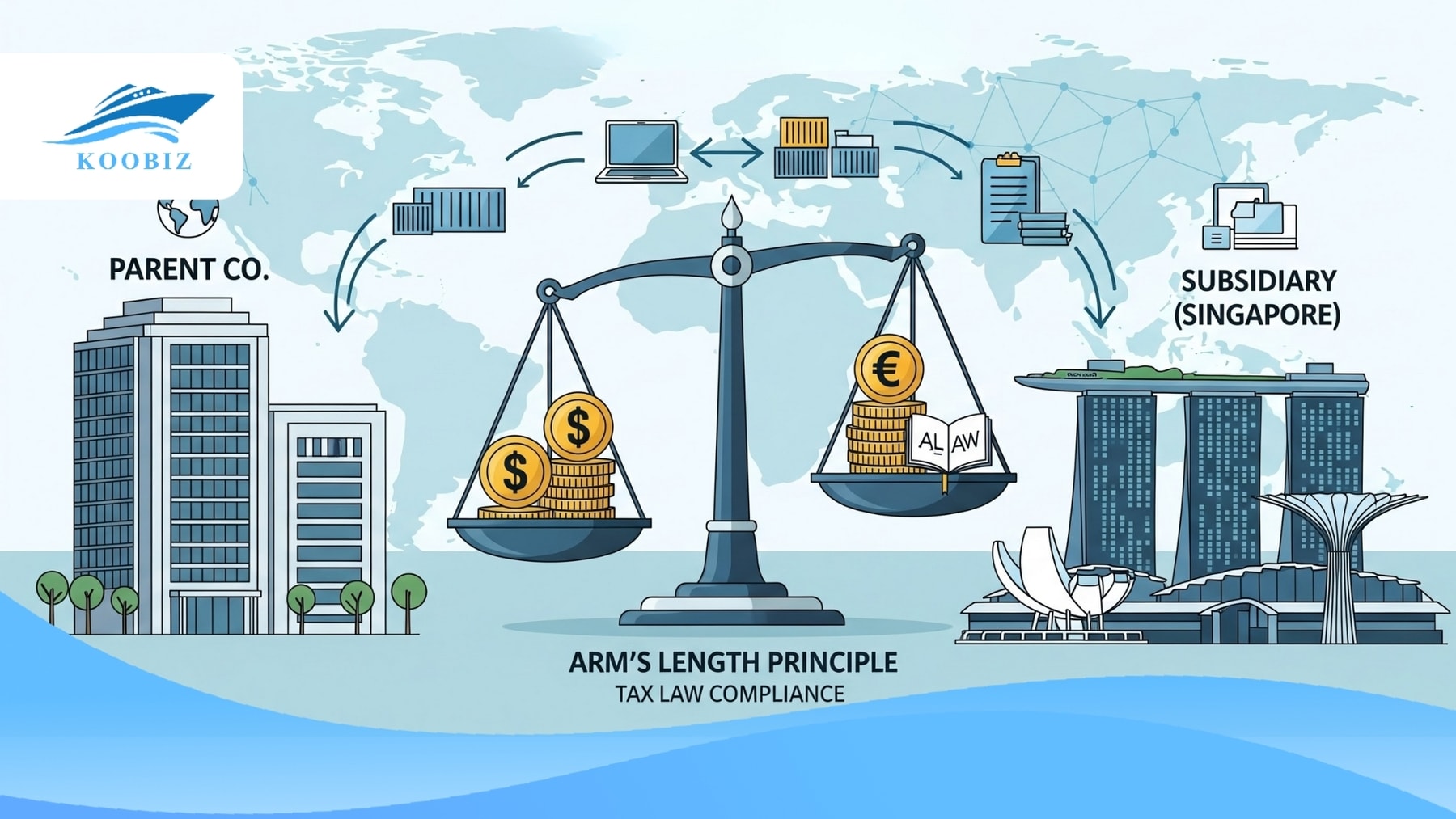
    Transfer Pricing
    Transfer Pricing

    Transfer Pricing is the pricing mechanism used for transactions between related parties, such as the sale of goods, provision of services, or transfer of intangible assets, which must strictly reflect market conditions.

    To delve deeper, transfer pricing is a neutral accounting term, not an illegal practice. However, under Section 34D of the Income Tax Act, IRAS scrutinizes these prices to prevent profit shifting and ensure profits reflect true economic value in Singapore.

    Defining “Related Party” & Scope

    IRAS defines related parties broadly, generally where there is control, significant influence, or a shared holding company. As a result, the scope of transfer pricing is wide and includes:

    • Operational Activities: Management fees, royalties, and intercompany loans.
    • Audit Scope: Every internal invoice is a potential subject of scrutiny.

    Koobiz Advice: Transparency and consistency in these definitions are your first line of defense against tax adjustments.

    According to IRAS e-Tax Guide (Eighth Edition), the authority explicitly states that taxpayers are expected to apply the arm’s length principle to ensure that their pricing with related parties reflects independent pricing behavior.

    How is Compliance with the Arm’s Length Principle Determined?

    Compliance is achieved when related party pricing matches what independent parties would agree to under similar circumstances. This must be backed by robust documentation and comparable market data.

    To determine compliance, IRAS applies the Arm’s Length Principle (the international standard). If your internal pricing deviates significantly from market rates—either artificially inflating costs or suppressing revenue—IRAS will deem it non-compliant.
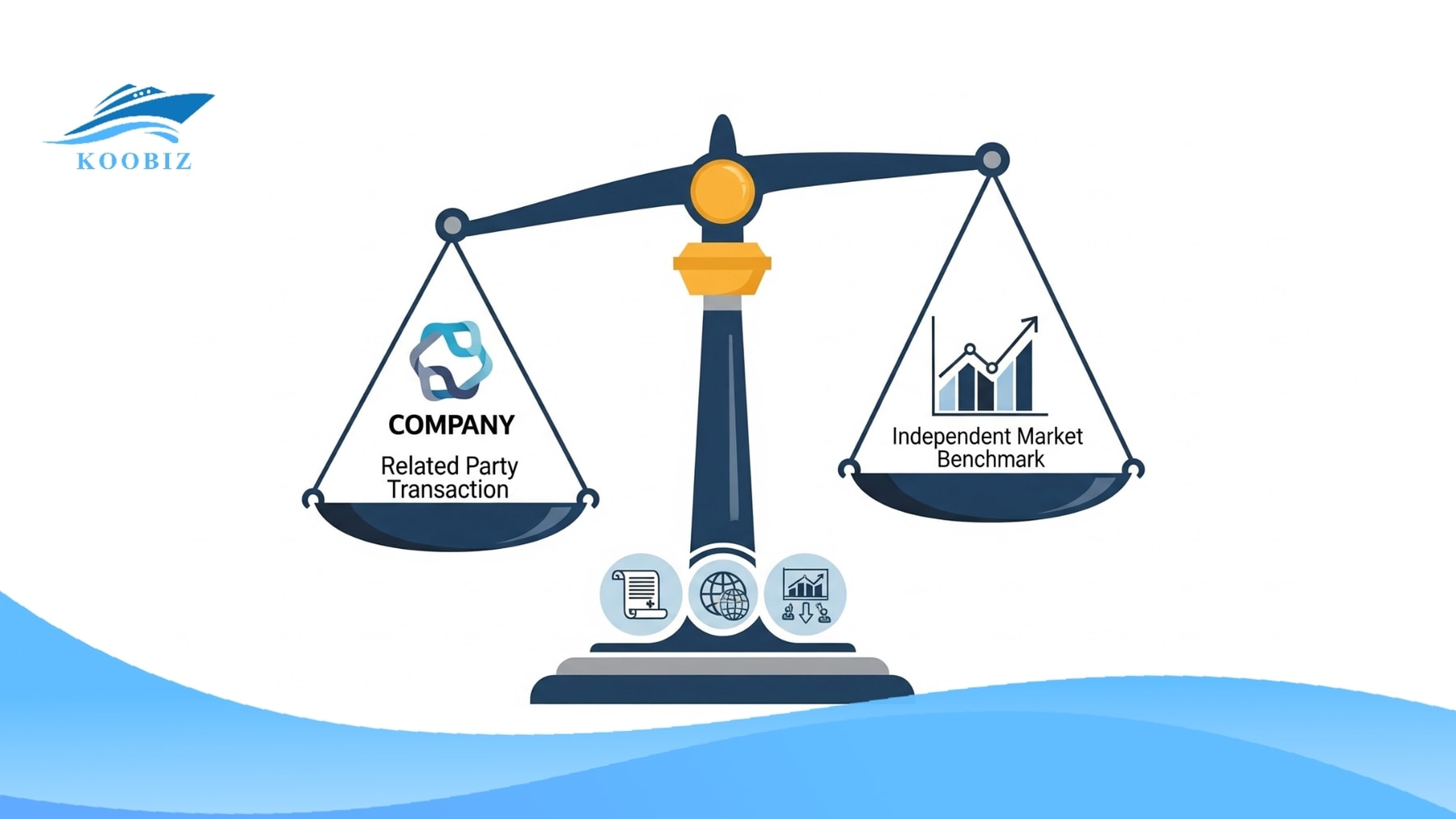
    Compliance with ALP: Documentation, Data & 3 Factors
    Compliance with ALP: Documentation, Data & 3 Factors

    The Core Test: “Would independent parties agree?”

    To pass this test, businesses must analyze three key factors:

    • Contractual Terms: Are the terms standard for the industry?
    • Economic Circumstances: Do the prices reflect current market realities?
    • Business Strategies: Is the pricing commercially rational?

    At Koobiz,we assist companies in stress-testing their intercompany pricing against this “independent party” benchmark, identifying exposure early and rectifying gaps before an audit arises.

    Research by the OECD confirms that the Arm’s Length Principle remains the global standard for ensuring fair tax bases across jurisdictions.

    What are the Mandatory Requirements for Transfer Pricing Documentation (TPD)?

    There are two specific mandatory conditions that trigger the requirement for TPD: having gross revenue exceeding S$10 million for the basis period, or being explicitly required by IRAS to prepare such documentation.

    Beyond applying the arm’s length principle in theory, Singapore law imposes strict documentation standards to ensure pricing can be properly substantiated. It is important to distinguish routine bookkeeping from Qualifying Transfer Pricing Documentation, which must meet specific regulatory criteria.

    1. Gross Revenue Threshold: If your company’s gross revenue (not just profit) exceeds S$10 million in the basis period concerned, you are legally required to prepare contemporaneous TPD.
    2. Specific Requirement: Regardless of revenue, if IRAS issues a specific direction to your company to prepare TPD for a previous basis period, you must comply.

    Exemptions from TPD

    Even where the S$10 million revenue threshold is met, IRAS grants transaction-level exemptions to ease the compliance burden for lower-value dealings between related parties.

    • Purchase/Sale of Goods: Exemption applies if the total value is below S$15 million.
    • Loans: Exemption applies if the loan value is below S$15 million (applicable where the IRAS Indicative Margin is applied).
    • Services, Royalties, and Others:
      • For YA 2025 and prior: Exemption applies if the total value is below S$1 million.
      • For YA 2026 onwards: The threshold increases to S$2 million, providing greater relief for businesses.

    TPD must be prepared on a contemporaneous basis, meaning it should be completed before the due date of filing the corporate income tax return. The documentation must cover, among others, the group structure, business activities, intercompany transactions, and a defensible pricing analysis. Failure to produce adequate TPD upon IRAS’ request exposes the company to immediate penalties and potential tax adjustments.

    At Koobiz, we support clients in preparing robust, compliant TPD that aligns with the detailed content requirements set out in the Second Schedule of the Income Tax (Transfer Pricing Documentation) Rules 2018, helping businesses mitigate risk and withstand IRAS scrutiny.

    The IRAS 3-Step Approach to Applying the Arm’s Length Principle
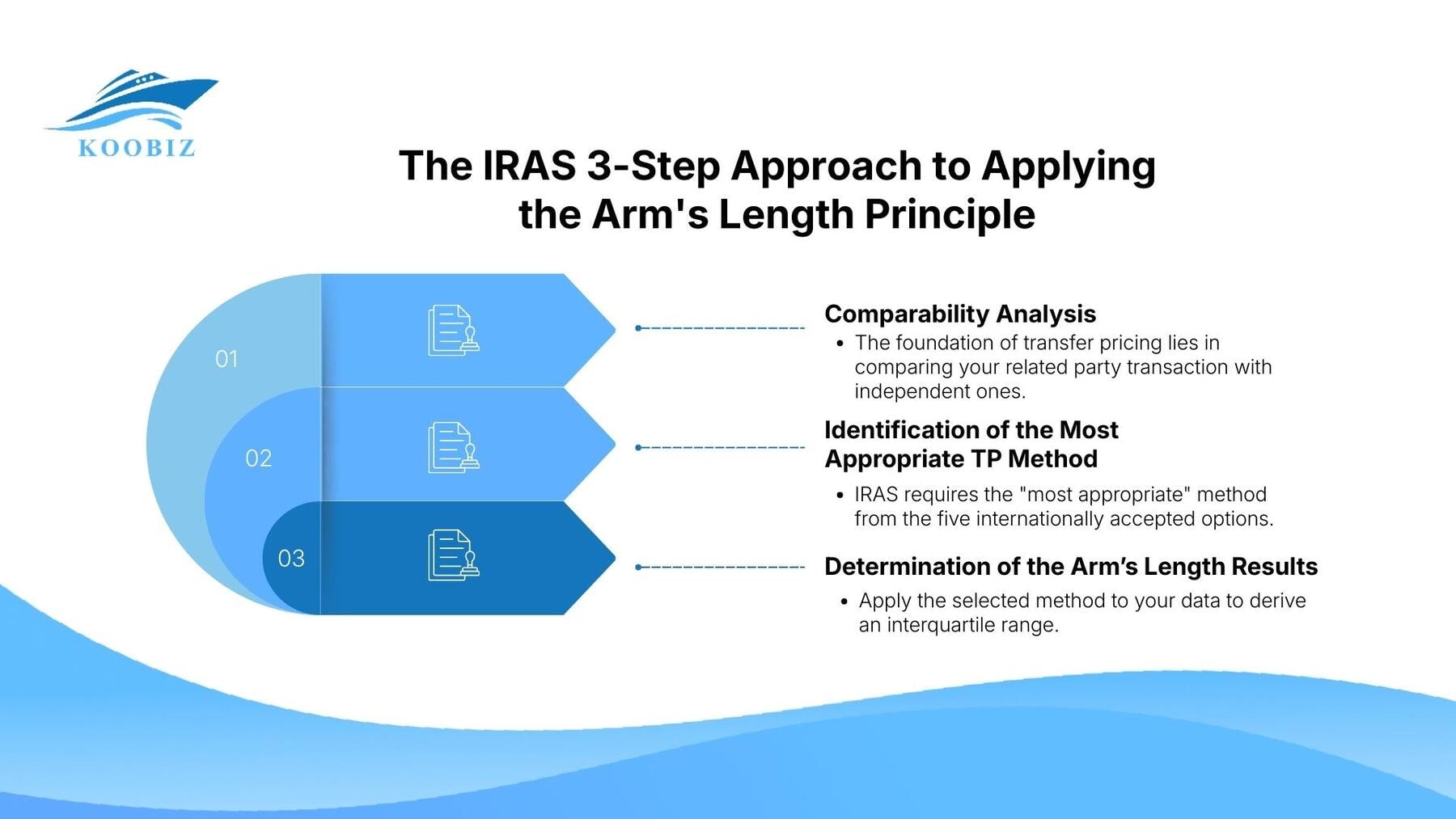
    The IRAS 3-Step Approach to Applying the Arm's Length Principle
    The IRAS 3-Step Approach to Applying the Arm’s Length Principle

    To justify pricing to tax authorities, MNCs are expected to apply a structured three-step methodology prescribed by IRAS. Transfer pricing is not a matter of estimation or intuition; it must be supported by a disciplined and evidence-based approach.

    Step 1: Comparability Analysis

    The foundation of transfer pricing lies in comparing your related party transaction with independent ones. This analysis must examine:

    • Characteristics: What goods or services are being traded?
    • Functional Analysis (FAR): Who performs the Functions, owns the Assets, and assumes the Risks?
    • Economic Circumstances: What are the market conditions?

    Step 2: Identification of the Most Appropriate TP Method

    IRAS requires the “most appropriate” method from the five internationally accepted options:

    • CUP Method: Compares specific prices (ideal for commodities).
    • Resale Price Method: Focuses on gross margins (for distributors).
    • Cost Plus Method: Focuses on mark-ups (for manufacturers/service providers).
    • TNMM: Compares net profit margins (most common for complex operations).
    • Profit Split: Splits profits based on contribution (for highly integrated value chains).

    Step 3: Determination of the Arm’s Length Results

    Apply the selected method to your data to derive an interquartile range.

    • Within Range: Compliant.
    • Outside Range: Adjustment required to the median.

    Real-world Impact: A Koobiz client in logistics used the TNMM to successfully justify their operating margin against competitors, eliminating subjectivity in their IRAS filings.

    Case Studies: Transfer Pricing in Action

    Real-world examples demonstrate the practical application of the Arm’s Length Principle and the potential pitfalls of incorrect pricing.

    To clarify how these rules affect daily operations, consider these two common scenarios that often trigger IRAS scrutiny.

    Scenario A: The Limited Risk Distributor (Tangible Goods)

    • Context: TechGlobal SG is a Singapore subsidiary acting as a distributor for its US parent. It purchases electronic components from the parent at S$80 per unit and resells them to local customers at S$100.
    • The Issue: After deducting local operating expenses (marketing, staff, rent), TechGlobal SG reports a Net Operating Margin of 1%.
    • IRAS Analysis: Using the TNMM (Transactional Net Margin Method),IRAS benchmarks TechGlobal SG against comparable independent distributors operating in Singapore. The benchmarking analysis shows that similar distributors typically earn an arm’s length operating margin of 3% to 5%.
    • Outcome: The adjustment leads to additional taxable income in Singapore, along with a 5% surcharge imposed on the transfer pricing adjustment, highlighting how even routine distribution models can result in costly exposure if pricing is not properly supported.

    Scenario B: Intercompany Management Fees (Services)

    • Context: SingHQ Pte Ltd acts as a regional hub, providing HR and IT support services to its subsidiaries in Vietnam and Thailand. Each subsidiary is charged a flat management fee of S$1 million per year, without detailed invoices or service breakdowns.
    • The Issue: The subsidiaries cannot verify the specific services received or the basis of the cost.
    • IRAS Analysis: IRAS applies the “Benefit Test”. Did the subsidiaries actually need and receive these services? Is the fee based on Cost + Mark-up (e.g., Cost + 5%)?

    IRAS will expect formal intercompany agreements and contemporaneous evidence, such as timesheets, service reports, email correspondence, or cost allocation schedules, to substantiate the charges.

    • Outcome: The deduction may be denied at the subsidiary level, or the income reclassified at SingHQ, potentially triggering double taxation disputes and additional tax exposure across multiple jurisdictions.

    What are the Penalties for Non-Compliance with Transfer Pricing Rules?

    Non-compliance with Transfer Pricing rules triggers severe financial consequences, including a fine of up to S$10,000, a 5% surcharge on adjustments, and potential interest on underpaid taxes.

    The consequences of ignoring these rules are not just administrative but financially punitive. IRAS has taken a stricter stance on enforcement to deter profit shifting.
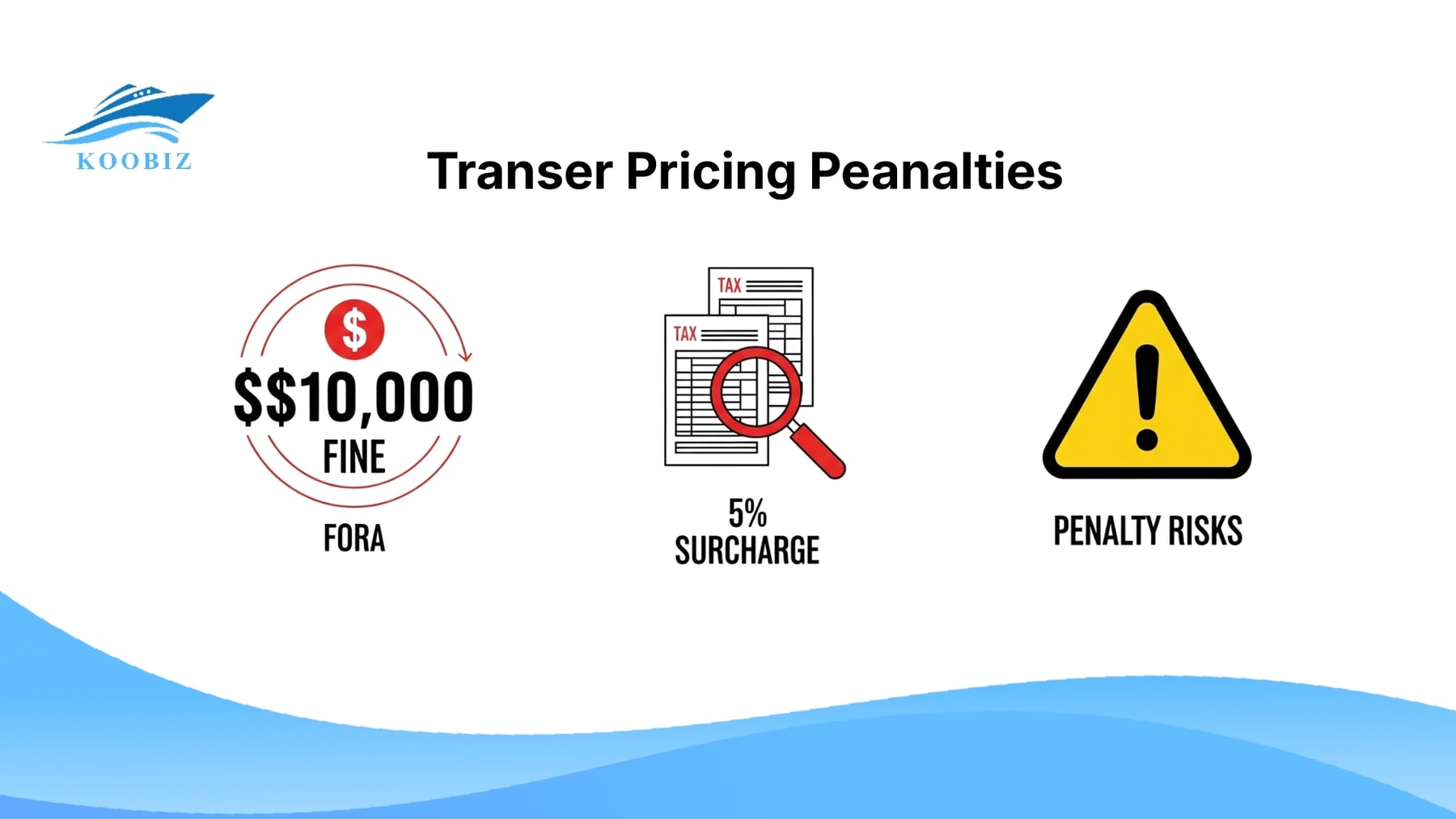
    Transfer Pricing Penalties: Fine, 5% Surcharge, No Safe Harbour
    Transfer Pricing Penalties: Fine, 5% Surcharge, No Safe Harbour
    1. Fine for Non-Documentation: Failure to prepare or submit TPD upon request can result in a fine not exceeding S$10,000. This applies even if the pricing itself was correct but the documentation was missing.
    2. 5% Surcharge on Adjustments: If IRAS reviews your accounts and decides to adjust your transfer price (increasing your taxable income), a 5% surcharge is imposed on the amount of the adjustment, regardless of whether there is additional tax payable. This surcharge is not tax-deductible.
    3. No Safe Harbour from Penalties: Unlike some jurisdictions where having documentation provides penalty protection, in Singapore, the 5% surcharge is strictly applied on adjustments.

    Note on Remission: While strict, IRAS may consider remitting part or all of the surcharge in cases where taxpayers are cooperative or voluntarily initiate a retrospective adjustment within two years (provided no audit has commenced). Proactive correction is key.

    Beyond immediate penalties, repeated non-compliance can trigger wider tax audits, including reviews of GST and withholding tax positions, and may result in reputational harm with regulators and counterparties. In practice, investing in robust transfer pricing compliance upfront is significantly more cost-effective than dealing with escalating penalties and enforcement actions later.

    Contextual Border:

    Having covered the “What” (definitions), the “Why” (compliance rationale), and the “Consequences” (penalties), we now turn to the “How.” The next section examines complex, real-world applications, such as intercompany financing arrangements and dispute resolution mechanisms, that sophisticated MNCs commonly encounter as their operations scale.

    Handling Specific Related Party Transactions and Dispute Resolutions

    MNCs face specific compliance requirements for intercompany loans and services, alongside mechanisms for resolving cross-border disputes.

    How are Intercompany Loans Treated under the 8th Edition Guidelines?

    Rule: Loans must be priced using a Base Reference Rate + Arm’s Length Spread or the IRAS Indicative Margin.

    • 8th Edition Update: Benchmarking must strictly match the loan tenure.
    • Domestic Loans (New Jan 2025 Rule): For domestic loans entered into from 1 Jan 2025, if neither party is in the business of lending, taxpayers can choose to apply the IRAS Indicative Margin.
      • Key Benefit: Doing so exempts the transaction from TPD and, crucially, IRAS will not make Section 34D adjustments on these specific loans.
    • Interest-Free Loans: From 2025 onwards, interest-free domestic intercompany loans are generally not acceptable unless supported by strong commercial justification. For cross-border loans, IRAS typically does not adjust interest-free arrangements where the Singapore entity is the lender, largely due to Singapore’s remittance-based taxation system. However, documentation and rationale remain important to mitigate audit risk.

    In practice, intercompany financing has become a high-focus area under the 8th Edition, and structuring loans correctly from inception is critical to avoid unnecessary adjustments and penalties.

    What is the Safe Harbour Rule for Routine Support Services?

    Rule: Taxpayers can apply a fixed 5% cost mark-up on routine support services (e.g., HR, IT listed in Annex C).

    • Benefit: No detailed benchmarking study is required.
    • Condition: Costs must be strictly pooled and correctly allocated.

    What is the Difference Between Advance Pricing Arrangements (APA) and Mutual Agreement Procedures (MAP)?

    APA is proactive; MAP is reactive. Use APAs for certainty and MAPs to resolve double taxation.

    Feature Advance Pricing Arrangement (APA) Mutual Agreement Procedure (MAP)
    Nature Prospective (Forward-looking / Prevention) Reactive (Backward-looking / Cure)
    Primary Purpose Determine pricing for future years (3-5 years). Resolve double taxation after adjustments.
    Benefit Audit immunity on covered transactions. Eliminates double taxation via authority agreement.

    When should MNCs consider a Transfer Pricing Health Check?

    Conduct a health check immediately if you meet any of the following criteria:

    • [ ] Revenue: Gross revenue > S$10 million.
    • [ ] Thresholds: Services/Royalties > S$1 million (S$2 million from YA 2026).
    • [ ] Outdated Data: Benchmarking study > 3 years old.
    • [ ] Losses: Singapore entity is consistently loss-making.
    • [ ] Risks: Interest-free loans exist between related parties.

    Koobiz offers a “traffic light” risk assessment to identify and remediate these exposures.

    About Koobiz

    Managing transfer pricing in Singapore goes beyond technical compliance, it requires commercial insight, regulatory awareness, and hands-on local experience. Koobiz is a trusted corporate services firm supporting businesses at every stage of their Singapore journey.

    We specialize in:

    • Singapore Company Incorporation: Setting up your optimal business structure.
    • Bank Account Opening: Facilitating seamless financial integration in Singapore.
    • Tax & Accounting Services: From Corporate Income Tax filing to Transfer Pricing Documentation preparation.
    • Audit & Assurance: Ensuring full regulatory compliance.

    Transfer pricing risks should never slow down your expansion. With Koobiz, your related party transactions are structured to be compliant, commercially sound, and well-prepared for IRAS scrutiny, so you can focus on growing your business with confidence.

    Explore Koobiz Services

    Disclaimer: This guide is for informational purposes only and does not constitute legal or tax advice. Transfer pricing rules are subject to change. Please consult with a professional advisor or IRAS guidelines for specific business circumstances.
  • What Do Accountants Do for Singapore SMEs? From Tax Compliance to Strategic Growth

    What Do Accountants Do for Singapore SMEs? From Tax Compliance to Strategic Growth

    [SUMMARIES]

    Beyond Bookkeeping: Modern accountants in Singapore act as strategic business partners, not just data recorders, helping SMEs navigate complex financial landscapes.

    Strict Compliance: Their core role involves adhering to rigorous IRAS tax regulations (GST, ECI, Form C-S) and ACRA statutory filings (Annual Returns, XBRL) to avoid costly penalties.

    Strategic Growth: Accountants drive expansion through precise cash flow management, budgeting, and acting as Virtual CFOs to interpret financial data for better decision-making.

    Outsourcing Advantage: For most SMEs, outsourcing accounting to Corporate Service Provider (CSP) offers a cost-effective alternative to hiring in-house, providing access to expert teams and specialized software.

    Tech-Driven Efficiency: The profession now relies heavily on cloud technology and AI automation to provide real-time financial insights and sustainability reporting.

    [/SUMMARIES]

    Accountants are the architects of financial stability who navigate complex IRAS and ACRA compliance while acting as strategic advisors for growth. Whether you are a startup founder or an established SME owner, understanding this multifaceted role is crucial.

    This article delves into the operational, compliance, and strategic functions of modern accountants, helping you decide whether to hire in-house or leverage professional experts.

    What is the Role of an Accountant in a Singapore SME?

    An accountant for a Singapore SME is a financial professional responsible for interpreting, recording, and analyzing financial data to ensure regulatory compliance and facilitate strategic decision-making.

    Financial expert responsible for analyzing and recording data
    Financial expert responsible for analyzing and recording data

    To understand this role more deeply, we must look beyond the stereotype of data entry. In the modern business context, specifically within Singapore’s framework, an accountant serves as a vital bridge between the company’s operational activities and its financial health.This critical function involves:

    • Maintaining the integrity of financial records (bookkeeping) and ensuring that every dollar is accounted for.
    • Providing financial visibility required to secure loans, attract investors, or simply manage cash flow effectively.
    • “Business integrity,” drives Koobiz experts to ensure your company remains in good standing with Singaporean authorities while maximizing operational efficiency.

    Core Responsibilities: Ensuring Compliance with IRAS (Inland Revenue Authority of Singapore) and ACRA (Accounting and Corporate Regulatory Authority)

    Singapore enforces rigorous adherence to laws, where errors can lead to stiff penalties or company striking-off. A competent accountant safeguards your business by managing complex deadlines and forms, allowing you to focus on core operations without the anxiety of non-compliance.

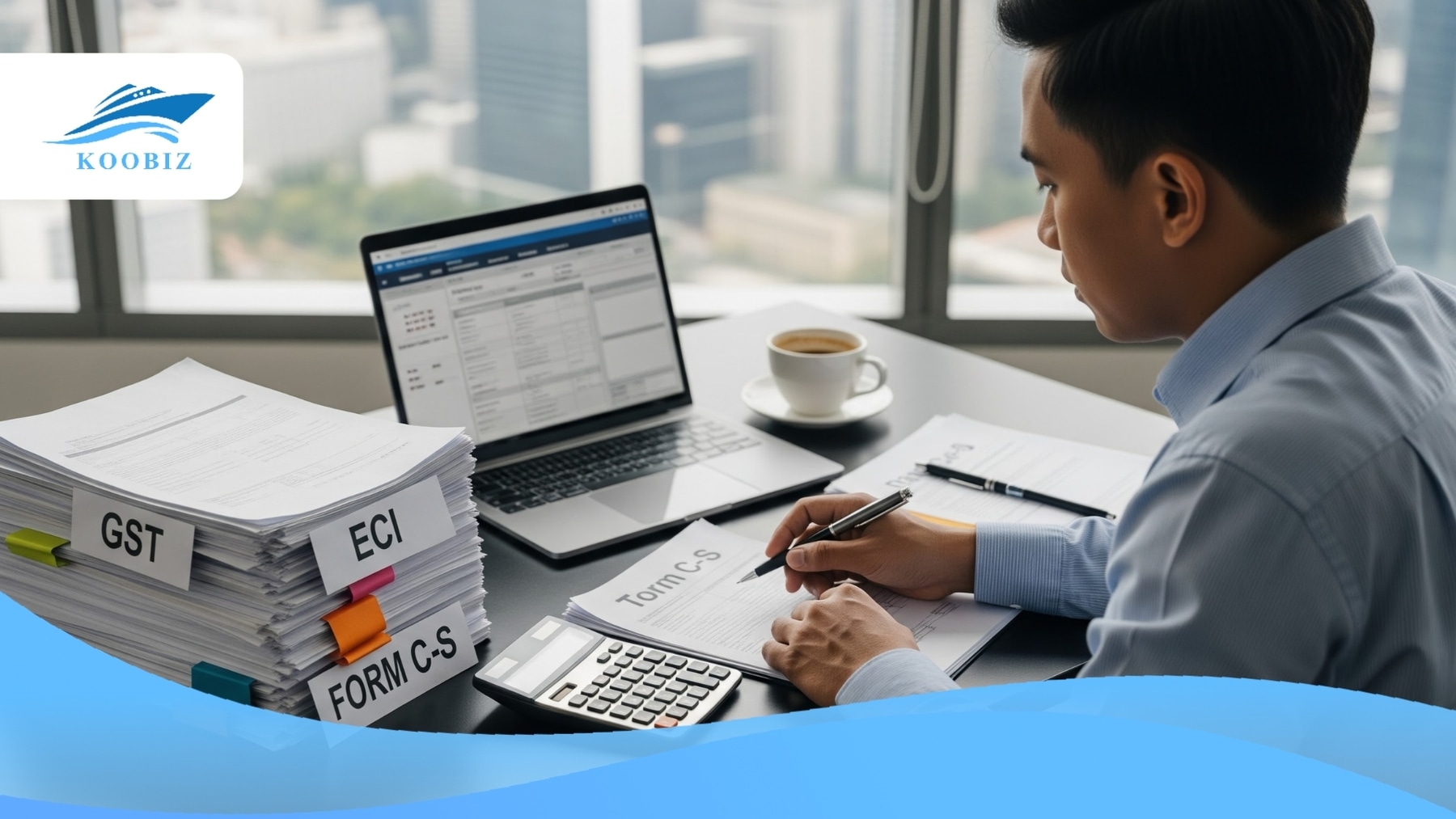
    Managing Tax Obligations (GST, ECI, and Form C-S)

    Singapore tax compliance: GST, ECI, Form C-S
    Singapore tax compliance: GST, ECI, Form C-S

    Navigating Singapore’s tax system requires precision regarding strict IRAS timelines and specific criteria for GST, Estimated Chargeable Income (ECI), and Corporate Income Tax (Form C-S/C).

    • Estimated Chargeable Income (ECI): Accountants must calculate and file the ECI within three months from the end of the financial year – A mandatory estimate of the company’s taxable income.

    Pro Tip: Companies with a financial year that have annual revenue of less than SGD 5 million AND predicted zero chargeable income , are exempt from filing ECI. Your accountant will verify if you qualify for this administrative waiver.

    • Depending on the company’s annual revenue, the accountant determines which form to file.
      • Form C-S Lite: For the simplest companies with revenue ≤ SGD 5 million and straightforward tax matters.
      • Form C-S: For qualifying small companies with revenue ≤ SGD 5 million.
      • Form C: For larger companies or those claiming complex deductions.

    GST Registration and Filing: If a company’s taxable turnover exceeds SGD 1 million, mandatory GST registration is triggered. Accountants manage the quarterly GST F5 filings, ensuring that output tax collected and input tax paid are reconciled accurately. Koobiz specialists ensure optimizing the tax position with sensible advisory based on the newest update.

    Financial Reporting and ACRA Annual Returns

    Every Singapore company must hold an Annual General Meeting (AGM) and file Annual Returns with ACRA, adhering to Singapore Financial Reporting Standards (SFRS). The accountant prepares the necessary unaudited or audited financial statements and converts them into the mandatory XBRL (eXtensible Business Reporting Language) format for the BizFile+ portal—a technical requirement that often trips up business owners attempting DIY filings.

    Note: Solvent Exempt Private Companies (EPCs) with revenue ≤ SGD 5 million may be eligible to file a simplified XBRL set or be exempt from filing financial statements with ACRA entirely, though they must still prepare them.

    How Do Accountants Drive Business Growth for SMEs?

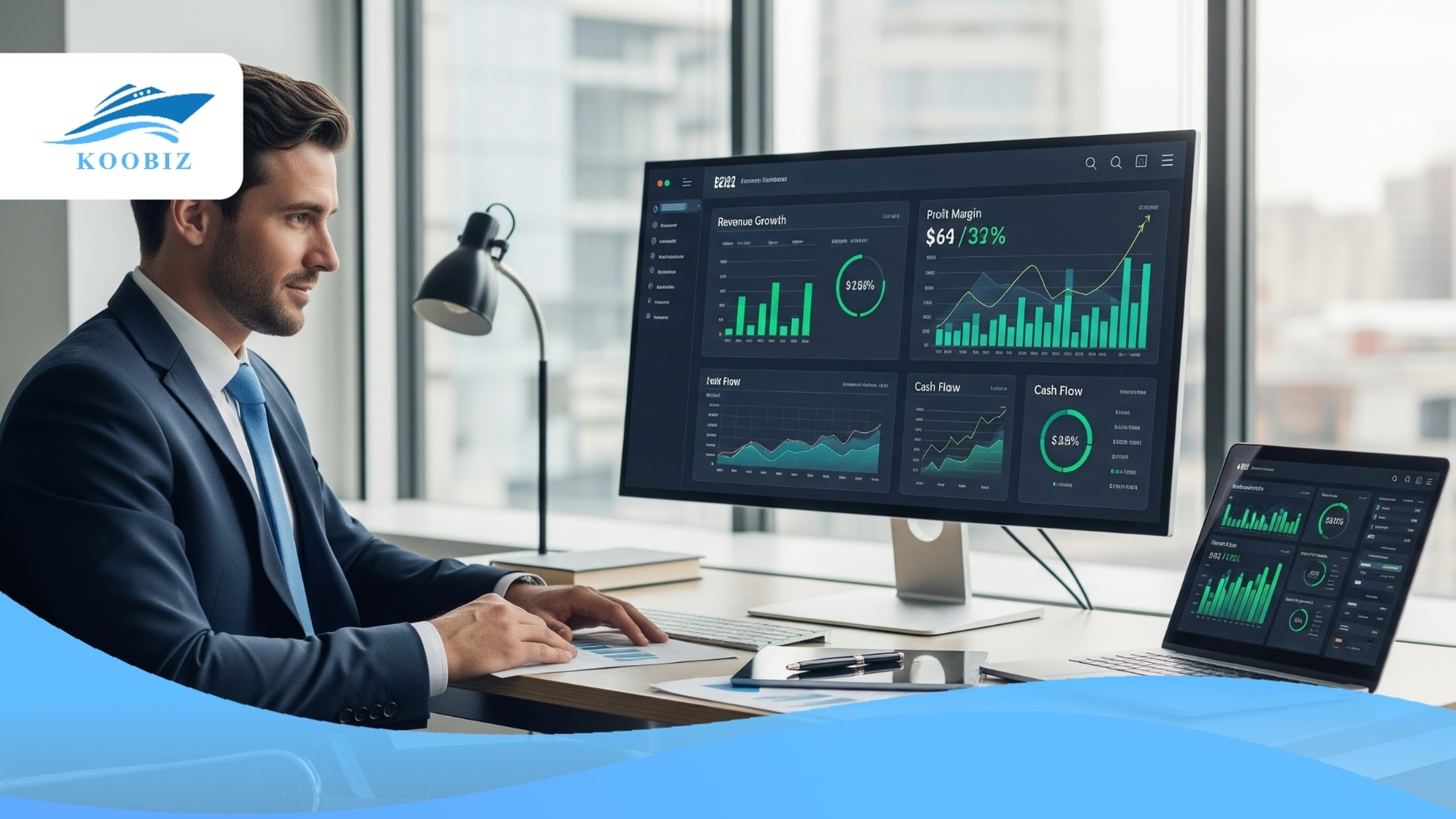
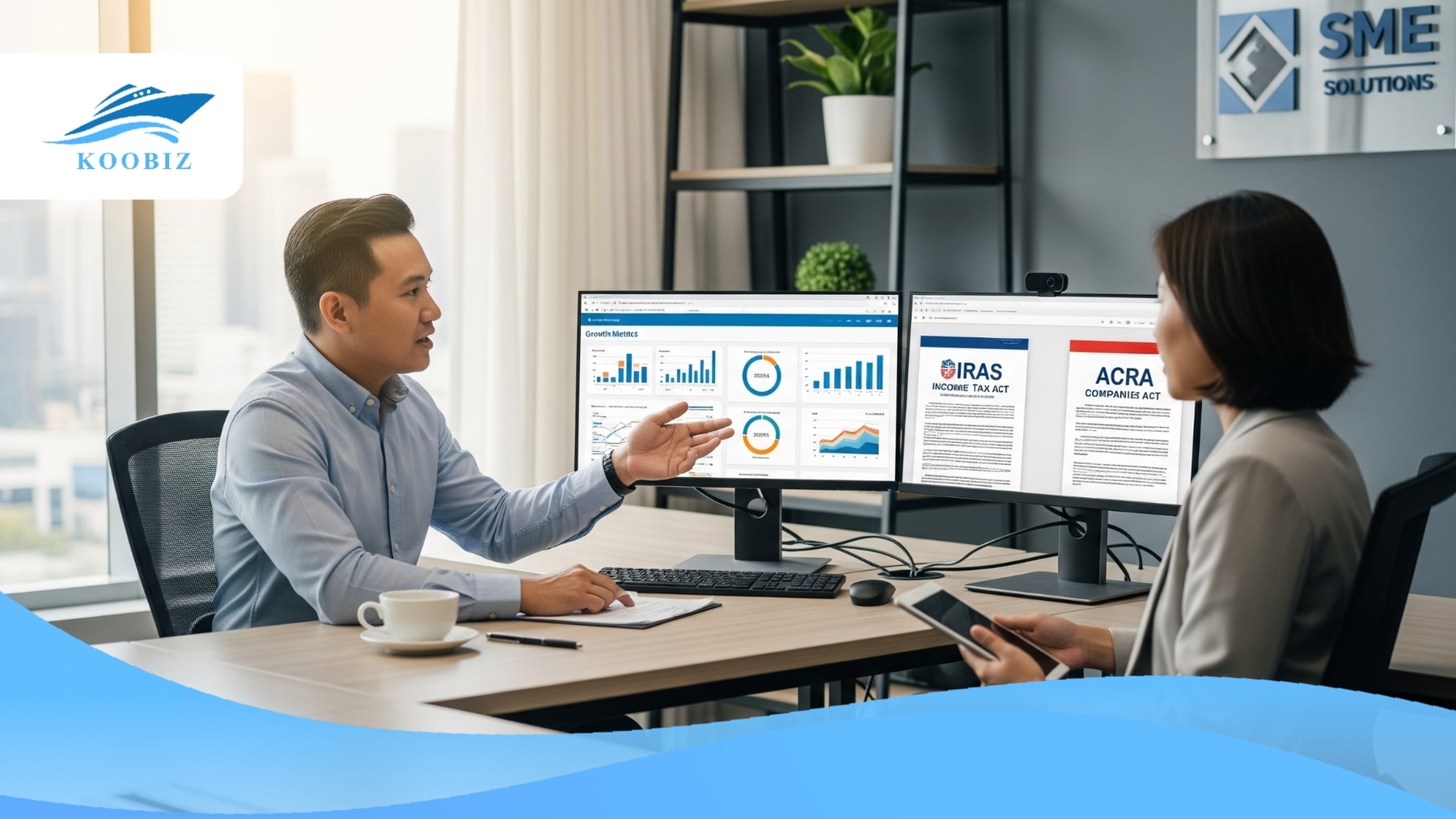
    Accounting advising SME viewing financial dashboard
    Accounting advising SME viewing financial dashboard

    Accountants drive business growth by transforming historical data into future-focused strategies, utilizing cash flow forecasting and advisory services to improve profitability.

    Transitioning from “defense” (compliance) to “offense” (growth), the modern accountant becomes a strategic partner. While compliance keeps the business safe, strategic accounting propels it forward. By analyzing trends in the financial data, our team can identify which product lines are most profitable, where unnecessary costs are hemorrhaging cash, and when the business has enough liquidity to invest in expansion. This shift from reactive reporting to proactive advising is what separates a standard bookkeeper from a value-adding accountant.

    Cash Flow Management and Budgeting

    Effective cash flow management involves monitoring the timing of cash inflows and outflows to ensure the business always has the liquidity to operate.

    Cash is the oxygen of any SME. An accountant creates detailed cash flow forecasts that predict potential shortages before they happen. Instead of spending blindly, an accountant helps the business owner set realistic spending limits for marketing, hiring, and operations. This discipline ensures that the company creates a sustainable “burn rate,” vital for startups and growing SMEs in Singapore’s high-cost environment.

    Acting as a Strategic Advisor (Virtual CFO Services)

    A Virtual CFO provides high-level financial strategy, performance analysis, and decision support without the cost of a full-time executive.

    Many SMEs cannot afford a full-time Chief Financial Officer (CFO), yet they face complex financial decisions. This is where the “Virtual CFO” service comes into play. In this capacity, the accountant interprets financial ratios (like Return on Investment or Gross Margin) to guide data-driven decisions. Should the company lease or buy equipment? Is it financially viable to open a new branch? Is the business valuation ready for potential investors?.

    Case Study: From Chaos to Clarity for a Singapore Retailer

    Let’s look at a practical example involving a typical Singapore SME scenario.

    The Challenge: “TechGadget SG,” a growing electronics retailer, faced a common dilemma: sales were hitting record highs, yet their bank balance remained dangerously low. The owner was overwhelmed by manual data entry, had missed a GST filing deadline resulting in penalties, and was unsure which product lines were actually profitable.

    The Accountant’s Intervention:

    1. Immediate Compliance Fix: Koobiz experts stepped in to perform a “financial health check.” We immediately rectified the missed GST returns and successfully negotiated a waiver for the penalty with IRAS by demonstrating the company’s otherwise clean track record.
    2. Digital Integration: We migrated their messy spreadsheets to a cloud accounting system , integrating it directly with their Shopify store and POS system. This eliminated over 80% of manual data entry per week using OCR tools.
    3. Strategic Pivot: Through detailed financial analysis, we discovered that while high-end laptops generated high revenue, the profit margins were razor-thin due to shipping and warranty costs. Conversely, accessories and cables had 60% margins but were being under-marketed.

    The Result: Guided by these insights, the business shifted its marketing budget to focus on high-margin accessories. Within six months, net profit increased by 20%, and cash flow stabilized, giving the owner the confidence and capital to open a second outlet. This case study demonstrates that an accountant provides the roadmap for survival and expansion, not just tax filing.

    Outsourced Accounting Services in Singapore: In-House vs. Outsourced

    Outsourcing accounting services is often the superior choice for SMEs, offering cost savings, access to a wider range of expertise, and greater scalability compared to hiring in-house.

    Deciding between an in-house team and an outsourced provider is a pivotal choice for Singapore business owners. The table below highlights the key differences:

    Aspect In-House Accountant Outsourced (e.g., Koobiz)
    Cost High fixed cost (SGD 4,000–6,000/mth + CPF/Benefits) Variable, often starting from SGD 300/mth
    Expertise Limited to one person’s experience Team with industry-wide knowledge & regulatory updates
    Continuity Risk of gaps due to leave or resignation Guaranteed coverage via Service Level Agreements (SLAs)
    Scalability Difficult to scale up/down quickly Flexible scaling based on transaction volume
    Software Company bears full cost of software Access to enterprise-grade tools often included

    We have established the fundamental roles of an accountant: keeping the business legal through compliance and making it profitable through strategy.. As we look toward the future of accounting for Singapore SMEs, we must cross the boundary into the realm of technology and specialized micro-niche functions.

    How Modern Technology is Changing What Accountants Do

    There are three main technology trends reshaping accounting: Cloud Computing, Automation, and Artificial Intelligence, all of which enhance speed and accuracy.

    Technology has revolutionized the “how” of accounting, allowing professionals to deliver value faster. Implemented systems that talk to each other—connecting the Point of Sale (POS) system directly to the accounting software, and linking bank feeds for automatic reconciliation. This allows accountants from Koobiz provide real-time dashboards rather than month-old reports.

    Cloud Accounting Software: Xero, QuickBooks, and Myr

    Cloud accounting platforms like Xero and QuickBooks allow for real-time collaboration, accessible data from anywhere, and seamless integration with other business apps.

    • Accessibility: Business owners can view their P&L on their phone while traveling.
    • Integration: These platforms integrate with payroll software (like Talenox or HReasily) and e-commerce platforms (Shopify), creating a unified data environment.
    • Security: Cloud providers offer bank-level security. Our team specializes in migrating SMEs to these platforms to ensure data is secure and accessible.

    Automating Routine Tasks and AI Analytics

    Automation tools use Optical Character Recognition (OCR) and AI to process invoices and expenses, while predictive analytics forecast future trends.

    Modern accountants utilize tools (like Dext or Hubdoc) that allow clients to simply snap a photo of a receipt. The software automatically extracts the data (date, amount, vendor, GST) and pushes it to the accounting system. Beyond basic automation, AI in accounting is now enabling predictive analytics. By analyzing historical data, AI tools can help accountants forecast cash flow trends with greater accuracy, predicting potential shortfalls months in advance.

    Specialized Accounting Functions You Might Need

    Beyond general practice, there are specialized accounting branches like Forensic Accounting and ESG Reporting that address specific risks and emerging global standards.

    Forensic Accounting and Fraud Prevention

    Forensic accounting involves the investigation of financial records to detect fraud, embezzlement, or financial discrepancies, often for legal proceedings.

    While we hope to never need them, forensic accountants are crucial when internal controls fail. If an SME suspects employee theft or needs to settle a partnership dispute, a forensic accountant dives deep into the digital trail. They reconstruct financial events to find missing funds. This is a specialized service that adds a layer of security to the business assets.

    Sustainability Reporting and Green Finance

    Sustainability reporting is the practice of measuring and disclosing a company’s Environmental, Social, and Governance (ESG) performance to attract green investment and meet evolving regulatory expectations.

    Singapore is positioning itself as a hub for green finance. While currently mandatory mostly for listed companies, ESG reporting is trickling down to the SME sector. Banks are increasingly offering “Green Loans” with better interest rates to companies that can prove their sustainability. Accountants are now tasked with measuring non-financial metrics—such as carbon footprint or waste management costs—and integrating them into the company’s reporting structure. This emerging role positions the accountant as a guardian of the company’s long-term sustainability and social license to operate.

    Why Choose Koobiz?

    At Koobiz, we don’t just file your taxes; we fuel your growth.

    • Comprehensive Support: From incorporation to Virtual CFO services, we handle the entire financial lifecycle.
    • Compliance Guarantee: Our deep knowledge of IRAS and ACRA regulations ensures you never miss a deadline.
    • Transparent Pricing: No hidden fees—just clear, value-driven packages tailored to your business size.

    Conclusion

    Koobiz accountants specialize in empowering businesses to thrive in the competitive Singaporean market. From Singapore company incorporation to ongoing tax, accounting, and audit services, our team acts as your dedicated financial partner, ensuring a seamless start for your venture.

    Schedule a free consultation at Koobiz.com today and unlock your SME’s growth potential—don’t wait for the next filing deadline!

  • Maximize Tax Benefits for Your Private Limited Company (Pte Ltd) in Singapore: A Corporate Tax Guide

    Maximize Tax Benefits for Your Private Limited Company (Pte Ltd) in Singapore: A Corporate Tax Guide

    [SUMMARIES]

    The Start-Up Tax Exemption (SUTE) scheme drastically reduces the effective tax rate for qualifying new companies during their first three years by exempting 75% of the first S$100,000 and 50% of the next S$100,000 of chargeable income.

    Established entities benefit from the Partial Tax Exemption (PTE) scheme, which exempts 75% of the first S$10,000 and 50% of the next S$190,000, alongside a single-tier tax system that ensures dividend distributions to shareholders are completely tax-free.

    Companies can further optimize their tax liability by claiming deductible business expenses-including wages subject to new 2025 S Pass thresholds-and leveraging the Foreign-Sourced Income Exemption (FSIE) and Double Taxation Agreements (DTAs) for cross-border trade.

    [/SUMMARIES]

    Maximizing tax benefits for your Private Limited Company (Pte Ltd) in Singapore involves strategically leveraging Singapore’s corporate tax incentives. Key schemes include the Start-Up Tax Exemption (SUTE) and Partial Tax Exemption (PTE), which can reduce your effective tax rate well below the headline 17%. While Singapore is globally renowned for its pro-business environment, simply incorporating is not enough; business owners must actively understand how chargeable income is calculated and which specific exemptions apply to their company’s lifecycle stage.

    To fully grasp the potential savings, one must first look beyond the headline figure and understand the distinction between the statutory corporate income tax rate and the effective tax rate that most companies actually pay. This distinction is crucial for foreign investors and local entrepreneurs alike who are planning their financial projections.

    For new businesses, the government offers generous support through the SUTE scheme, which provides a substantial partial exemption scheme for the first three consecutive Years of Assessment. This initiative is designed to support entrepreneurship and cash flow during the critical early years of operation.

    However, the benefits do not end once the startup phase is over; established companies, as well as foreign shareholders, can utilize deductions, the single-tier tax system, and international treaties to to minimise corporate tax liability and maximise after-tax profits. . The sections below explain how companies can legally optimise their corporate tax obligations.

    What Is the Corporate Income Tax Rate for a Singapore Private Limited Company (Pte Ltd) ?

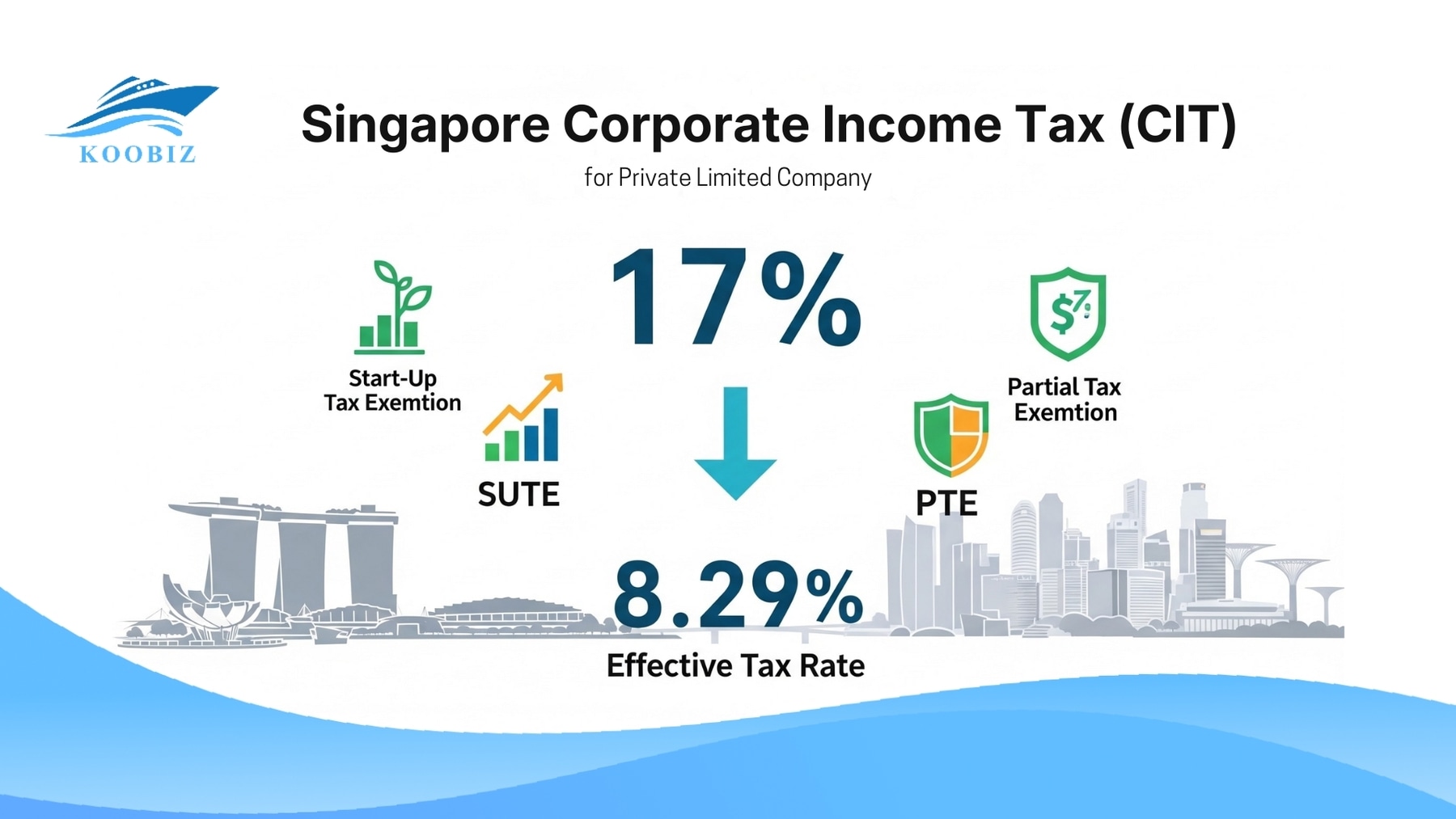
    The Corporate Income Tax (CIT) rate in Singapore is a flat 17% levied on chargeable income, renowned for being one of the most competitive statutory rate in the Asia-Pacific region. This single rate applies to both local and foreign companies doing business in Singapore, providing a predictable fiscal environment.

    To understand how this impacts your bottom line, we must look beyond the headline figure. In reality, due to various tax incentives, rebates, and exemption schemes, the effective tax rate for many small-to-medium enterprises (SMEs) is often significantly lower than 17%.The Inland Revenue Authority of Singapore (IRAS) calculates tax based on the preceding financial year’s income, known as the Year of Assessment (YA). For example, income earned in 2024 is taxed in YA 2025.

    Understanding this baseline is essential before diving into the specific mechanisms that can reduce your liability.

    According to the Inland Revenue Authority of Singapore (IRAS), most Singapore companies achieve an effective tax rate significantly lower than 17% through government exemption schemes.

    What Are the Key Tax Exemption Schemes for New Startups?

    There is one primary scheme for new companies for new companies: the Start-Up Tax Exemption (SUTE) scheme, designed to reduce the effective tax rate significantly for the first three consecutive Years of Assessment (YAs). This scheme was introduced to encourage entrepreneurship and help local enterprises grow by exempting a large portion of their initial income from taxation.

    The mechanics of this incentive are outlined below to show how much tax savings are available.

    How Does the Start-Up Tax Exemption (SUTE) Scheme Work?

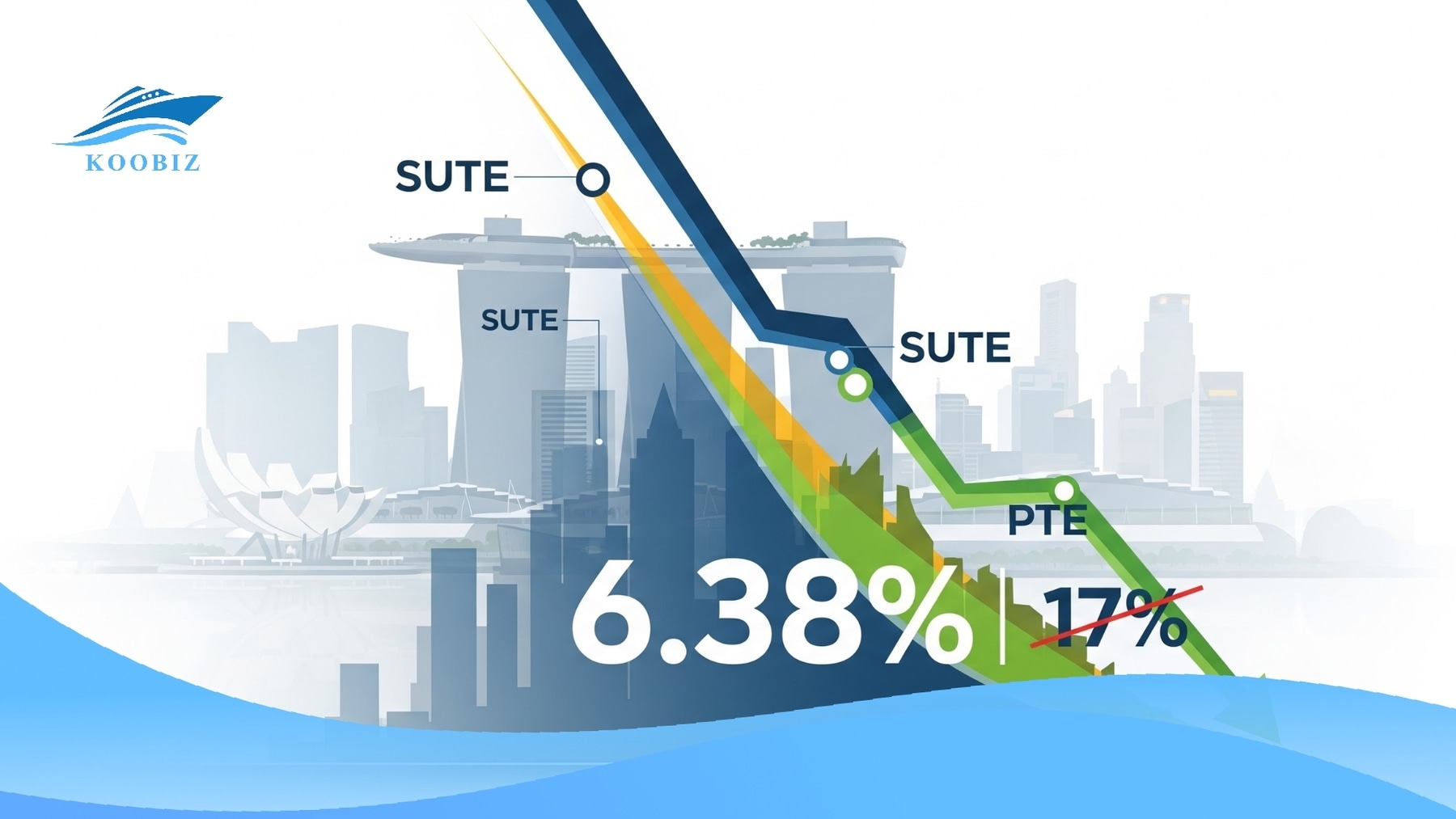
    The SUTE scheme offers a significant tax break by exempting 75% of the first SGD 100,000 of normal chargeable income from tax, and subsequently, a 50% exemption on the next SGD 100,000.

    Specifically, for the first three YAs where the company falls within the qualifying period:

    • First SGD 100,000: 75% exempt (You only pay tax on 25%).
    • Next SGD 100,000: 50% exempt (You only pay tax on 50%).

    What does this mean for your business? If your startup earns SGD 200,000 in profit, your effective tax payable is drastically reduced compared to the standard 17% calculation. This massive cash flow saving is absolutely vital for reinvestment into key business operations during the critical early stages.

    Does Your Private Limited Company (Pte Ltd) Qualify for the SUTE Scheme?

    Yes, your Private Limited Company (Pte Ltd) is generally eligible for the SUTE scheme, provided it meets three specific criteria related to shareholder structure and company type defined by IRAS.

    However, eligibility is not automatic. To benefit, you must ensure your company strictly complies with the following conditions:

    1. Incorporation Status: The company must be a Singapore-incorporated company.
    2. Tax Residency: The company must be a tax resident in Singapore for that YA (Year of Assessment).
    3. Shareholder Structure: The company must have no more than 20 shareholders throughout the basis period for that YA, where:
      • All shareholders are individuals; OR
      • At least one shareholder is an individual holding at least 10% of the issued ordinary shares.

    Important Note: Companies that are Investment Holding Companies or those undertaking Property Development (for sale, investment, or both) are STRICTLY EXCLUDED from the SUTE scheme. If you are unsure about your eligibility or shareholder structure, services like Koobiz can assist in structuring your incorporation correctly from day one to ensure you don’t miss out on these valuable benefits.

    How Can Established Private Limited Company (Pte Ltd) Benefit from the Partial Tax Exemption (PTE)?

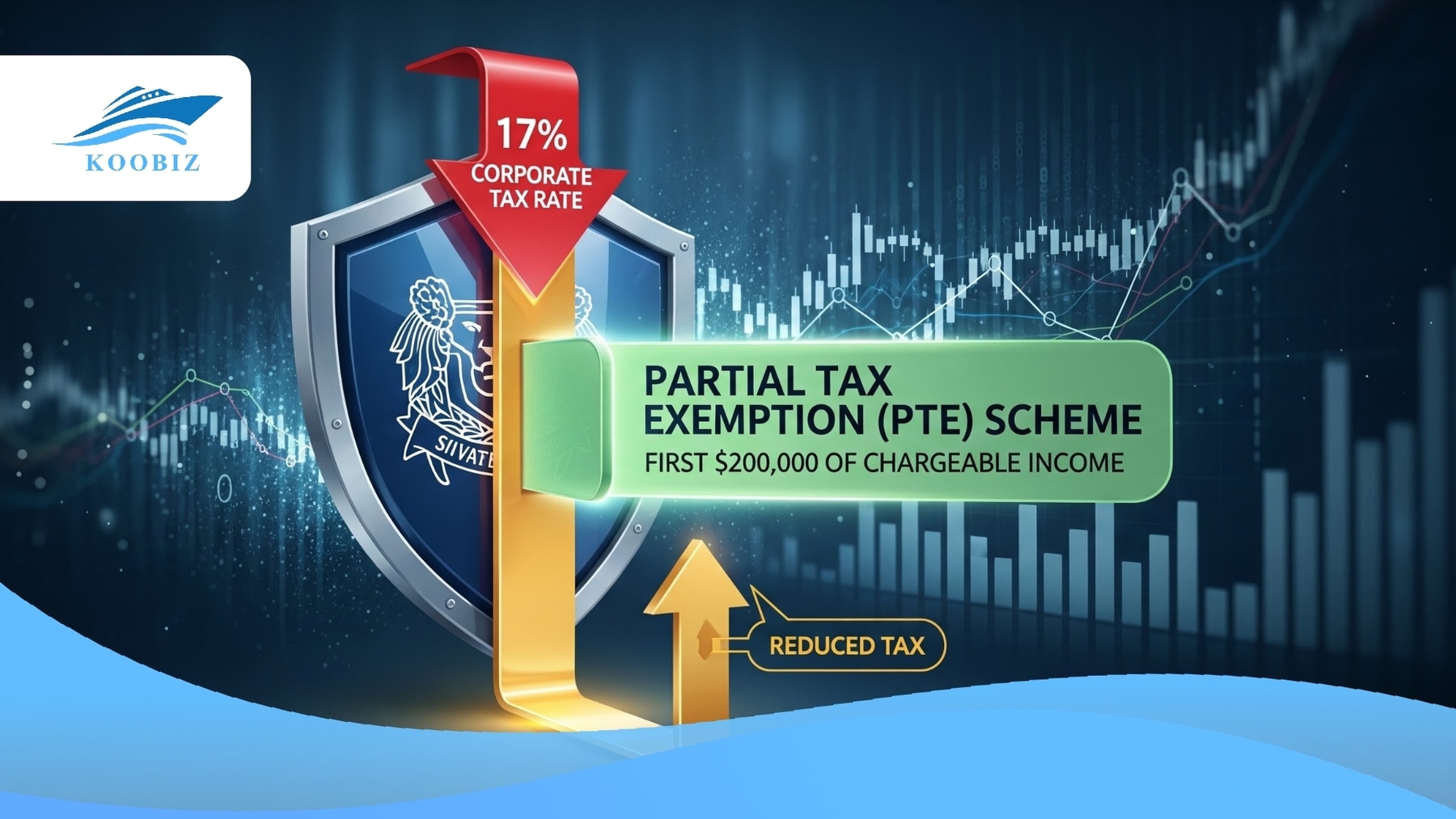
    Established Private Limited Company (Pte Ltd) benefit from the Partial Tax Exemption (PTE) scheme by automatically applying a 75% exemption on the first SGD 10,000 of chargeable income and 50% on the next SGD 190,000.

    This scheme guarantees that even mature companies—or startups that have successfully passed their first three YAs—will still enjoy a significantly reduced tax burden. Importantly, unlike SUTE, the eligibility for PTE is much broader and applies to almost all companies.

    Specifically, the calculation for PTE is as follows:

    • First SGD 10,000: 75% exempt.
    • Next SGD 190,000: 50% exempt.

    In practice, this means the first $200,000 of your chargeable income will always enjoy reduced tax rates. This crucial mechanism ensures that the initial $200,000 of company income is NEVER taxed at the full 17% rate, acting as a permanent tax buffer for SMEs and allowing them to retain more earnings for expansion or dividends.

    CASE STUDY: Comparing Tax Benefits (SUTE vs. PTE)

    To clearly illustrate the tangible benefits of these tax schemes, let’s compare two hypothetical companies with the same chargeable income of SGD 200,000:

    Scenario A: New Startup (SUTE Benefits)

    • Total Income: SGD 200,000
    • Exemption on First $100k (75%): SGD 75,000 exempt
    • Exemption on Next $100k (50%): SGD 50,000 exempt
    • Total Tax Exempt: SGD 125,000
    • Taxable Income: SGD 75,000
    • Tax Payable (17% of $75k): SGD 12,750
    • Effective Tax Rate: 6.38%

    Scenario B: Established Company (STABLE PTE Benefits)

    • Total Income: SGD 200,000
    • Exemption on First $10k (75%): SGD 7,500 exempt
    • Exemption on Next $190k (50%): SGD 95,000 exempt
    • Total Tax Exempt: SGD 102,500
    • Taxable Income: SGD 97,500
    • Tax Payable (17% of $97.5k): SGD 16,575
    • Effective Tax Rate: 8.29%

    The Savings: Even without the startup status, MatureCorp pays an effective tax rate of only 8.29%less than half the headline rate of 17%! However, TechStart saves an additional SGD 3,825 purely due to the startup scheme, which underscores the CRITICAL IMPORTANCE of correct initial structuring.

    Tax Optimisation: What Business Expenses Are Deductible?

    There are two main categories of deductible business expenses: revenue expenses incurred in generating income and specific statutory deductions allowed by IRAS.

    Properly claiming these deductions is CRUCIAL for minimising your “Chargeable Income”—the figure your tax rate is actually applied to. The Golden Rule is that expenses must be “wholly and exclusively” incurred in generating that income.

    Key Deductible Expenses Include:

    • Employee Wages & CPF: Mandatory contributions and salaries for both local and foreign staff are fully deductible.
    • Rent & Utilities: Costs associated with your office or facility (e.g., rent, electricity, water, internet) are deductible.
    • Renovation & Refurbishment (R&R): Qualifying R&R costs can be claimed over three years (capped at SGD 300,000).
    • Capital Allowances: This refers to deductions for the wear and tear of fixed assets (such as machinery or office equipment)—claimed instead of depreciation, which is generally not tax-deductible.

    Important Update: 2025 S Pass Salary Thresholds

    When budgeting for foreign employee wages (which are deductible), companies must strictly adhere to Ministry of Manpower (MOM) standards to ensure work passes are approved. Effective 1 September 2025, the minimum qualifying salary for new S Pass applications will increase to:

    • All Sectors (except Financial): SGD 3,300 (increasing progressively with age up to SGD 4,800).
    • Financial Services Sector: SGD 3,800 (increasing progressively with age up to SGD 5,650).

    Ensuring your stated salaries meet these new benchmarks is ESSENTIAL for both legal compliance and ensuring your wage deductions remain valid.

    Conversely, private expenses of the business owner, potential losses, and capital expenses (like the costs to incorporate or acquire new assets) are generally NOT deductible. Ensuring your bookkeeping clearly separates these is a vital part of effective tax optimization.

    How Does Singapore’s Single-Tier Tax System Benefit Shareholders?

    The Single-Tier Tax System is a mechanism where tax is paid only at the corporate level, meaning dividends distributed to shareholders are exempt from further taxation.

    This eliminates the “double taxation” burden common in other jurisdictions, where profit is taxed once at the company level and again when distributed to shareholders. This system is a major pull factor for investors using Koobiz to set up their holding companies in Singapore.

    Is Dividend Income Taxable for Foreign Shareholders?

    No, dividend income is NOT taxable for foreign shareholders in Singapore, regardless of whether they are tax residents or non-residents.

    This policy significantly simplifies the tax obligations for international investors. Once the Singapore Private Limited Company (Pte Ltd) has paid its corporate tax (or enjoyed its exemptions), the remaining profit can be distributed to you anywhere in the world without withholding tax. This facilitates cleaner capital repatriation.

    What Is the Foreign-Sourced Income Exemption (FSIE) Scheme?

    The Foreign-Sourced Income Exemption (FSIE) scheme is a crucial relief scheme that allows Singapore tax residents to enjoy full tax exemption on foreign-sourced dividends, branch profits, and service income remitted into Singapore.

    To qualify, the foreign income MUST meet three specific conditions:

    1. The income has been subject to tax in the foreign jurisdiction.
    2. The headline tax rate of that foreign jurisdiction is at least 15%.
    3. The Comptroller of Income Tax is satisfied that the tax exemption would benefit the resident company.

    How Do Double Taxation Agreements (DTAs) Minimise Corporate Tax Liability and Maximise After-Tax Profits?

    Double Taxation Agreements (DTAs) are vital tools that minimise corporate tax liability and maximise after-tax profits by allowing companies to claim tax credits or exemptions for taxes paid in foreign jurisdictions, effectively preventing the same income from being taxed twice.

    Singapore has an extensive network of over 90 DTAs. If your Private Limited Company (Pte Ltd) trades cross-border, these agreements ENSURE that you are not paying full tax in both the partner country and Singapore. Leveraging these treaties requires careful documentationand proof of tax residency, which is a standard part of corporate compliance.

    Ready to incorporate and optimize your tax structure?

    Navigating the complexities of SUTE, PTE, and compliance can be daunting. At Koobiz, we specialize in seamless company incorporation and corporate secretarial services. We ensure your business is structured correctly from day one to qualify for maximum tax benefits.

    Contact Koobiz Today for a Consultation