Tag: MOM Compliance

  • Work Injury Compensation Act (WICA) Insurance Singapore: Mandatory Requirements, Benefits & Coverage Guide (2025)

    Work Injury Compensation Act (WICA) Insurance Singapore: Mandatory Requirements, Benefits & Coverage Guide (2025)

    [SUMMARIES]

    Mandatory Coverage: WICA is compulsory for all manual employees, non-manual employees earning ≤S$2,600/month, and (New for 2025) Platform Workers.

    No-Fault System: Employees can claim compensation without proving employer negligence, ensuring faster payouts compared to common law suits.

    Increased Limits (Nov 2025): New higher compensation caps apply for Death (S$269k), Permanent Incapacity (S$346k), and Medical Expenses (S$53k).

    Strict Compliance: Failure to maintain adequate WICA insurance is a serious offense punishable by fines up to S$10,000 or imprisonment.

    Koobiz Support: Koobiz assists businesses not only with incorporation but also with navigating Singapore’s regulatory landscape to ensure full MOM compliance.

    [/SUMMARIES]

    Setting up a business in Singapore goes beyond ACRA registration—it also requires full compliance with Ministry of Manpower (MOM) regulations to protect both your employees and your company. One of the most critical statutory obligations is Work Injury Compensation Act (WICA) Insurance.

    WICA is not an optional policy. It is a mandatory insurance framework that enables fast and simplified compensation for work-related injuries or occupational diseases. For employers, it reduces exposure to costly legal disputes; for employees, it ensures financial protection during recovery. Whether you are a local startup or a foreign investor, WICA compliance is essential.

    In this 2025 guide, Koobiz explains WICA in detail, from compulsory coverage and limits to the claims process, helping your business stay compliant, protected, and resilient.

    What is WICA Insurance?

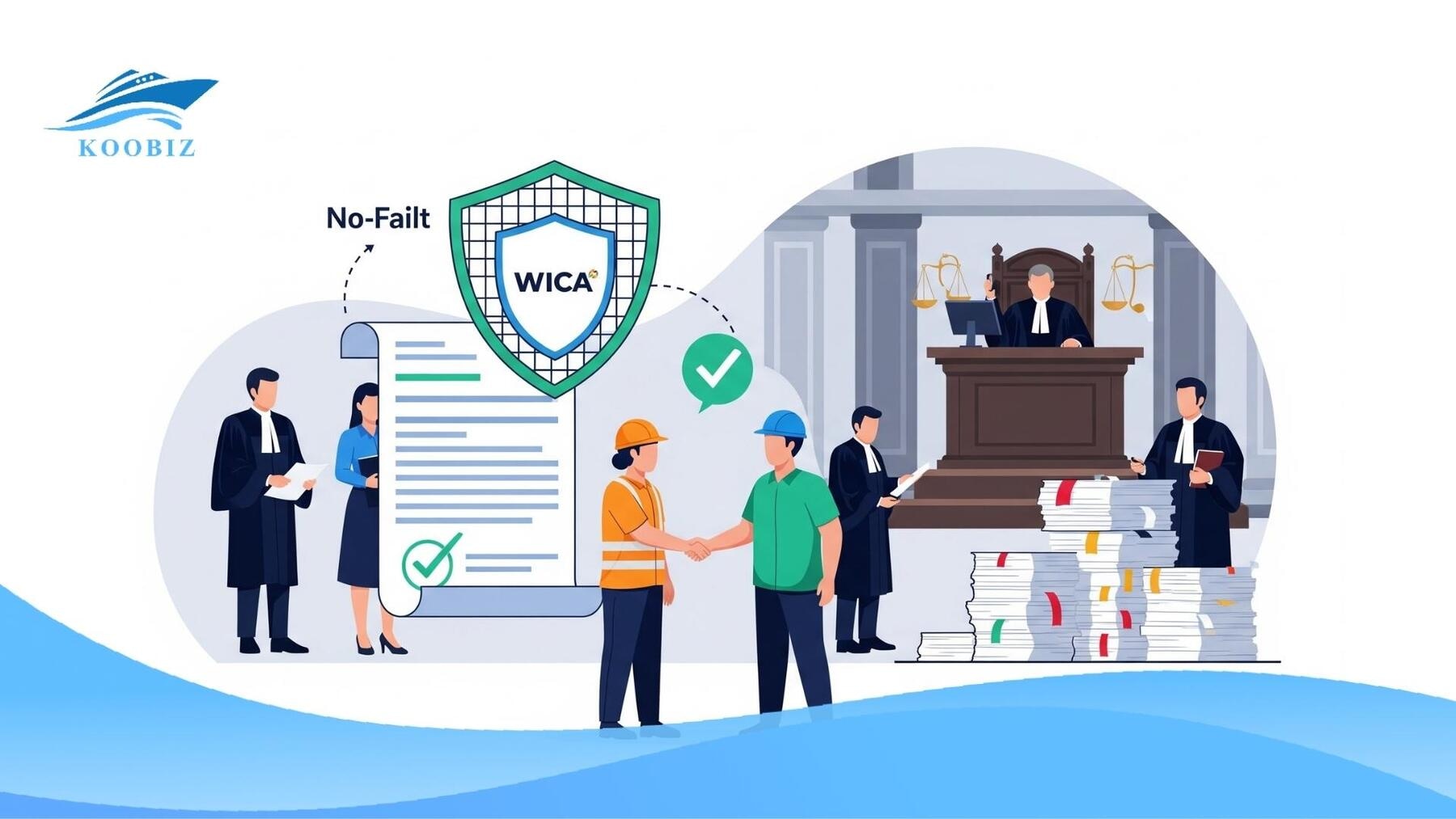
    WICA Insurance is a mandatory policy under the Work Injury Compensation Act that provides cost-efficient, no-fault compensation to employees injured or stricken with diseases during their employment.

    To appreciate the value of WICA, it is essential to understand how it differs from conventional liability insurance. Its defining feature is the “no-fault” principle. Unlike traditional claims, where an injured employee must prove employer negligence through a lengthy and costly legal process, WICA only requires proof that the injury or disease occurred in the course of employment-fault is irrelevant.

    This approach benefits both sides: employees gain faster access to medical expenses and wage compensation, while employers avoid the uncertainty and cost of civil litigation, as long as claims are resolved under the Act.
    Who Must Be Covered? (Mandatory Requirements)

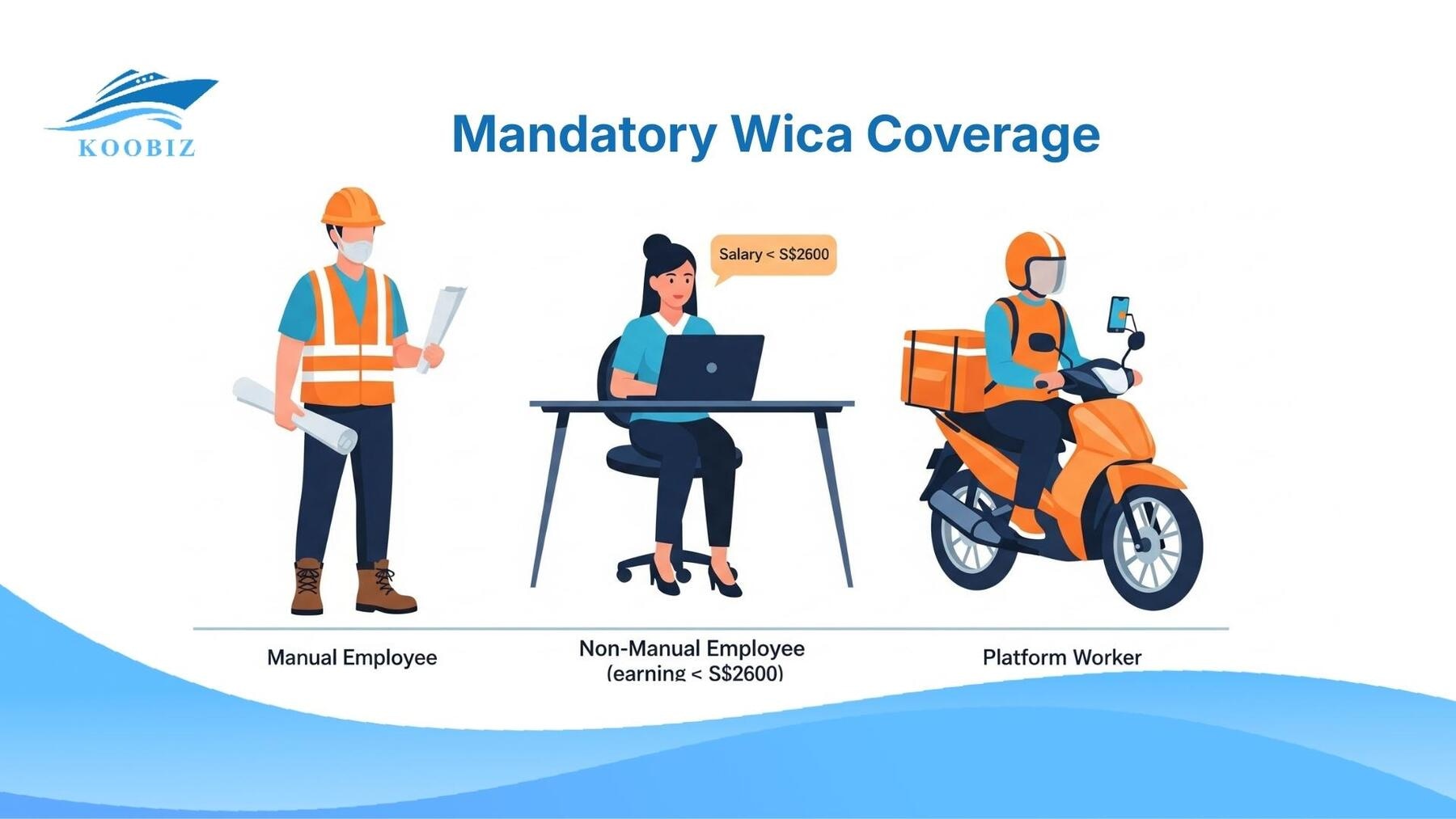
    WICA insurance is mandatory for manual employees, lower-income non-manual employees, and platform workers (effective 2025).

    Understanding WICA eligibility can be confusing, so we’ve summarised the mandatory rules to help you avoid penalties.
    Manual Employees

    WICA is mandatory for all manual workers regardless of salary. This covers roles involving physical labour, machinery or equipment (e.g., construction, factory operators, drivers, cleaners, technicians).

    Non-Manual Employees

    For non-manual employees, insurance is mandatory only if monthly salary ≤ S$2,600 (exclude OT, bonus, AWS). Office staff above this threshold aren’t legally required to be insured, though employers remain liable for valid claims. Many employers therefore insure everyone to transfer risk.

    Platform Workers (New 2025 Requirement)

    Mandatory for Platform Operators.

    Under the Platform Workers Act, Platform Operators must provide WICA for workers (e.g., delivery riders, private-hire drivers) who are subject to significant operator control.

    Local vs. Foreign Staff

    The Act applies equally to citizens, PRs and foreign work pass holders (Work Permit, S Pass, Employment Pass). Employers cannot exclude foreign workers.

    Note on Exemptions:

    Generally excludes independent contractors/freelancers (contract for service), domestic helpers (separate scheme), and uniformed government personnel.

    Coverage Benefits & Limits (Updated Nov 2025)

    The WICA framework provides three main types of compensation benefits: medical expenses, lost wages during medical leave, and lump-sum payouts for permanent disability or death.

    Understanding these limits is essential for financial planning. Below is a detailed comparison of the coverage benefits, featuring the increased limits effective from November 1, 2025.

    Benefit Type Max Limit / Calculation Coverage Details
    Medical Expenses Up to S$53,000 or 1 year from the accident date (whichever is reached first). Covers hospital bills, consultation fees, surgical costs, and rehabilitation fees. No copayment is required from the employee. (Increased from S$45,000).
    Medical Leave Wages (MC) Full pay for up to 14 days (or 60 days if hospitalized). 2/3 pay for the subsequent period, up to one year. Compensates the employee for lost income while they are recovering and unable to work.
    Death Benefit Min: S$91,000** <br> Max: **S$269,000 A lump sum paid to the dependents of an employee who dies due to a work-related accident. Calculated based on age and average monthly earnings. (Increased from S$225,000).
    Permanent Incapacity (PI) Min: S$116,000

    Max: **S$346,000** (plus 25% for total permanent incapacity).

    A lump sum for employees who suffer permanent disability (e.g., loss of a limb or sight). The amount depends on the % of incapacity assessed by a doctor. (Increased from S$289,000).

    Real-World Case Studies (Examples)

    To illustrate how these regulations apply in daily business operations, let’s examine two common scenarios faced by Singapore employers.

    These examples highlight the practical application of the rules discussed above.

    Case Study 1: The Construction Worker (Manual)

    Scenario: Ahmed is a construction site supervisor earning S$3,500 per month.

    Analysis: Even though his salary is above the S$2,600 threshold, his role involves manual labor (supervising on-site, handling tools).

    Verdict: Mandatory Coverage. His employer must buy WICA insurance. If Ahmed is injured by falling debris, the insurance will cover his medical bills and pay for his medical leave wages without him needing to sue the company.

    Case Study 2: The Admin Executive (Non-Manual)

    Scenario: Sarah is an HR Assistant earning S$2,500 per month.

    Analysis: Her role is non-manual (desk-bound). Her salary is S$2,500, which is below the S$2,600 threshold.

    Verdict: Mandatory Coverage. Her employer is legally required to insure her. If she develops Carpal Tunnel Syndrome (a work-related disease) due to her duties, she is eligible to claim under WICA. However, if she gets a promotion and her salary rises to S$2,700, insurance becomes optional – though highly recommended to protect the company from liability.

    WICA vs. Common Law: Which Route Should You Choose?

    Employees generally have two routes to seek compensation: filing a claim under WICA or suing the employer under Common Law, but they cannot pursue both simultaneously.

    This decision is critical and often irreversible once a judgment is made.

    Feature Work Injury Compensation Act (WICA) Common Law Suit
    Basis of Claim No-Fault (Employee only needs to prove injury happened at work) Fault-Based (Must prove employer was negligent)
    Speed of Process Faster (Streamlined process managed by MOM) Slower (Court proceedings can take years)
    Compensation Limits Capped at statutory limits (e.g., max S$346k for incapacity) Unlimited (Based on proven damages, including pain & suffering)
    Legal Costs Minimal / None (No lawyer required) High (Lawyer fees required)
    Certainty of Outcome High (Formula-based calculation) Uncertain (Depends on judge’s ruling and evidence)
    Best For Accidents where fault is unclear or speed is prioritized. Severe injuries due to gross negligence with high damages.

    Key Rule: An employee must elect a single route. Accepting compensation under WICA typically waives the right to pursue a Common Law claim, while commencing a Common Law action will generally suspend or terminate the WICA claim.

    How to File a Work Injury Compensation Claim in Singapore
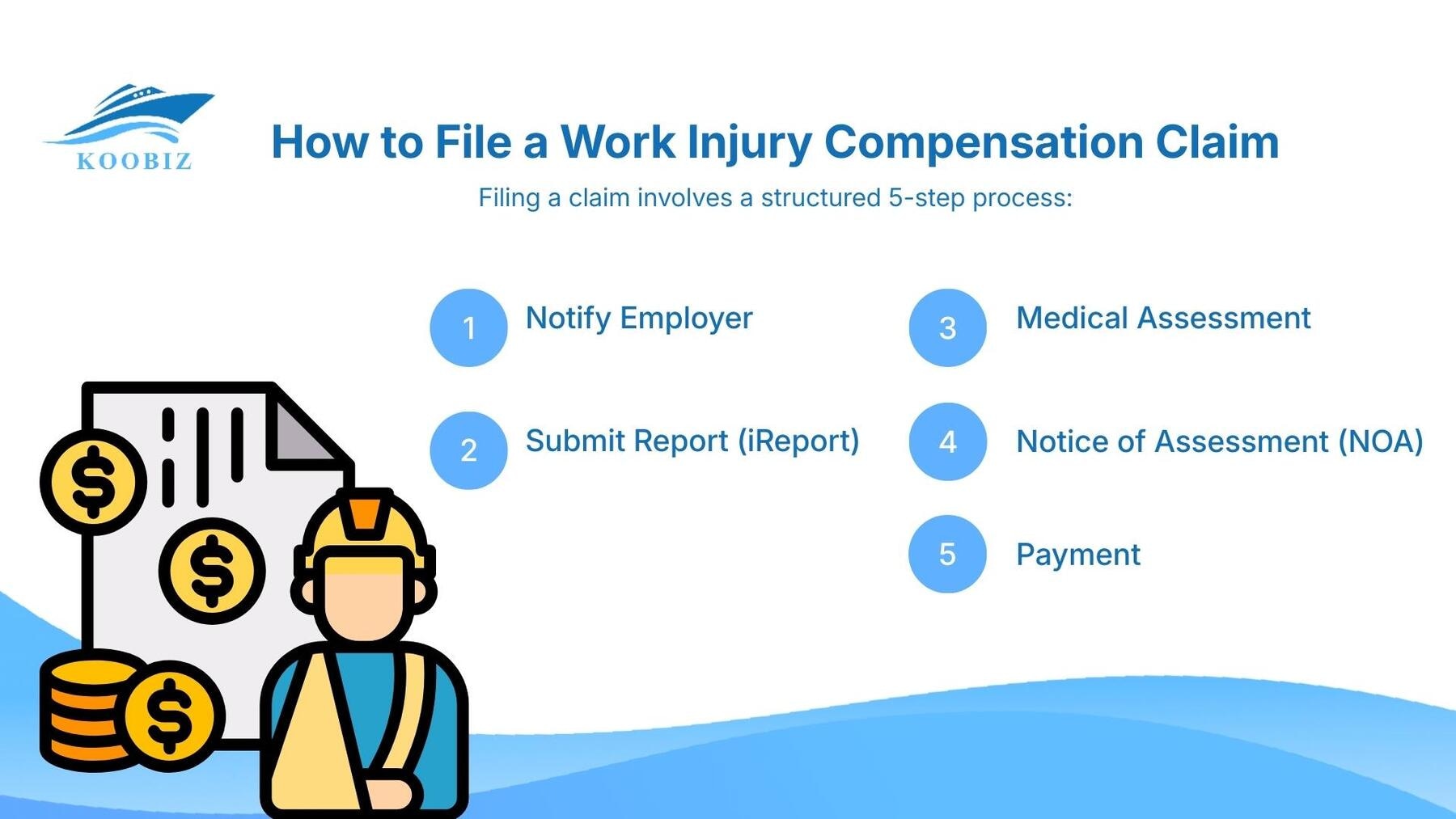
    Filing a claim involves a structured 5-step process starting from immediate notification to the final disbursement of funds.

    For employers and HR managers, knowing this workflow is vital to avoid procedural delays.

    Step 1: Notify Employer

    The injured employee must inform the employer of the accident as soon as possible. Prompt notification ensures that the incident is documented and the claims process can begin immediately without disputes over the timeline.

    Step 2: Submit Report (iReport)

    The employer is legally required to submit an incident report to the MOM via the iReport system. This must be done within 10 days of being notified of the accident or diagnosis. This applies if the accident results in death, more than 3 days of medical leave, or at least 24 hours of hospitalization.

    Step 3: Medical Assessment

    The employee undergoes a medical examination by a registered doctor. The doctor will assess the extent of the injury and determine the percentage of permanent incapacity (if any) once the condition stabilizes.

    Step 4: Notice of Assessment (NOA)

    Once the medical report is ready, MOM (or the designated insurer) will calculate the compensation based on statutory limits and issue a Notice of Assessment (NOA). This document officially states the compensation amount payable to the employee.

    Step 5: Payment

    If no objection is raised by either party within 14 days of the NOA, the employer (or their insurer) must make the payment within 21 days. Late payments can incur interest charges, so timely disbursement is critical.

    Frequently Asked Questions (FAQs)

    Can I claim both WICA and private personal accident insurance?

    Yes. WICA does not prevent an employee from claiming against their own personal accident insurance policies. These are separate contracts.

    Does WICA cover me if I’m working from home?

    Yes. With the rise of hybrid work, WICA covers injuries sustained while working from home (WFH), provided the injury arose out of and in the course of employment (e.g., tripping over a laptop cable while on a video call). It does not cover domestic accidents unrelated to work duties.

    Can I claim if the accident was my own fault?

    Yes. Because WICA is a no-fault system, an employee is eligible for compensation even if their own carelessness contributed to the accident, provided it wasn’t a deliberate act of self-harm.

    Is WICA insurance mandatory for foreign workers on S Pass?

    Yes, if they meet the criteria (Manual worker OR Non-manual earning ≤S$2,600). The pass type (S Pass, E Pass, Work Permit) does not exempt the employer from WICA obligations if the nature of work and salary fall within the mandatory scope.

    Ensure Full Compliance with Koobiz

    Beyond obtaining the right insurance, total business compliance requires expert structuring, accurate reporting, and ongoing adherence to Singapore’s regulatory framework.

    Operating a business in Singapore means managing compliance across ACRA, IRAS, and MOM – where even minor errors, such as employee misclassification or late WICA reporting, can result in significant penalties.

    At Koobiz, we streamline corporate compliance for startups and established businesses alike. From company incorporation and corporate secretarial support to banking and tax advisory, we work as your long-term strategic partner.

    Don’t leave compliance to chance. Build your business on a strong, compliant foundation.

    Contact Koobiz today for a consultation on entity structuring and compliance checks.

    • Website: koobiz.com
    • Services: Incorporation, Corporate Secretary, Accounting, Tax, and Banking Advisory.
  • Calculate Singapore EP Qualifying Salary: A 2025 Benchmark Guide for Employers

    Calculate Singapore EP Qualifying Salary: A 2025 Benchmark Guide for Employers

    [SUMMARIES]

    New Base Thresholds: The minimum qualifying salary is $5,600 for all sectors, rising to $6,200 for Financial Services (effective for all new applications and renewals expiring from Jan 1, 2026).

    Age Matters: The requirement increases progressively with age; a 45-year-old candidate now requires $10,700+ (General) or $11,800+ (Finance).

    COMPASS Integration: Meeting the minimum only qualifies the candidate to apply; earning points under the COMPASS C1 attribute requires meeting local PMET salary benchmarks (65th and 90th percentiles).

    Fixed Components: Only “fixed monthly salary” counts towards the threshold, variable bonuses and overtime pay are excluded.

    [/SUMMARIES]

    For employers and HR leaders, obtaining an Employment Pass (EP) in Singapore has shifted from a straightforward salary benchmark to a more nuanced, multi-factor assessment. Meeting a single minimum threshold is no longer sufficient; today, the EP qualifying salary is assessed dynamically, taking into account the applicant’s age, industry sector, and performance under the COMPASS framework. These evolving requirements mean that workforce planning now requires greater precision and foresight At Koobiz, we frequently assist businesses in navigating these complexities to ensure their talent acquisition strategies remain compliant and efficient. This guide will help you accurately calculate the required salary to meet the new 2025/2026 standards.

    What is the Minimum Qualifying Salary for EP in 2025?

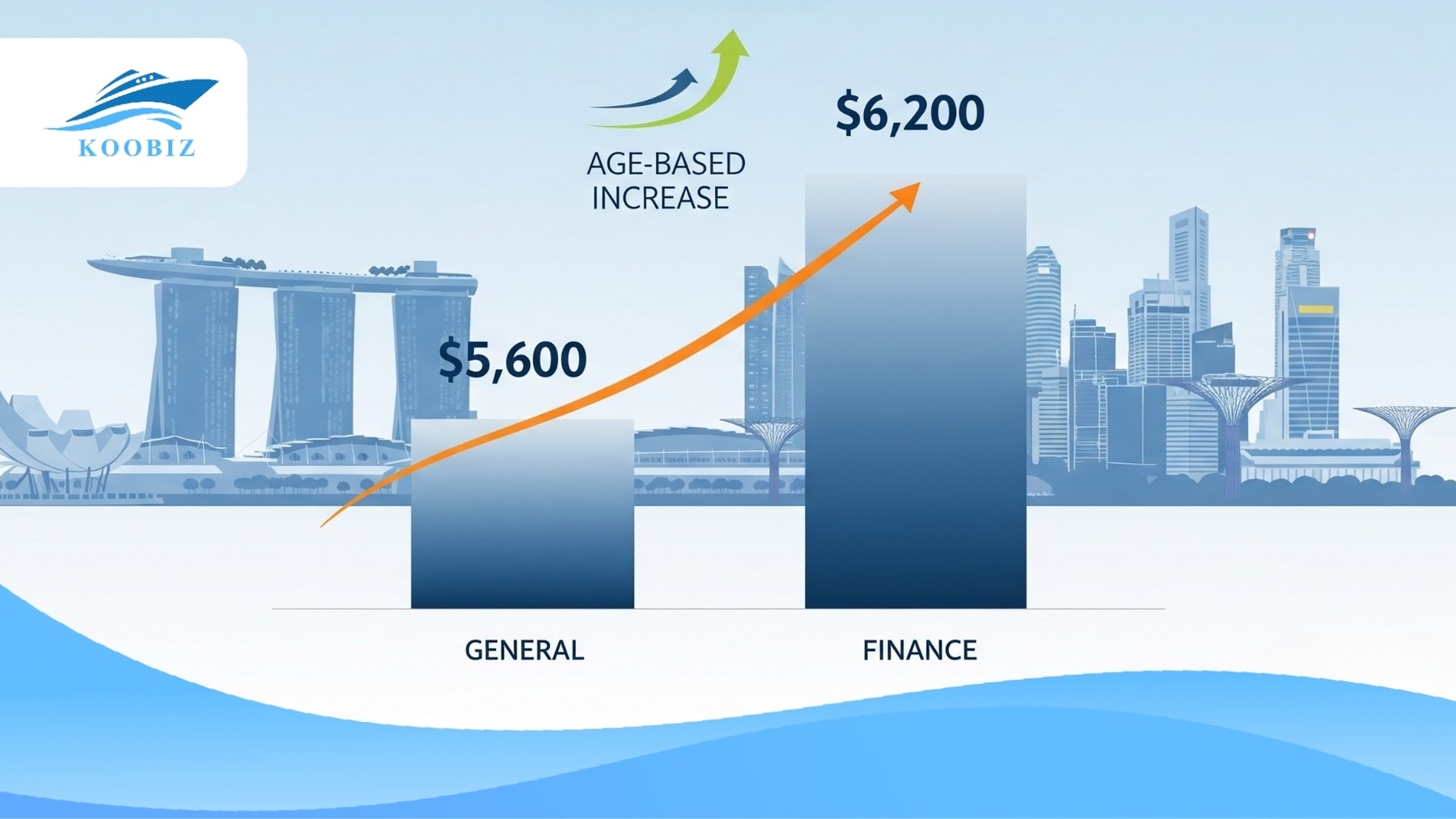
    As of 2025, the Ministry of Manpower (MOM) has raised the baseline monthly wage required to secure an Employment Pass to $5,600 for most industries.

    This figure is benchmarked against the top one-third of local PMET wages. For all new applications (and renewals expiring from 1 January 2026 onwards), the baseline thresholds are:

    • Non-Financial Sectors: $5,600 per month (up from $5,000).
    • Financial Services: $6,200 per month (up from $5,500).

    Note on Renewals: The previous lower rates ($5,000/$5,500) applied only to passes expiring before 31 December 2025. Moving forward into 2026, all candidates must meet these higher thresholds. Any EP application submitted with a fixed monthly salary below these amounts will be rejected automatically, regardless of the employer’s size, reputation, or business profile.

    Singapore EP salary 2025: $5,600 - $6,200
    Singapore EP salary 2025: $5,600 – $6,200

    How Does Age Affect the EP Salary Threshold?

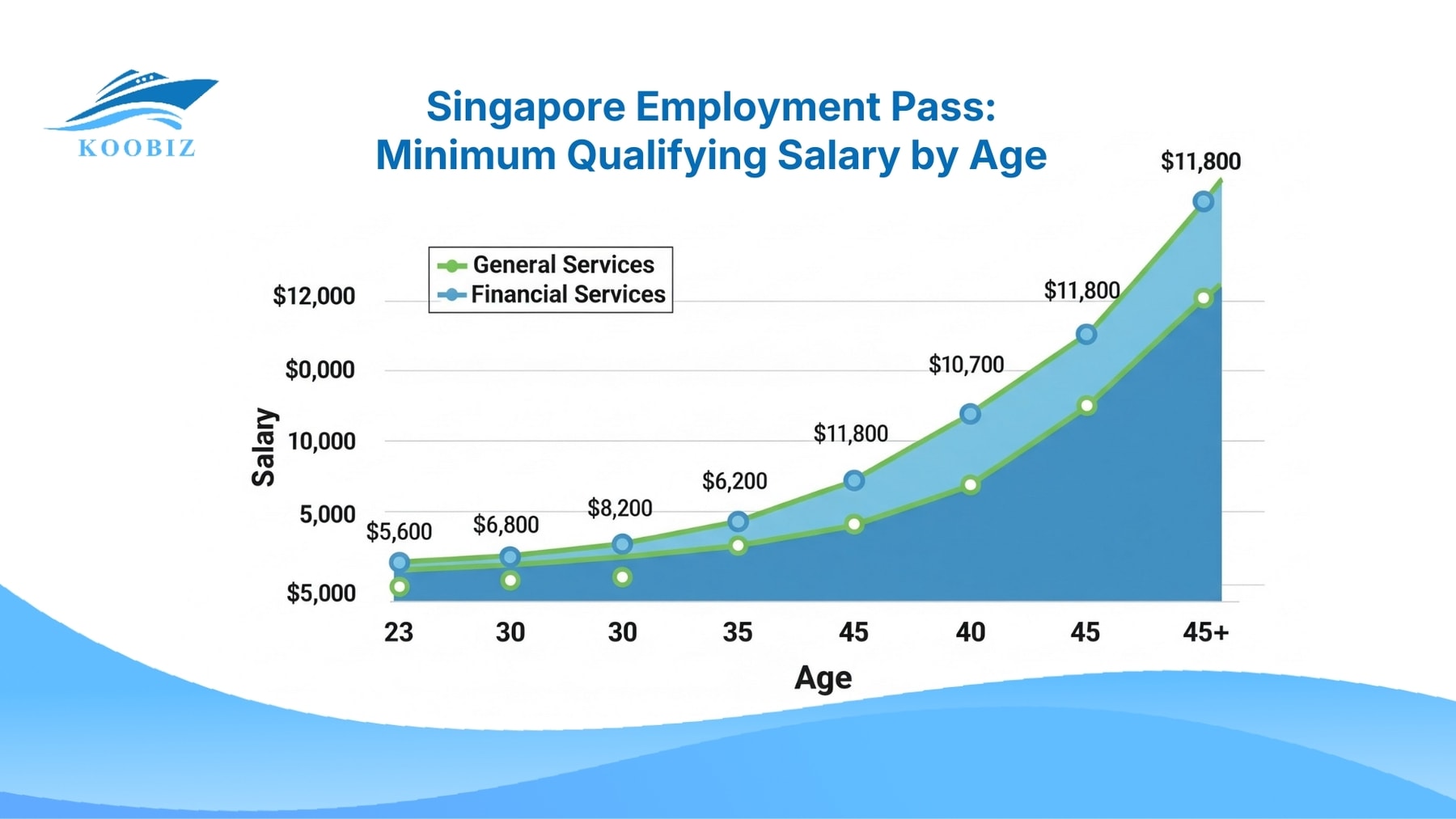
    The EP qualifying salary increases progressively with age, starting at the baseline for a 23-year-old and rising to nearly double for candidates aged 45 and above.

    EP salary increases by age: 23t: $5,600. 45t+: $10,700
    EP salary increases by age: 23t: $5,600. 45t+: $10,700

    MOM structures this increase to ensure foreign talent competes fairly with locals at a similar career stage. The 2025 age curve is significantly steeper than previous years:

    • Entry Level (Age 23): Candidates qualify at the absolute minimum ($5,600 General / $6,200 Finance).
    • Progressive Increase (Age 23 to 45): The salary requirement rises steadily. For example, a 30-year-old in a general sector now requires approximately $7,223.
    • Senior Level (Age 45 and above): The threshold peaks at $10,700 (General) and $11,800 (Financial Services).

    In practice, this “experience premium” is often the most underestimated cost in EP planning. As many employers working with Koobiz discover, hiring senior expatriates requires budgeting well above the headline minimum salary, especially when aligning compensation with COMPASS and renewal expectations.

    Financial Services vs. Non-Financial Sectors: The Salary Gap

    Financial services require a higher baseline compared to general industries, reflecting the premium wage norms within Singapore’s banking sector.

    The Ministry of Manpower recognizes that salaries in this sector are naturally inflated due to the high demand for specialized skills. Consequently, the bar is set higher across the board.

    Here is a detailed comparison of the 2025/2026 requirements:

    Comparison Factor Non-Financial Sectors Financial Services
    Base Salary (Age 23) $5,600 $6,200
    Mid-Career (Age ~35) ~$8,382 ~$9,000+
    Senior (Age 45+) $10,700 $11,800
    Target Industries Retail, Tech, Manufacturing, etc. Banking, Insurance, Asset Mgmt.

    This gap widens significantly as age increases. Failing to account for this sector-specific premium is a common reason for application rejections in the Central Business District.

    The COMPASS Framework: Calculating C1 Salary Points

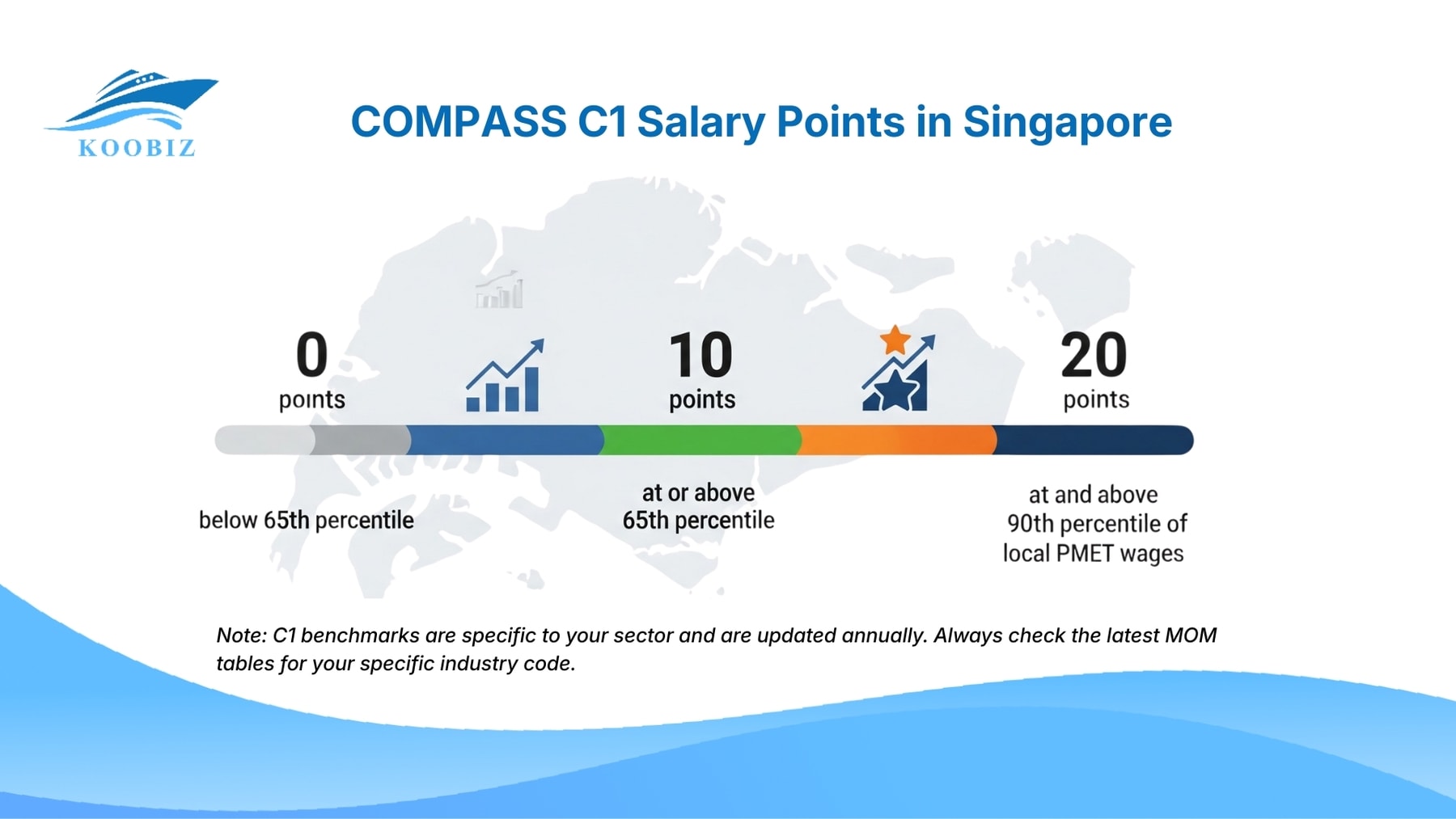
    The COMPASS Framework calculates C1 Salary Points based on two benchmarks: meeting the 65th percentile of local PMET wages earns 10 points, while meeting the 90th percentile earns 20 points.

    COMPASS C1 Salary Points: 0, 10 (≥65th percentile), 20 (≥90th percentile)
    COMPASS C1 Salary Points: 0, 10 (≥65th percentile), 20 (≥90th percentile)

    Importantly, meeting the EP qualifying salary is only the entry requirement, it does not earn points by itself. To pass COMPASS, an application must score at least 40 points, and C1 is the most straightforward lever employers can use to boost the total score.

    • 0 Points: Salary meets the EP minimum but is below the 65th percentile of local peers.
    • 10 Points: Salary is at or above the 65th percentile.
    • 20 Points: Salary is at or above the 90th percentile.

    Note: C1 benchmarks are specific to your sector and are updated annually. Always check the latest MOM tables for your specific industry code.

    Case Studies: Calculating EP Eligibility in Real Scenarios

    To demonstrate how the new 2025 rates apply, we have compiled three scenarios. These highlight the stricter requirements compared to previous years.

    Scenario 1: The “Age Trap” (Tech Sector)

    Candidate: Software Engineer, Age 38.

    Offer: $8,000 Fixed Monthly Salary.

    Outcome: REJECTED.

    • Analysis: While $8,000 seems high, the new 2025 benchmark for a 38-year-old in general sectors is approximately $9,077. The offer falls short by over $1,000.
    • Lesson: Mid-career hires face the steepest increases. You must check the specific age benchmark before making an offer.

    Scenario 2: The “Sector Premium” (Finance vs. Retail)

    Candidate: Marketing Manager, Age 30.

    Offer: $7,000 Fixed Monthly Salary.

    Outcome: AT RISK (Both Sectors).

    • In a Retail Company: REJECTED. The new general benchmark for Age 30 is roughly $7,223. An offer of $7,000 is no longer sufficient (unlike in 2024).
    • In an Investment Bank: REJECTED. The Finance benchmark for Age 30 is approximately $7,982.
    • Lesson: Salaries that were “safe” last year may now be insufficient.

    Scenario 3: The “COMPASS Save” (Using Salary to Pass)

    Candidate: Operations Director, Age 45.

    Challenge: The company has low diversity (0 points). They need 40 points solely from the candidate.

    Strategy: Offer a salary in the 90th percentile (e.g., $18,000+).

    • Result:
      • C1 (Salary): 20 Points (90th percentile).
      • C2 (Qualifications): 20 Points (Top-tier University degree).
      • Total: 40 Points -> PASSED.
    • Lesson: For senior roles, aiming for the 90th percentile can “save” an application even if the firm scores poorly on diversity.

    How to Use the MOM Self-Assessment Tool (SAT) for Verification

    The Self-Assessment Tool (SAT) is MOM’s official online calculator that predicts application outcomes.

    Before submitting any application, using the SAT is mandatory to avoid rejection fees and records.

    Step 1: Access and Login

    Navigate to the MOM SAT page. Koobiz strongly recommends logging in via Singpass to see your specific Firm-Level COMPASS scores (C3 Diversity and C4 Support for Local Employment).

    Step 2: Input Candidate Data

    Enter the candidate’s personal details accurately. Nationality & Date of Birth are critical for the age-based salary curve.

    Step 3: Input Job & Salary Details

    Enter only the fixed monthly salary. Do not include variable bonuses. If the result is “Not Eligible,” try adjusting the salary upward to find the passing threshold for that specific profile.

    Step 4: Interpret the Result

    • Green (Eligible): ~90% chance of approval.
    • Red (Not Eligible): Do not proceed. The salary likely fails the new 2025 age-based benchmarks.

    Understanding “Fixed Monthly Salary” Components

    Fixed Monthly Salary is the guaranteed amount paid every month. MOM assesses EP eligibility strictly based on this figure, not total compensation.

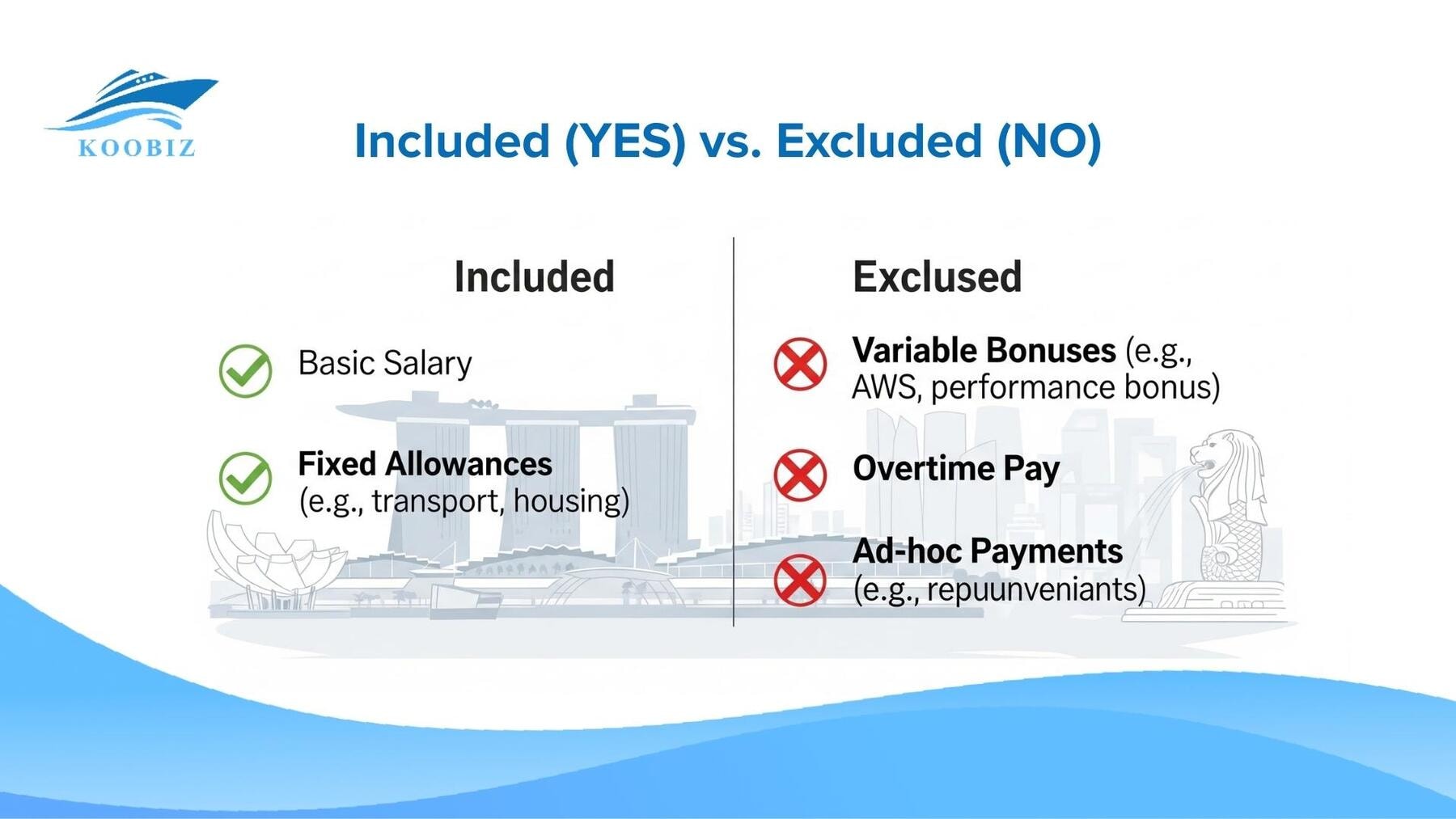
    Included (YES) vs. Excluded (NO)
    Included (YES) vs. Excluded (NO)

    Included (YES) vs. Excluded (NO)

    • YES: Basic monthly salary and fixed allowances (e.g., fixed transport/housing/meal allowances stipulated in the contract).
    • NO: Variable bonuses (AWS, performance bonus), overtime pay, reimbursements, and in-kind benefits (direct housing or car provided).

    Special Cases and Exemptions

    Renewals vs. New Applications

    While the 2025 increase applies fully to new EP applications, employers should plan early for renewals expiring in 2026. These renewals must meet the new higher baselines ($5,600 / $6,200), and many existing EP holders may need salary adjustments to remain eligible.

    Overseas Intra-Corporate Transferees (ICT)

    Intra-Corporate Transferees (ICTs) are senior employees transferred from an overseas branch. While they must still meet the age-tiered qualifying salary (Age 45+ ~$10,700), ICTs are exempt from the COMPASS framework (no C1 salary points needed).

    Frequently Asked Questions (FAQs)

    Can I use my “13th-month bonus” (AWS) to meet the $5,600 threshold?

    No. The Annual Wage Supplement (AWS) is not considered part of the “fixed monthly salary” because it is a one-time annual payment. You must meet the minimum threshold using strictly monthly guaranteed income.

    What is the salary requirement to bring my family (Dependants)?

    To sponsor a Dependant’s Pass for your spouse or children, you must earn a fixed monthly salary of at least $6,000. To sponsor a Long-Term Visit Pass for your parents, the threshold is significantly higher at $12,000.

    Can EP holders work part-time or start a side business?

    Generally, no. An Employment Pass is tied to a specific employer. You cannot engage in moonlighting or freelance work without explicit approval (e.g., a “Letter of Consent”) or holding a specific pass like the ONE Pass.

    How long is the Employment Pass valid for?

    For first-time applicants, the pass is typically granted for up to 2 years. For renewals, it can be granted for up to 3 years, provided the passport validity allows.

    My company is overseas without a Singapore branch. Can we still apply?

    Yes. Applications can be made via a local sponsor (a registered Singapore entity), though processing is longer (around 8 weeks). For smoother processing (about 10 business days) and better long-term compliance, Koobiz typically recommends incorporating a local Singapore entity.

    About Koobiz

    Navigating Singapore’s employment regulations, whether it’s determining the correct EP qualifying salary or managing corporate tax and accounting, can be challenging for international businesses.

    Koobiz helps simplify your market entry and ongoing compliance in Singapore. From company incorporation and corporate bank account opening to payroll setup and tax filings aligned with the latest MOM and IRAS requirements, our experienced team provides end-to-end support.

    Let us manage the regulatory details, so you can stay focused on scaling your business with confidence.

    Visit us at: Koobiz.com to learn more about our corporate services.