Author: Stella Pham

  • Long-Term Visit Pass (LTVP Singapore): Requirements, Benefits & How to Apply (2026)

    Long-Term Visit Pass (LTVP Singapore): Requirements, Benefits & How to Apply (2026)

    [SUMMARIES]

    The Long-Term Visit Pass (LTVP) allows eligible foreigners, such as family members of Singapore Citizens, PRs, or work pass holders, to reside in Singapore for an extended period.

    LTVP holders do not have automatic work rights but can legally work by obtaining a Pre-Approved Letter of Consent (PLOC) or a specific Letter of Consent (LOC).

    Applications are assessed by either ICA or MOM depending on the sponsor, with the LTVP+ offering enhanced benefits like healthcare subsidies and longer validity for spouses of Singapore Citizens.

    [/SUMMARIES]

    The Long-Term Visit Pass (LTVP) allows eligible foreigners to stay in Singapore on a long-term basis, mainly to live with family members or for approved residency-related purposes. Depending on the applicant’s profile, the pass is issued by either the Immigration & Checkpoints Authority (ICA) or the Ministry of Manpower (MOM).

    In 2026, LTVP applications are assessed carefully based on family ties, eligibility criteria, and the applicant’s ability to integrate into Singapore. Understanding the correct LTVP type, authority, and application process is essential to avoid delays or rejection. This guide explains who can apply for an LTVP in Singapore, the key requirements and benefits, and how to apply correctly under the latest regulations.

    What Is the Long-Term Visit Pass (LTVP) in Singapore?

    The Long-Term Visit Pass (LTVP) is a residence pass that allows eligible foreigners to remain in Singapore for an extended period for family-related or other approved purposes. It is intended for individuals who do not qualify for permanent residence or a standard work pass, but who have a legitimate basis to stay in Singapore long term.

    The LTVP framework is administered by two government authorities. Applications linked to Singapore Citizens or Permanent Residents and certain special residency cases are handled by the Immigration & Checkpoints Authority (ICA), while applications for eligible family members of Employment Pass or S Pass holders fall under the Ministry of Manpower (MOM).

    While the LTVP itself does not automatically grant the right to work, some holders may be permitted to work in Singapore with additional approval from MOM. LTVPs are typically issued for a limited validity period and may be renewed subject to continued eligibility and assessment by the relevant authority.

    Types of Long-Term Visit Pass in Singapore

    Singapore offers two main types of Long-Term Visit Pass, depending on the applicant’s relationship to a sponsor, study background, and long-term stay needs.

    Standard Long-Term Visit Pass (LTVP)

    The Standard Long-Term Visit Pass (LTVP) supports eligible foreigners who require a long-term stay in Singapore for approved family, study, or personal reasons. It is commonly issued to:

    • Family members of Singapore Citizens, Permanent Residents, or eligible work pass holders
    • Graduates from Singapore institutions who are seeking employment
    • Parents or grandparents of children studying in Singapore
    • Other special cases assessed by ICA on a discretionary basis

    The pass is typically granted for a shorter validity period and may be renewed subject to eligibility.

    Long-Term Visit Pass Plus (LTVP+)

    The LTVP+ is an enhanced pass designed specifically for foreign spouses of Singapore Citizens who meet additional criteria.

    It offers longer residency validity, access to public healthcare subsidies, and easier access to employment through a Letter of Consent (LOC), providing greater stability for Singaporean families.

    LTVP vs LTVP+: Key Differences You Should Know

    Criteria Standard LTVP LTVP+
    Target applicants Spouses of PRs, Children of SC/PRs, parents, graduates, or newlywed spouses of SCs. Foreign spouses of Singapore Citizens (subject to qualifying criteria).
    Length of stay Typically 1–2 years Up to 3 years, renewable for up to 5 years
    Right to work No automatic work rights; requires LOC/PLOC (for spouses/children) or a separate work pass. Enhanced access: Comes with Pre-approved LOC (PLOC); no job offer required at application stage.
    Employer quota & levy May apply (Waived if on LOC/PLOC; Applies if on Work Permit). Not subject to quota or foreign worker levy.
    Healthcare benefits No public healthcare subsidies Eligible for subsidised inpatient care at public hospitals.
    Overall stability Moderate High, suitable for long-term family settlement

    Who Can Apply for a Long-Term Visit Pass in Singapore?

    Eligible Applicants for LTVP Singapore
    Eligible Applicants for LTVP Singapore

    Eligibility for the Long-Term Visit Pass (LTVP) varies depending on the applicant’s relationship to Singapore, residency purpose, and sponsorship profile. In practice, LTVP applications generally fall into the following main categories.

    Family Members of Singapore Citizens or Permanent Residents (PRs)

    Foreigners with immediate family ties to a Singapore Citizen or Permanent Resident may be eligible for an LTVP. This commonly includes:

    • Spouses of Singapore Citizens or PRs
    • Unmarried children under 21, born within a legal marriage or legally adopted
    • Parents of Singapore Citizens or PRs

    Applications in this category are assessed based on factors such as family relationship, length of marriage, household stability, and the sponsor’s profile.

    Graduates from Singapore Institutions Seeking Employment

    Foreign graduates from recognised institutions in Singapore who wish to remain in the country to seek employment may apply for an LTVP.

    This option allows graduates to stay legally in Singapore while exploring job opportunities, subject to ICA’s approval and prevailing eligibility criteria.

    Parents or Grandparents of Children Studying in Singapore

    Parents or grandparents of children holding a Student’s Pass in Singapore may be eligible for an LTVP, provided:

    • Only one applicant (either a parent or grandparent) applies at any one time
    • A local sponsor who is a Singapore Citizen or PR is appointed, where required

    This category supports families who wish to accompany and care for their children during their studies in Singapore.

    Employment Pass or S Pass Holders Sponsoring Family Members

    Eligible Employment Pass (EP) or S Pass holders may sponsor certain family members for an LTVP if they meet MOM’s sponsorship requirements, including minimum salary thresholds.

    Family members who may qualify under this category include:

    • Common-law spouses
    • Unmarried step-children under 21
    • Unmarried handicapped children aged 21 and above
    • Parents (for EP/S Pass holders earning at least SGD 12,000 per month)

    Visitors Seeking Permission to Give Birth in Singapore

    Foreign visitors who wish to give birth in Singapore may apply for a Long-Term Visit Pass (LTVP), subject to approval by the Immigration & Checkpoints Authority (ICA).

    Applications under this category require:

    • A local sponsor who is a Singapore Citizen or Permanent Resident aged 21 and above
    • Submission via ICA e-Service by the sponsor using Singpass

    Approval is assessed by ICA on a case-by-case basis, taking into account the applicant’s circumstances and supporting documentation.

    Pre-Marriage Assessment (PMLA) for Prospective Spouses

    The Pre-Marriage Long-Term Visit Pass Assessment (PMLA) is an optional assessment conducted by ICA for Singapore Citizens and their foreign partners before marriage.

    By completing the PMLA prior to marriage, couples can receive an early indication of the foreign spouse’s likelihood of being granted an LTVP after marriage. Applications submitted following a completed PMLA are typically processed within 6 weeks, compared to the usual processing time of up to 6 months.

    The PMLA is free of charge and is strongly recommended for couples who wish to plan their residency arrangements in Singapore with greater certainty.

    Benefits of Holding a Long-Term Visit Pass (LTVP) in Singapore

    The Long-Term Visit Pass (LTVP) is an immigration pass granted to eligible foreigners for an approved period of residence in Singapore.

    Key benefits include:

    • Longer stay duration compared to short-term visit passes, reducing the need for frequent exits and re-entries
    • Stability for family life, especially for spouses or family members of Singapore Citizens or Permanent Residents
    • Eligibility to apply for additional passes, such as a Letter of Consent (LOC), Pre-approved Letter of Consent (PLOC), subject to ICA and MOM approval
    • Access to essential services in Singapore, including housing arrangements, banking, and healthcare, depending on individual circumstances
    • Clear residency status, helping families plan long-term living arrangements with greater certainty

    Overall, the LTVP provides a more secure and flexible stay option for foreigners with strong family or personal ties to Singapore.

    LTVP Singapore Requirements

    Long-Term Visit Pass (LTVP) applications in Singapore are assessed by different authorities depending on the applicant’s profile and purpose of stay. In general, ICA oversees immigration eligibility and residency matters, while MOM is involved when the application relates to employment eligibility or work authorization.

    Eligibility Criteria for LTVP Singapore

    Eligibility for the Long-Term Visit Pass (LTVP) is assessed based on the applicant’s individual circumstances and the purpose of stay. Depending on the case, the assessment may involve either the Immigration & Checkpoints Authority (ICA) or the Ministry of Manpower (MOM).

    Key factors typically considered include the applicant’s relationship with a Singapore-based sponsor, the intended duration and purpose of stay, and the sponsor’s residency or employment status in Singapore. Where employment-related permissions are involved, additional requirements under MOM regulations may also apply.

    Final approval is granted on a case-by-case basis and remains subject to the relevant authority’s prevailing policies and discretionary assessment.

    Documents Required for LTVP Application

    Supporting documents for an LTVP application depend on the applicant’s profile and the assessing authority. Applications involving family ties to Singapore Citizens or Permanent Residents are typically assessed by the Immigration & Checkpoints Authority (ICA), while applications sponsored by Employment Pass or S Pass holders fall under the Ministry of Manpower (MOM). Applicants should always refer to the latest official document checklists issued by ICA and MOM to ensure their submissions meet current requirements.

    How to Apply for an LTVP in Singapore

    Step-by-Step LTVP Application
    Step-by-Step LTVP Application

    The application process for a Long-Term Visit Pass (LTVP) depends on the applicant’s profile and the relevant authority. ICA handles cases for Singapore Citizens and Permanent Residents, as well as certain special or discretionary situations, while MOM handles cases assessed under Employment Pass (EP) and S Pass regulations. Applying through the correct channel ensures smoother processing and faster approval.

    For ICA-Assessed Applicants

    Who this applies to:

    • Spouses of Singapore Citizens or Permanent Residents
    • Unmarried children or step-children of SC/PRs
    • Parents or grandparents of Student Pass holders
    • Visitors seeking permission to give birth in Singapore
    • Other discretionary cases assessed by ICA

    Steps to apply:

    1. The sponsor (SC or PR aged 21+) submits the application via ICA e-Service using Singpass
    2. ICA reviews the application based on family ties, residency, and eligibility
    3. The outcome is communicated once ICA completes its assessment

    For MOM-Assessed Applicants

    Who this applies to:

    • Parents or other eligible family members of Employment Pass (EP) or S Pass holders

    Steps to apply:

    1. The EP or S Pass holder acts as the main sponsor and submits the application via myMOM Portal
    2. MOM reviews employment-related eligibility, such as sponsor’s salary and company registration
    3. Approval is granted once MOM completes its assessment

    LTVP Processing Time and Application Fees

    Aspect MOM-Assessed Applications ICA-Assessed Applications
    Processing Time Typically 3 weeks, up to 8 weeks for some cases Up to 6 months; ~6 weeks if PMLA completed before marriage
    Submission Fee $105 per pass S$45 per application
    Issuance Fee $225 per pass S$60 per pass
    Multiple Journey Visa (if applicable) S$30 S$30
    Refund Policy Non-refundable Non-refundable

    Applicants can pay online via:

    • Credit/debit cards (Visa, MasterCard, AMEX)
    • Internet banking (DBS/POSB, OCBC, UOB, Standard Chartered)
    • PayNow (ICA and some MOM cases)
    • GIRO or bank transfer (MOM only, if required)

    Can LTVP Holders Work in Singapore?

    Holding a Long-Term Visit Pass (LTVP or LTVP+) does not automatically grant the right to work in Singapore. Eligible holders must obtain either a Pre-Approved Letter of Consent (PLOC) or a Letter of Consent (LOC) before starting employment. These passes make it easier for certain family members of Singapore Citizens (SC) or Permanent Residents (PR) to work legally without needing a full Employment Pass or S Pass.

    Pre-Approved Letter of Consent (PLOC)

    The Pre-Approved Letter of Consent (PLOC) is a work authorization for eligible LTVP/LTVP+ holders that allows them to start working in Singapore without securing a job first. It simplifies the process for spouses or unmarried children under 21 of Singapore Citizens or Permanent Residents, providing a smooth path to employment once the pass is approved.

    Letter of Consent (LOC)

    The Letter of Consent (LOC) is another type of work authorization for LTVP/LTVP+ holders, but it is tied to a specific job offer. It allows eligible family members to work legally in Singapore once their prospective employer has obtained approval. LOC ensures compliance with employment regulations while enabling work for those who already have an offer.

    PLOC vs LOC Comparison

    Aspect Pre-Approved Letter of Consent (PLOC) Letter of Consent (LOC)
    Who Can Apply LTVP/LTVP+ holders who are spouse or unmarried child under 21 of a Singapore Citizen or PR LTVP/LTVP+ holders who are spouse or unmarried child under 21 of a Singapore Citizen or PR and have a job offer
    Job Requirement No job offer needed Must have a job offer from a Singapore employer
    Application Submitted By The LTVP/LTVP+ holder applies directly to ICA The employer or appointed agent applies to MOM
    Start Work Immediately after PLOC is approved Only after LOC is issued
    Pass Validity Tied to the expiry of current LTVP/LTVP+ Tied to earlier of LTVP/LTVP+ expiry or employer-indicated duration
    Occupation Restrictions None (subject to normal employment regulations) Cannot work in objectionable occupations (e.g., dance hostess)
    Best For Those eligible and without a job offer yet Those with job offer but cannot get PLOC

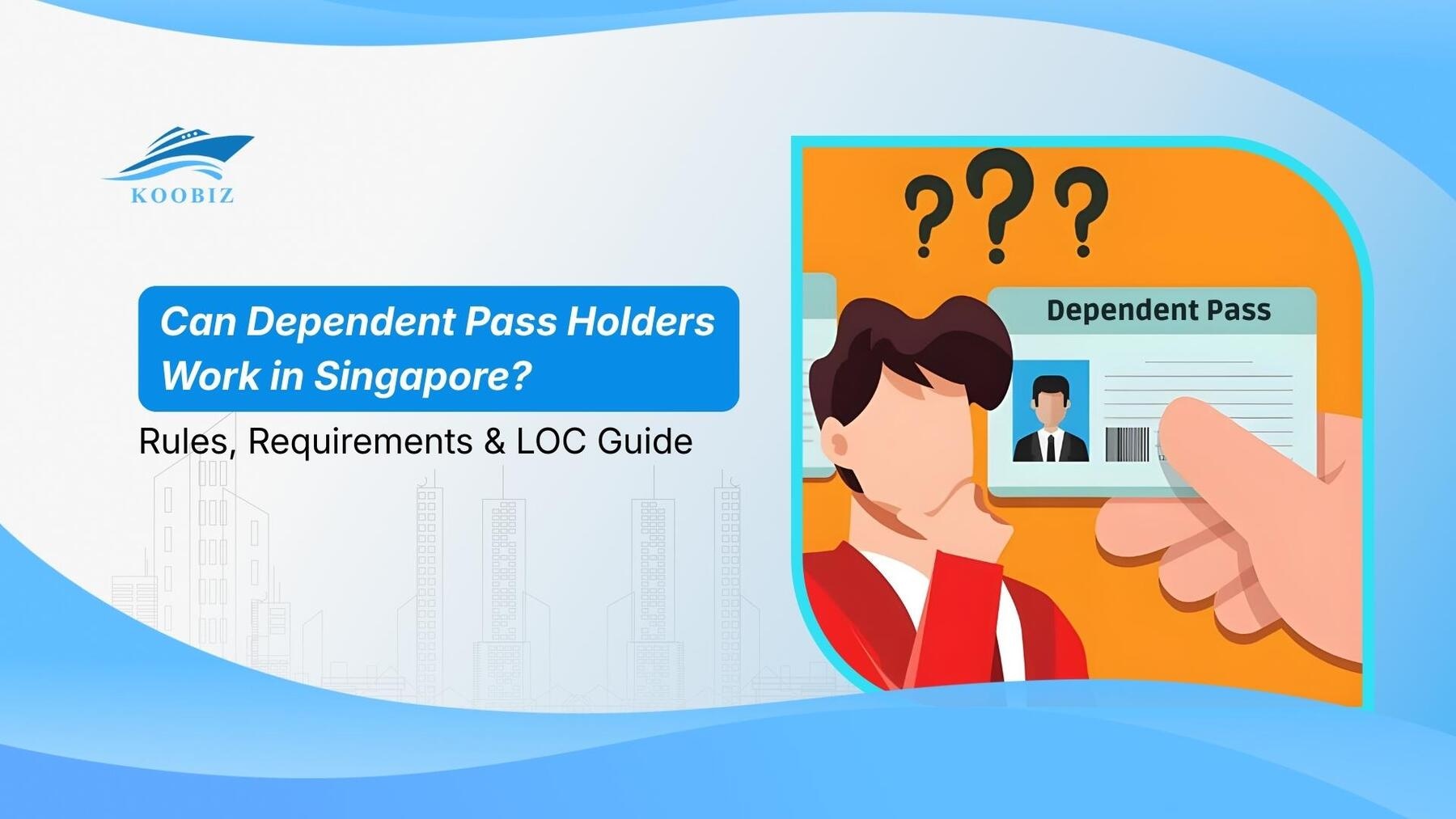
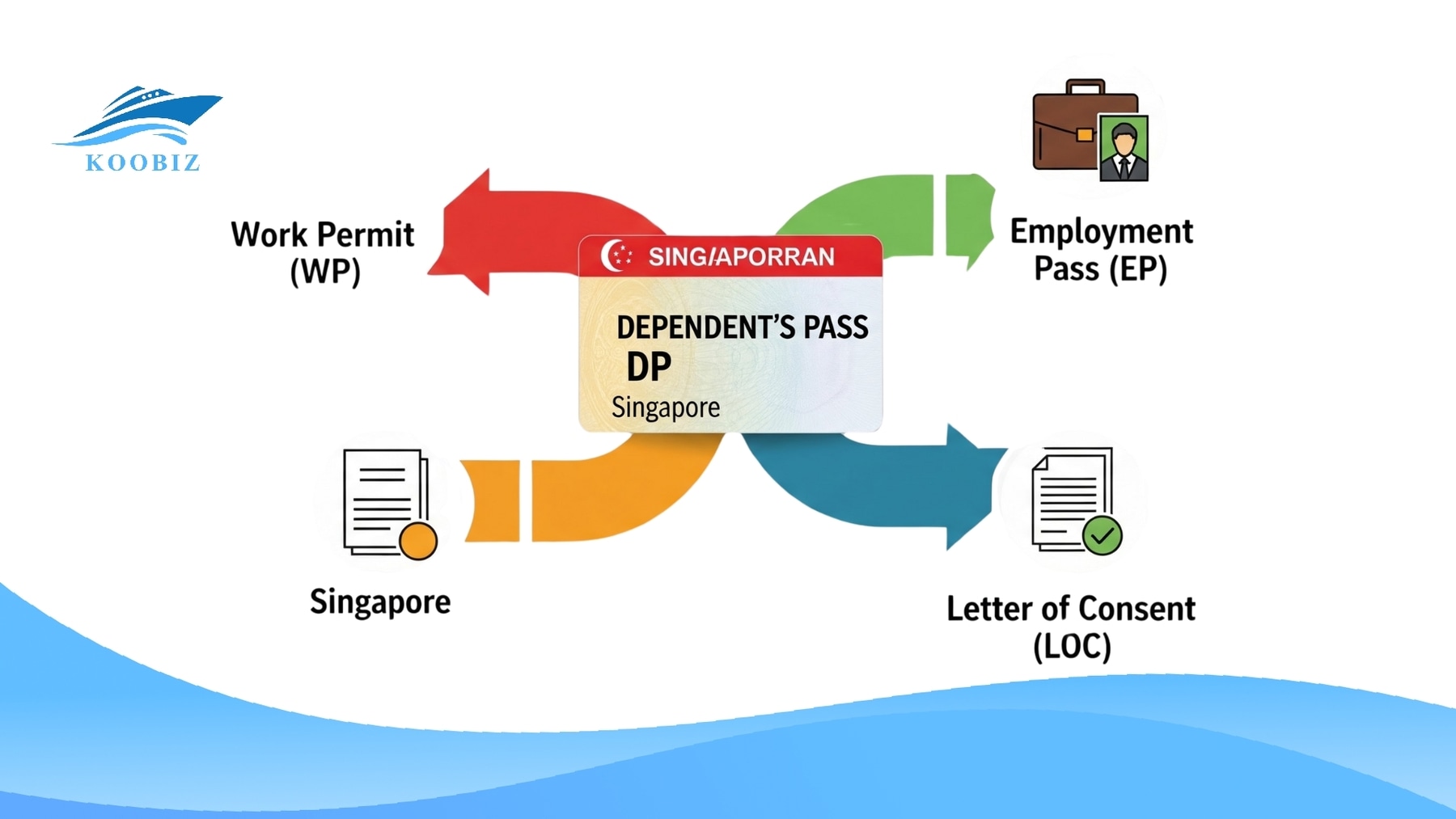
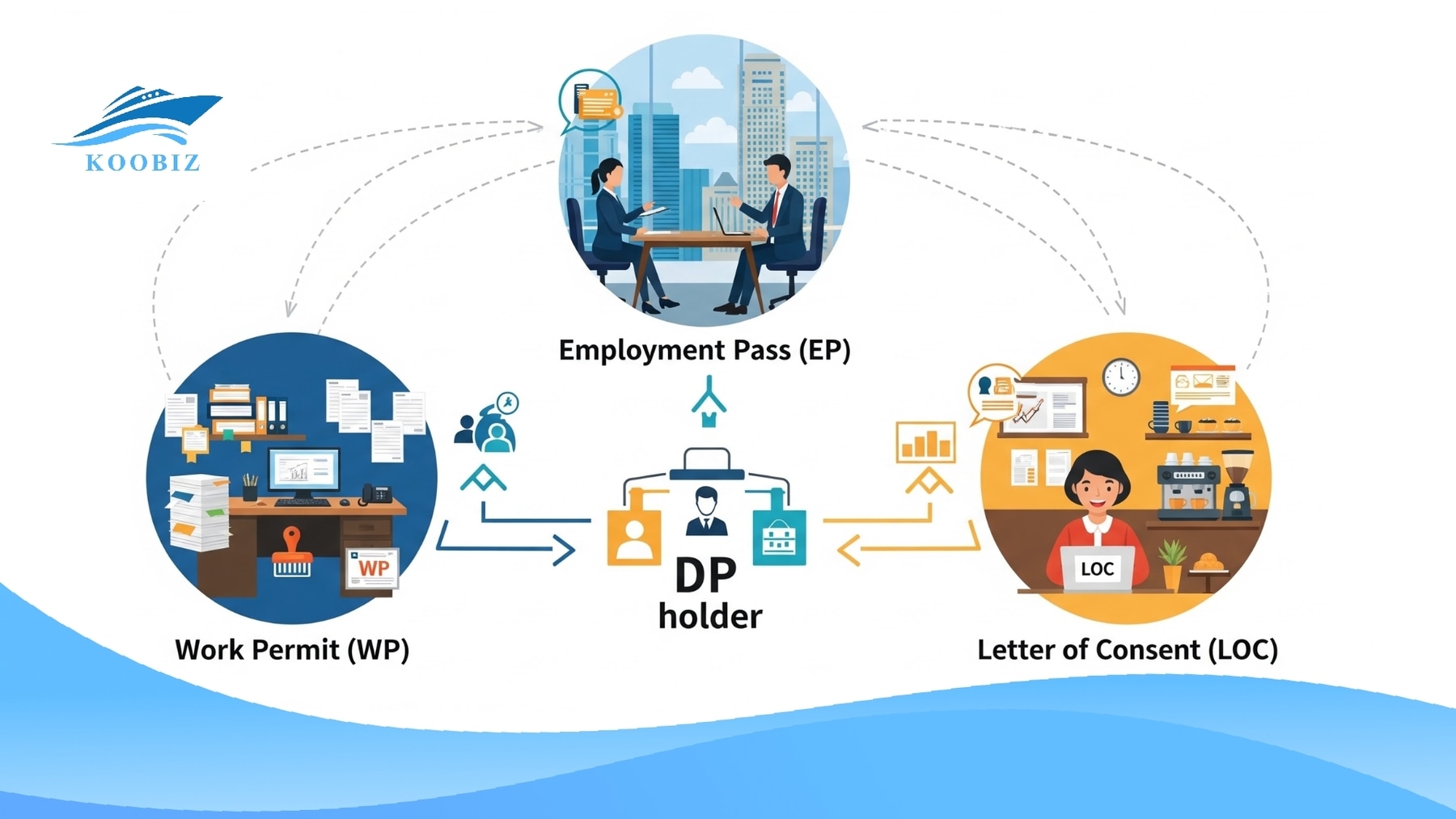
    Note: If you are a Dependant’s Pass holder seeking employment in Singapore, you will need to apply for a Work Permit, S Pass or Employment Pass instead.

    LTVP vs Dependant Pass (DP): Which Pass Is More Suitable?

    Choosing the right pass for your family in Singapore depends on your situation.

    Dependant Pass (DP) is for spouses and children under 21 of Employment Pass (EP) or S Pass holders. DP holders can stay with the main pass holder, and children can attend school, but to work, they generally need to obtain a Work Permit, S Pass, or Employment Pass (LOC is no longer available for most DP holders)

    Long-Term Visit Pass (LTVP) is primarily issued to family members of Singapore Citizens (SCs) or Permanent Residents (PRs).

    In addition, Employment Pass (EP) and S Pass holders may also sponsor certain eligible family members under the LTVP scheme – such as parents (subject to a minimum monthly salary of S$12,000), common-law spouses, step-children, or handicapped children, depending on MOM eligibility criteria.

    Can an LTVP Lead to Singapore Permanent Residence (PR)?

    LTVP to PR Pathway
    LTVP to PR Pathway

    Many foreigners wonder if holding a Long-Term Visit Pass (LTVP) can be a pathway to Singapore Permanent Residence (PR). While an LTVP allows you to live in Singapore legally, it does not automatically lead to PR.

    Eligibility for PR is assessed separately by the Immigration and Checkpoints Authority (ICA), based on factors such as:

    • Your family ties to a Singapore Citizen or PR
    • Employment history and economic contributions (if applicable)
    • Duration of stay in Singapore
    • Stability of your household and personal profile

    In practice, having an LTVP can strengthen your PR application if you have been living in Singapore for several years and have strong family connections or a stable lifestyle. For example, LTVP holders who are spouses of Singapore Citizens may have a higher chance of approval.

    Common Reasons Why LTVP Applications Are Rejected

    While the Long-Term Visit Pass (LTVP) provides a way for family members to stay in Singapore, not every application is approved. Understanding common reasons for rejection can help you prepare a stronger application.

    1. Weak family ties or relationship concernsLTVP applications are assessed based on family relationships and household stability. Applications may be rejected if the marriage is very recent, if there is insufficient proof of relationship, or if the sponsor’s family background raises concerns.

    2. Insufficient supporting documentsIncomplete or inconsistent documents—such as marriage certificates, birth certificates, or proof of adoption—are a frequent reason for rejection. All documents must be official, translated into English (if needed), and properly certified.

    3. Sponsor does not meet eligibility criteriaThe sponsor’s profile is important. Applications may be rejected if the Singapore Citizen or PR sponsor does not meet income, stability, or residency requirements to support the applicant.

    4. Past immigration or visa issuesApplicants with a history of overstaying, visa violations, or previous rejected applications may face higher scrutiny, which can result in rejection.

    5. Lack of financial stabilityThe ICA may reject applications if it feels the applicant or sponsor cannot support the living expenses in Singapore, especially for dependents without a work pass.

    Professional Assistance for Your LTVP Singapore Application – Koobiz Can Help!

    Applying for an LTVP can be complex, with specific requirements and document needs. Koobiz provides comprehensive, step-by-step support to help families navigate the process efficiently. From assessing eligibility, organizing documents, to guiding application submission, we aim to make the process clear and manageable, tailored to your needs.

    Frequently Asked Questions About LTVP Singapore

    What is the approval rate for LTVP?

    Approval is case-by-case by ICA and MOM, depending on family ties, sponsor eligibility, and documents.

    How long is LTVP in Singapore?

    Typically 1–2 years, depending on the sponsor and relationship.

    Is the LTVP renewable?

    Yes, it can be renewed with updated documents and proof of continued eligibility.

    What is the difference between PR and LTVP?

    LTVP allows temporary stay in Singapore, while PR provides long-term residence, more work options, and social benefits. Holding an LTVP may support a future PR application but does not guarantee approval.

  • Corporate Tax Filing Deadline Singapore: Stay Compliant and Avoid Penalties

    Corporate Tax Filing Deadline Singapore: Stay Compliant and Avoid Penalties

    [SUMMARIES]

    Companies must file ECI within 3 months of their financial year end and Tax Returns by 30 November annually.

    Filing is mandatory for all active, dormant, and loss-making entities unless officially waived by IRAS.

    Non-compliance risks estimated assessments, fines up to SGD 5,000, and court prosecution.

    [/SUMMARIES]

    Stay on top of corporate tax filing deadlines in Singapore and ensure your business remains compliant. Learn the key deadlines for ECI and Corporate Tax Returns, and follow simple steps to avoid fines and stay on track with IRAS.

    What Is the Corporate Tax Filing Deadline in Singapore?

    The corporate tax filing deadline in Singapore refers to the statutory dates set by the Inland Revenue Authority of Singapore (IRAS) for companies to submit their corporate tax information each year. All companies including dormant or loss-making entities are required to comply to avoid penalties.

    Corporate tax filing in Singapore involves two separate stages:

    • Estimated Chargeable Income (ECI): Must be filed within three months after the company’s Financial Year End (FYE), unless the company qualifies for an ECI filing waiver.
    • Corporate Income Tax Return (Form C-S, Form C-S Lite, or Form C): Must be filed by 30 November of the following Year of Assessment (YA).

    Unlike in many other jurisdictions, Singapore’s corporate tax deadlines are not based on the calendar year. Instead, they depend on your company’s Financial Year End (FYE). Understanding how these deadlines work is essential to stay compliant and avoid late filing penalties or composition fines imposed by IRAS.

    The Two Corporate Tax Filing Deadlines Companies Must Meet

    Key dates for corporate tax filing
    Key dates for corporate tax filing

    As mentioned, corporate tax filing in Singapore involves two critical deadlines. Each serves a distinct regulatory purpose and follows its own timeline. Let’s take a closer look at these requirements with Koobiz to help you stay ahead of your compliance obligations.

    Estimated Chargeable Income (ECI) Filing Deadline

    The ECI is a preliminary declaration of your company’s estimated taxable income for the financial year.

    • Deadline: Within 3 months after the company’s Financial Year End (FYE).
    • Who must file: Most companies, regardless of their profitability.
    • Possible Waiver: Your company is exempt from filing ECI if it meets both IRAS conditions: Annual revenue does not exceed SGD 5 million, and ECI is nil.

    Why it matters: Filing the ECI allows IRAS to assess your tax payable early and, where applicable, grant interest-free installment payment plans. Even if your tax liability is zero, missing this deadline without a waiver can still trigger IRAS penalties.

    Corporate Income Tax Return (Form C-S / Form C) Filing Deadline

    The final stage is filing the Corporate Income Tax Return, which reports your company’s actual taxable income.

    • Deadline: 30 November of the following Year of Assessment (YA).
    • Submission Forms:
    • Form C-S/Form C-S Lite: Simplified filing for qualifying small and medium-sized enterprises (SMEs).
    • Form C: For companies that do not meet the simplified filing criteria.

    Note: This filing is mandatory even for dormant or loss-making entities. Unlike the ECI, there is no automatic waiver for the Income Tax Return, making this deadline the most critical date for corporate compliance.

    How Financial Year End Affects Corporate Tax Filing Deadlines

    Plan taxes based on your business financial year
    Plan taxes based on your business financial year

    Many companies in Singapore miss tax deadlines simply because they do not clearly understand the relationship between Financial Year End (FYE) and Year of Assessment (YA). These two concepts are closely linked and together determine when your corporate tax filings are due.

    Distinguishing Financial Year End (FYE) vs. Year of Assessment (YA)

    Financial Year End (FYE) and Year of Assessment (YA) play different but closely related roles in Singapore’s corporate tax system. Importantly, tax filing deadlines are based on FYE and YA — not the calendar year.

    Feature Financial Year End (FYE) Year of Assessment (YA)
    Definition End of your company’s accounting period Year IRAS assesses and taxes the income
    Purpose Determines when income is earned Determines when tax is reported and paid
    Flexibility Chosen by the company Fixed by IRAS (year after FYE)
    Rule of Thumb Earning period Taxing period

    In simple terms:

    • FYE = when income is earned
    • YA = when income is taxed

    How Financial Year End Influences Your Corporate Tax Deadlines

    Your FYE sets the timeline for both corporate tax filings:

    • ECI: Due within 3 months after FYE
    • Form C-S / Form C: Due 30 November of the following YA

    Example: Filing Timeline by FYE

    FYE ECI Deadline YA Form C-S / C Deadline
    31 March 2024 30 June 2024 YA 2025 30 November 2025
    30 June 2024 30 September 2024 YA 2025 30 November 2025
    31 December 2024 31 March 2025 YA 2025 30 November 2025

    Because companies can choose different FYEs, ECI deadlines vary, while the corporate tax return deadline remains fixed. Understanding this helps companies plan ahead and avoid late filing penalties from IRAS.

    Who Is Required to File Corporate Tax in Singapore?

    Know who must file corporate taxes in Singapore
    Know who must file corporate taxes in Singapore

    In Singapore, all companies incorporated with ACRA or registered in Singapore are generally required to file corporate tax returns with IRAS, regardless of business activity or financial performance. This mandatory filing obligation applies to:

    • Active companies, whether profitable or loss-making
    • Dormant companies, unless IRAS has explicitly granted a Waiver to Submit Tax Return
    • Newly incorporated companies, after closing their first financial year
    • Foreign-owned companies, including foreign branches and subsidiaries registered in Singapore

    Having zero income or incurring losses does not remove the filing obligation. Companies must still submit the required tax returns unless IRAS has formally approved an exemption.

    Exceptions and Administrative Concessions:

    While filing is the default rule, IRAS provides administrative concessions for certain companies, including:

    • ECI filing waivers for companies that meet specific revenue and income thresholds
    • Simplified tax filings (Form C-S / Form C-S Lite) for qualifying small businesses
    • Dormant company waivers, subject to strict conditions and usually requiring a formal application

    These concessions are not automatic. Companies must ensure they meet IRAS requirements before skipping any filing step.

    Understanding which filings apply to your company and whether you qualify for any exemptions is essential to avoid unintentional non-compliance and strict late filing penalties imposed by IRAS.

    Consequences of Missing Corporate Tax Filing Deadlines

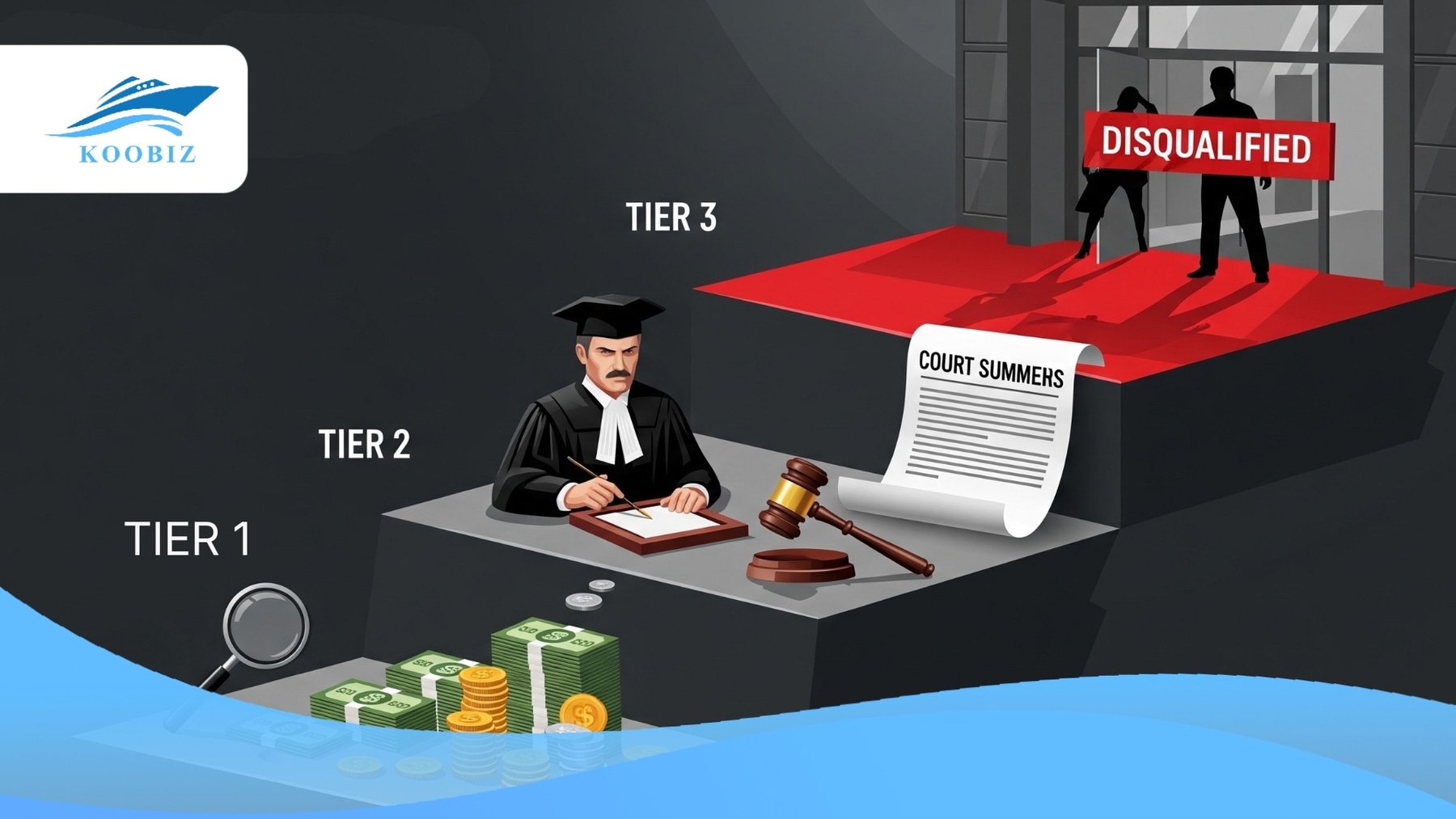
    Missing corporate tax deadlines in Singapore can lead to fines and compliance issues, even if your company has no tax to pay. According to IRAS, late or non-filing of Form C-S, C-S Lite, or Form C may result in:

    • Estimated Assessment: IRAS may issue an estimate of your tax. Payment is due within 1 month, even if you dispute it.
    • Composition Fine: To avoid prosecution, IRAS may charge a fine up to SGD 5,000 per offence, payable along with the overdue return.
    • Director Information Notice: Directors may be required to provide information. Non-compliance can lead to further action.
    • Court Action: Persistent late filing can lead to summons or prosecution.
    • Company Standing: Repeated delays may affect your compliance record and dealings with banks or regulators.

    Note: Dormant companies must still file returns unless IRAS grants a formal waiver.

    Do Companies Need to File ECI and Corporate Tax Returns Every Year?

    Yes. In Singapore, most companies must file both ECI and Corporate Tax Returns annually, even if dormant or making losses.

    • ECI: Submit an estimate of taxable income within 3 months after your Financial Year End (FYE). Small or dormant companies may qualify for a waiver.
    • Corporate Tax Return (Form C-S / C-S Lite / C): File the actual tax return by 30 November of the following Year of Assessment (YA).

    Filing each year is mandatory unless IRAS grants a formal waiver. Timely submission helps avoid fines, estimated assessments, and compliance risks.

    How Koobiz Simplifies Corporate Tax Filing in Singapore

    Filing corporate tax in Singapore can be complex, but Koobiz makes it simple and stress-free. Our services help companies:

    • Submit ECI and Corporate Tax Returns (Form C-S / C) on time
    • Identify eligible waivers or exemptions to reduce administrative burden
    • Ensure full compliance with IRAS deadlines to avoid fines and estimated assessments
    • Minimize compliance risks, allowing your team to focus on growing the business

    With Koobiz, your company can confidently manage corporate tax filing in Singapore without the stress of missing deadlines or facing penalties.

    Corporate Tax Filing Deadline Singapore – FAQs

    Is the tax filing deadline the same for all companies?

    Not exactly. While the final Corporate Income Tax Return (Form C-S / C) is due by 30 November annually, the ECI filing deadline depends on your company’s Financial Year End (FYE). Companies must submit ECI within 3 months of their FYE.

    Can I request an extension for tax filing?

    Yes, but approval is not guaranteed. Requests must be submitted via the myTax Portal before the original deadline. Extensions are granted only for valid, exceptional cases. Filing on time is always the safest way to avoid composition fines or court summons.

    When is the actual tax payment due?

    Tax is typically due within 1 month from the date on the Notice of Assessment (NOA) issued by IRAS.

    Tip: Filing ECI early and using GIRO allows interest-free monthly instalments, improving your company’s cash flow.

    Does a dormant company still need to file?

    Yes. Unless your company has an official Waiver from IRAS, dormant companies must meet all filing deadlines. For qualifying dormant entities, a simplified filing process is available and can be completed in just a few minutes.

  • What Is a Non-Executive Director? Complete Guide to Roles, Duties, and Board Governance

    What Is a Non-Executive Director? Complete Guide to Roles, Duties, and Board Governance

    [SUMMARIES]

    A Non-Executive Director (NED) in Singapore provides independent oversight and strategic guidance without participating in daily business operations. While they do not manage the company, NEDs share the same legal and fiduciary liabilities as executive directors under the Singapore Companies Act.

    [/SUMMARIES]

    Understanding the role of a Non-Executive Director is vital for robust corporate governance in Singapore. In this guide, Koobiz simplifies the complexities of board leadership, breaking down the essential duties, legal liabilities, and qualifications you need to know. We provide a clear, detailed roadmap to help you navigate the distinction between executive and non-executive functions with confidence.

    What Is a Non-Executive Director?

    A Non-Executive Director (NED) is a member of a company’s board of directors who is not part of the executive management team and does not engage in the day-to-day operations of the business. Their primary purpose is to provide independent oversight, objective strategic guidance, and constructive challenges to the executive directors. By operating outside of daily management, NEDs play a crucial role in corporate governance, helping to monitor performance, manage risk, and safeguard the interests of shareholders and stakeholders.

    Key Responsibilities and Duties

    While their specific mandate may vary by organization, Non-Executive Directors generally balance strategic oversight with legal compliance to ensure sustainable long-term value.

    Responsibilities

    The broader strategic and oversight roles of a Non-Executive Director include:

    • Strategy Development: Constructively challenging and contributing to the development of the company’s strategic direction.
    • Performance Monitoring: Scrutinizing the performance of executive management in meeting agreed goals and objectives.
    • Risk Management: Ensuring robust risk management frameworks and internal controls are in place.
    • Succession Planning: Leading the process for appointing and removing executive directors and planning for future leadership needs.

    Duties

    The specific legal and fiduciary obligations required of the role include:

    • Fiduciary Duty: Acting in the best long-term interests of the company and its shareholders.
    • Financial Integrity: Ensuring the accuracy of financial information and systems of risk management are robust and defensible.
    • Compliance: Overseeing compliance with statutory obligations and relevant laws.
    • Remuneration: Determining appropriate levels of executive remuneration and compensation structures.
    The 4 Pillars of a Non-Executive Director
    The 4 Pillars of a Non-Executive Director

    [IMAGE: Đồ họa Infographic hình tròn hoặc sơ đồ tư duy (Mind map) tóm tắt 4 trụ cột trách nhiệm chính của NED: Strategy (Chiến lược), Performance (Hiệu suất), Risk (Rủi ro), và People (Nhân sự/Kế nhiệm). Giúp người đọc hình dung tổng quan công việc.]

    Why Companies Appoint Non-Executive Directors

    At its core, companies appoint Non-Executive Directors to bring independent objectivity to the boardroom. Business leaders often get “tunnel vision” from focusing on daily operations; a NED provides a fresh, unbiased perspective to spot risks and opportunities that insiders might miss.

    Beyond general oversight, companies specifically seek NEDs for these critical scenarios:

    • Bridging Skills Gaps: Bringing specialized expertise (e.g., cybersecurity, ESG, or market expansion) that the current executive team lacks.
    • Enhancing Credibility & Investment: Investors and banks often require an experienced board before providing capital or supporting an IPO.
    • Crisis Management: Providing steady guidance during turbulent times, such as regulatory scrutiny or reputational damage.
    • Succession Planning: Managing the sensitive transition of leadership, particularly in family-owned businesses or when a CEO departs.
    • Mediating Conflicts: Acting as a neutral party to resolve disputes between shareholders and management.

    Executive vs. Non-Executive Directors: What’s the Difference?

    While both sit on the same board of directors and share equal legal liabilities, their roles differ fundamentally in focus and engagement. The Executive Director is the “doer” managing the company, while the Non-Executive Director is the “monitor” ensuring it is managed correctly.

    [IMAGE: Bảng so sánh trực quan, Bên trái là “Executive Director”, bên phải là “Non-Executive Director”]

    Comparison Table: Executive vs. Non-Executive Directors
    Comparison Table: Executive vs. Non-Executive Directors
    Feature Executive Director Non-Executive Director
    Primary Focus Running the business (Day-to-day operations) Monitoring the business (Independent oversight)
    Employment Status Full-time employee Part-time / Contract for services
    Key Responsibility Implementing strategy and managing teams Developing strategy and challenging management
    Remuneration Salary, bonuses, and benefits Fixed director’s fees (usually no performance bonuses)
    Independence Not independent (part of management) Independent (objective outsider)

    Legal Duties and Liabilities in Singapore

    In Singapore, the law does not distinguish between Executive and Non-Executive Directors; both bear the same fiduciary duties and legal responsibilities under the Companies Act and common law.

    Legal Duties

    Key obligations every NED must uphold include:

    • Duty of Good Faith: You must act honestly and in the best interests of the company, ensuring personal interests do not conflict with business decisions.
    • Duty of Care and Diligence: You are expected to exercise reasonable diligence and skill, monitoring the company’s affairs rather than being a “sleeping director.”
    • Duty of Disclosure: Under Section 156 of the Companies Act, you must disclose any conflicts of interest or property holdings that might compete with the company.
    • Statutory Compliance: Ensuring the company complies with statutory requirements, such as filing annual returns, holding AGMs, and maintaining accurate financial records.

    Liabilities

    Failure to discharge these duties can lead to severe consequences:

    [IMAGE: Hình ảnh minh họa ]

    Legal Responsibility and Penalties
    Legal Responsibility and Penalties
    • Civil Liability: The company or shareholders can sue you for damages to recover losses caused by negligence or breach of trust.
    • Criminal Penalties: Breaching statutory duties is a criminal offense punishable by fines (up to SGD 5,000) or imprisonment (up to 12 months).
    • Disqualification: You may be disqualified from acting as a director for up to 5 years if convicted of serious offenses or for persistent default in filing requirements.
    • Personal Liability: If the company continues trading while insolvent, you may be held personally liable for the debts incurred.

    How to Become a Non-Executive Director in Singapore

    Becoming a NED requires a transition from “operational leadership” to “strategic oversight,” often necessitating a build-up of specific credentials and networks within Singapore’s corporate ecosystem.

    Qualifications and Skills Required

    While there is no single statutory qualification, the following are standard benchmarks for aspiring NEDs:

    • Relevant Experience: A strong track record in C-suite roles or senior management is essential to command respect.
    • Mandatory Training (for Listed Companies): First-time directors of SGX-listed companies must undergo training in the Listed Entity Director (LED) Programme by the Singapore Institute of Directors (SID).
    • Financial Literacy: The ability to read and scrutinize financial statements is non-negotiable for all board members.
    • Specialized Expertise: Modern boards actively seek skills in ESG (Environmental, Social, and Governance), Cybersecurity, Digital Transformation, and Legal/Compliance.
    • Soft Skills: High emotional intelligence (EQ), independence of mind, and the ability to influence without authority.

    The role comes with unique hurdles that differ significantly from executive management:

    • Information Asymmetry: NEDs rely on management for data; they often have less information than executives but share the same legal liability.
    • “Noses In, Fingers Out”: Striking the delicate balance of providing deep oversight (“noses in”) without micromanaging daily operations (“fingers out”).
    • Time Commitment: The role is increasingly demanding, requiring significant time for board preparation, committee meetings (Audit, Remuneration), and crisis management.
    • Liability vs. Control: Bearing full personal liability for company failures (e.g., data breaches, financial fraud) despite having limited control over daily execution.

    Best Practices for Success & Real-World Examples

    To succeed as a Non-Executive Director, one must move beyond simply attending meetings to becoming a proactive “Critical Friend” to the business.

    Best Practices for Success

    • Continuous Education: Regulations change rapidly. Successful NEDs consistently upgrade their skills through SID courses, focusing on emerging risks like ESG and Cybersecurity.
    • The “Critical Friend” Mindset: The ability to challenge management’s assumptions constructively without being adversarial is the hallmark of a great NED.
    • Deep-Dive Diligence: Do not rely solely on board papers. Effective NEDs visit company sites, speak to employees, and understand the “ground reality” of the business.
    • Active Listening: In the boardroom, the power of a NED often lies in asking the right question rather than giving the right answer.

    Real-World Examples & Archetypes

    • The “Industry Titan” (e.g., Mr. Koh Boon Hwee): A prominent figure in Singapore (serving on boards like SGX, GIC, and Agilent), he exemplifies the Strategic NED who brings immense credibility, networks, and high-level vision to multiple diverse organizations.
    • The “Governance Guardian” (e.g., Tan Huay Lim): Often a former audit partner or CFO, this NED archetype chairs Audit Committees (like at Sheng Siong or REIT managers), ensuring that financial reporting is rigorous and minority shareholders are protected.
    • The “Transformation Specialist”: A modern archetype where a tech veteran joins the board of a traditional bank or retailer specifically to guide digital transformation and challenge legacy thinking.

    Independent Directors vs. Non-Executive Directors

    It is a common misconception that these terms are interchangeable. While all Independent Directors are Non-Executive Directors, not all Non-Executive Directors are Independent.

    Independent Directors vs. Non-Executive Directors
    Independent Directors vs. Non-Executive Directors

    [IMAGE: Biểu đồ Venn hoặc sơ đồ phân loại (Classification Diagram). Vòng tròn lớn là “Non-Executive Directors”, bên trong chia thành 2 nhóm: “Independent” (Không có quan hệ tài chính/kinh doanh) và “Non-Independent” (Đại diện cổ đông lớn, cựu lãnh đạo). Ghi chú thêm quy tắc “9 năm” (9-Year Rule) tại Singapore để làm rõ ranh giới độc lập.]

    Independent Directors (IDs)

    An Independent Director is a NED who has no material relationship with the company, its related corporations, 10% shareholders, or its officers that could interfere with their exercise of independent business judgment.

    • Key Requirement: They must be free from any business or financial connection (other than board fees and shareholdings).
    • The “Nine-Year Rule” (Singapore): Under SGX rules, an ID who has served for more than nine years loses their independent status and must resign or be re-designated as a non-independent NED.
    • Role: Critical for protecting minority shareholders and staffing key committees (Audit, Nominating, Remuneration).

    Non-Independent Non-Executive Directors (NI-NEDs)

    A Non-Independent NED is a director who does not work in the company (is “Non-Executive”) but has a relationship that compromises their independence.

    • Scenario 1: The Major Shareholder. A significant investor (or their representative) sits on the board to monitor their personal investment. They are non-executive but lack independence due to financial bias.
    • Scenario 2: The Former Insider. A former CEO stays on the board after retirement to provide continuity. They are non-executive but lack independence due to their historical ties and relationships with current management.
    • Role: They provide oversight and strategic input but cannot be counted towards the “independent” quota required by corporate governance codes.

    FAQs About Non-Executive Directors in Singapore

    Can a foreigner be a Non-Executive Director in Singapore?

    Yes, a foreigner can act as a NED. However, under the Companies Act, every Singapore company must have at least one director who is “ordinarily resident” in Singapore. Foreigners typically serve as additional directors alongside a local resident director.

    Is there a limit to the number of directorships one can hold?

    There is no statutory “hard cap” in the Companies Act. However, for SGX-listed companies, the Nominating Committee must assess whether a director with multiple board representations is able to adequately discharge their duties. If a director holds a significant number of directorships, they must convince the board they have sufficient time and capacity.

    Do Non-Executive Directors have less liability than Executive Directors?

    No. In Singapore law, all directors have the same fiduciary duties and liabilities. A NED can be sued or criminally charged just like an Executive Director if they fail to exercise reasonable diligence. The law does not accept “I was just a non-executive” as a valid defense for negligence.

    How much are Non-Executive Directors paid in Singapore?

    Remuneration varies widely by company size and industry. For small-to-mid-cap listed companies, fees often range from SGD 40,000 to SGD 80,000 annually. For large-cap companies or banks, fees can exceed SGD 100,000 to SGD 200,000+. Unlike executives, NEDs typically receive fixed fees and do not get performance bonuses to preserve their independence.

  • Distinguish Exempt vs. Zero-Rated GST in Singapore: A Complete Business Guide

    Distinguish Exempt vs. Zero-Rated GST in Singapore: A Complete Business Guide

    [SUMMARIES]

    Taxability: Zero-rated supplies are taxable at 0%, whereas exempt supplies are non-taxable under the GST Act.

    Input Tax Claims: Businesses can claim input tax incurred on zero-rated supplies, but generally cannot claim for exempt supplies.

    Registration Threshold: Revenue from zero-rated supplies counts towards the $1 million mandatory registration threshold; exempt supplies do not.

    Compliance: Zero-rated supplies require strict proof of export/international service, while exempt supplies focus on the nature of the transaction (e.g., financial services).

    Expert Support: Koobiz helps Singapore companies navigate these complex GST classifications to optimize tax positions and ensure compliance.

    [/SUMMARIES]

    Managing Goods and Services Tax (GST) in Singapore requires accurate classification of business supplies. Confusing exempt supplies with zero-rated supplies can result in substantial financial consequences, including lost input tax claims or penalties imposed by IRAS. Although both categories involve charging no GST to customers, they differ significantly in tax treatment, reporting obligations, and entitlement to input tax recovery.At Koobiz, we specialize in assisting companies with Singapore incorporation and tax compliance, and we frequently guide clients through these critical distinctions to protect their cash flow. This guide explains the key differences, highlights common supply classifications, and outlines the compliance rules businesses must follow to remain fully compliant.

    Are Exempt and Zero-Rated Supplies the Same in Singapore GST?

    GST: 0% (Claimable) differs from Exempt (Not claimable)
    GST: 0% (Claimable) differs from Exempt (Not claimable)

    No, exempt and zero-rated supplies are not the same. While both result in no GST collected from the customer, they differ fundamentally in legal status and back-end accounting:

    • Legal Status: Zero-rated supplies are taxable (at 0%), while exempt supplies are non-taxable.
    • Input Tax: You can claim input tax for zero-rated supplies, but generally cannot for exempt supplies.
    • Registration: Zero-rated revenue counts towards the $1M registration threshold; exempt revenue does not.

    According to the Inland Revenue Authority of Singapore (IRAS), incorrectly treating an exempt supply as zero-rated is one of the most common GST compliance breaches. Such misclassification can result in penalties of up to two times the amount of GST undercharged, making accurate classification critical for businesses.

    What is the Difference Between Zero-Rated and Exempt Supplies?

    Zero-rated supplies win on input tax recovery and taxable status, while exempt supplies are advantageous for reducing administrative burdens for specific sectors like residential property. To fully grasp the impact on your business, refer to the comparison below:

    Feature Zero-Rated Supplies Exempt Supplies
    GST Rate 0% No GST charged (Not applicable)
    Taxable Status Taxable supply Non-taxable supply
    Input Tax Claim Allowed (Refundable from IRAS) Not Allowed (Sunk cost for business)
    GST Registration Revenue counts towards $1M threshold Revenue does not count towards threshold
    GST Return Reporting Reported in Box 2 (Zero-rated supplies) Reported in Box 3 (Exempt supplies)
    Invoicing Tax invoice required (showing 0%) No tax invoice required
    Common Examples Exports, International Services Residential rental, Financial services

    Difference in Taxability and GST Rates

    Distinguish Zero-Rated vs. Exempt GST
    Distinguish Zero-Rated vs. Exempt GST

    Zero-rated supplies are taxable supplies charged at 0% GST, whereas exempt supplies are non-taxable supplies not subject to GST at all. This legal distinction is paramount:

    • Zero-Rated Supplies: These fall within the scope of the GST Act. You must issue tax invoices (indicating 0%) and report the transaction value in your GST F5 return.
    • Exempt Supplies: These are non-taxable. You do not charge GST and typically do not issue a tax invoice.

    For Koobiz clients operating in international trade, correctly identifying this status ensures seamless audits.

    Difference in Input Tax Claims (Crucial for Cashflow)

    GST Input Tax Claim Difference
    GST Input Tax Claim Difference

    Businesses can claim input tax incurred on making zero-rated supplies, but they generally cannot claim input tax incurred on making exempt supplies. This is the most financially significant difference:

    • Zero-Rated Supplies: Input tax is claimable (refundable). You can recover GST paid on business purchases (cost of goods, rent, utilities), ensuring no tax cost “sticks” to the supply chain.
    • Exempt Supplies: Input tax is not claimable (sunk cost). The GST paid on maintenance or agent fees becomes a direct business expense.

    Impact on GST Registration Threshold

    Turnover from zero-rated supplies counts towards the SGD 1 million mandatory registration threshold, while turnover from exempt supplies does not.

    • Zero-Rated Supplies: Turnover counts towards the threshold. If you generate SGD 1.2 million purely from zero-rated exports, you must register for GST.
    • Exempt Supplies: Turnover does not count. If you generate SGD 1.2 million purely from exempt residential rentals, you are not required to register.

    Koobiz often advises startups to monitor this threshold carefully, as voluntary registration might still be beneficial for zero-rated suppliers to reclaim input tax, even if not mandatory.

    According to IRAS guidelines, a business is required to register for GST once its taxable turnover—comprising standard-rated and zero-rated supplies, exceeds SGD 1 million. Failure to register when required can lead to serious penalties, including a fine of up to SGD 10,000 and an additional penalty of 10% of the GST payable.

    Classification of Supplies: What Falls Under Each Category?

    Classification of GST Supplies: 0% and Exempt
    Classification of GST Supplies: 0% and Exempt

    Non-standard supplies in Singapore fall into two distinct categories: Zero-Rated supplies, which mainly relate to international transactions, and Exempt supplies, which apply to specific domestic activities such as financial services and residential property transactions.

    Categorizing your goods and services correctly requires looking at the nature of the transaction and the location of the consumer. Grouping these supplies accurately ensures that you apply the correct tax treatment and maintain valid supporting documents. Below is the classification for the most common business activities in Singapore.

    List of Zero-Rated Supplies in Singapore

    Zero-rated supplies mainly include the export of goods and the provision of “international services” as defined under Section 21 of the GST Act.

    To qualify for zero-rating, strict documentary proof is required to show that goods have left Singapore or that services are consumed abroad. The main types include:

    • Export of Goods: Goods physically moved from Singapore to an overseas destination (e.g., selling electronics to a client in Vietnam).
    • International Services: Services provided to a customer who belongs in a country outside Singapore and benefits from the services outside Singapore (e.g., Koobiz providing consultancy to a foreign entity).
    • International Transport: Transport of passengers or goods into, out of, or outside Singapore.

    List of Exempt Supplies in Singapore

    Exempt supplies primarily consist of financial services, the sale and lease of residential properties, and the supply of investment precious metals (IPM).

    These categories are exempt mainly due to the difficulty in valuing the value-added component (in finance) or for social policy reasons (housing). The key groups are:

    • Financial Services: Bank charges, issue of equity or debt securities, provision of loans, and life insurance policies.
    • Residential Properties: Sale of vacant residential land, and the sale or lease of residential properties (condos, HDB flats).
    • Investment Precious Metals (IPM): Sale of gold, silver, and platinum bars/wafers/coins that meet specific purity criteria.

    According to the Ministry of Finance Singapore, the exemption of financial services aligns with international GST/VAT norms where intermediation services are hard to tax explicitly.

    Common Misconceptions: Exempt vs. Zero-Rated vs. Out-of-Scope Supplies

    Many business owners confuse these categories, leading to reporting errors in GST returns. While none attract GST, the distinction in scope and reporting is vital for compliance.

    Feature Exempt Supply Zero-Rated Supply Out-of-Scope Supply
    GST Act Jurisdiction Within Scope (Non-taxable) Within Scope (Taxable) Outside Scope
    GST Chargeable No No (0% Rate) No
    GST Return Reporting Report in Box 3 (Exempt Supplies) Report in Box 2 (Zero-Rated Supplies) Not Reported in GST Return*
    Input Tax Claim Not Allowed Allowed Not Allowed (General rule)
    Typical Example Interest from local bank, Residential rental Export of goods, Int’l services Third-country sales, Dividends, Salary

    *Note: Out-of-scope supplies like “Third-Country Sales” (buying goods from China and shipping directly to the USA without entering Singapore) are completely excluded from the GST F5 return. In contrast, exempt supplies like bank interest must still be declared in Box 3.

    Koobiz accountants ensure these figures are segregated correctly in your bookkeeping to prevent IRAS queries regarding turnover discrepancies.

    Special Compliance Rules for Mixed Suppliers

    Mixed suppliers are businesses that generate both taxable supplies (standard-rated or zero-rated) and exempt supplies, which triggers special GST apportionment rules for input tax claims.

    If your business engages in both activities—for example, a property developer selling both commercial offices (taxable) and residential condos (exempt)—you cannot claim all your input tax. You generally can only claim the input tax directly attributable to your taxable supplies. This “Apportionment” rule ensures fairness but adds a layer of complexity to your accounting.

    Claiming Input Tax for Mixed Suppliers

    For expenses that cannot be directly linked to one type of supply, mixed suppliers must apply the Residual Input Tax method to apportion GST on shared overheads, such as office rent, utilities, professional fees, and audit costs.

    Direct attribution is straightforward: GST paid on construction materials for a commercial building is claimable, while GST on materials used for residential development is not. However, for common expenses supporting both activities, the recoverable portion must be calculated based on the proportion of taxable turnover relative to total turnover. Koobiz utilizes specialized accounting software to automate these calculations for our clients, ensuring compliance without the manual headache.

    Understanding the De Minimis Rule

    Apportionment and De Minimis Rule GST
    Apportionment and De Minimis Rule GST

    The De Minimis Rule allows a mixed supplier to claim all input tax incurred, including that on exempt supplies, if the total value of exempt supplies is insignificant.

    This is a relief provision for businesses that might have incidental exempt supplies (like small interest income or minor forex gains). You can claim full input tax if:

    1. The value of exempt supplies is less than or equal to an average of SGD 40,000 per month; AND
    2. The value of exempt supplies is less than or equal to 5% of your total turnover.Meeting these criteria simplifies your tax filing significantly.

    Emerging Exemptions: Digital Payment Tokens (DPT)

    Digital Payment Tokens (DPTs) are now classified as exempt supplies to encourage the growth of the cryptocurrency and fintech sector in Singapore.

    Previously, transactions involving virtual currencies were often treated as barter trades or supplies of services, creating uncertainty and administrative complexity. In response to the evolving digital economy, IRAS revised the GST treatment effective 1 January 2020, providing much-needed clarity for businesses operating in this space. This update brings Singapore in line with other leading financial hubs and offers greater certainty for fintech and blockchain startups navigating GST compliance.

    GST Treatment for Cryptocurrency and DPTs

    The exchange of Digital Payment Tokens for fiat currency or other DPTs is exempt from GST, while the use of DPTs to pay for goods remains a separate supply event.

    Under the current rules:

    1. Exchange: Using Bitcoin to buy Ethereum, or selling Bitcoin for SGD, is an exempt supply of financial services. You do not charge GST.
    2. Payment: If you use Bitcoin to pay for a consulting service (standard-rated), the payment itself is not a supply, but the consulting service is still subject to 9% GST.For fintech companies incorporated through Koobiz, this exemption is vital as it removes the risk of double taxation on the token value itself.

    Conclusion

    Understanding the distinction between Exempt and Zero-Rated GST supplies is not just about compliance, it is a strategic decision that directly impacts your business’s profitability. While zero-rated supplies provide both pricing advantages (0% GST) and the ability to recover input tax, exempt supplies demand tighter cost control since input tax claims are generally disallowed.

    Whether you are an exporter, a property investor, or a fintech startup, understanding these distinctions ensures you stay on the right side of Singapore’s tax laws. At Koobiz, we offer end-to-end corporate support, from company incorporation and bank account opening to specialized GST, accounting, and audit services. Our team helps businesses structure GST efficiently, including managing mixed supplies and de minimis calculations.

    Visit Koobiz.com today to schedule a consultation with our tax experts and ensure your Singapore business is built on a solid, compliant foundation.

  • Verify GST Registration Status & Calculate Tax from Total Amount: SG Business Guide

    Verify GST Registration Status & Calculate Tax from Total Amount: SG Business Guide

    [SUMMARIES]

    Verification is Crucial: Always verify a vendor’s GST status via the IRAS “GST Registered Business Search” tool before paying the 9% tax to avoid scams.

    Calculation Formulas: To calculate GST from a total amount (inclusive), use the formula: Total Amount x 9 / 109. To add GST (exclusive), use Amount x 9%.

    Invoice Compliance: A valid tax invoice must contain specific details like the GST Reg No, invoice date, and a breakdown of the tax amount to claim input tax.

    Risk Management: Be vigilant of fake invoices from non-registered businesses; reporting unauthorized GST collection to IRAS is mandatory.

    Overseas Vendors: Under the OVR regime, overseas digital service providers may also be GST-registered and liable to charge tax.

    [/SUMMARIES]

    Managing Singapore’s tax rules is essential for business owners to ensure financial compliance. Verifying GST registration and accurately calculating GST from total amounts are crucial to avoid wrongful charges and to support input-tax claims. Whether you’re working with a local supplier or issuing invoices yourself, confirming a partner’s IRAS status and applying the 9% GST formulas correctly are must-have skills. At Koobiz—specialists in Singapore company incorporation, tax and accounting—we often see clients struggle with these checks. This guide shows clear steps to verify GST status, compute GST precisely, and spot red flags in transactions.

    How to verify if a company is GST registered in Singapore?

    There are two reliable ways to confirm a company’s GST registration: checking the official IRAS search tool or verifying the format of its GST Registration Number. This step is essential to ensure the 9% GST charged is valid and claimable. To stay compliant especially with expert support from Koobiz always complete this verification before paying any invoice that includes GST.

    Method 1: Using the IRAS GST Registered Business Search Tool

    The most reliable way to confirm a business’s tax status is through the “GST Registered Business Search” on the myTax Portal maintained by IRAS.

    • Access the Portal: Navigate to the official IRAS website or the myTax Portal. Look for the “GST Registered Business Search” option.
    • Search Criteria: You can search using the Business Name, the Unique Entity Number (UEN), or the GST Registration Number provided on the invoice.
    • Interpret Results:
      • Registered: The system will display the business name, GST registration number, and the “Effective Date of GST Registration.” This confirms they are authorized to collect tax.
      • Not Registered: If no record is found, the company is likely not GST-registered. However, ensure you have entered the exact name or UEN, as typos can lead to false negatives.
      • Deregistered: The system may show that a business was previously registered but has since been deregistered. In this case, they cannot charge GST after the deregistration date.

    Method 2: Identifying the GST Registration Number Format

    A valid GST Registration Number in Singapore typically follows a specific alphanumeric structure, often mirroring the company’s UEN, which allows for quick visual verification.

    • Standard Business Format: For most local companies, the GST number is the same as their UEN. It usually consists of 9 or 10 digits (e.g., 201012345Z).
    • Old Format: Some older businesses may have a GST number that differs from their UEN, typically starting with “M” followed by digits (e.g., M90367xxx).
    • Sole Proprietorships: The GST number might be the owner’s NRIC number followed by a check letter (though this is becoming less common in public invoices for privacy, UENs are preferred).
    • Visual Check: If an invoice lists a “GST Reg No” that looks like a random string of numbers inconsistent with these formats, you should immediately proceed to Method 1 for confirmation.

    According to IRAS regulations, it is an offense for a non-registered business to issue a tax invoice or charge GST. Therefore, performing this check is your first line of defense against tax fraud.

    How to calculate GST from total amount?

    GST calculations differ depending on whether the amount is GST-inclusive or GST-exclusive. With Singapore’s GST at 9% (as of 2025), applying the correct formula is key to accuracy. For Koobiz clients, mastering these calculations helps validate supplier invoices and set pricing correctly.

    Scenario 1: Extracting GST from a Total Bill (GST-Inclusive)

    Use this method when you have a final receipt and need to know how much of that amount is tax to claim it back.

    Step 1: Identify the Total Amount

    Locate the final “Net” figure on your invoice (e.g., S$109.00).

    Step 2: Apply the Backward Formula

    Use the formula: Total Amount x 9 / 109

    Step 3: Calculate the Result

    • Multiply the total by 9 (e.g., 109 x 9 = 981).
    • Divide the result by 109 (e.g., 981 / 109 = 9).
    • Result: The GST amount is S$9.00.

    Step 4: Verify the Pre-Tax Amount

    Subtract the GST from the total ($109 – $9 = $100) to ensure the pre-tax value is correct. This formula is crucial for accurate expense recording in your accounting software.

    Scenario 2: Adding GST to a Base Price (GST-Exclusive)

    Use this method when pricing your own services or products to determine the final amount to charge the customer.

    Step 1: Identify the Pre-GST Amount

    Start with your base service fee or product price (e.g., S$1,000).

    Step 2: Apply the Forward Formula

    Use the formula: Pre-GST Amount x 9% (or multiply by 0.09).

    Step 3: Calculate the Tax

    • Multiply the base amount by 0.09 (e.g., 1,000 x 0.09).
    • Result: The GST amount is S$90.00.

    Step 4: Determine the Final Bill

    Add the tax to the base amount ($1,000 + $90) to get the Total Amount Payable (S$1,090.00).

    Note: Always round the total GST payable on an invoice to the nearest cent (i.e., half-cent upwards) as per IRAS regulations.

    What are the mandatory requirements for a valid tax invoice?

    A valid tax invoice must include all required elements, such as the words “Tax Invoice,” supplier and customer details, and a clear GST breakdown to be accepted by IRAS. Without a compliant invoice, your business cannot legally claim input tax on its purchases.

    Checklist of Details Required on a Standard Tax Invoice

    To ensure your documentation stands up to an audit, verify that every tax invoice received includes the following:

    1. Title: The words “Tax Invoice” must be clearly displayed.
    2. Supplier Info: Name, address, and GST Registration Number of the supplier.
    3. Customer Info: Name and address of your company (the recipient).
    4. Invoice Number: A unique, sequential identifying number.
    5. Date: The date the invoice is issued.
    6. Description: A description of the goods or services supplied.
    7. Breakdown:
      • Total amount payable excluding GST.
      • Total GST amount shown separately.
      • Total amount payable including GST.
      • Note: If the invoice covers both standard-rated (9%) and zero-rated (0%) items, they must be distinguished.

    Can You Claim Input Tax Without a Valid Invoice?

    No, you cannot claim input tax without a valid tax invoice, as IRAS requires this specific document to substantiate any refund request.
    • Simplified Tax Invoices: For amounts below S$1,000, a “Simplified Tax Invoice” is acceptable. This version requires fewer details (e.g., customer name is not mandatory) but must still show the supplier’s GST Reg No and the total amount payable with GST.
    • Consequences: If you claim input tax based on an invalid invoice (e.g., a credit card slip or a pro-forma invoice) during an audit, you will be required to return the claimed amount plus potential penalties.
    • Koobiz Tip: We recommend digitizing all valid tax invoices immediately upon receipt to prevent fading or loss, ensuring your quarterly GST filing is smooth and compliant.

    Once you understand verification, calculation, and documentation, the next step is knowing why they matter. The following section explains non-compliance risks, scam red flags, and key differences between business types to help safeguard your finances.

    Identifying risks: Fake GST invoices and scams

    GST fraud risks generally fall into three categories: unregistered businesses charging GST, fake invoices from shell entities, and administrative errors that lead to overpayment. Staying vigilant protects your cash flow and keeps you clear of potential tax evasion issues.

    What are the Warning Signs of a Fake GST Invoice?

    An invoice might look professional, but subtle errors can reveal its fraudulent nature. Watch out for these red flags:

    • Invalid GST Number: The GST Reg No provided does not exist in the IRAS database (as checked in Method 1).
    • Math Errors: The GST amount does not equate to 9% of the goods’ value. Scammers often use round numbers or incorrect percentages.
    • Suspicious Business Names: The company name on the invoice differs slightly from the one registered with UEN.
    • Non-GST Registered Entity: The company is small or new and likely hasn’t met the S$1 million turnover threshold for mandatory registration, yet is charging tax.

    How to Report Unauthorized GST Collection to IRAS?

    If you suspect a business is wrongly charging GST, you should first clarify with the vendor. If they cannot provide a valid explanation or valid GST number, you must report it.

    • Do Not Pay the Tax: Pay only the principal amount excluding the GST component if verification fails.
    • Whistleblowing: You can report the entity to IRAS using their “Report Tax Evasion” form. IRAS takes unauthorized GST collection seriously, as it defrauds both the consumer and the state.
    • Protection: By reporting, you help maintain a fair business environment in Singapore.

    GST Registered vs. Non-GST Registered Business: What is the Difference?

    The key difference is in pricing and tax recovery. GST-registered businesses charge an additional 9% but can reclaim GST on expenses, while non-registered businesses do not charge GST and must absorb it as a cost. Knowing this helps you assess which vendors are more cost-efficient for your supply chain.
    Feature GST-Registered Business Non-GST Registered Business
    Pricing Must charge 9% GST on top of the selling price. Cannot charge GST. Prices quoted are net.

    Invoice Type Issues a valid “Tax Invoice”. Issues a standard “Invoice” or “Receipt”.
    Input Tax Claims Can claim GST paid on business expenses from IRAS. Cannot claim GST; it is absorbed as a business cost.
    Filing Requirements Must file GST returns (usually quarterly) to IRAS. No GST returns required.
    Registration Mandatory if taxable turnover > S$1 million. Voluntary if turnover < S$1 million.

    Strategy: Koobiz advises small businesses hovering near the S$1 million threshold to conduct a cost-benefit analysis. Voluntary registration might be beneficial if your major customers are also GST-registered and can claim back the tax you charge.

    Does the GST Rule Apply to Overseas Vendors?

    Yes, the GST rule applies to overseas vendors under the Overseas Vendor Registration (OVR) regime if they supply digital services to non-GST registered customers in Singapore and exceed specific global and local turnover thresholds.

    This ensures a level playing field between local and overseas digital service providers.

    Checking GST Status for Digital Service Providers (Netflix, Adobe, etc.)

    With the rise of the digital economy, many Singaporean businesses subscribe to foreign software (SaaS) or cloud services.

    • The Mechanism: Under the Reverse Charge mechanism (for B2B) and OVR (for B2C), tax is applicable.
    • Verification: Major global providers like Google, Netflix, or Adobe are registered with IRAS under the OVR regime. Their GST registration numbers often start with specific identifiers (like M9).
    • B2B Context: If you are a GST-registered business in Singapore importing services (e.g., paying for LinkedIn Ads), you might be subject to the “Reverse Charge,” where you account for the GST yourself rather than paying it to the vendor. This is a complex area where professional advice from Koobiz can ensure you don’t underpay or overpay your tax liabilities.

    About Koobiz

    Navigating Singapore’s financial regulations requires more than just a calculator; it requires a partner who understands the intricacies of the law. Koobiz is your premier corporate service provider, dedicated to helping international and local entrepreneurs succeed in Singapore. From Singapore company incorporation and corporate secretarial services to assisting with opening corporate bank accounts, tax filing, accounting, and audit, we handle the bureaucracy so you can focus on growth.

    Ensure your business is fully compliant and optimized for tax efficiency.

    Visit us at: Koobiz.com to schedule a consultation with our experts today.

  • How to Register for GST in Singapore: A Step-by-Step Guide (Updated for 2026)

    How to Register for GST in Singapore: A Step-by-Step Guide (Updated for 2026)

    [SUMMARIES]

    Mandatory Threshold: Registration is required if your business’s taxable turnover exceeds S$1 million. This is assessed either by looking back at the past calendar year or by forecasting the next 12 months.

    Voluntary Option: Businesses below the threshold can register voluntarily to reclaim GST on expenses. This requires a two-year commitment and the use of InvoiceNow-compatible software.

    Digital Process: Applications are submitted online through the myTax Portal using CorpPass. You’ll need documents like your ACRA business profile and bank details.

    Pre-Registration Claims: You may reclaim GST paid on certain business costs incurred up to 6 months before your registration date.

    Strict Compliance: Once registered, you must show prices inclusive of GST, file returns on time, and set up GIRO for payments (mandatory for voluntary registrants) to avoid penalties.

    [/SUMMARIES]

    Successfully registering for Goods and Services Tax (GST) is a key step for growing businesses in Singapore. The process can seem complex due to strict rules and compliance needs. At Koobiz, we understand that whether you are scaling up to meet the mandatory S$1 million turnover requirement or strategically opting for voluntary registration to optimize your tax position, getting the registration right is paramount.

    To help you manage this transition smoothly, this guide provides a comprehensive walkthrough on how to register for GST in Singapore, covering the latest 2026 updates including the InvoiceNow mandate and annual assessment rules.

    IMPORTANT UPDATES FOR 2026

    Before proceeding, be aware of two critical changes to the GST regime:

    InvoiceNow Mandate for Voluntary Registration:

    • From 1 November 2025: New companies (applying within 6 months of setup) that register voluntarily must use InvoiceNow-ready software to send invoice data to IRAS.
    • From 1 April 2026: All new voluntary registrants must use InvoiceNow solutions. Applications may be rejected without this.

    Grace Period for Prospective Registration: For registration liabilities arising on or after 1 July 2025, IRAS offers a 2-month grace period for the registration effective date, giving you more time to prepare.;/

    Do You Need to Register for GST?

    Yes, you must register for GST if your business’s taxable turnover exceeds S$1 million under either the retrospective or prospective view.

    Accurate liability assessment requires calculating your “Taxable Turnover,” not merely reviewing total bank deposits. This figure is defined by the specific inclusion of certain revenue streams and the exclusion of others.

    What Counts Towards Taxable Turnover?

    IRAS requires you to sum up the following income sources to see if you hit the S$1 million threshold:

    • Standard-Rated Supplies (9%): Most local sales of goods and services in Singapore (for example, retail purchases and consultancy fees).
    • Zero-Rated Supplies (0%): Goods exported overseas and international services provided to foreign clients.

    What is EXCLUDED from Taxable Turnover?

    Do not include these when calculating your S$1 million turnover:

    • Exempt Supplies: Financial services (such as interest income or share issues) and the sale or lease of residential properties.
    • Out-of-Scope Supplies: Sales where goods are delivered from outside Singapore to another place outside Singapore (third-country sales).
    • Sale of Capital Assets: Proceeds from selling major business assets like machinery or furniture.

    To determine whether you’ve crossed the S$1 million mark, you need precise calculations of these revenue streams. At Koobiz, we frequently help clients audit their revenue sources to avoid accidentally triggering a GST registration requirement.

    Why that registration matters: Failing to register when required is a serious offense in Singapore (penalty up to S$10,000 and 10% additional penalty). If you’re liable but don’t apply, IRAS may backdate your registration, forcing you to pay GST on past sales out of your own pocket.

    Compulsory vs. Voluntary Registration

    Compulsory registration is mandated by law based on revenue milestones, whereas voluntary registration is a strategic choice for businesses earning under the threshold.

    To help you decide or determine your obligation, here is a direct comparison of the two paths:

    Feature Compulsory Registration Voluntary Registration
    Who is it for? Businesses with taxable turnover > S$1 million. Businesses with taxable turnover < S$1 million.
    Trigger Mandated by law under the Retrospective (Annual) or Prospective view. Strategic choice by the business owner.
    Key Benefit Compliance with the law (avoids penalties). Ability to claim input tax (refunds) on business expenses.
    Key Obligation Must register within 30 days of liability notification date. Must commit to remaining registered for at least 2 years.
    New Requirement Must be ready to charge GST. Must use InvoiceNow solutions (phased implementation).
    Risk Late registration attracts backdated taxes and fines. Administrative costs and GIRO requirement.

    Retrospective View vs. Prospective View (Compulsory)

    If you’re under the compulsory regime, you use one of these tests to determine when to register:

    1. Retrospective View (Annual Assessment): You must register if your taxable turnover for the calendar year (1 Jan to 31 Dec) exceeds S$1 million.
      • Deadline: You have until 30 January of the following year to apply.
      • Effective Date: You will be registered for GST on 1 March of that year.
    2. Prospective View: You must register if you reasonably expect your taxable turnover to exceed S$1 million in the next 12 months. This typically applies if you have signed a large sales contract.
      • Deadline: You must apply within 30 days of the date of your forecast/signed contract.

    Businesses can now monitor compliance more easily by reviewing the past calendar year (retrospective). For future-looking assessments (prospective), IRAS requires formal documentation like purchase orders or signed contracts to support your forecasted figures.

    Voluntary Registration Considerations

    If you’re not required to register, the decision often comes down to cost versus benefit. Voluntary registration is especially advantageous for exporters (who sell zero-rated goods but incur GST on local costs) or start-ups with significant upfront capex.

    However, voluntary registration comes with conditions: you must stay GST-registered for at least two years, comply with all filing requirements, and set up GIRO payments for taxes and refunds. Also, with the InvoiceNow mandate starting November 2025 for new companies, you’ll need a compatible accounting system to transmit invoice data to IRAS as part of your application.

    Practical Case Studies: Determining Your Liability

    Applying the abstract rules of registration to concrete business scenarios helps clarify exactly when you need to act.

    To help you visualize whether your business falls under the mandatory or voluntary brackets, let’s examine three updated scenarios based on 2026 rules.

    Scenario 1: The Retrospective Trigger (Mandatory)

    Situation: TechFlow Solutions, a software consultancy, had steady revenue. By 31 December 2025, their accumulated revenue for the calendar year reached S$1.2 million.

    Verdict: They have triggered the Retrospective View.

    Action: TechFlow must apply for GST registration by 30 January 2026. Their GST registration will be effective from 1 March 2026.

    Note: They do not need to check their turnover at the end of every quarter, only at the end of the calendar year.

    Scenario 2: The Prospective Trigger (Mandatory)

    Situation: BuildStrong Construction is a new company. On 15 July 2025, they secure a confirmed contract worth S$1.5 million.

    Verdict: They have triggered the Prospective View.

    Action: They must apply within 30 days. Under the new rules for liabilities arising after 1 July 2025, IRAS allows a grace period. While they apply in August, their effective date might be set to 1 October 2025 (approx. 2 months later), giving them time to set up their invoicing systems.

    Scenario 3: The Strategic Choice (Voluntary)

    Situation: PureExport Trading (incorporated in Jan 2026) buys goods locally and exports them to Europe. Their annual turnover is only S$800,000.

    Verdict: They are not required to register.

    Action: However, they choose Voluntary Registration in April 2026 to claim input tax refunds. Because they are applying after 1 April 2026, they must adopt an InvoiceNow-ready solution to transmit invoice data to IRAS as part of their application approval conditions.

    Prerequisites for GST Registration

    There are three main categories of prerequisites: administrative access, business documentation, and educational requirements.

    Before logging into the portal, ensuring you have these elements ready will streamline the application process and prevent session timeouts.

    The e-Learning Course Requirement

    The most overlooked prerequisite is the “Overview of GST” e-Learning course. Business owners (sole proprietors, partners, or directors) applying under the Voluntary Registration scheme are generally required to complete this course.

    Exemptions apply if:

    • Your director/partner has already managed other GST-registered businesses, or
    • You engage a professional tax agent (like Koobiz) to handle your GST matters. Our affiliation can reassure IRAS of your compliance.

    Additional Voluntary Requirements (2026)

    • GIRO Account: You must have a GIRO application form processed or pending.
    • InvoiceNow: You must be prepared to declare your InvoiceNow-ready software details.

    By preparing your CorpPass (with “IRAS Digital Services” authorized), your ACRA Business Profile, and your bank account details for GIRO setup beforehand, you ensure a frictionless application experience.

    How to Submit Your Application via myTax Portal

    The standard method involves a digital submission via the myTax Portal, which typically takes about 15 to 20 minutes to complete if all documents are prepared.

    To guide you through the technical interface, here is the exact workflow you will encounter.

    Step 1: Logging in with CorpPass

    To begin, visit the IRAS myTax Portal (mytax.iras.gov.sg) and select “Business Tax.” You must log in using your CorpPass credentials.

    Specifically, ensure that the person logging in has been assigned the “Approver” or “Preparer” role for GST (Filing and Applications) within the CorpPass system. Without this authorization, the relevant menus will not appear. Once logged in, navigate to the menu bar, select “GST”, and then click on “Apply for GST Registration”.

    Step 2: Completing Form GST F1

    Once inside the module, you will likely be filling out Form GST F1 (Application for GST Registration). The form acts as a dynamic interview, asking for details regarding your financial year-end, turnover figures, and business activities.

    Detailed inputs required include:

    • Turnover Details: You must declare your taxable turnover.
    • Financial Year End (FYE): This determines your filing cycle (usually quarterly).
    • Industry Code (SSIC): Ensure this matches your ACRA profile.

    If you are a professional service provider or a consultant, be precise about your business description. For Koobiz clients, we handle this data entry meticulously to prevent discrepancies that could trigger an IRAS audit query.

    Step 3: Processing Time and Notification

    After submission, the standard processing time is approximately 10 working days.

    During this period, IRAS may contact you for additional information or clarification regarding your business model. Upon approval, you will receive a notification via the portal and a physical letter containing your GST Registration Number and the effective date. It is crucial to monitor your email and portal inbox during this window so you do not miss the approval notice.

    What is the Effective Date of Registration?

    The Effective Date of Registration is the specific date from which you become a taxable person and must strictly start charging GST.

    This date is legally binding and marks the boundary between your non-GST and GST eras.

    • Retrospective: Usually 1 March following the end of the calendar year.
    • Prospective: Typically the date requested, or approximately 2 months after the liability trigger date (post-July 2025 rules).
    • Voluntary: Typically the date requested or a date assigned by IRAS upon approval.

    From this exact date onwards, you must charge GST (currently 9%) on your standard-rated supplies. If you issue an invoice on the effective date without GST, you will have to absorb that tax amount yourself and pay it to IRAS.

    Claiming Pre-registration Input Tax

    GST-registered businesses can claim input tax on qualifying expenses incurred before their effective registration date.

    IRAS allows claims on:

    • Goods: Held on hand at the effective date (e.g., inventory).
    • Services: Purchased within 6 months prior to the effective date (e.g., consultancy, renovation).

    Strict documentation is required, including original tax invoices. Koobiz assists clients with these retrospective audits to maximize refunds, provided the goods haven’t been sold or consumed prior to registration.

    Special Registration Cases

    Specialized schemes exist for specific business models to simplify compliance.

    Exemption from Registration

    If your turnover exceeds S$1 million but supplies are wholly (or substantially) zero-rated (exports), you may apply for exemption. This saves administrative effort but disqualifies you from claiming input tax refunds.

    Overseas Vendor Registration (OVR)

    Overseas suppliers with global turnover >S$1 million selling >S$100,000 of digital services to Singapore consumers must register under this simplified pay-only regime.

    GST Group Registration

    Related companies can register as a single taxable group. This eliminates the need to account for GST on intra-group transactions, significantly reducing paperwork and cash flow constraints.

    Responsibilities After Registration

    Compliance involves immediate operational adjustments regarding pricing and payments.

    GST-Inclusive Pricing

    All public price displays (tags, menus, websites) must be GST-inclusive (e.g., S$109, not S$100++). Showing the breakdown is optional, but the final payable price must be clear.

    GIRO Payment Setup

    IRAS mandates GIRO for GST payments and refunds for all voluntary registrants, and strongly recommends it for compulsory registrants. Failure to set up GIRO when required can lead to penalties or cancellation of voluntary registration. Koobiz handles this setup immediately upon registration.

    Conclusion

    Registering for GST in Singapore is more than ticking a box. It’s a transition to a stricter regulatory environment that requires precise bookkeeping and timely compliance. Whether you’re compelled to register due to growing revenue or choosing voluntary registration to optimize your tax position, accuracy is essential.

    At Koobiz, we specialize in simplifying Singapore’s corporate landscape for entrepreneurs. From determining your exact liability to handling the Form GST F1 submission and managing ongoing quarterly filings, our team ensures your business remains compliant while you focus on growth.

    Ready to streamline your GST application? Visit Koobiz.com today to consult with our tax specialists about your Singapore incorporation and GST registration needs.

    Disclaimer: This guide is based on IRAS regulations as of January 2026. Tax laws are subject to change. Readers are advised to consult with professional tax advisors or refer to the latest IRAS publications before taking action.

  • Understanding “Subject to Prevailing GST” Meaning: Singapore Tax Guide (2026)

    Understanding “Subject to Prevailing GST” Meaning: Singapore Tax Guide (2026)

    [SUMMARIES]

    Definition: “Subject to prevailing GST” means the advertised price excludes tax; the 9% Goods and Services Tax is added at the final bill.

    Current Rate: The GST rate in Singapore is stable at 9% for 2026, based on current government announcements.

    Calculation Logic: For F&B “++” pricing, GST is calculated on the sum of the base price plus the 10% service charge.

    Business Rationale: Companies use this clause in contracts to “future-proof” agreements against potential policy changes without renegotiation.

    [/SUMMARIES]

    The phrase “subject to prevailing GST” on Singapore invoices or menus simply means the listed price excludes tax, with the current 9% Goods and Services Tax added at payment. Whether you are calculating a “++” restaurant bill or drafting future-proof contracts, understanding this term is key to accurate costing. Koobiz, your trusted partner for Singapore incorporation and tax services, explains its meaning, the stable 2026 rate, and the correct calculation methods.

    What Does “Subject to Prevailing GST” Mean?

    “Subject to prevailing GST” is a pricing condition defining that the listed cost is exclusive of tax, and the final payable amount will include the Goods and Services Tax rate effective at the specific time of supply.

    Key features include: the GST rate applied is the one effective when the transaction is completed or invoiced; the tax liability is determined at payment rather than contract date; and any future GST increase is passed to the buyer, not absorbed by the seller. This pricing model is commonly used by hotels, higher-end restaurants, and professional service providers.

    This differs from “nett” pricing-typical in hawker centres and retail – where the displayed price is final. For international entrepreneurs working with Koobiz, understanding this distinction is fundamental to accurate and compliant financial planning in Singapore.

    The current GST rate in 2026: Is it still 9%?

    Yes, the prevailing GST rate in Singapore remains stable at 9% throughout 2026, maintaining the ceiling established after the final scheduled hike in 2024.

    To provide context, here is the timeline of recent and projected GST rate adjustments:

    Period GST Rate Status
    Before 2023 7% Historical Rate
    Jan 1, 2023 8% 1st Stage Increase
    Jan 1, 2024 9% 2nd Stage Increase
    2025 – 2030 9% Current & Stable*

    *Note: Stability is based on current government projections and is subject to economic conditions.

    Although “prevailing” suggests variability, the GST rate for 2026 is effectively fixed. Current government guidance indicates no further GST increases are expected before 2030, though policy changes may still arise through future Budgets or major economic developments.

    This stability provides a reliable planning baseline and removes the uncertainty seen during the 2023–2024 transition. Nonetheless, invoices and contracts will continue to reference the “prevailing rate” for legal accuracy. For Koobiz clients, our accounting team ensures all invoices correctly apply the 9% GST, keeping you fully compliant with IRAS requirements.

    How to calculate the final bill (The “++” Rule)

    To calculate the final bill under the “++” (Plus Plus) pricing model, you must first apply the 10% service charge to the base price, and then calculate the 9% GST on that combined total.

    Many consumers and even some new business owners make the mistake of calculating the 10% service charge and the 9% GST separately on the base price. This is incorrect. In Singapore’s F&B and hotel sectors, GST is a tax on the value of the service provided, and the service charge is considered part of that value. Therefore, the tax is compounded.

    The Breakdown of “++”:

    1. First “+” (Service Charge): 10% of the menu price.
    2. Second “+” (GST): 9% of the (Menu Price + Service Charge).

    Mathematical Formula:

    Final Bill = (Base Price x 1.10) x 1.09

    Let’s illustrate this with a concrete example for 2026.

    If you order a meal listed at SGD 100++:

    • Step 1: Calculate Service Charge: $100 x 10% = $10.
      • Subtotal: $110.
    • Step 2: Calculate Prevailing GST (9%) on the Subtotal: $110 x 9% = $9.90.
    • Final Payable Amount: $100 + $10 + $9.90 = $119.90.

    If you simply added 10% and 9% to the base ($19 total), you would calculate a final bill of $119.00, which is short by $0.90. While small on a single meal, for businesses processing thousands of transactions, this calculation error can lead to significant tax filing discrepancies. Koobiz advises all F&B clients to configure their Point-of-Sale (POS) systems to adhere strictly to this compounding logic to satisfy IRAS audit requirements.

    “GST Inclusive” vs. “Subject to GST”: Visual Comparison

    “GST-inclusive” pricing shows the final amount payable upfront, while “subject to GST” displays a base price that increases at payment. This is not merely a pricing choice but an IRAS-regulated requirement.

    In general, retailers such as supermarkets and fashion stores must display GST-inclusive prices, while the “subject to GST” model is permitted mainly in the F&B and hotel sectors where service charges apply.

    Feature GST Inclusive (Nett) Subject to Prevailing GST (++)
    Industry Retail, Hawkers, Transport Hotels, Restaurants, B2B Services
    Transparency High: What you see is what you pay Low: Final price is higher than listed
    Psychology “Honest” pricing “Optical” pricing (appears cheaper)
    Calculation Price includes the 9% tax component Tax added on top of the price

    For instance, shoes priced at $109 nett generate $100 in revenue, with $9 remitted as GST. By contrast, a $100 fee quoted “subject to GST” results in a total charge of $109 to the client.

    This distinction is critical for cash flow management. For Koobiz retail clients, we ensure price displays comply with GST-inclusive rules to avoid consumer protection breaches. For B2B clients, quoting fees “subject to GST” remains the standard approach to safeguard margins.

    Why do contracts still use “Prevailing Rate” if the rate is stable?

    Businesses retain the “prevailing GST” clause in long-term contracts to future-proof agreements against post-2030 legislative changes without renegotiation. While the rate is stable at 9% in 2026, leases or service retainers often span many years.

    If a contract were to state “plus 9% GST” and the rate later increased, the supplier could be forced to absorb the difference. Using “subject to prevailing GST” allows the contract to automatically reflect the legally applicable rate at invoicing, protecting margins. At Koobiz, we routinely review for this clause when drafting or vetting contracts to safeguard clients from future tax exposure.

    Time of supply rules (General application)

    The “Time of Supply” rules determine which prevailing GST rate applies, based on the earlier of the invoice date or the payment date. This tax point is decisive, regardless of when a contract was signed or work commenced.

    For example, a contract signed in December 2025 but invoiced in January 2026 is subject to the January 2026 rate of 9%. For high-volume businesses, errors in identifying the Time of Supply can result in under-declared GST. Koobiz accounting services help audit these timelines to ensure accurate and compliant GST returns.

    Tourist refunds & export exceptions

    The “subject to prevailing GST” rule mainly applies to domestic consumption, but international visitors can offset this cost through the Tourist Refund Scheme (TRS). Tourists may reclaim the 9% GST (less a handling fee) on eligible purchases above $100 from participating retailers when goods are taken out of Singapore – an important mechanism for the retail and luxury sectors.

    Likewise, B2B exports are zero-rated, meaning exported goods are subject to 0% GST. Understanding these exceptions can deliver significant savings for both businesses and visitors.

    Real-World Case Studies: Putting It All Together

    To help you visualize how “Subject to Prevailing GST” applies in daily life and business, here are three common scenarios you might encounter in Singapore.

    Case Study 1: The Company Annual Dinner (F&B “++”)

    Scenario: You are hosting a company dinner at a hotel restaurant. The menu price is listed as $1,000++.

    The Confusion: You budget $1,190, assuming you just add 10% and 9% ($190) to the bill.

    The Reality: The restaurant charges the 10% Service Charge first ($100), creating a subtotal of $1,100. The 9% GST is then applied to this $1,100, which is $99 (not $90).

    Final Bill: $1,199.00.

    Lesson: Always account for the compounding effect when budgeting for corporate events.

    Case Study 2: The 5-Year Office Lease (Contract Clauses)

    Scenario: A startup signs a 5-year office rental agreement in 2026. The monthly rent is stated as “$5,000 subject to prevailing GST.”

    The Logic: The landlord uses this clause even though the rate is stable at 9%. If the government unexpectedly raises the GST to 10% in 2029, the startup will automatically pay $5,500 (Rent + 10%) starting that month.

    Lesson: The clause protects the landlord from absorbing future tax hikes. As a tenant, this means your costs could theoretically rise if tax laws change, without the lease being renegotiated.

    Case Study 3: The Cross-Year Consultant (Time of Supply)

    Scenario: A consultant completes a project in December 2025 but issues the invoice in January 2026.

    The Application: Even though the work was finished in 2025, the Time of Supply is triggered by the invoice date (January 2026). Therefore, the GST rate applicable is the one prevailing in January 2026.

    Lesson: While the rate is 9% in both years, this rule is critical for accurate tax filing. The consultant must declare this revenue in their 2026 GST return, not 2025.

    Conclusion

    Understanding the phrase “Subject to Prevailing GST” is more than just a math exercise; it is about navigating the legal and financial norms of Singapore’s vibrant economy. In 2026, while the rate is stable at 9%, the implications of calculation methods and contractual phrasing remain vital for financial health. Whether you are calculating the cost of a business dinner or drafting a ten-year lease agreement, clarity on these terms prevents unexpected costs and ensures compliance.

    About Koobiz

    Navigating Singapore’s tax and corporate landscape can be complex, but you don’t have to do it alone. Koobiz is your premier partner for Singapore company incorporation, corporate secretary services, and opening corporate bank accounts in Singapore. Our team of experts also provides comprehensive accounting, tax, and auditing services to ensuring your business stays compliant with IRAS regulations while optimizing your tax position.

    Ready to start or grow your business in Singapore? Visit koobiz.com today for a consultation.

    Disclaimer: This guide is provided for general informational purposes only and does not constitute professional legal or tax advice. While all information is accurate based on IRAS announcements as of January 2026, tax regulations are subject to change. Readers should consult with IRAS or a qualified tax professional at Koobiz for advice specific to their business situation.

  • Singapore GST Registration Requirements: Mandatory vs. Voluntary Guide

    Singapore GST Registration Requirements: Mandatory vs. Voluntary Guide

    [SUMMARIES]

    Mandatory Threshold: You must register for GST if your taxable turnover exceeds SGD 1 million, using either the Retrospective or Prospective view.

    Voluntary Option: If you’re below the threshold, you can choose to register voluntarily to claim input tax, but you’ll need to stay registered for at least two years and start using InvoiceNow.

    Calculation Matters: Taxable turnover includes standard-rated and zero-rated supplies, but excludes exempt and out-of-scope supplies.

    Special Schemes: Overseas vendors (OVR) and group registration have their own rules to keep things fair and compliant.

    Penalty Risks: Late registration can lead to fines and penalties, so it’s important to act promptly.

    [/SUMMARIES]

    Understanding Singapore’s tax landscape is essential for operating legally. This guide explains the Singapore GST registration requirements, focusing on the SGD 1 million threshold, how turnover is calculated, and the choice between mandatory and voluntary registration. We also cover special scenarios like the Overseas Vendor Registration regime to help you stay compliant while optimizing your tax position.

    Is GST Registration Mandatory for Your Singapore Business?

    Yes. You must register for GST if your taxable turnover exceeds SGD 1 million.

    Singapore GST Registration, SGD 1M Threshold, Mandatory Voluntary
    Singapore GST Registration, SGD 1M Threshold, Mandatory Voluntary

    This is not optional. Once you hit the threshold, IRAS rules apply. Quick facts:

    • Threshold: > SGD 1 million (Taxable Turnover).
    • Current Rate: 9% on goods and services.
    • Basis: Liability is based on Revenue, not Profit.
    • Risk: Failing to register can lead to significant penalties

    Crossing the SGD 1 million mark is a big milestone. It also means you need to calculate turnover accurately to stay compliant.

    Understanding the $1 Million Taxable Turnover Threshold

    Taxable turnover is the total value of all standard-rated and zero-rated supplies made in Singapore, and it excludes exempt and out-of-scope supplies.

    There are two ways IRAS requires you to look at turnover. It’s important to know what counts and what doesn’t:

    • Standard-rated supplies: Goods and services sold in Singapore (taxed at 9%).
    • Zero-rated supplies: Exports and international services (0%), which still count toward the threshold even though no tax is collected.
    • Exempt supplies: Some financial services, sale/lease of residential properties, and certain metals are exempt.
    • Out-of-scope supplies: Sales from outside Singapore to outside Singapore (third-country sales) are not counted.

    To ensure you are compliant, you must apply the following two views.

    Singapore GST $1M Threshold: Retrospective and Prospective Views
    Singapore GST $1M Threshold: Retrospective and Prospective Views

    The Retrospective View (End of Calendar Year)

    The Retrospective View requires you to assess your turnover strictly at the end of the calendar year (31 December).

    You must sum up your taxable turnover for the calendar year (1 Jan to 31 Dec). If the total exceeds SGD 1 million, you must register.

    • Check Date: 31 December.
    • Deadline: You must apply by 30 January of the following year.
    • Effective Date: You will be registered on 1 March of that year.

    Note: While the mandatory check is annual, we recommend monitoring your turnover quarterly to anticipate this liability.

    The Prospective View (Next 12 Months)

    The Prospective View mandates registration if there is reasonable certainty that your taxable turnover will exceed SGD 1 million in the next 12 months.

    This method looks forward and is often triggered by large contracts or business restructuring. “Reasonable certainty” usually means you have signed sales contracts or confirmed purchase orders. It is not based on vague sales targets or optimistic projections.

    • Deadline: You must apply strictly within 30 days of the date on which your forecast indicates you will exceed the threshold.
    • Effective Date: Registration usually starts two months from the date of your forecast (for liabilities arising on or after 1 July 2025). This extended grace period provides ample time to set up your accounting systems.

    According to data from IRAS, failing to apply the prospective view is a common error for rapidly scaling startups. If you sign a contract worth SGD 1.2 million today, you must register immediately, even if you haven’t issued a single invoice yet.

    Voluntary GST Registration: Benefits and Responsibilities

    Voluntary registration lets you claim input tax on your purchases, but it comes with ongoing obligations.

    Why Choose Voluntary Registration? (Pros)

    The primary advantage of voluntary registration is the ability to claim input tax incurred on business purchases and the enhancement of corporate image.

    Specifically, choosing to register voluntarily offers the following Benefits:

    • Recover Input Tax: You can reclaim GST paid on business expenses (rent, imports, vendor fees, etc.).
    • Enhance Corporate Image: Being GST-registered can signal stability to suppliers and lenders.
    • Neutral Impact on B2B: If most clients are GST-registered, charging GST is straightforward for them.

    Cons and Obligations of Voluntary Registration

    The drawbacks include a compulsory lock-in period, heightened administrative and compliance expenses, and stringent payment obligations. Before submitting an application, businesses must be ready to assume the following Responsibilities:

    • Mandatory InvoiceNow Adoption: For voluntary registration applications submitted on or after 1 November 2025 (for newly incorporated companies) or 1 April 2026 (for all other entities), businesses are required to employ InvoiceNow-compatible software to directly transmit invoice data to IRAS.
    • 2-Year Lock-in Period: Upon registration, the business must maintain its GST-registered status for a minimum of two years. Deregistration is not permitted merely due to administrative burden.
    • Mandatory GIRO: IRAS typically mandates voluntary registrants to enrol in GIRO for automated tax deductions, ensuring payment security.
    • Strict Filing & Record Keeping: GST returns must be filed punctually (generally on a quarterly basis), and all accounting records must be maintained for at least five years.
    • Additional Compliance Costs: For smaller enterprises, the administrative workload or the expense of engaging professional accounting services may occasionally exceed the recoverable input tax.

    Koobiz often conducts a Cost-Benefit Analysis for clients to see if the recoverable tax covers the cost of hiring professional accounting services.

    Comparison: Mandatory vs. Voluntary Registration

    Mandatory registration is a legal requirement triggered by specific turnover thresholds, accompanied by immediate and rigid deadlines. In contrast, voluntary registration is a strategic business decision offering a flexible application timeline but entailing a long-term commitment. Grasping these distinctions is vital for effective strategic planning. The following table outlines key differences essential for business owners in Singapore.

    Feature Mandatory Registration Voluntary Registration
    Trigger Taxable turnover > SGD 1M (Past or Future). Strategic decision by business owner.
    Application Timeline By 30 Jan (Retrospective) or within 30 days (Prospective). Anytime, provided the business is active.
    De-registration Only when turnover drops < SGD 1M or business ceases. Minimum 2-year lock-in period required.
    Compliance Risk High penalty for late registration. Risk of rejection if business intent is unclear.
    Primary Benefit Legal compliance (avoiding jail/fines). Recovering input tax (cost savings).

    Unsure if you’ve hit the threshold? Contact Koobiz for a free eligibility assessment.

    Case Studies: Real-World Scenarios

    To illustrate how these regulations are applied, consider the following common scenarios, which highlight specific deadlines and effective dates.

    Case 1: The “Steady Growth” Scenario (Retrospective View)

    The
    The “Steady Growth” Scenario

    Situation: “TechGadgets Pte Ltd” reviews its accounts on 31 December 2025. They realize their total taxable turnover for the calendar year (Jan–Dec 2025) was SGD 1.2 million.

    • Verdict: They are liable to register.
    • Deadline to Apply: They must submit the application by 30 January 2026.
    • Effective Date: They will become a GST-registered business on 1 March 2026.

    Case 2: The “Big Contract” Scenario (Prospective View)

    The
    The “Big Contract” Scenario

    Situation: “BuildRight Construction” signs a major contract on 5 January 2026.

    • Verdict: Even though they haven’t issued a single invoice yet, they are “reasonably certain” turnover will exceed $1M in the next 12 months.
    • Deadline to Apply: They must apply by 4 February 2026 (within 30 days of the forecast date).
    • Effective Date: Under the rules for liabilities arising after 1 July 2025, their registration will be effective on 5 March 2026 (strictly two months from the forecast date).

    Case 3: The “Strategic Choice” Scenario (Voluntary Registration)

    The
    The “Strategic Choice” Scenario

    Situation: “CreativeDesign Studio” has a revenue of SGD 400,000. They are renting a fancy office in CBD and paying SGD 8,000 per month + 9% GST. They are not required to register.

    • Analysis: They pay SGD 720 in GST every month (SGD 8,640/year) which they currently cannot claim back.
    • Decision: They choose Voluntary Registration.
    • Net Benefit Calculation:
      • Input Tax Recovered: +$8,640
      • Estimated Annual Compliance Cost: -$3,000
      • Net Annual Savings: +$5,640
    • Outcome: It is financially beneficial to register, provided they commit to the 2-year lock-in period and adoption of InvoiceNow.

    Special GST Registration Scenarios and Exemptions

    Standard rules cover most businesses, but specific scenarios exist for unique models. These exceptions extend the scope of Singapore GST registration requirements to international providers and complex corporate structures.

    Applying for Exemption from Registration

    Businesses with taxable turnover exceeding SGD 1 million, derived wholly or primarily from zero-rated supplies (e.g., export trading), may apply for an exemption. This spares them from filing returns but also forfeits any input tax claims.

    Overseas Vendor Registration (OVR) Regime

    The OVR regime mandates GST registration for foreign digital service providers if Global Turnover exceeds SGD 1 million AND Local B2C Supplies exceed SGD 100,000. This ensures a level playing field for the digital economy (e.g., streaming, software). Under this simplified ‘pay-only’ regime, vendors account for GST on B2C supplies but generally cannot claim input tax.

    GST Group Registration for Related Companies

    Related companies under common control (e.g., >50% shareholding) may register as a single GST entity. This streamlines administration by allowing a consolidated return and disregards intra-group transactions for GST, mitigating related cash flow issues.

    Late Registration and Penalties

    Failure to register on time can result in fines up to SGD 10,000 and additional penalties (usually 5% of tax due plus 2% per month for continued non-payment). IRAS will backdate the registration, requiring the business to pay all due GST on past sales from its own funds if not collected from customers.

    Frequently Asked Questions (FAQ)

    What if my taxable turnover is exactly SGD 1 million?

    The obligation arises only when turnover exceeds SGD 1 million. However, accounts should be monitored closely.

    Can I deregister if my revenue drops below $1 million?

    Yes, if the turnover for the next 12 months is expected to be SGD 1 million or less. Voluntary registrants must first complete the 2-year lock-in period.

    Does “out-of-scope” supply count towards the $1M threshold?

    No. Supplies such as third-country sales or transactions from an overseas branch are excluded from the taxable turnover calculation.

    Conclusion

    Navigating Singapore GST registration requirements demands a clear understanding of your financial data and future business contracts. Whether you are compelled to register due to the $1 million threshold or are considering voluntary registration for its fiscal benefits, accuracy is paramount. Errors in calculation or delays in application can lead to costly penalties that hinder your business growth.

    At Koobiz, we specialize in simplifying corporate services for businesses in Singapore. From company incorporation to opening bank accounts and managing complex tax and accounting frameworks, our team ensures you remain compliant while you focus on expansion.

    Disclaimer: This guide is for informational purposes only and does not constitute professional tax advice. Regulations are subject to change; businesses should consult IRAS or a qualified tax advisor for their specific circumstances. Information current as of January 2026.

  • Government Grants for Startups in Singapore: The 2026 Guide

    Government Grants for Startups in Singapore: The 2026 Guide

    [SUMMARIES]

    Diverse Ecosystem: Singapore offers tiered grants like Startup SG (for new founders), PSG (for tech adoption), and EDG (for scaling).

    Strict Eligibility: SME grants typically require at least 30% local shareholding and local registration; foreign founders often need corporate structuring advice or specific founder-focused schemes.

    Reimbursement Model: Unlike “free money” upfront, most Singapore grants operate on a reimbursement basis, requiring solid cash flow management to pay vendors first.

    Strategic Application: Success depends on aligning your project proposal with Singapore’s core economic goals, such as innovation, digitization, and sustainability.

    Holistic Support: Beyond cash, many grants connect founders to the ecosystem. For example, Startup SG provides mentorship, while PSG focuses on transactional efficiency.

    [/SUMMARIES]

    Securing capital is the lifeblood of any new venture, and for entrepreneurs in Southeast Asia, Singapore stands out as a premier hub offering robust financial support through government grants for startups. Unlike traditional bank loans or venture capital funding, these grants are non-dilutive, allowing founders to grow without sacrificing equity. That said, the range of schemes administered by Enterprise Singapore can be complex and difficult to navigate without proper guidance.

    At Koobiz, we know that building a successful business requires more than a strong idea, it starts with the right corporate and financial foundation. From structuring your company to meet grant requirements to opening a compliant corporate bank account for fund disbursement, we support founders at every stage. In this guide, we outline the key government grants available in 2026, explain eligibility requirements, and walk you through the application process to help you secure funding with confidence.

    What Are Government Grants for Startups in Singapore?

    Startup funding: non-dilutive, reimbursement-based
    Startup funding: non-dilutive, reimbursement-based

    Government grants for startups in Singapore are non-dilutive financial assistance schemes provided by agencies like Enterprise Singapore to support business capabilities, innovation, and market expansion.

    To understand the ecosystem fully, it is essential to recognize that these are not “handouts” but strategic investments. Here are the core characteristics you need to know:

    • Non-Dilutive Funding: Unlike venture capital, you do not give up any equity or ownership shares to investors.
    • No Repayment Required: Unlike standard business loans, these funds do not need to be paid back.
    • Reimbursement Basis: Grants almost always operate on a reimbursement model. You must have the cash flow to pay for project costs upfront (e.g., hiring consultants, buying software) and claim the money back later.
    • Co-Funding Principle: The government rarely covers 100% of the cost. Typically, they support 50% to 70% of qualifying costs, meaning the startup shares the financial risk. Note: Enhanced support rates (e.g., up to 70% for sustainability projects under EDG) are subject to specific timelines, such as the March 31, 2026 deadline.

    This framework is designed to ensure that only committed and financially viable businesses participate. For foreign founders in particular, it underscores the importance of having a properly incorporated Singapore entity. Koobiz helps startups overcome these early barriers by ensuring their company structure is fully compliant with ACRA requirements, an essential first step to accessing Singapore’s government grant ecosystem.

    Top Government Grants for Startups in 2026

    In 2026, Singapore’s startup funding landscape is anchored by four major government grant schemes: Startup SG Founder, Productivity Solutions Grant (PSG), Enterprise Development Grant (EDG), and Market Readiness Assistance (MRA). Each is tailored to a different stage of business growth and strategic objective.

    To help you identify the right funding stream, we have grouped these grants based on their specific objectives and target attributes.

    4 Singapore government grants in 2026
    4 Singapore government grants in 2026

    Startup SG Founder (For First-Time Entrepreneurs)

    Designed specifically for first-time entrepreneurs with innovative business ideas, this grant provides mentorship and capital.

    • Funding Amount: Up to S$50,000.
    • Mechanism: This is not a direct match of funds raised. Instead, successful applicants must commit S$10,000 in paid-up capital to the business. The grant is then disbursed in tranches based on the achievement of pre-agreed milestones.
    • Key Requirement: You must be a first-time founder and apply through an Accredited Mentor Partner (AMP). The mentorship component is mandatory. Note: Foreign applicants generally need to commit to obtaining Singapore Permanent Residency or Citizenship as part of the scheme’s requirements.

    Productivity Solutions Grant (PSG) (For Tech Adoption)

    PSG is the most accessible grant for SMEs looking to digitize their operations quickly using pre-scoped solutions.

    • Scope: Covers the purchase of off-the-shelf IT solutions (e.g., accounting software like Xero, HR systems, customer relationship management tools) and equipment.
    • Funding Support: Up to 50% of qualifying costs, with a grant cap of S$30,000 per financial year.
    • Efficiency: Because the vendors and solutions are pre-approved by IMDA, the approval process is faster than other grants.

    Enterprise Development Grant (EDG) (For Scaling & Innovation)

    This is a heavyweight grant intended for companies ready to upgrade their business, innovate, or venture overseas.

    • Scope: Projects under EDG fall into three pillars: Core Capabilities (HR, Finance), Innovation and Productivity (R&D, Automation), and Market Access (Overseas expansion).
    • Funding Support: Typically up to 50% for SMEs. Note: Sustainability-related projects may enjoy up to 70% support until March 31, 2026.
    • Requirements: Requires a detailed project proposal and often necessitates hiring third-party management consultants.

    Market Readiness Assistance (MRA) (For Global Expansion)

    For startups ready to take their product out of Singapore and into the region (e.g., Vietnam, Indonesia).

    • Funding Amount: Up to 50% of eligible costs, capped at S$100,000 per company per lifetime.
    • Coverage: Supports costs related to overseas market promotion (PR, trade fairs), business development (matching partners), and market set-up (legal/tax advisory).

    According to recent data from Enterprise Singapore, thousands of enterprises have utilized these schemes to pivot and grow. Choosing the right one depends entirely on whether you are at the “ideation” stage (Startup SG) or the “expansion” stage (EDG/MRA).

    Are You Eligible for Government Funding?

    The eligibility criteria for Singapore government grants
    The eligibility criteria for Singapore government grants

    Yes, you are eligible for most Singapore government funding if you meet three core criteria: registering as a business entity in Singapore, meeting shareholding requirements, and ensuring the business is financially viable.

    That said, eligibility is rarely as simple as it looks on paper, especially for foreign founders. Many applications fail due to misunderstandings around these core requirements. Below are the key yes/no checkpoints that grant agencies use to assess eligibility.

    1. Is your business registered in Singapore?

    You must have a valid Unique Entity Number (UEN) issued by ACRA. You cannot apply for grants as a foreign entity or a representative office. This is where Koobiz supports clients; we handle the incorporation process seamlessly, ensuring your standard industrial classification (SSIC) code aligns with the nature of your business.

    2. Do you meet the Shareholding rule?

    • For SMEs (PSG/EDG): There is a strict requirement that at least 30% of the shareholding must be held by Singapore Citizens or Permanent Residents.
    • For Startup SG Founder: The focus is on the founder’s commitment. Foreign founders can apply but must hold key roles and often commit to residency in Singapore.
    • Koobiz Tip: Fully foreign-owned companies targeting SME grants often need to explore alternative structures, such as local partnerships or tailored corporate arrangements.

    3. Is the company solvent and viable?

    Government agencies will check your financial statements. They want to ensure the company isn’t dormant or facing insolvency. You must demonstrate the ability to pay for the project costs upfront before reimbursement.

    How to Apply for Singapore Government Grants

    The application method involves a standardized three-step process: registering for a CorpPass account, preparing a detailed project proposal, and submitting through the Business Grants Portal (BGP).

    To navigate this administrative process efficiently, follow this detailed flow:

    Step 1: Secure Access via CorpPass

    CorpPass is Singapore’s official digital identity system for businesses and is mandatory for accessing all government e-services, including grant applications.

    Only authorized personnel, such as directors, company secretaries, or appointed representatives, can transact on behalf of the company. CorpPass can be set up once incorporation is completed, and Koobiz routinely assists clients in activating this access promptly to avoid delays at the application stage.

    Step 2: Prepare Your Proposal and Financials

    For simple grants like PSG, you just need a quotation from a pre-approved vendor. However, for EDG or Startup SG, you need a comprehensive business plan.

    • The Proposal: Must clearly state the objective, the current state of the business, the proposed solution, and the projected quantitative outcomes (e.g., “Expected revenue increase of 20% over 3 years”).
    • Financials: You will need to upload your latest financial statements. This is why having professional accounting and tax services—like those offered by Koobiz—is crucial. We ensure your books are clean, up-to-date, and ready for scrutiny by Enterprise Singapore.

    Step 3: Submission on the Business Grants Portal (BGP)

    Log in to the Business Grants Portal. Select the specific grant, fill in the project details, and upload your documents.

    • Processing Time: PSG applications can be approved in 4-6 weeks, while EDG proposals may take 8-12 weeks.
    • Claims: It is important to note that grant approval does not mean immediate payout. Most schemes operate on a reimbursement basis. Companies must first pay vendors, then submit a claims application with supporting documents such as invoices, payment proofs, and evidence of project completion.

    Once approved, you will receive a Letter of Offer. You must accept this within the stipulated timeframe. Remember, you cannot start the project or make any payments to vendors before the grant is approved; doing so usually disqualifies the expense.

    Common Challenges and Mistakes When Applying for Grants

    Common reasons for grant rejection include misalignment with government economic goals, lack of innovation, or weak financial projections.

    While the ecosystem is generous, it is also rigorous. Understanding the pitfalls (Antonyms to success) is as important as knowing the rules.

    Grants vs. Equity Financing vs. Business Loans

    It is vital to compare these funding sources to ensure you aren’t misusing a grant for a purpose it wasn’t intended for.

    Funding Source Best Used For Key Characteristics
    Grants Capability Building

    (e.g., buying tech, branding, process redesign)

    Reimbursement model (requires upfront cash); non-dilutive. PSG is fast; EDG is slower.
    Equity Financing

    (VC / Angel)

    Rapid Growth

    (e.g., high burn rate, scaling teams quickly)

    Immediate cash; requires giving up ownership/equity; investor pressure.
    Business Loans Working Capital

    (e.g., inventory, rent, payroll)

    Retain ownership; requires collateral or cash flow history; must be repaid with interest.

    Koobiz often advises clients to use a hybrid approach: Use equity/loans for working capital and grants for specific project upgrades.

    Special Grants for Fintech and Green Tech Startups

    Beyond the general grants, there are “Rare Attribute” grants for specific niches.

    • Fintech: The Monetary Authority of Singapore (MAS) offers the Financial Sector Technology and Innovation (FSTI) scheme, supporting innovation with significant funding pools.
    • Sustainability: The Enterprise Financing Scheme – Green (EFS-Green) is available (until March 31, 2026) to help enterprises access green financing. Additionally, new grants targeting carbon market initiatives are emerging.If your startup operates in these sectors, do not limit yourself to the generic PSG/EDG; investigate these specialized pools of funding.

    Tax Incentives as an Alternative to Grants

    Sometimes, the best funding is tax saving. Even if you don’t qualify for a direct grant, Singapore offers the Tax Exemption Scheme for New Start-Up Companies (SUTE).

    • Benefit: For the first three consecutive YAs (Years of Assessment):
      • 75% exemption on the first S$100,000 of normal chargeable income.
      • 50% exemption on the next S$100,000.
    • Eligibility: Available to most new companies (excluding investment holding and property development companies).
    • Relation: This acts as an indirect grant, preserving your cash flow. Koobiz’s tax specialists can help you model these savings into your financial runway.

    Conclusion

    Navigating the landscape of government grants for startups in Singapore requires more than just an application form; it demands thoughtful planning around corporate structure, financial readiness, and long-term business strategy. While 2026 presents abundant opportunities, they are best leveraged by founders who are properly prepared.

    At Koobiz, we empower entrepreneurs to seize these opportunities. From incorporating your Singapore company to meeting local director requirements and opening your corporate bank account, we build the foundation that makes you grant-ready. Don’t let administrative hurdles stop your innovation.

    Ready to start your business journey in Singapore?

    Visit Koobiz.com today to speak with our specialists about incorporation, tax planning, and banking solutions designed for global founders.

  • How to Setup Alipay Singapore for China Travel: Top Up Guide (No Bank Account Needed)

    How to Setup Alipay Singapore for China Travel: Top Up Guide (No Bank Account Needed)

    [SUMMARIES]

    No China Bank Account Needed: You can now connect your Singapore-issued credit or debit cards (Visa, Mastercard, Amex, Diners Club, JCB, UnionPay) directly to the international version of Alipay.

    Identity Verification is Mandatory: You must complete “Real-name Verification” using your Singapore passport to activate the payment features.

    The 200 RMB Rule: Alipay does not charge a fee for single transactions under 200 Chinese Yuan (CNY). A 3% fee is applied to the entire amount of any single transaction over 200 CNY.

    Best Cards to Use: Using multi-currency cards like YouTrip or Wise is advised to get better exchange rates and avoid additional bank fees.

    Payment Method: You do not need to pre-load money into an Alipay wallet. Funds are deducted directly from your linked card at the time of payment.

    [/SUMMARIES]

    Planning a trip to China can feel overwhelming for Singaporeans, especially when you discover that cash is rarely used. If you’re worried about how to pay for things without a local bank account, this guide is for you.

    The good news is that you no longer need a Chinese bank account or to carry large amounts of cash. This guide will clearly explain how to set up Alipay from Singapore, verify your identity, and link your cards. We’ll also cover important tips on fees and limits to help you manage your spending efficiently.

    Can Singaporeans Use Alipay Without a China Bank Account?

    Alipay payment successful in China
    Alipay payment successful in China

    Yes, Singaporeans can absolutely use Alipay in China without a China bank account thanks to the “International Version” update that allows direct linking of foreign credit cards.

    To clarify this significant change, specifically for our clients at Koobiz who travel for business, Alipay has evolved from a closed-loop system to an open platform for international travelers. Previously, foreigners had to rely on a “Tour Pass” (a temporary prepaid card), but now the system supports “Direct Binding.” This means you can pay for things in China, and the app will charge your Singapore card directly for each transaction—no Chinese bank account is necessary.

    Step-by-Step: How to Register and Verify Alipay Singapore

    It’s best to get the app ready before your trip to avoid any connectivity issues when you arrive.

    Phase 1: Download the International Version

    1. Search: Search for “Alipay” in your phone’s app store (Apple App Store or Google Play Store).
    2. Identify: Look for the app with a blue icon featuring the Chinese character ‘支’. There is only one main Alipay app.
    3. Download and install it: The app will automatically detect your Singapore (+65) number and show the international interface in English.

    Phase 2: Register Account

    1. Open the app and sign up using your Singapore mobile number.
    2. Verify your number with the one-time password (OTP) sent via SMS.

    Phase 3: Verify Identity (Real-name Verification)

    To make payments, you must complete “Real-name Verification.”

    1. Navigate: Go to “Account” or “Me” settings in the bottom right corner.
    2. Select Region: Find the verification section and select Singapore as your region.
    3. Face & Passport Scan: Follow the instructions to scan the photo page of your Singapore passport and complete a quick facial recognition scan.
    4. Wait for Approval: Approval is usually instant or within 24 hours

    You cannot pay merchants until this step is done.

    How to Top Up Alipay: Linking Singapore Credit & Debit Cards

    Linking foreign cards (YouTrip, Wise) to Alipay
    Linking foreign cards (YouTrip, Wise) to Alipay

    There are two primary ways to fund your spending: linking standard Singapore bank cards (DBS/POSB, OCBC, UOB) or using multi-currency travel wallets like YouTrip and Wise.

    Think of this as “linking” rather than “topping up.” Your card is charged directly during payment.

    Adding Local Bank Cards (DBS, OCBC, UOB)

    You can easily add your everyday Singapore credit or debit cards to the platform.

    1. Open Alipay and tap on “Bank Cards” or “Add Card”.
    2. Enter the details of your Singapore-issued Visa, Mastercard, Amex, etc.
    3. Authorize the link with an OTP from your bank.
    4. Note: Your bank will convert CNY to SGD and may add a foreign transaction fee (often around 3.25%) and a less favourable exchange rate.

    Using Multi-Currency Cards (YouTrip, Wise, Revolut)

    To save on the bank fees mentioned above, Koobiz strongly recommends using multi-currency cards like YouTrip, Wise, or Revolut.

    • Why use them? These cards typically offer much better exchange rates and lower fees.
    • How to setup: The process is identical to adding a bank card. Enter your YouTrip/Wise card number.
    • Strategic Tip: Just ensure you have enough SGD in the wallet to cover your spending.
    • Pro Tip (Fee Hack): Also check the “Changi Pay” option within the iChangi app, which uses the Alipay+ network and sometimes waives the 3% fee even for larger transactions.

    How to Make Payments in China Using Alipay?

    Making payments in China involves two distinct methods: “Merchant Scans You” (for large stores) and “You Scan Merchant” (for small vendors/taxis).

    Understanding the difference between these two modes is vital for a seamless checkout experience. Critical: Ensure you have an active internet connection (Roaming or eSIM) as “You Scan Merchant” requires data to load the payment page.

    Merchant Scans You vs. You Scan Merchant

    Feature Merchant Scans You (B-Scan-C) You Scan Merchant (C-Scan-B)
    Typical Locations Supermarkets, convenience stores (FamilyMart, 7-Eleven), subway stations. Street food stalls, wet markets, taxis.
    How to Pay Tap “Pay/Receive” to generate your personal QR code. Tap “Scan” and point camera at the merchant’s printed QR code.
    The Process The cashier scans your phone screen with their gun scanner. You enter the amount in RMB yourself and confirm the payment.
    Requirements No PIN is usually required for small amounts. Requires an active internet connection on your phone.

    Contextual Border:

    Now that you have successfully set up your account and linked your cards, you are ready to spend. However, being a smart traveler means understanding the hidden costs. The next section details the fees, limits, and potential issues you might face, ensuring you don’t get caught off guard by unexpected charges.

    Understanding Fees, Limits, and Exchange Rates

    The 200 RMB Rule and Alipay Transaction Limits
    The 200 RMB Rule and Alipay Transaction Limits

    Financial management on Alipay revolves around the critical “200 RMB Rule” and understanding the specific yearly transaction limits imposed on international users.

    At Koobiz, where we handle corporate finance and tax services, we emphasize cost efficiency. For personal travel, the same principle applies—avoiding unnecessary transaction fees.

    What is the 3% Transaction Fee Rule?

    Alipay charges a 3% transaction fee on international cards for single transactions exceeding 200 CNY (approx. 37 SGD).

    • Below 200 CNY: Free
    • Above 200 CNY: You pay a 3% fee on the entire amount. For example, if you pay 201 CNY, the fee is applied to the full 201 CNY, not just the excess 1 CNY.
    • Strategy: For a purchase of, say, 350 CNY, you can ask the merchant to split it into two separate payments (e.g., 175 CNY each) to avoid the fee.

    Payment Limits for International Users

    Great news for travelers: In March 2024, China significantly increased transaction limits for international travelers.

    • Single Transaction Limit: Raised to approx. 36,000 CNY (USD $5,000).
    • Annual Cumulative Limit: Raised to approx. 360,000 CNY (USD $50,000).
    • Note: While Alipay allows these high limits, your Singapore bank or card issuer (e.g., YouTrip, Wise) may still have its own daily overseas spending limits. Check your banking app settings before you travel.
    • TourCard (Last Resort): The “TourCard” mini-app (prepaid Bank of Shanghai card) is now considered a Plan B or last resort. It has a much lower lifetime limit of 10,000 CNY and charges a 5% top-up fee. Only use this if direct card linking fails completely.

    Real-Life Case Study: Alex’s Trip to Shanghai

    To illustrate how these rules affect your wallet, let’s look at a hypothetical spending diary of “Alex,” a Singaporean traveler using a linked YouTrip card.

    Scenario A: The Morning Coffee Run

    • Transaction: Alex buys a coffee and a sandwich at a FamilyMart.
    • Cost: 45 CNY.
    • Outcome: Since 45 CNY is under the 200 CNY threshold, Alipay charges 0% fee.
    • Total Cost: His YouTrip card is deducted exactly 45 CNY worth of SGD (at YouTrip’s exchange rate).

    Scenario B: The Business Dinner

    • Transaction: Alex treats his team to a hotpot dinner.
    • Cost: 500 CNY.
    • Outcome: This exceeds the 200 CNY limit. Alipay applies a 3% fee on the full amount.
    • Calculation: 500 CNY x 3% = 15 CNY fee.
    • Total Cost: His card is charged 515 CNY (500 for the merchant + 15 for Alipay).

    Scenario C: The “Smart” Souvenir Purchase

    • Transaction: Alex buys gifts at a shop totaling 350 CNY.
    • Smart Move: Instead of paying 350 CNY at once (which would incur a 10.5 CNY fee), Alex asks the merchant to scan his QR code twice.
    • Split Payment: He pays 175 CNY first, then another 175 CNY.
    • Outcome: Both transactions are individually under 200 CNY.
    • Total Cost: 350 CNY. Fee: 0 CNY.

    Troubleshooting and Alternatives

    While Alipay is robust, it is wise to prepare for refunds, consider backup apps like WeChat Pay, and know what to do if your account freezes.

    Technology can fail, and having a contingency plan is the hallmark of a seasoned traveler.

    How to Process Refunds to Singapore Cards?

    Refunds on Alipay are reliable but not instant for international cards.

    If you request a refund (e.g., for a cancelled Didi ride or returned goods), the RMB amount is credited back to Alipay instantly, but the transfer back to your Singapore credit card takes 7 to 14 business days. The exchange rate used for the refund might differ slightly from the purchase rate due to currency fluctuations.

    Alipay vs. WeChat Pay: Do You Need Both?

    Alipay wins on user-friendliness for foreigners, but WeChat Pay is superior in social integration. While having both is the optimal strategy, here is how they compare:

    Feature Alipay WeChat Pay
    Best For International travelers & Foreigners Social interaction & Communication with vendors
    Interface Better English support, user-friendly Integrated with chat, essential for local life
    Card Acceptance Higher acceptance rate for international cards Widely accepted, but specific small merchants prefer it
    Koobiz Strategy Use as your Primary Driver Keep as a Backup (“Spare Tyre”)

    What to Do If Your Account Is Frozen?

    In rare cases, Alipay’s risk system might flag a transaction as suspicious and temporarily freeze your payment ability. If this happens, follow these steps to restore access:

    • Stay Calm & Check Status: Go to “Me” > “Settings” > “Account and Security” > “Security Center” > “Restrictions” to see the specific reason.
    • Use the “Help Center”: Navigate to the in-app Customer Service. You can type “Human” or “Live Chat” to request an English-speaking agent (usually available 8 AM – 12 AM UTC+8).
    • Prepare Documents: Be ready to upload a clear photo of the credit card used for the transaction and a bank statement proving ownership.
    • Hotline Alternative: If the app is inaccessible, you can call the Alipay international hotline at +86 571 2688 6000.

    Frequently Asked Questions (FAQ)

    Can I use my American Express (Amex) card?

    Yes! Alipay now officially supports Amex, so you can link it directly and earn rewards points.

    Do I need a VPN to use Alipay in China?

    No. Alipay works perfectly in China without a VPN. You only need a VPN if you want to access certain Singapore-based apps or websites that are restricted.

    Is “TourCard” the same as direct card linking?

    Generally, no. Since you can now link cards directly with high limits, the TourCard (which has a 5% top-up fee) is considered a last-resort option if direct linking fails for some reason.

    Navigating the financial landscape of a foreign country requires preparation and the right knowledge. Just as Koobiz simplifies the complex world of Singapore company incorporation, accounting, and tax filing for businesses, we hope this guide simplifies your travel payments in China.

    Whether you are a business owner looking to expand into Singapore or an individual managing cross-border assets, Koobiz provides professional support for opening Singapore bank accounts, corporate secretary services, and tax compliance.

    Visit Koobiz.com to learn more about our comprehensive corporate services.