Category: Accounting & Bookkeeping

  • Filing Financial Statements in XBRL Format: Full vs. Simplified Taxonomy for SG Companies

    Filing Financial Statements in XBRL Format: Full vs. Simplified Taxonomy for SG Companies

    [SUMMARIES]

    Mandatory Requirement: Most Singapore-incorporated companies must file financial statements in XBRL format with ACRA, except for specific exemptions, such as solvent Exempt Private Companies (EPCs) that choose to file their financial statements in PDF format.

    Two Taxonomies: Companies must choose between ‘Full XBRL’ and ‘Simplified XBRL’ based on their company type and whether they are required to file a full set of financial statements with ACRA, rather than on revenue or asset thresholds.

    BizFinx Tool: Companies may use ACRA’s BizFinx Preparation Tool or other ACRA-compatible accounting software to prepare, validate, and submit XBRL financial statements.

    Compliance is Key: Errors in XBRL mapping or applying an incorrect taxonomy may result in resubmission requests or filing delays. Engaging professional assistance, such as Koobiz, helps ensure accuracy and regulatory compliance

    [/SUMMARIES]

    Navigating the regulatory landscape of Singapore can be daunting for business owners, particularly when it comes to the technicalities of filing financial statements in XBRL format. Whether you are a newly incorporated startup or an established enterprise, understanding ACRA’s digital reporting requirements is crucial for maintaining good standing.

    At Koobiz, we often encounter clients confused about whether they should file under the ‘Simplified XBRL’ or are required to adopt the ‘Full XBRL’ taxonomy. This comprehensive guide will demystify the XBRL mandate, helping you determine exactly which template applies to your business, how to execute the filing process using BizFinx or other ACRA-compatible tools, and how to avoid common compliance pitfalls in the evolving 2025 landscape.

    What is XBRL Filing?

    XBRL Filing refers to the mandatory process for most Singapore-incorporated companies to convert and submit their financial statements to ACRA in a machine-readable format.

    While XBRL (eXtensible Business Reporting Language) is the global standard technology used to tag financial data (like revenue, assets, and liabilities), XBRL Filing refers to the specific compliance action Singapore companies must take. Instead of just uploading a static PDF of your accounts, companies required to file in XBRL must use the ACRA-approved taxonomy to map their financial figures into this digital format and submit them as part of their Annual Return. This ensures that the data is not just stored, but is ready for analysis and comparison by regulators and investors.

    Why Does ACRA Require It?

    To understand why this matters to your business, we must look at the objective behind the mandate: transparency and efficiency.

    ACRA's requirements
    ACRA’s requirements

    ACRA requires most Singapore-incorporated companies to file financial statements in XBRL format to achieve several key objectives:

    • Enhance Transparency: It ensures financial data is presented in a consistent, standardized format, making the marketplace more transparent for all stakeholders.
    • Improve Efficiency: Being machine-readable, XBRL allows regulators and auditors to analyze vast amounts of data instantly without manual processing.
    • Facilitate Comparison: It allows investors to easily compare the financial performance of different companies within the same industry (comparing apples to apples).
    • Boost Pro-Business Reputation: A transparent corporate environment builds trust with international investors and strengthens Singapore’s status as a trusted global business hub.
    For companies working with Koobiz, this transition to digital reporting is not just a compliance hurdle but a step towards better financial visibility and governance.
    Who Must File Financial Statements in XBRL Format?

    The majority of Singapore-incorporated companies are required to file their financial statements in XBRL format with ACRA.

    However, the scope of this requirement depends on the specific type of business entity you operate. Generally, the mandate applies primarily to companies limited by shares, while companies limited by guarantee may be subject to different filing requirements depending on their regulatory status. Specifically, if your company is Singapore-incorporated (unlimited or limited by shares), you are legally obliged to file your financial statements in XBRL format, using either the Full or Simplified taxonomy, unless you fall into a specific exempted category.

    The Primary Groups That Must Comply
    The Primary Groups That Must Comply

    The primary groups that must comply include:

    • Public Companies: All public companies listed or unlisted.
    • Private Companies: Most private limited companies, unless they are exempted (such as Solvent Exempt Private Companies or EPCs).
    • Insolvent EPCs: Even if a company is an Exempt Private Company, if it is insolvent, it loses the privilege of filing financial statements in PDF format and must instead file its financial statements in XBRL.

    Understanding these distinctions is the first step in compliance. If your company falls within the mandatory group, the next critical decision is determining the depth of data you need to report—whether to use the Full or Simplified taxonomy.

    Full vs. Simplified XBRL: Which Taxonomy Applies to You?

    The Full and Simplified XBRL taxonomies are applied based on a company’s filing obligations with ACRA, rather than its size or public accountability.

    Choosing the correct XBRL taxonomy is important, as using the wrong one may result in your Annual Return being rejected or delayed. The table below outlines the key differences between Full XBRL and Simplified XBRL to help you determine which option applies to your company.

    Feature Full XBRL Taxonomy Simplified XBRL Taxonomy
    Applicable Companies Publicly accountable or larger entities Smaller, privately held companies (SMEs)
    Revenue Criteria Exceeds SGD 500,000 SGD 500,000 or less
    Total Assets Criteria Exceeds SGD 500,000 SGD 500,000 or less
    Data Elements (Tags) ~210 elements (High granularity) ~120 elements (Key highlights only)
    Notes to Accounts Comprehensive disclosure required Limited disclosure required

    Companies with revenue or total assets above SGD 500,000 are required by ACRA to file financial statements using the Full XBRL taxonomy. In contrast, Simplified XBRL is designed for smaller companies, allowing startups and SMEs to meet ACRA’s filing requirements with fewer disclosures and lower compliance effort.

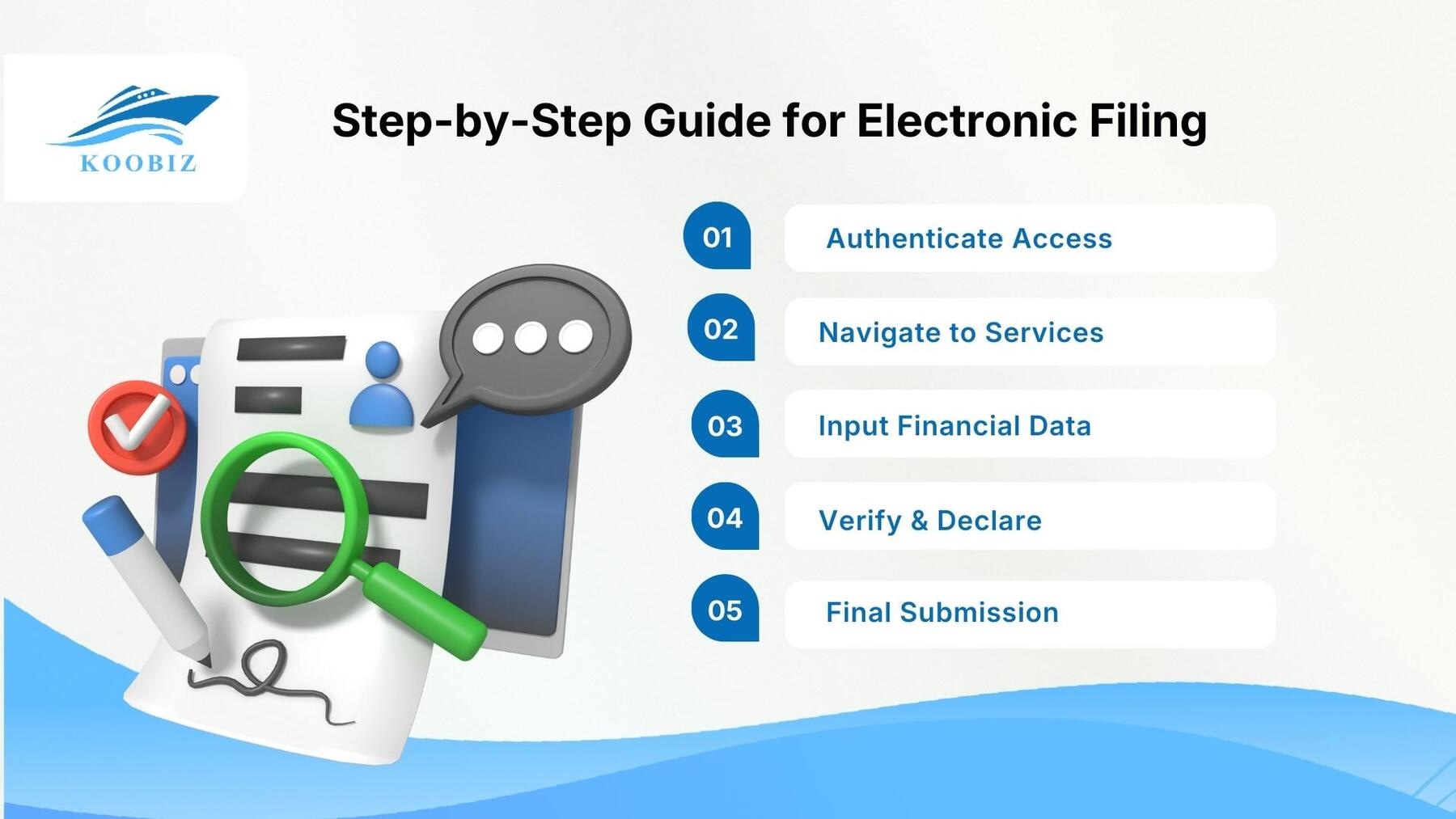
    How to Prepare and File XBRL Financial Statements

    Preparing XBRL financial statements generally follows three main steps: preparing the source documents, mapping data in BizFinx, and validating the file before submission.

    ACRA provides a free tool called BizFinx to help companies prepare and file XBRL financial statements. Although BizFinx is free to use, accurately interpreting financial figures and mapping them to the correct XBRL tags requires technical knowledge. Whether the filing is handled internally or outsourced to a professional service provider, the overall workflow remains the same.

    How to Prepare and File XBRL Financial Statements
    How to Prepare and File XBRL Financial Statements

    Step 1: Preparing Source Documents (Excel/PDF)

    Before using BizFinx, ensure that your financial statements approved for the AGM are finalised.

    • The Directors’ Statement and Auditors’ Report (if applicable) should also be completed at this stage.
    • If you intend to import data into BizFinx, preparing an Excel template in advance can help reduce manual data entry.

    Step 2: Using the BizFinx Preparation Tool

    Once the source documents are ready, you can proceed to the BizFinx preparation tool.

    • Input Basic Data: Enter the company UEN and financial period.
    • Select Template: Choose “Full” or “Simplified” based on the criteria discussed in the previous section.
    • Mapping (Tagging): Mapping (tagging) is the key step in the XBRL process, where figures from the financial statements are mapped to the relevant XBRL tags within BizFinx. For example, “Cash at Bank” in your balance sheet must be mapped to the “Cash and Cash Equivalents” tag in the taxonomy.

    Step 3: Validating and Uploading the XBRL File

    After completing the mapping process, the XBRL file must be validated before submission.

    • Validation: Use the ‘Validate’ function in BizFinx to run system checks on the XBRL file.BizFinx checks for common issues such as arithmetic inconsistencies (for example, Assets not equalling Liabilities plus Equity) and missing mandatory disclosures.
    • Generation: After all validation errors have been resolved, the system will allow you to generate the XBRL (.xml) file.
    • Upload: Log in to the BizFile+ portal to file your Annual Return and upload this generated .xml file as the financial statement component.

    We have covered the standard procedures and definitions. Now, we will delve into the exceptions and common challenges that specific business models might face.

    Exemptions and Special Cases in XBRL Filing

    There are specific exemptions for Solvent Exempt Private Companies (EPCs) and certain other entities, allowing them to bypass full XBRL filing under strict conditions.

    Although ACRA prioritizes a ‘digital-first’ approach, the agency understands that for some business models, the cost outweighs the benefit. Knowing whether you qualify for these exemptions can save your business significant time and budget.

    Filing Requirements for Solvent vs. Insolvent EPCs

    A frequent question we handle at Koobiz revolves around Exempt Private Companies (EPCs).

    • Solvent EPCs: If your EPC is solvent (able to pay its debts), you are exempt from filing financial statements with ACRA entirely. You only need to make a solvency declaration during the Annual Return. The bottom line: You are completely exempt from XBRL filing.
    • Insolvent EPCs: If an EPC is insolvent, it must file financial statements. If this happens, you are required to file in XBRL format (usually Simplified, assuming revenue criteria are met).
    • Voluntary Filing: A solvent EPC may choose to file financial statements voluntarily. If they do, they can choose to file in either PDF or XBRL format.

    Exemptions for CLGs and Foreign Companies

    ACRA recognizes that not every entity fits the standard commercial mold.

    • Companies Limited by Guarantee (CLGs): Commonly used for non-profits and charities, CLGs get a pass on the complex data entry. They are only required to file a PDF copy of their financial statements.
    • Foreign Companies (Singapore Branch): Singapore branches of foreign companies verify their accounts based on the laws of their home country. They are exempt from XBRL filing and you only need to file a PDF copy of their financial statements.

    Common Challenges and Best Practices for XBRL Mapping

    Misunderstanding the Scope / The Expert Fix

    XBRL is not just data entry; it is a translation of financial concepts. A mismatch between a line item in your PDF report and the ACRA taxonomy tag creates a misleading public record.

    Avoiding Common Validation Errors in BizFinx

    Validation errors often occur due to arithmetic imbalances or missing mandatory tags.

    • Rounding Off: A common issue is rounding discrepancies where the total assets do not match the sum of individual components due to decimal rounding.
    • Negative Values: Some tags expect positive values (e.g., “Less: Expenses”), while others expect negative values. Getting the sign wrong is a classic error.
    • Unmapped Data: Leaving mandatory fields blank because the specific line item doesn’t exist in your accounts (you should enter “0” rather than leaving it null if mandatory).

    In-House Preparation vs. Outsourcing to Corporate Services

    Given these complexities, businesses face a choice:

    • In-House: Requires training staff on BizFinx and accounting standards. It is cost-effective for simple accounts but risky if staff are inexperienced.
    • Outsourcing: Outsourcing to Koobiz (The Expert Route). This ensures that the mapping is done by accountants who understand both the financial standards (FRS) and the technical taxonomy.

    Emerging Trends in 2025: ESG and Enhanced Data

    ACRA is no longer satisfied with just ‘balancing the books.’ In 2025, the agency is tightening its lens.

    The compliance landscape is evolving. Beyond basic financial data, moving beyond basic financial figures to demand a 360-degree view of corporate health and sustainability.

    • Mandatory Climate Reporting: Starting FY2025, listed issuers are required to report climate-related disclosures (Scope 1 and Scope 2 greenhouse gas emissions). While this currently targets public companies, it is the ‘canary in the coal mine’ for private enterprises.
    • Enhanced Data Granularity: The latest taxonomies require more precise tagging of revenue streams and expenses. The days of using ‘Other Expenses’ as a catch-all bucket are over. Relying on vague tags is now a compliance red flag that invites unnecessary scrutiny.

    Frequently Asked Questions (FAQ)

    What if my revenue is exactly SGD 500,000?

    If your revenue (and assets) is exactly SGD 500,000 or less, you qualify for the Simplified XBRL taxonomy. You only move to Full XBRL if you exceed this amount.

    Can I apply for an exemption from XBRL filing?

    Yes, companies can apply for specific exemptions (e.g., if the company is dormant or has specific regulatory reasons) by lodging a specific transaction form with ACRA, though approval is case-by-case.

    My company is a Solvent EPC. Should I file voluntarily?

    This is a strategic choice. Filing voluntarily can improve your credit standing with banks and suppliers, as it shows transparency. If you choose to file, you can submit a PDF copy or use XBRL.

    Conclusion

    XBRL is more than just a regulatory checkbox; it is your company’s digital financial footprint. Whether you are navigating the nuances of the Full vs. Simplified taxonomy or troubleshooting BizFinx validation errors, precision is paramount.

    At Koobiz, we specialize in decoding the complex corporate landscape of Singapore for international and local entrepreneurs. From company incorporation to tax, accounting, and audit services, we ensure your business remains compliant so you can focus on growth. If you are unsure about your XBRL obligations or need assistance with your Annual Return, our team of experts is ready to help.

    Visit Koobiz.com today for professional assistance with your Singapore corporate filing needs.

  • Avoid Annual Return Late Filing Penalty in Singapore: ACRA Compliance Guide

    Avoid Annual Return Late Filing Penalty in Singapore: ACRA Compliance Guide

    [SUMMARIES]

    Penalty Tiers: A fixed $300 fine applies if your filing is up to 3 months late, rising to $600 for delays beyond that.

    Deadlines: For most private companies, the Annual Return must be filed within 7 months after your company’s financial year ends.

    Director Liability: This isn’t just a company fee. Directors may be summoned to court or disqualified if non-compliance persists.

    Immediate Action: The penalty must be paid immediately via BizFile+ at the point of filing to prevent escalation.

    Appeals: Getting a penalty waived is very uncommon. ACRA typically only considers requests in cases of proven system errors, not simple oversight or a busy schedule.

    [/SUMMARIES]

    For business owners in Singapore, receiving a notification about an Annual Return late filing penalty can be a source of significant anxiety. It’s not just about the fee—it’s a compliance issue that, if ignored, can lead to court action and affect a director’s ability to serve.

    At Koobiz, we understand that ACRA requirements can feel overwhelming, especially for new founders or overseas business owners. Whether you operate a local startup or an international subsidiary, understanding your filing deadlines and penalty exposure is essential to keeping your company in good standing.

    This guide is your straightforward resource for fixing and avoiding these penalties. We’ll explain the exact fines, how the system works, the deadlines based on your company’s financial year, and what happens if these legal duties are overlooked. We’ll also clear up the common mix-up between ACRA and tax filings, giving you a clear path to staying compliant.

    What is the ACRA Annual Return Late Filing Penalty?

    The ACRA Annual Return late filing penalty is a statutory fine imposed on companies that fail to lodge their Annual Return (AR) within the prescribed timeline. Think of it this way:

    • Statutory Mandate: Under Section 197 of the Companies Act, every company is legally required to file an AR to confirm its particulars (officers, address, financial status) are up to date.
    • Automatic Enforcement: The system flags a late filing immediately; no manual review is needed to issue the initial fine.
    • Public Register Integrity: The penalty ensures public records are timely and reliable for anyone checking a company’s status.
    • Distinct from Tax: Unlike IRAS tax returns which focus on income, the Annual Return focuses on corporate governance and solvency. Many Koobiz clients often confuse the two, leading to accidental non-compliance.
    • Director Responsibility: While the fine is charged to the company, the legal duty to ensure it’s filed and paid falls on the directors.

    How Much is the Late Lodgement Fee and Composition Sum?

    There are two primary tiers for the late lodgement penalty: a $300 flat fee for filings made within 3 months of the deadline, and a $600 flat fee for filings made after 3 months.

    Specifically, the cost depends on the duration of the delay. ACRA simplified this framework effective April 30, 2021, to encourage quicker rectification of breaches. Previously, penalties accumulated on a monthly basis, which could lead to confusion. The current 2-tier system is straightforward but punitive enough to discourage negligence.

    • Tier 1 ($300): If you miss your deadline but file the Annual Return within 3 months (90 days) of the due date, the penalty is capped at $300. This is legally referred to as a “Composition Sum”, essentially an offer to settle the offense out of court by paying a fixed amount.
    • Tier 2 ($600): If the delay exceeds 3 months, the penalty doubles to $600. This is the maximum administrative penalty ACRA will impose via the BizFile+ system before potentially escalating the matter to prosecution.

    Importantly, penalties are imposed per breach. In many cases, companies that miss their Annual Return deadline have also failed to hold their Annual General Meeting (AGM) on time. Each breach can attract a separate composition sum. As a result, directors may face up to $1,200 in total penalties, $600 for the AGM breach and $600 for the AR breach. Koobiz advises clients to view the $600 cap not as a safety net, but rather as ACRA’s final administrativewarning before court action is initiated.

    Note: As of late 2025, ACRA continues to enforce this 2-tier framework strictly. Ignoring the Tier 2 penalty often results in a summons to court.

    When is the Annual Return Deadline Due?

    Your deadline isn’t a fixed calendar date. It’s calculated from your company’s own Financial Year End (FYE).

    • For Non-Listed Companies (Private Limited): You must file your Annual Return within 7 months after your FYE. For example, if your FYE is 31 December, your Annual Return is due by 31 July of the following year.
    • For Listed Companies: The timeline is tighter. You must file within 5 months after your FYE.

    Key Detail: The 7-month AR deadline assumes you have complied with AGM requirements. For most private companies, the AGM must be held within 6 months after the FYE. If the AGM is delayed (or forgotten), the AR filing will almost certainly become late as well, triggering penalties for both breaches.

    Real-World Scenarios: Calculating Deadlines and Penalties

    To make these rules easier to digest, let’s look at three common scenarios we encounter at Koobiz. These examples illustrate how the Financial Year End (FYE) dictates the deadline and how the penalty tiers are applied in practice for a standard Private Limited Company.

    Scenario 1: The “Just Missed It” Startup (Tier 1 Penalty)

    • Company: TechStart Solutions Pte. Ltd.
    • Financial Year End (FYE): 31 December 2023.
    • Correct Deadline: 31 July 2024 (7 months after FYE).
    • Actual Filing Date: 15 August 2024.
    • The Breach: The filing is 15 days late.
    • The Penalty: $300.
    • Koobiz Insight: Even a short delay counts. Once the deadline is missed, even by a single day, the filing automatically falls into the “within 3 months” penalty tier. ACRA does not calculate penalties by the number of days late; the full $300 applies immediately.

    Scenario 2: The Major Oversight (Tier 2 Penalty)

    • Company: Global Trade Holdings Pte. Ltd.
    • Financial Year End (FYE): 31 March 2023.
    • Correct Deadline: 31 October 2023.
    • Actual Filing Date: 5 February 2024.
    • The Breach: The filing is over 3 months late (approx. 95 days late).
    • The Penalty: $600.
    • Koobiz Insight:Once the delay crosses the 3-month mark, the penalty automatically increases to $600. More importantly, leaving the breach unresolved for an extended period significantly raises the risk of a court summons, exposing directors to prosecution and potential disqualification.

    Scenario 3: The “Tax vs. ACRA” Confusion

    • Company: Creative Design Agency Pte. Ltd.
    • The Situation: The foreign director successfully filed the Corporate Tax Return (Form C-S) with IRAS by the 30 November deadline and assumed all government compliance was complete.
    • The Mistake: They neglected the ACRA Annual Return, which was due earlier on 31 July.
    • The Outcome: Despite paying their taxes on time, the company was flagged as “Non-Compliant” by ACRA and incurred a $600 late filing penalty because the error was only discovered 5 months later.
    • Lesson: IRAS tax filing and ACRA Annual Return filing are separate obligations with different deadlines. Being compliant with IRAS does not mean you are compliant with ACRA.

    Steps to File Late Annual Return and Pay Penalties via BizFile+

    Follow these three key steps to resolve the issue:

    Step 1: Log in to BizFile+

    Access the BizFile+ portal using your Corppass login. You must be an authorized director, company secretary, or a registered filing agent.

    Step 2: Navigate to Annual Return

    Select “File Annual Return by Local Company” and complete all the required information accurately.

    Step 3: Acknowledge and Pay

    The system will auto-calculate the late fee ($300 or $600). Acknowledge and pay immediately via card or GIRO to complete the filing. Once payment is made, your company’s compliance status will be updated.

    What are the Consequences of Ignoring the ACRA Penalty?

    Ignoring the penalty escalates the issue from a simple fine to a serious legal problem for the company’s directors.

    Can Directors Face Court Prosecution and Disqualification?

    Yes, directors can face personal court prosecution and, upon conviction, may be disqualified or debarred from acting as a director in Singapore. There are two main risks for directors:

    Under the Companies Act, if a director fails to comply with the requirement to file Annual Returns, ACRA can issue a summons to attend court. The specific consequences include:

    • Court Fines: The court can impose fines significantly higher than the $600 composition sum, potentially up to $5,000 per offense.
    • Disqualification (Section 155): A director faces disqualification for “persistent default.” This occurs if you are convicted of three or more filing offenses within a 5-year period, or have three or more enforcement orders made against you.
    • Debarment (Section 155B): This is a swifter enforcement tool. The Registrar can debar a director if they fail to lodge any document for at least 3 months after the deadline. Unlike disqualification, you do not need multiple convictions; a single prolonged default can trigger this, preventing you from taking on new appointments as a director or secretary.
    • Section 155A: Additionally, a director can be disqualified if they were a director of at least three companies which were struck off within a 5-year period (where the striking off was initiated by ACRA).

    At Koobiz, we stress that director enforcement records are publicly accessible. A disqualification is not a private administrative matter, it permanently damages your professional standing. Such records are routinely reviewed during bank due diligence and compliance checks, making it extremely difficult to open corporate bank accounts or conduct regulated business in Singapore and other major financial centres.

    Will the Company Be Struck Off for Non-Filing?

    • Yes. Where a company repeatedly fails to file its statutory returns, ACRA may presume that the company is no longer carrying on business and initiate strike-off proceedings. Once struck off, the company ceases to exist as a legal entity. All bank accounts are frozen, contractual rights lapse, and remaining assets may vest in the state. Restoring a struck-off company is possible only through a court-led reinstatement process, which is time-consuming, costly, and subject to judicial discretion.

    Can You Appeal for a Waiver of the Late Filing Penalty?

    Yes, but only under extremely specific and rare conditions, such as a proven technical glitch in the ACRA system or a court order extending the deadline.

    While penalties are strict, there is a narrow window for appeal, though “forgetfulness” or “not knowing the law” are never accepted as valid reasons.

    • Invalid Reasons: “My accountant resigned,” “I was overseas,” “I didn’t receive the reminder email,” or “The company made no profit.” These are considered management failures, not valid excuses.
    • Valid Reasons: Proven system failure of BizFile+ (requires screenshots/logs), loss of essential records due to fire or theft (requires police report), or critical illness of the sole director (requires medical evidence).

    Appeals must be lodged via BizFile+ or written to ACRA directly. However, based on Koobiz‘s experience, the success rate for waivers is very low unless the evidence is irrefutable. It is often more cost-effective to pay the composition sum and move on.

    Difference Between ACRA Annual Return and IRAS Tax Filing Penalties

    ACRA penalties target the governance and structural reporting of the entity, whereas IRAS penalties strictly target the reporting of taxable income and corporate tax liability. It is crucial not to conflate the two.

    Feature ACRA (Annual Return) IRAS (Tax Filing – Form C-S/C)
    Primary Focus Governance, shareholders, officers, and solvent financial status. Reporting of taxable income and corporate tax liability.
    Enforcement Authority Accounting and Corporate Regulatory Authority (ACRA). Inland Revenue Authority of Singapore (IRAS).
    Deadline Depends on FYE (e.g., 7 months after FYE for non-listed). Fixed deadline (typically 30 November).
    Late Penalty Fixed tiers: $300 (Tier 1) or $600 (Tier 2). Varies: Composition fines to court prosecution under tax evasion laws.
    Relationship Filing here does not satisfy IRAS requirements. Filing here does not satisfy ACRA requirements.

    According to Singapore regulatory data, a significant portion of compliance breaches involving foreign-owned companies stem from confusing the Annual Return with the Tax Return.

    Frequently Asked Questions (FAQs)

    1. Can I apply for an extension of time (EOT) to file my Annual Return?

    Yes, you can apply for a 60-day Extension of Time (EOT) on BizFile+ before your original deadline, for a fee of $200. An EOT applied for after the deadline will not cancel an already-incurred late filing penalty.

    2. Does paying the composition sum remove the breach from my record?

    Paying the fee settles that specific offense and stops court action. However, ACRA’s system will still show that the filing was submitted late. Multiple late filings can label a director as a “persistent defaulter.”

    3. What if my company is dormant? Do I still need to file?

    Yes, even dormant companies must file an Annual Return, though they may qualify for a simpler process. Not filing will still result in the same late penalties.

    Conclusion

    Staying compliant in Singapore’s business environment requires attention to detail. The Annual Return late filing penalty is a sign that your company’s administrative health needs a check-up. Whether it’s a $300 fee or the risk of director disqualification, the consequences of inaction are far greater than the effort of staying organized.

    At Koobiz, we help business owners stay fully compliant so they can focus on growth with confidence. From company incorporation and corporate bank account opening to ongoing tax, accounting, audit, and company secretarial services, our team ensures that no deadline is missed. If you are currently facing a late filing issue or require a professional Company Secretary to manage your Annual Returns, contact Koobiz today for a complimentary compliance health check. Avoid unnecessary penalties, let us handle the paperwork for you.

  • Avoid Late Filing Penalties: Adhere to 2026 XBRL Deadlines for SG Directors

    Avoid Late Filing Penalties: Adhere to 2026 XBRL Deadlines for SG Directors

    [SUMMARIES]

    Mandatory Compliance: Most Singapore companies must file financial statements in XBRL format via BizFile+ in 2026 based on their FYE.

    The 7-Month Rule: Private Limited companies generally have 7 months from their Financial Year End to file Annual Returns.

    High Stakes: Late filing results in escalating fees ($300–$600) and potential director debarment for chronic non-compliance.

    Exemptions Exist: Solvent Exempt Private Companies (EPCs) and Dormant companies have simplified filing options.

    Recovery Options: Extensions of Time (EOT) can be applied for before the deadline to avoid immediate penalties.

    [/SUMMARIES]

    In 2026, Singapore’s regulatory regime remains strict, with ACRA enforcing firm deadlines for Annual Return and XBRL filings. For directors, meeting these timelines is not merely administrative – it is essential to avoid penalties and preserve a strong compliance record. Whether you operate a Private Limited Company or a Solvent EPC, missed deadlines can result in substantial financial consequences.

    At Koobiz, we’ve prepared this practical guide to help you determine your exact filing deadline, understand applicable fines, and assess available exemptions.

    Is XBRL filing mandatory for Singapore Companies in 2026?

    Yes. In 2026, most Singapore-incorporated companies are required to file financial statements in XBRL format unless they qualify for a specific exemption. ACRA mandates XBRL to enhance transparency and enable efficient financial analysis.

    This requirement applies to both unlimited and limited-by-shares companies. If your company is insolvent or does not qualify as a Solvent Exempt Private Company (EPC), a full set of XBRL financial statements must be lodged via ACRA BizFile+ portal. Even where the FYE falls in late 2025, the filing obligation typically arises in 2026. Failure to submit the correct XBRL file with the Annual Return will result in immediate rejection and non-compliance.

    XBRL filing
    XBRL filing

    2026 XBRL Filing Schedule: Deadlines Based on FYE

    In 2026, Annual Return filing deadlines (including XBRL) fall into two separate timelines, depending on whether the company is listed or non-listed.

    To avoid missing the deadline, directors must determine the filing date based on the company’s Financial Year End (FYE), applying the standard rule that combines the permitted AGM period with the statutory filing window.

    Deadlines Based on FYE
    Deadlines Based on FYE
    Company Type AGM Deadline (from FYE) Annual Return Deadline (from FYE) Example (FYE 31 Dec 2025)
    Private Limited (Non-listed) 6 months 7 months AGM by 30 Jun 2026

    File by 30 Jul 2026

    Listed Company 4 months 5 months AGM by 30 Apr 2026

    File by 30 May 2026

    Private Limited Companies: The 7-Month Rule Explained

    Private Limited Companies must complete their Annual Return filing within 7 months from the Financial Year End. This period covers two statutory steps: holding the AGM within 6 months of the FYE, followed by filing the Annual Return (including XBRL) within 30 days after the AGM.

    For instance, with an FYE of 31 December 2025, the AGM must be held by 30 June 2026, and the final filing deadline falls on 30 July 2026. Koobiz recommends preparing the XBRL conversion at least one month before the AGM to ensure accuracy ahead of directors’ approval.

    Listed Companies: Stricter timelines for 2026

    Listed companies in Singapore operate under a shorter timeline, with only 5 months from the Financial Year End to complete their filings. They must hold the AGM within 4 months of the FYE and lodge the Annual Return, including XBRL, within 30 days thereafter.

    For example, with an FYE of 31 December 2025, the AGM must be held by 30 April 2026 and the XBRL filing completed by 30 May 2026. This compressed timeline requires efficient reporting processes to meet the heightened compliance expectations of public entities.

    Updated ACRA penalties for late lodgment in 2026

    In 2026, ACRA enforces a tiered penalty regime for late filings, ranging from monetary fines to serious administrative sanctions on directors. While an initial late fee may appear minor, repeated non-compliance can severely damage a company’s compliance record and reputation. Notably, these penalties are automatically triggered by the BizFile+ system upon late submission.

    ACRA Tiered Penalty Regime (2026)
    ACRA Tiered Penalty Regime (2026)

    How late fees accumulate: Tiered penalty Structure

    Late lodgment fees are capped based on the length of the delay, typically ranging from $300 to $600 per statutory breach. Filing the Annual Return within three months of the deadline usually incurs a $300 penalty, increasing to $600 if the delay exceeds three months.

    Importantly, penalties are imposed separately for the AGM and the Annual Return. Missing both deadlines can therefore double the total fines – an avoidable cost that services like Koobiz help mitigate through proactive compliance reminders.

    Directors’ Liability: Can you be disqualified?

    Yes. Directors may be disqualified or debarred for persistent breaches of the Companies Act. Under the enhanced enforcement regime, a director with three or more companies struck off by ACRA within five years may be barred from holding directorships. In addition, ACRA now displays a public compliance rating on the Business Profile, meaning repeated late XBRL filings can directly undermine a company’s credibility with banks and investors.

    Real-World Scenarios: 2026 compliance in action

    To put these deadlines into perspective, the following three scenarios for the 2025/2026 financial year show how the rules apply across different business structures and the real cost of missing them.

    Scenario 1: The Standard Private Company

    Company Profile: TechStart Pte. Ltd. (Private Company)

    • FYE: 31 December 2025.
    • Deadline Calculation:
      • AGM: Must be held by 30 June 2026 (within 6 months).
      • Filing: Must file Annual Return by 30 July 2026 (within 7 months).
    • Outcome: The director approves the Financial Statements in June, and the Corporate Secretary files the XBRL via BizFile+ in July. The company remains compliant with zero penalties.

    Scenario 2: The Listed Entity

    Company Profile: Global Trade Holdings Ltd (Public Listed)

    • FYE: 31 March 2026.
    • Deadline Calculation:
      • AGM: Must be held by 31 July 2026 (within 4 months).
      • Filing: Must file Annual Return by 31 August 2026 (within 5 months).
    • Outcome: Due to the tighter timeline, the company completes its audit by early July to meet the accelerated deadline.

    Scenario 3: The Cost of Delay

    Company Profile: LateBloomer Services Pte. Ltd.

    • FYE: 31 December 2025.
    • Filing Date: The company misses the 30 July 2026 deadline and finally files on 15 November 2026 (3.5 months late).
    • Consequence:
      • Late Lodgment Fee: $600 (imposed immediately because the delay exceeded 3 months).
      • Composition Sum: ACRA may also offer a separate composition sum (minimum $500) for the breach of Section 197 (Annual Return) or Section 175 (AGM).
      • Total Risk: The company faces a potential total of $1,100+ in fines and a permanent “Late” remark on the director’s compliance history for that year.

    With the key deadlines and penalties established, we now turn to the finer details of the filing requirements. Not all companies are subject to the same obligations, and understanding the applicable exemptions and variations can save substantial time and resources in 2026.

    Understanding Revisions: Revised XBRL Requirements in 2026

    The Revised XBRL Filing Requirements are now the authoritative standard for financial reporting in Singapore. Designed to streamline data elements, this framework reduces compliance burden while still capturing the key financial information required by ACRA.

    To navigate these requirements effectively in 2026, directors should note the following key changes:

    • Elimination of Old Options: Companies are no longer permitted to use the obsolete “Option A” or “Option B” formats, which have been fully phased out.
    • The Single Template Approach: Most companies must now file using the Revised XBRL Filing Requirements template. This unified template focuses on capturing approximately 100+ data elements that allow ACRA to benchmark industry performance.
    • Simplified vs. Full IFRS: While less exhaustive than the full IFRS taxonomy, the revised template still requires precise mapping of financial line items to ensure accuracy.

    Understanding these specific data entry points is where the professional corporate secretaries at Koobiz add immense value, ensuring your financial mapping complies strictly with the latest taxonomy revisions.

    Exemptions and Special Cases for 2026 Filing

    Certain categories of companies are exempted from filing a full set of XBRL financial statements based on their solvency or level of activity. Determining whether your entity falls within these “unique” or “rare” classifications is key to optimizing your compliance approach.

    Solvent EPCs: Do you need to convert financials to XBRL?

    No. Solvent Exempt Private Companies (EPCs) are not required to file financial statements in XBRL, provided they make the necessary solvency declarations. An EPC is a private company with no more than 20 shareholders and no corporate shareholders. If solvent, it may file a simplified Annual Return without financial statements or attach them in PDF format. While XBRL filing is optional, voluntary submission may enhance the company’s credit profile. By contrast, insolvent EPCs must file a full set of XBRL financial statements.

    Filing for dormant companies: Simplified process

    Dormant companies enjoy a much simpler filing regime than active entities. A company is considered dormant if it has no accounting transactions during the financial year. In 2026, a dormant non-listed company that meets the substantial assets test (total assets ≤ S$500,000) is exempt from preparing financial statements and filing XBRL.

    Such companies may submit a simplified Annual Return via BizFile+ to confirm their dormant status. While this exemption can significantly reduce compliance costs, directors must ensure no unintended transactions (such as bank charges) have occurred that would negate dormancy.

    What to Do If You Miss the 2026 Deadline?

    If your company is unable to meet the XBRL filing deadline, the appropriate step is to apply for an Extension of Time (EOT) instead of filing late. Proactive action signals to ACRA that the board is managing the issue responsibly.

    Step-by-Step Guide to Applying for an Extension of Time (EOT)

    Applying for an EOT involves a formal request via the BizFile+ portal, which must be submitted before the statutory deadline expires.

    1. Log in to BizFile+: Use your Corppass to access the portal at www.bizfile.gov.sg.
    2. Select EOT Service: Navigate to “Annual Filing” and select “Application for Extension of Time for Holding AGM/Filing AR”.
    3. Provide Justification: You must state a valid reason (e.g., delay in audit, change of financial year).
    4. Pay the Fee: The fee is $200 per application (covering up to 60 days extension).

    Approvals are generally granted if the application is made early. However, relying on EOTs annually is not sustainable. For a long-term solution, partnering with a corporate service provider like Koobiz ensures that your accounts are prepared and converted to XBRL well ahead of schedule, keeping your company in good standing.

    Frequently Asked Questions (FAQ)

    Can I file my XBRL after the AGM date?

    Yes, the Annual Return (which includes the XBRL) is typically filed after the AGM. You have 30 days after the AGM to complete this filing.

    What if I have zero income but expenses? Am I dormant?

    Not necessarily. If you have administrative expenses (like paying a secretary or audit fees), the company may be considered “active” for filing purposes. Dormancy usually requires no accounting transactions other than compliance costs or maintenance of statutory records.

    Does ACRA waive late penalties for first-time offenders?

    Generally, no. Penalties are automated. However, you can submit an appeal via BizFile+ if you have a strong, valid reason (e.g., medical emergency), though waivers are rare.

    About Koobiz

    Navigating Singapore’s corporate regulations requires precision and expertise. Koobiz specializes in helping international and local entrepreneurs establish and manage their businesses in Singapore. From Company Incorporation and Bank Account Opening to Tax, Accounting, and XBRL Filing, our expert team ensures you remain compliant while you focus on business growth.

    Need help with your 2026 Annual Return?

    Contact Koobiz today for a consultation

    Disclaimer: This article is for general informational purposes only and does not constitute legal or professional financial advice. All ACRA regulations, fees, and deadlines are subject to change. Readers should consult the official ACRA website or a qualified corporate secretary for the most current information specific to their business situation.

  • Master Transfer Pricing Compliance in Singapore for MNCs: The Arm’s Length Guide

    Master Transfer Pricing Compliance in Singapore for MNCs: The Arm’s Length Guide

    [SUMMARIES]

    Mandatory Compliance: Singapore tax law (Section 34D) requires all related party transactions to strictly adhere to the Arm’s Length Principle.

    Documentation Threshold: Businesses with gross revenue exceeding S$10 million must prepare contemporaneous Transfer Pricing Documentation (TPD).

    3-Step Approach: IRAS mandates a specific three-step process: Comparability Analysis, Method Selection, and Determining Results.

    Penalty Risks: Non-compliance can result in a fine of up to S$10,000 and a 5% surcharge on any tax adjustments made by IRAS.

    Strategic Support: Koobiz assists MNCs in navigating complex TP rules, including the latest 8th Edition guidelines on intercompany loans.

    [/SUMMARIES]

    For Multinational Corporations (MNCs) expanding into Asia, Singapore offers an attractive tax regime, yet it demands rigorous adherence to regulatory standards, particularly regarding cross-border transactions. Transfer Pricing Compliance in Singapore has moved from being a supplementary reporting requirement to a central focus of the Inland Revenue Authority of Singapore (IRAS), especially with the enforcement of the 8th Edition Guidelines.

    At Koobiz, we recognize that the technical requirements under Section 34D of the Income Tax Act can be challenging for both foreign investors and established MNCs. This guide is designed to help you clearly understand and apply the Arm’s Length Principle, assess when transfer pricing documentation becomes mandatory, and navigate the IRAS-mandated three-step approach. Whether you are reviewing intercompany financing arrangements or preparing for a potential tax audit, a solid grasp of these rules is essential to mitigate surcharge risks and protect your company’s standing in Singapore.

    What constitutes Transfer Pricing under Singapore Tax Law?

    Transfer Pricing
    Transfer Pricing

    Transfer Pricing is the pricing mechanism used for transactions between related parties, such as the sale of goods, provision of services, or transfer of intangible assets, which must strictly reflect market conditions.

    To delve deeper, transfer pricing is a neutral accounting term, not an illegal practice. However, under Section 34D of the Income Tax Act, IRAS scrutinizes these prices to prevent profit shifting and ensure profits reflect true economic value in Singapore.

    Defining “Related Party” & Scope

    IRAS defines related parties broadly, generally where there is control, significant influence, or a shared holding company. As a result, the scope of transfer pricing is wide and includes:

    • Operational Activities: Management fees, royalties, and intercompany loans.
    • Audit Scope: Every internal invoice is a potential subject of scrutiny.

    Koobiz Advice: Transparency and consistency in these definitions are your first line of defense against tax adjustments.

    According to IRAS e-Tax Guide (Eighth Edition), the authority explicitly states that taxpayers are expected to apply the arm’s length principle to ensure that their pricing with related parties reflects independent pricing behavior.

    How is Compliance with the Arm’s Length Principle Determined?

    Compliance is achieved when related party pricing matches what independent parties would agree to under similar circumstances. This must be backed by robust documentation and comparable market data.

    To determine compliance, IRAS applies the Arm’s Length Principle (the international standard). If your internal pricing deviates significantly from market rates—either artificially inflating costs or suppressing revenue—IRAS will deem it non-compliant.

    Compliance with ALP: Documentation, Data & 3 Factors
    Compliance with ALP: Documentation, Data & 3 Factors

    The Core Test: “Would independent parties agree?”

    To pass this test, businesses must analyze three key factors:

    • Contractual Terms: Are the terms standard for the industry?
    • Economic Circumstances: Do the prices reflect current market realities?
    • Business Strategies: Is the pricing commercially rational?

    At Koobiz,we assist companies in stress-testing their intercompany pricing against this “independent party” benchmark, identifying exposure early and rectifying gaps before an audit arises.

    Research by the OECD confirms that the Arm’s Length Principle remains the global standard for ensuring fair tax bases across jurisdictions.

    What are the Mandatory Requirements for Transfer Pricing Documentation (TPD)?

    There are two specific mandatory conditions that trigger the requirement for TPD: having gross revenue exceeding S$10 million for the basis period, or being explicitly required by IRAS to prepare such documentation.

    Beyond applying the arm’s length principle in theory, Singapore law imposes strict documentation standards to ensure pricing can be properly substantiated. It is important to distinguish routine bookkeeping from Qualifying Transfer Pricing Documentation, which must meet specific regulatory criteria.

    1. Gross Revenue Threshold: If your company’s gross revenue (not just profit) exceeds S$10 million in the basis period concerned, you are legally required to prepare contemporaneous TPD.
    2. Specific Requirement: Regardless of revenue, if IRAS issues a specific direction to your company to prepare TPD for a previous basis period, you must comply.

    Exemptions from TPD

    Even where the S$10 million revenue threshold is met, IRAS grants transaction-level exemptions to ease the compliance burden for lower-value dealings between related parties.

    • Purchase/Sale of Goods: Exemption applies if the total value is below S$15 million.
    • Loans: Exemption applies if the loan value is below S$15 million (applicable where the IRAS Indicative Margin is applied).
    • Services, Royalties, and Others:
      • For YA 2025 and prior: Exemption applies if the total value is below S$1 million.
      • For YA 2026 onwards: The threshold increases to S$2 million, providing greater relief for businesses.

    TPD must be prepared on a contemporaneous basis, meaning it should be completed before the due date of filing the corporate income tax return. The documentation must cover, among others, the group structure, business activities, intercompany transactions, and a defensible pricing analysis. Failure to produce adequate TPD upon IRAS’ request exposes the company to immediate penalties and potential tax adjustments.

    At Koobiz, we support clients in preparing robust, compliant TPD that aligns with the detailed content requirements set out in the Second Schedule of the Income Tax (Transfer Pricing Documentation) Rules 2018, helping businesses mitigate risk and withstand IRAS scrutiny.

    The IRAS 3-Step Approach to Applying the Arm’s Length Principle

    The IRAS 3-Step Approach to Applying the Arm's Length Principle
    The IRAS 3-Step Approach to Applying the Arm’s Length Principle

    To justify pricing to tax authorities, MNCs are expected to apply a structured three-step methodology prescribed by IRAS. Transfer pricing is not a matter of estimation or intuition; it must be supported by a disciplined and evidence-based approach.

    Step 1: Comparability Analysis

    The foundation of transfer pricing lies in comparing your related party transaction with independent ones. This analysis must examine:

    • Characteristics: What goods or services are being traded?
    • Functional Analysis (FAR): Who performs the Functions, owns the Assets, and assumes the Risks?
    • Economic Circumstances: What are the market conditions?

    Step 2: Identification of the Most Appropriate TP Method

    IRAS requires the “most appropriate” method from the five internationally accepted options:

    • CUP Method: Compares specific prices (ideal for commodities).
    • Resale Price Method: Focuses on gross margins (for distributors).
    • Cost Plus Method: Focuses on mark-ups (for manufacturers/service providers).
    • TNMM: Compares net profit margins (most common for complex operations).
    • Profit Split: Splits profits based on contribution (for highly integrated value chains).

    Step 3: Determination of the Arm’s Length Results

    Apply the selected method to your data to derive an interquartile range.

    • Within Range: Compliant.
    • Outside Range: Adjustment required to the median.

    Real-world Impact: A Koobiz client in logistics used the TNMM to successfully justify their operating margin against competitors, eliminating subjectivity in their IRAS filings.

    Case Studies: Transfer Pricing in Action

    Real-world examples demonstrate the practical application of the Arm’s Length Principle and the potential pitfalls of incorrect pricing.

    To clarify how these rules affect daily operations, consider these two common scenarios that often trigger IRAS scrutiny.

    Scenario A: The Limited Risk Distributor (Tangible Goods)

    • Context: TechGlobal SG is a Singapore subsidiary acting as a distributor for its US parent. It purchases electronic components from the parent at S$80 per unit and resells them to local customers at S$100.
    • The Issue: After deducting local operating expenses (marketing, staff, rent), TechGlobal SG reports a Net Operating Margin of 1%.
    • IRAS Analysis: Using the TNMM (Transactional Net Margin Method),IRAS benchmarks TechGlobal SG against comparable independent distributors operating in Singapore. The benchmarking analysis shows that similar distributors typically earn an arm’s length operating margin of 3% to 5%.
    • Outcome: The adjustment leads to additional taxable income in Singapore, along with a 5% surcharge imposed on the transfer pricing adjustment, highlighting how even routine distribution models can result in costly exposure if pricing is not properly supported.

    Scenario B: Intercompany Management Fees (Services)

    • Context: SingHQ Pte Ltd acts as a regional hub, providing HR and IT support services to its subsidiaries in Vietnam and Thailand. Each subsidiary is charged a flat management fee of S$1 million per year, without detailed invoices or service breakdowns.
    • The Issue: The subsidiaries cannot verify the specific services received or the basis of the cost.
    • IRAS Analysis: IRAS applies the “Benefit Test”. Did the subsidiaries actually need and receive these services? Is the fee based on Cost + Mark-up (e.g., Cost + 5%)?

    IRAS will expect formal intercompany agreements and contemporaneous evidence, such as timesheets, service reports, email correspondence, or cost allocation schedules, to substantiate the charges.

    • Outcome: The deduction may be denied at the subsidiary level, or the income reclassified at SingHQ, potentially triggering double taxation disputes and additional tax exposure across multiple jurisdictions.

    What are the Penalties for Non-Compliance with Transfer Pricing Rules?

    Non-compliance with Transfer Pricing rules triggers severe financial consequences, including a fine of up to S$10,000, a 5% surcharge on adjustments, and potential interest on underpaid taxes.

    The consequences of ignoring these rules are not just administrative but financially punitive. IRAS has taken a stricter stance on enforcement to deter profit shifting.

    Transfer Pricing Penalties: Fine, 5% Surcharge, No Safe Harbour
    Transfer Pricing Penalties: Fine, 5% Surcharge, No Safe Harbour
    1. Fine for Non-Documentation: Failure to prepare or submit TPD upon request can result in a fine not exceeding S$10,000. This applies even if the pricing itself was correct but the documentation was missing.
    2. 5% Surcharge on Adjustments: If IRAS reviews your accounts and decides to adjust your transfer price (increasing your taxable income), a 5% surcharge is imposed on the amount of the adjustment, regardless of whether there is additional tax payable. This surcharge is not tax-deductible.
    3. No Safe Harbour from Penalties: Unlike some jurisdictions where having documentation provides penalty protection, in Singapore, the 5% surcharge is strictly applied on adjustments.

    Note on Remission: While strict, IRAS may consider remitting part or all of the surcharge in cases where taxpayers are cooperative or voluntarily initiate a retrospective adjustment within two years (provided no audit has commenced). Proactive correction is key.

    Beyond immediate penalties, repeated non-compliance can trigger wider tax audits, including reviews of GST and withholding tax positions, and may result in reputational harm with regulators and counterparties. In practice, investing in robust transfer pricing compliance upfront is significantly more cost-effective than dealing with escalating penalties and enforcement actions later.

    Contextual Border:

    Having covered the “What” (definitions), the “Why” (compliance rationale), and the “Consequences” (penalties), we now turn to the “How.” The next section examines complex, real-world applications, such as intercompany financing arrangements and dispute resolution mechanisms, that sophisticated MNCs commonly encounter as their operations scale.

    Handling Specific Related Party Transactions and Dispute Resolutions

    MNCs face specific compliance requirements for intercompany loans and services, alongside mechanisms for resolving cross-border disputes.

    How are Intercompany Loans Treated under the 8th Edition Guidelines?

    Rule: Loans must be priced using a Base Reference Rate + Arm’s Length Spread or the IRAS Indicative Margin.

    • 8th Edition Update: Benchmarking must strictly match the loan tenure.
    • Domestic Loans (New Jan 2025 Rule): For domestic loans entered into from 1 Jan 2025, if neither party is in the business of lending, taxpayers can choose to apply the IRAS Indicative Margin.
      • Key Benefit: Doing so exempts the transaction from TPD and, crucially, IRAS will not make Section 34D adjustments on these specific loans.
    • Interest-Free Loans: From 2025 onwards, interest-free domestic intercompany loans are generally not acceptable unless supported by strong commercial justification. For cross-border loans, IRAS typically does not adjust interest-free arrangements where the Singapore entity is the lender, largely due to Singapore’s remittance-based taxation system. However, documentation and rationale remain important to mitigate audit risk.

    In practice, intercompany financing has become a high-focus area under the 8th Edition, and structuring loans correctly from inception is critical to avoid unnecessary adjustments and penalties.

    What is the Safe Harbour Rule for Routine Support Services?

    Rule: Taxpayers can apply a fixed 5% cost mark-up on routine support services (e.g., HR, IT listed in Annex C).

    • Benefit: No detailed benchmarking study is required.
    • Condition: Costs must be strictly pooled and correctly allocated.

    What is the Difference Between Advance Pricing Arrangements (APA) and Mutual Agreement Procedures (MAP)?

    APA is proactive; MAP is reactive. Use APAs for certainty and MAPs to resolve double taxation.

    Feature Advance Pricing Arrangement (APA) Mutual Agreement Procedure (MAP)
    Nature Prospective (Forward-looking / Prevention) Reactive (Backward-looking / Cure)
    Primary Purpose Determine pricing for future years (3-5 years). Resolve double taxation after adjustments.
    Benefit Audit immunity on covered transactions. Eliminates double taxation via authority agreement.

    When should MNCs consider a Transfer Pricing Health Check?

    Conduct a health check immediately if you meet any of the following criteria:

    • [ ] Revenue: Gross revenue > S$10 million.
    • [ ] Thresholds: Services/Royalties > S$1 million (S$2 million from YA 2026).
    • [ ] Outdated Data: Benchmarking study > 3 years old.
    • [ ] Losses: Singapore entity is consistently loss-making.
    • [ ] Risks: Interest-free loans exist between related parties.

    Koobiz offers a “traffic light” risk assessment to identify and remediate these exposures.

    About Koobiz

    Managing transfer pricing in Singapore goes beyond technical compliance, it requires commercial insight, regulatory awareness, and hands-on local experience. Koobiz is a trusted corporate services firm supporting businesses at every stage of their Singapore journey.

    We specialize in:

    • Singapore Company Incorporation: Setting up your optimal business structure.
    • Bank Account Opening: Facilitating seamless financial integration in Singapore.
    • Tax & Accounting Services: From Corporate Income Tax filing to Transfer Pricing Documentation preparation.
    • Audit & Assurance: Ensuring full regulatory compliance.

    Transfer pricing risks should never slow down your expansion. With Koobiz, your related party transactions are structured to be compliant, commercially sound, and well-prepared for IRAS scrutiny, so you can focus on growing your business with confidence.

    Explore Koobiz Services

    Disclaimer: This guide is for informational purposes only and does not constitute legal or tax advice. Transfer pricing rules are subject to change. Please consult with a professional advisor or IRAS guidelines for specific business circumstances.

  • Avoid Annual Return Late Filing Penalty in Singapore: ACRA Compliance Guide

    Avoid Annual Return Late Filing Penalty in Singapore: ACRA Compliance Guide

    [SUMMARIES]

    Penalty Tiers: A fixed $300 fine applies if your filing is up to 3 months late, rising to $600 for delays beyond that.

    Deadlines: For most private companies, the Annual Return must be filed within 7 months after your company’s financial year ends.

    Director Liability: This isn’t just a company fee. Directors may be summoned to court or disqualified if non-compliance persists.

    Immediate Action: The penalty must be paid immediately via BizFile+ at the point of filing to prevent escalation.

    Appeals: Getting a penalty waived is very uncommon. ACRA typically only considers requests in cases of proven system errors, not simple oversight or a busy schedule.

    [/SUMMARIES]

    For business owners in Singapore, receiving a notification about an Annual Return late filing penalty can be a source of significant anxiety. It’s not just about the fee—it’s a compliance issue that, if ignored, can lead to court action and affect a director’s ability to serve.

    At Koobiz, we understand that ACRA requirements can feel overwhelming, especially for new founders or overseas business owners. Whether you operate a local startup or an international subsidiary, understanding your filing deadlines and penalty exposure is essential to keeping your company in good standing.

    This guide is your straightforward resource for fixing and avoiding these penalties. We’ll explain the exact fines, how the system works, the deadlines based on your company’s financial year, and what happens if these legal duties are overlooked. We’ll also clear up the common mix-up between ACRA and tax filings, giving you a clear path to staying compliant.

    What is the ACRA Annual Return Late Filing Penalty?

    The ACRA Annual Return late filing penalty is a statutory fine imposed on companies that fail to lodge their Annual Return (AR) within the prescribed timeline. Think of it this way:

    • Statutory Mandate: Under Section 197 of the Companies Act, every company is legally required to file an AR to confirm its particulars (officers, address, financial status) are up to date.
    • Automatic Enforcement: The system flags a late filing immediately; no manual review is needed to issue the initial fine.
    • Public Register Integrity: The penalty ensures public records are timely and reliable for anyone checking a company’s status.
    • Distinct from Tax: Unlike IRAS tax returns which focus on income, the Annual Return focuses on corporate governance and solvency. Many Koobiz clients often confuse the two, leading to accidental non-compliance.
    • Director Responsibility: While the fine is charged to the company, the legal duty to ensure it’s filed and paid falls on the directors.

    How Much is the Late Lodgement Fee and Composition Sum?

    There are two primary tiers for the late lodgement penalty: a $300 flat fee for filings made within 3 months of the deadline, and a $600 flat fee for filings made after 3 months.

    Specifically, the cost depends on the duration of the delay. ACRA simplified this framework effective April 30, 2021, to encourage quicker rectification of breaches. Previously, penalties accumulated on a monthly basis, which could lead to confusion. The current 2-tier system is straightforward but punitive enough to discourage negligence.

    • Tier 1 ($300): If you miss your deadline but file the Annual Return within 3 months (90 days) of the due date, the penalty is capped at $300. This is legally referred to as a “Composition Sum”, essentially an offer to settle the offense out of court by paying a fixed amount.
    • Tier 2 ($600): If the delay exceeds 3 months, the penalty doubles to $600. This is the maximum administrative penalty ACRA will impose via the BizFile+ system before potentially escalating the matter to prosecution.

    Importantly, penalties are imposed per breach. In many cases, companies that miss their Annual Return deadline have also failed to hold their Annual General Meeting (AGM) on time. Each breach can attract a separate composition sum. As a result, directors may face up to $1,200 in total penalties, $600 for the AGM breach and $600 for the AR breach. Koobiz advises clients to view the $600 cap not as a safety net, but rather as ACRA’s final administrativewarning before court action is initiated.

    Note: As of late 2025, ACRA continues to enforce this 2-tier framework strictly. Ignoring the Tier 2 penalty often results in a summons to court.

    When is the Annual Return Deadline Due?

    Your deadline isn’t a fixed calendar date. It’s calculated from your company’s own Financial Year End (FYE).

    • For Non-Listed Companies (Private Limited): You must file your Annual Return within 7 months after your FYE. For example, if your FYE is 31 December, your Annual Return is due by 31 July of the following year.
    • For Listed Companies: The timeline is tighter. You must file within 5 months after your FYE.

    Key Detail: The 7-month AR deadline assumes you have complied with AGM requirements. For most private companies, the AGM must be held within 6 months after the FYE. If the AGM is delayed (or forgotten), the AR filing will almost certainly become late as well, triggering penalties for both breaches.

    Real-World Scenarios: Calculating Deadlines and Penalties

    To make these rules easier to digest, let’s look at three common scenarios we encounter at Koobiz. These examples illustrate how the Financial Year End (FYE) dictates the deadline and how the penalty tiers are applied in practice for a standard Private Limited Company.

    Scenario 1: The “Just Missed It” Startup (Tier 1 Penalty)

    • Company: TechStart Solutions Pte. Ltd.
    • Financial Year End (FYE): 31 December 2023.
    • Correct Deadline: 31 July 2024 (7 months after FYE).
    • Actual Filing Date: 15 August 2024.
    • The Breach: The filing is 15 days late.
    • The Penalty: $300.
    • Koobiz Insight: Even a short delay counts. Once the deadline is missed, even by a single day, the filing automatically falls into the “within 3 months” penalty tier. ACRA does not calculate penalties by the number of days late; the full $300 applies immediately.

    Scenario 2: The Major Oversight (Tier 2 Penalty)

    • Company: Global Trade Holdings Pte. Ltd.
    • Financial Year End (FYE): 31 March 2023.
    • Correct Deadline: 31 October 2023.
    • Actual Filing Date: 5 February 2024.
    • The Breach: The filing is over 3 months late (approx. 95 days late).
    • The Penalty: $600.
    • Koobiz Insight:Once the delay crosses the 3-month mark, the penalty automatically increases to $600. More importantly, leaving the breach unresolved for an extended period significantly raises the risk of a court summons, exposing directors to prosecution and potential disqualification.

    Scenario 3: The “Tax vs. ACRA” Confusion

    • Company: Creative Design Agency Pte. Ltd.
    • The Situation: The foreign director successfully filed the Corporate Tax Return (Form C-S) with IRAS by the 30 November deadline and assumed all government compliance was complete.
    • The Mistake: They neglected the ACRA Annual Return, which was due earlier on 31 July.
    • The Outcome: Despite paying their taxes on time, the company was flagged as “Non-Compliant” by ACRA and incurred a $600 late filing penalty because the error was only discovered 5 months later.
    • Lesson: IRAS tax filing and ACRA Annual Return filing are separate obligations with different deadlines. Being compliant with IRAS does not mean you are compliant with ACRA.

    Steps to File Late Annual Return and Pay Penalties via BizFile+

    Follow these three key steps to resolve the issue:

    Step 1: Log in to BizFile+

    Access the BizFile+ portal using your Corppass login. You must be an authorized director, company secretary, or a registered filing agent.

    Step 2: Navigate to Annual Return

    Select “File Annual Return by Local Company” and complete all the required information accurately.

    Step 3: Acknowledge and Pay

    The system will auto-calculate the late fee ($300 or $600). Acknowledge and pay immediately via card or GIRO to complete the filing. Once payment is made, your company’s compliance status will be updated.

    What are the Consequences of Ignoring the ACRA Penalty?

    Ignoring the penalty escalates the issue from a simple fine to a serious legal problem for the company’s directors.

    Can Directors Face Court Prosecution and Disqualification?

    Yes, directors can face personal court prosecution and, upon conviction, may be disqualified or debarred from acting as a director in Singapore. There are two main risks for directors:

    Under the Companies Act, if a director fails to comply with the requirement to file Annual Returns, ACRA can issue a summons to attend court. The specific consequences include:

    • Court Fines: The court can impose fines significantly higher than the $600 composition sum, potentially up to $5,000 per offense.
    • Disqualification (Section 155): A director faces disqualification for “persistent default.” This occurs if you are convicted of three or more filing offenses within a 5-year period, or have three or more enforcement orders made against you.
    • Debarment (Section 155B): This is a swifter enforcement tool. The Registrar can debar a director if they fail to lodge any document for at least 3 months after the deadline. Unlike disqualification, you do not need multiple convictions; a single prolonged default can trigger this, preventing you from taking on new appointments as a director or secretary.
    • Section 155A: Additionally, a director can be disqualified if they were a director of at least three companies which were struck off within a 5-year period (where the striking off was initiated by ACRA).

    At Koobiz, we stress that director enforcement records are publicly accessible. A disqualification is not a private administrative matter, it permanently damages your professional standing. Such records are routinely reviewed during bank due diligence and compliance checks, making it extremely difficult to open corporate bank accounts or conduct regulated business in Singapore and other major financial centres.

    Will the Company Be Struck Off for Non-Filing?

    • Yes. Where a company repeatedly fails to file its statutory returns, ACRA may presume that the company is no longer carrying on business and initiate strike-off proceedings. Once struck off, the company ceases to exist as a legal entity. All bank accounts are frozen, contractual rights lapse, and remaining assets may vest in the state. Restoring a struck-off company is possible only through a court-led reinstatement process, which is time-consuming, costly, and subject to judicial discretion.

    Can You Appeal for a Waiver of the Late Filing Penalty?

    Yes, but only under extremely specific and rare conditions, such as a proven technical glitch in the ACRA system or a court order extending the deadline.

    While penalties are strict, there is a narrow window for appeal, though “forgetfulness” or “not knowing the law” are never accepted as valid reasons.

    • Invalid Reasons: “My accountant resigned,” “I was overseas,” “I didn’t receive the reminder email,” or “The company made no profit.” These are considered management failures, not valid excuses.
    • Valid Reasons: Proven system failure of BizFile+ (requires screenshots/logs), loss of essential records due to fire or theft (requires police report), or critical illness of the sole director (requires medical evidence).

    Appeals must be lodged via BizFile+ or written to ACRA directly. However, based on Koobiz‘s experience, the success rate for waivers is very low unless the evidence is irrefutable. It is often more cost-effective to pay the composition sum and move on.

    Difference Between ACRA Annual Return and IRAS Tax Filing Penalties

    ACRA penalties target the governance and structural reporting of the entity, whereas IRAS penalties strictly target the reporting of taxable income and corporate tax liability. It is crucial not to conflate the two.

    Feature ACRA (Annual Return) IRAS (Tax Filing – Form C-S/C)
    Primary Focus Governance, shareholders, officers, and solvent financial status. Reporting of taxable income and corporate tax liability.
    Enforcement Authority Accounting and Corporate Regulatory Authority (ACRA). Inland Revenue Authority of Singapore (IRAS).
    Deadline Depends on FYE (e.g., 7 months after FYE for non-listed). Fixed deadline (typically 30 November).
    Late Penalty Fixed tiers: $300 (Tier 1) or $600 (Tier 2). Varies: Composition fines to court prosecution under tax evasion laws.
    Relationship Filing here does not satisfy IRAS requirements. Filing here does not satisfy ACRA requirements.

    According to Singapore regulatory data, a significant portion of compliance breaches involving foreign-owned companies stem from confusing the Annual Return with the Tax Return.

    Frequently Asked Questions (FAQs)

    1. Can I apply for an extension of time (EOT) to file my Annual Return?

    Yes, you can apply for a 60-day Extension of Time (EOT) on BizFile+ before your original deadline, for a fee of $200. An EOT applied for after the deadline will not cancel an already-incurred late filing penalty.

    2. Does paying the composition sum remove the breach from my record?

    Paying the fee settles that specific offense and stops court action. However, ACRA’s system will still show that the filing was submitted late. Multiple late filings can label a director as a “persistent defaulter.”

    3. What if my company is dormant? Do I still need to file?

    Yes, even dormant companies must file an Annual Return, though they may qualify for a simpler process. Not filing will still result in the same late penalties.

    Conclusion

    Staying compliant in Singapore’s business environment requires attention to detail. The Annual Return late filing penalty is a sign that your company’s administrative health needs a check-up. Whether it’s a $300 fee or the risk of director disqualification, the consequences of inaction are far greater than the effort of staying organized.

    At Koobiz, we help business owners stay fully compliant so they can focus on growth with confidence. From company incorporation and corporate bank account opening to ongoing tax, accounting, audit, and company secretarial services, our team ensures that no deadline is missed. If you are currently facing a late filing issue or require a professional Company Secretary to manage your Annual Returns, contact Koobiz today for a complimentary compliance health check. Avoid unnecessary penalties, let us handle the paperwork for you.

  • Calculate AGM Deadline Singapore: Annual Return Rules for Private Companies

    Calculate AGM Deadline Singapore: Annual Return Rules for Private Companies

    [SUMMARIES]

    The 6-Month Rule: Private companies must hold their AGM within 6 months of their Financial Year End (FYE).

    The 7-Month Rule: Annual Returns must be filed with ACRA within 7 months of the FYE.

    Exemptions: Private companies can dispense with AGMs if all members pass a resolution or if financial statements are sent within 5 months of FYE.

    Penalties: Late filing attracts composition fines starting from SGD 300 per breach.

    Extensions: Companies can apply for an Extension of Time (EOT) via BizFile+ for a fee of SGD 200 before the deadline passes.

    [/SUMMARIES]

    Getting to grips with annual company requirements in Singapore might seem complex for new entrepreneurs. A top priority is knowing the due date for your company’s Annual General Meeting (AGM). . Failure to calculate AGM deadline Singapore dates correctly can lead to penalties and affect your company’s compliance standing.. At Koobiz, we know keeping track of these official dates can be tricky. This guide breaks it down clearly, showing you how to find your specific AGM deadline based on your company’s Financial Year End. We’ll also explain how it connects to filing your Annual Return and outline situations where you might not need to hold an AGM.

    What is the AGM Requirement for Singapore Private Companies?

    An Annual General Meeting (AGM) is a key yearly event where a company’s shareholders and directors come together. Its main purpose is to present the company’s financial statements, discuss its performance over the past year, and make important decisions about its future.

    Think of the AGM as a cornerstone of good corporate governance. It ensures transparency and accountability, giving shareholders a formal opportunity to review the company’s health, ask questions of the leadership, and have their voices heard.

    AGM of private companies in Singapore: governance and transparency
    AGM of private companies in Singapore: governance and transparency

    For private limited companies in Singapore, holding an AGM is a legal requirement. Even if a company is not actively trading or has only one shareholder, it must still follow the AGM rules—or formally complete the steps to be exempt from them. This is essential to keep your company in active (“Live”) and compliant standing with the national registry, ACRA.

    How to Calculate Your AGM and Annual Return Deadlines?

    AGM & Annual Return Singapore Schedule (6-7 months)
    AGM & Annual Return Singapore Schedule (6-7 months)

    For private companies, the timeline is strict: hold the AGM within 6 months of the Financial Year End (FYE) and file the Annual Return within 7 months of the FYE.

    All of these key dates are directly linked to your company’s unique FYE. Once that date is established, your annual compliance schedule becomes a regular, predictable cycle. This consistency allows both business owners and our team of corporate secretaries at Koobiz to plan effectively and ensure all obligations are met well ahead of time. For example, a company with a 31 December FYE knows its AGM is due by 30 June and its Annual Return must be filed by 31 July of the following year.

    The 6-Month Rule Explained for Private Companies

    Singapore’s Companies Act sets out clear rules for private companies regarding Annual General Meetings (AGMs) and annual filings. Here’s a simple breakdown of how the deadlines work:

    1. The AGM Deadline: The law requires a private company to hold its AGM within 6 months after the end of its financial year. The financial reports presented at this meeting must be up-to-date, meaning they cannot be dated more than 6 months old at the time of the meeting.

    2. The Filing Deadline: After the AGM, the company typically has 30 days to file its Annual Return (AR) with ACRA. This creates an effective final deadline of 7 months after the company’s financial year-end.

    An Important Sequence: The AGM must happen before the Annual Return can be filed. This is because the filing process confirms to ACRA that the shareholders have officially reviewed and approved the company’s financial statements at the AGM (or have formally agreed to skip the meeting). You cannot submit the Annual Return until this step is complete.

    In short: Hold your AGM by the 6-month mark, then file your Annual Return by the 7-month mark.

    AGM Deadline Calculator Table (By FYE)

    Use this table to quickly find your specific deadlines.

    Financial Year End (FYE) Deadline to hold AGM (6 Months after FYE) Deadline to file Annual Return (7 Months after FYE)
    31 March 30 September 30 October
    30 June 31 December 30 January (Next Year)
    30 September 31 March (Next Year) 30 April (Next Year)
    31 December 30 June (Next Year) 30 July (Next Year)

    Note: If a deadline falls on a weekend or public holiday, complete the requirement on the preceding working day.

    Real-World Scenarios: Calculating Deadlines in Practice

    These case studies illustrate how AGM and Annual Return deadlines apply to different corporate timelines, helping you visualize the process for your business.

    Case Study 1: The Standard Calendar Year (FYE 31 December)

    Company: TechGenius Solutions Pte. Ltd.

    • Financial Year End: 31 December 2024.
    • The Calculation:
      • AGM Deadline: 30 June 2025 (6 months post-FYE).
      • AR Filing Deadline: 30 July 2025 (7 months post-FYE).
    • Outcome: Directors convene the AGM on 15 June 2025. The Annual Return is filed on 20 June 2025. The company remains compliant.

    Case Study 2: The Mid-Year Fiscal Close (FYE 30 June)

    Company: Oceanic Trading Pte. Ltd.

    • Financial Year End: 30 June 2024.
    • The Calculation:
      • AGM Deadline: 31 December 2024.
      • AR Filing Deadline: 30 January 2025.
    • Outcome: The deadline falls on New Year’s Eve. The company secretary schedules the AGM for 10 December 2024 to avoid the holiday rush and prevent administrative oversight.

    Case Study 3: Managing a Delay (Extension of Time)

    Company: Creative Sparks Agency Pte. Ltd.

    • Financial Year End: 31 March 2024.
    • The Calculation:
      • Original AGM Deadline: 30 September 2024.
    • The Situation: In mid-August, directors realize the audit won’t be ready due to complex overseas transactions.
    • Correct Action: They apply for an Extension of Time (EOT) via BizFile+ on 1 September 2024, paying the SGD 200 fee.
    • New Deadline: ACRA grants a 30-day extension, moving the deadline to 30 October 2024. The meeting is held on 25 October, avoiding penalties.

    AGM vs. Annual Return: Understanding the Difference and Connection

    Think of the Annual General Meeting (AGM) as your company’s internal approval process, and the Annual Return as its external notification duty. These two events are often mistaken for being the same, but they serve distinct purposes. In simple terms, the AGM is about governance—securing shareholder approval for your company’s direction and financials. The Annual Return is about disclosure—officially updating the national registry (ACRA) with your company’s current information.

    Feature Annual General Meeting (AGM) Annual Return (AR)
    Primary Purpose Internal Governance (Approval) External Disclosure (Reporting)
    Key Action Directors present financial statements; Shareholders vote to adopt them. Company officers submit details to ACRA via BizFile+ (e.g., officers, address, financials).
    Audience Shareholders & Directors The Public & The Regulator (ACRA)
    Sequence Must happen first (within 6 months of FYE). Must happen after the AGM (within 7 months of FYE).
    Pre-requisite Accounts must be ready for presentation. AGM must be concluded (or dispensed with).

    The connection is linear: You generally cannot file the Annual Return until the AGM is concluded (or validly dispensed with) because the filing requires the AGM date.

    Key Agenda Items: What Must Be Discussed at an AGM?

    A valid Annual General Meeting (AGM) typically follows a formal agenda with several key items. For a private limited company in Singapore, these usually include:

    1. Adoption of Accounts: The board of directors presents the company’s financial reports. The shareholders then review and formally approve these documents.
    2. Director Re-election: In accordance with the company’s constitution, certain directors may retire from their position and stand for re-election by the shareholders.
    3. Dividend Declaration: If the company has made a profit, the directors may propose a final dividend. Shareholders will then vote on whether to approve this payout.
    4. Auditor Appointment/Re-appointment: Shareholders are responsible for appointing (or reappointing) an external auditor for the upcoming financial year and approving their fees. (Note: “Exempt Private Companies” may be relieved from this requirement.)

    The AGM may also address “Special Business,” which covers other significant changes like altering the company’s name, provided that proper advance notice has been given to all shareholders.

    Can Private Companies Dispense with Holding AGMs?

    Yes, private companies in Singapore can be exempt from holding a formal Annual General Meeting if they meet certain conditions. This exemption is known as “dispensing” with the AGM. It’s important to understand that dispensing with an AGM does not mean you can skip preparing financial statements or filing your Annual Return. It simply means you do not need to hold a physical or online meeting. This helps reduce the administrative load for small private companies. Even if the AGM is dispensed with, the Annual Return must still be filed within 7 months of your financial year-end.

    Criteria for AGM Exemption

    A private company does not need to hold an AGM if it meets one of the following criteria:

    • Resolution to Dispense: All shareholders pass a formal resolution agreeing to dispense with AGMs. This decision remains valid until the shareholders decide to change it.
    • Sending Accounts Early: The company sends its financial statements to all shareholders within 5 months of the financial year-end. If no shareholder requests an AGM within 14 days of receiving the documents, the requirement for a meeting is automatically waived.
    • Dormant Relevant Company: A company that is officially classified as “dormant” by ACRA and is exempt from preparing financial statements is also exempt from holding an AGM.

    What Happens If You Miss the AGM Deadline?

    ACRA Penalties and Late Lodgment Fees for missing the deadline
    ACRA Penalties and Late Lodgment Fees for missing the deadline

    Missing the AGM or Annual Return deadline triggers immediate action from ACRA, including fines and the possibility of legal prosecution for directors.

    ACRA holds directors personally responsible for compliance. Late filings will lower your company’s public compliance rating, which can harm your reputation with banks and potential partners. Even if your company is in “Live” status, it is still subject to penalties for late submissions.

    ACRA Penalties and Late Lodgment Fees

    ACRA imposes two types of penalties:

    • Late Lodgment Fee: Payable when filing the Annual Return.
      • Up to 3 months late: SGD 300.
      • Over 3 months late: SGD 600.
    • Composition Fines: A separate fine offered to directors to settle the breach of failing to hold the AGM. This starts at SGD 300 per breach and increases based on the delay and previous offenses.

    How to Apply for an Extension of Time (EOT)

    If you foresee missing a deadline, you can apply for an Extension of Time (EOT) before the original deadline passes.

    Apply online via the BizFile+ portal for an extension of up to 60 days.

    The application fee is SGD 200.

    It is very rare for ACRA to approve extensions requested after the deadline has already passed.

    Conducting Virtual AGMs in Singapore

    Since 2023, companies can permanently hold virtual or hybrid AGMs if their constitution allows it and technological safeguards are in place.

    Previously a temporary COVID-19 measure, this is now permanent under the Companies Act. Companies can hold fully virtual or hybrid meetings. To conduct a valid virtual AGM, ensure:

    • Attendees are verified.
    • Voting happens in real-time.
    • Shareholders can ask questions live.
    • The technology is secure and reliable.

    If your constitution prohibits virtual meetings, you must amend it before holding one.

    Conclusion

    Managing your corporate calendar is essential for business operations in Singapore. Whether you need to calculate AGM deadline Singapore dates or prepare financial statements, accuracy prevents unnecessary fines. Failing to adhere to the 6-month rule leads to administrative headaches.

    At Koobiz, we specialize in Singapore statutory compliance. From acting as your Company Secretary to preparing financial statements and filing Annual Returns, we ensure you never miss a deadline. If you are unsure about your status or need an Extension of Time, Koobiz is here to help.

    $$Visit Koobiz.com to explore our Corporate Secretarial Services$$

  • 7 Best Accounting Software Singapore (2025): Top IRAS-Compliant Picks for SMEs

    7 Best Accounting Software Singapore (2025): Top IRAS-Compliant Picks for SMEs

    [SUMMARIES]

    Top Contender: Xero remains the market leader for Singapore SMEs because of its ecosystem and reliable bank feeds; QuickBooks competes strongly with frequent promotions.

    Compliance matters: Pick software listed on IRAS’s ASR+ register and confirm the integration level you need (Corporate tax, GST returns, InvoiceNow).

    Funding Available: Eligible firms can apply for the Productivity Solutions Grant (PSG) to subsidize approved solutions.

    Beyond Bookkeeping: Leading platforms offer AI-driven insights and native e-invoicing (InvoiceNow/Peppol).

    Scalability Matters: Zoho Books is great for automation at low cost; NetSuite is better for enterprise/ERP needs.

    [/SUMMARIES]

    Managing finances in Singapore goes beyond spreadsheets. You need tools that automate routine work, ensure IRAS/ACRA compliance, and scale as your business grows. At Koobiz, we help businesses choose and implement the right accounting stack – from incorporation and chart-of-accounts setup to PSG applications and annual tax/audit support – so your accounting becomes a growth enabler rather than a manual burden.

    What defines the best accounting software for Singapore SMEs?

    The best accounting software for Singapore SMEs is a cloud-native ecosystem that automates core financial reporting while strictly adhering to local regulatory standards set by IRAS and ACRA.

    The ideal solution for 2025 is cloud-native, automates core financial reporting, and is locally compliant. Focus on three attributes: Automation, Local compliance, and Accessibility. Practical capabilities include automatic bank feeds (DBS, OCBC, UOB), real-time P&L reporting, secure access via CorpPass, InvoiceNow (Peppol) support, and smooth GST handling. Koobiz advises choosing software with these local integrations – otherwise you’ll pay in manual work and compliance risk.

    Is your software IRAS-compliant? Understanding ASR+

    Yes, ensuring your chosen platform is listed on the IRAS Accounting Software Register Plus (ASR+) is absolutely crucial to avoid tax filing errors and streamline your statutory obligations.

    Always verify that a product appears on IRAS’s Accounting Software Register Plus (ASR+). ASR+ level (often called tiers) indicates how tightly the software integrates with IRAS systems:

    • Tier 1 (Core): Supports corporate tax submissions (e.g., Form C-S) where applicable.
    • Tier 2 (GST-ready): Adds GST return submission (Forms F5/F8).
    • Tier 3 (Digital ecosystem): Includes InvoiceNow/Peppol e-invoicing along with tax/GST submission.

    Note: For the most current list of valid software, always refer directly to the IRAS ASR+ Listing.

    Choosing non-compliant software means you will have to manually extract data and key it into the IRAS tax portal, a process prone to human error. According to IRAS, businesses using ASR+ software reduce their tax filing time significantly, ensuring accuracy and peace of mind.

    The 7 best accounting platforms in Singapore (2025 Ranked List)

    There are 7 standout accounting platforms dominating the Singapore market in 2025: Xero, QuickBooks Online, Zoho Books, Oracle NetSuite, MYOB (ABSS), Odoo, and Aspire.

    Here is a detailed breakdown of each platform, including pros and cons, to help you find your perfect match.

    Xero

    Xero
    Xero

    Xero stands out as the premier cloud accounting solution for Singaporean SMEs, renowned for its user-friendly interface and massive ecosystem of over 1,000 third-party app integrations.

    • Core Strength: Its “beautiful business” dashboard provides a real-time view of cash flow. Xero excels in bank reconciliation, automatically matching transactions from major Singapore banks.
    • Compliance: Fully IRAS-compliant (ASR+ Tier 2/3 depending on add-ons).
    • Koobiz Verdict: Recommended for 90% of our clients due to scalability.

    Pros:

    • Extensive ecosystem (Integrates with almost everything).
    • Excellent bank feed stability in Singapore.
    • Strong support for accountants and bookkeepers.

    Cons:

    • Price: Generally higher monthly cost; multi-currency requires the “Premium” plan.
    • Limits: The entry-level “Starter” plan has very restrictive invoice limits.

    QuickBooks Online

    QuickBooks Online
    QuickBooks Online

    QuickBooks Online is a global heavyweight offering an intuitive and affordable entry point, often featuring aggressive discounts (e.g. up to 50-70% depending on offers).

    • Core Strength: Unbeatable mobile app functionality and aggressive pricing promotions. Great for freelancers needing to snap receipts on the go.
    • Compliance: Fully localized for Singapore with GST tracking.

    Pros:

    • Promotions: Frequently offers significant discounts for new users.
    • Mobile App: Best-in-class mobile experience.
    • Ease of Use: Very intuitive for non-accountants.

    Cons:

    • Ecosystem: Smaller library of Asian-specific integrations compared to Xero.
    • Support: Direct local support can sometimes be harder to access than dedicated local partners.

    Zoho Books

    Zoho Books
    Zoho Books

    Zoho Books is the best choice for businesses already invested in the Zoho ecosystem (CRM, Mail, Inventory), offering unparalleled automation.

    • Core Strength: Automation workflows. You can trigger tasks based on accounting events (e.g., auto-emailing clients upon payment).
    • Value: Highly competitive pricing, often bundling features that others charge extra for.

    Pros:

    • Automation: Powerful scripting and workflow rules.
    • Value: Feature-rich even at lower price points.
    • Ecosystem: Seamless if you use Zoho CRM.

    Cons:

    • Learning Curve: The interface can be overwhelming for users who just want simple bookkeeping.
    • Integrations: Integration with non-Zoho apps can be trickier than with Xero.

    Oracle NetSuite

    Oracle NetSuite
    Oracle NetSuite

    Oracle NetSuite represents the gold standard for rapidly scaling startups and established enterprises requiring a full ERP system.

    • Core Strength: Unified database for Accounting, CRM, Inventory, and E-commerce. Handles multi-subsidiary consolidation effortlessly.
    • Target Audience: Mid-to-large sized companies.

    Pros:

    • Scalability: You will never outgrow it.
    • Depth: Handles complex supply chain and manufacturing needs.
    • Consolidation: Perfect for HQs managing regional branches.

    Cons:

    • Cost: Significant investment (often five-to-six figures annually).
    • Complexity: Long implementation time (months, not days).

    MYOB (ABSS)

    MYOB (ABSS)
    MYOB (ABSS)

    MYOB, now known in Asia as ABSS, remains a trusted choice for traditional trading businesses.

    • Core Strength: Stability and robust inventory management. Many older accounting firms are deeply familiar with it.
    • Deployment: Offers desktop/hybrid models.

    Pros:

    • Inventory: Very strong stock handling capabilities.
    • Familiarity: Long-standing presence in the Singapore market.
    • Licensing: Perpetual license options available (pay once).

    Cons:

    • Legacy: Lacks the “work from anywhere” agility of true cloud native apps.
    • UI: Interface feels dated compared to modern SaaS tools.

    Odoo

    Odoo
    Odoo

    Odoo is a highly modular, open-source platform allowing businesses to “stack” apps (HR, POS, Manufacturing).

    • Core Strength: Modularity. Start with accounting, then add modules as you grow.
    • Flexibility: Open-source nature allows for deep customization.

    Pros:

    • Customizable: Can be tailored to exact workflows.
    • All-in-One potential: Can replace multiple disparate software tools.

    Cons:

    • Technical Setup: implementation can be complex and may require developer support.
    • Cost Creep: Adding many modules can increase costs unexpectedly.

    Aspire

    Aspire
    Aspire

    Aspire is technically a fintech operating system, not a traditional general ledger. It serves as a powerful complement to Xero/QuickBooks rather than a total replacement for complex accounting needs.

    • Core Strength: Integrated business account, corporate cards, and spend management. It syncs data seamlessly to accounting software.
    • Best For: Digital startups wanting an “all-in-one” finance dashboard.

    Pros:

    • Efficiency: Automates expense categorization and receipt matching.
    • Speed: fast account opening and card issuance.
    • Cost: No monthly subscription fees for the core account.

    Cons:

    • Not a full GL: Lacks deep accounting features like depreciation schedules or complex audit trails (best paired with Xero).

    Comparison of Key Features: Price vs. Functionality

    Xero wins on ecosystem depth, QuickBooks on entry-level pricing/promos, and NetSuite on enterprise power.

    To make an informed decision, you must weigh the current market pricing against functionality.

    Note: Prices below are indicative. Always check vendor websites for live promotions (e.g., “70% off for 6 months”).

    Software Pricing Model Multi-Currency User Limits Ideal For
    QuickBooks Subscription (Check for Promos) Available Flexible Micro-businesses
    Zoho Books Tiered Subscription Mid-tier Plans Flexible Budget-conscious Automation
    Xero Tiered Subscription Premium Plan Only Flexible Scaling SMEs
    MYOB (ABSS) License / Subscription Version Dependent License-based Traditional Trading
    NetSuite Custom Quote Native Per User Fee Large Enterprises
    Odoo Free / Per App Fee Enterprise Version Per App/User Tech-savvy / Custom Needs
    Aspire Free (FX/Trans. Fees apply) Native (FX focused) Unlimited Digital Startups (Fintech)

    At Koobiz, we advise clients to look at the “Total Cost of Ownership,” including the cost of add-ons and the potential need for a migration consultant.

    Having identified the top players in the market, it is essential to look beyond the software features themselves. The next logical step for a Singaporean business owner is to understand how to fund this investment and how to handle the technical transition.

    How to Offset Costs with the Productivity Solutions Grant (PSG)

    • Eligible Singapore SMEs may get up to 50% support for approved IT solutions via PSG. Key points: your business must be registered and operating in Singapore with minimum local shareholding requirements; apply on the Business Grants Portal and receive approval before purchasing; not every vendor/partner is PSG-eligible. Koobiz can help identify PSG-approved vendors and prepare the application.

    Cloud vs. Desktop Accounting: Which Suits Your Business Model?

    Cloud accounting offers real-time accessibility and automatic backups, whereas desktop software provides offline security.

    • Cloud (The Modern Standard): Tools like Xero and QuickBooks allow you to run your business from anywhere. This is essential for utilizing the InvoiceNow network.
    • Desktop (The Traditionalist): Solutions like older versions of MYOB reside on your office hard drive. This appeals to businesses with specific data sovereignty requirements or poor connectivity, though these are becoming rarer in Singapore.

    The Rise of AI in Accounting: Automated Forecasting & Cash Flow

    The latest frontier in 2025 is the integration of Artificial Intelligence (AI), moving accounting from retrospective reporting to proactive insights.

    • Xero JAX-style assistants let you query finances with natural language.
    • Anomaly detection flags suspicious transactions automatically.
    • These AI features give SMEs early warnings on cash flow and help reduce routine manual checks.

    Switching Accounting Software: A Migration Checklist

    Switching accounting software requires a disciplined migration strategy.

    1. Cut-off Date: Choose a clean break point (e.g., financial year-end).
    2. Chart of Accounts: Map your old codes to the new system.
    3. Opening Balances: Accurately enter balances for all accounts as of the cut-off date.
    4. Parallel Run: Koobiz Tip: Run both systems for one month to ensure P&L parity before full switch-over.

    Navigating the landscape of accounting software in Singapore can be daunting, but making the right choice is foundational to your company’s compliance and efficiency. Whether you choose Xero for its ecosystem or NetSuite for its power, the goal remains the same: clarity and control over your finances.

    At Koobiz, we guide you from incorporation to a production-ready finance stack: company setup, choosing ASR+ software, PSG applications, data migration, and ongoing tax and audit support. Our approach reduces implementation risk and keeps you compliant from day one.

    Ready to discuss options for your business? Visit Koobiz.com to schedule a consultation — we’ll assess your needs and recommend a tailored, cost-effective accounting setup.

  • Accounting for Sundry Expenses: Miscellaneous Examples for Small Business

    Accounting for Sundry Expenses: Miscellaneous Examples for Small Business

    [SUMMARIES]

    Definition: Sundry expenses are small, infrequent costs that don’t fit into a standard spending category (e.g., a one-time donation or a minor repair).

    Recording: To avoid clutter, these small items are grouped together under a single line in your accounts, often called “Sundry” or “Miscellaneous.”

    Differentiation: Unlike regular operating expenses (which are predictable, like utilities), sundry expenses are uncommon and irregular.

    Compliance: These costs are usually tax-deductible, but because the category is broad, it’s important not to mix in personal spending. Keeping receipts is crucial.

    Materiality: If a certain type of small expense happens often or involves a significant amount, it should get its own category in your books for better transparency.

    [/SUMMARIES]

    Running a small business means keeping track of all kinds of spending—from your biggest bills to those small, surprising costs that occasionally arise. While regular expenses like rent and supplies are straightforward, what about the one-off purchase of a get-well gift for a team member or a single, unexpected bank fee? These are called sundry expenses.

    Handling these minor costs correctly is key to keeping your financial records clear and ready for tax season. At Koobiz, we know that for Singaporean small business owners, simple bookkeeping is the foundation of good financial management and peace of mind.

    This guide will explain sundry expenses in plain English. We’ll cover what they are, provide everyday examples, show how they differ from your regular bills, and walk you through the simple steps to record them properly.

    What Are Sundry Expenses in Small Business Accounting?

    Core tools and sundry items in the box
    Core tools and sundry items in the box

    Sundry expenses are a category of miscellaneous costs that originate from irregular operational activities and are characterized by their small value and infrequent occurrence.

    Think of your business expenses like items in a toolbox. Major costs like rent or salaries are your core tools, each with its own dedicated spot. Sundry expenses are the occasional odd items—like a specific screwdriver used once a year—that don’t need their own permanent space.

    In accounting, the “Sundry” account acts as this practical, organized “catch-all” drawer. It’s the designated place for those legitimate, minor business costs that don’t belong to any other regular category.

    Here’s why this approach is so useful, especially for keeping clear financial records: if you created a separate account for every tiny, one-off expense—such as “Client Flowers” or “Emergency Office Key”—your financial reports would quickly become overcrowded and hard to understand.

    Grouping these occasional items under a single “Sundry Expenses” label keeps your bookkeeping clean and efficient. It’s important to remember, however, that this drawer is for business-use items only. It should not become a place for unclear or personal transactions, as maintaining accurate records is key for compliance and clarity.

    10 Common Examples of Sundry Expenses for SMEs

    There are typically three main groups of sundry expenses—Administrative, Financial, and Social—classified based on the nature of the incidental cost.

    Correctly identifying these minor costs saves your bookkeeper valuable time that would otherwise be spent tracking down the details of a small, one-off receipt.

    Below are 10 common examples that Koobiz frequently encounters when managing accounts for small businesses:

    1. One-off Bank Service Charges: A one-time charge, like a fee for ordering a new checkbook or for an unexpected international transfer, separate from your regular monthly account fees.
    2. Small Charitable Donations: A modest, one-off donation to a local fundraiser or charity that isn’t part of a formal company program.
    3. Office Decor or Minor Repairs: Purchasing a single lightbulb, a holiday decoration for reception, or a small amount of paint for a quick touch-up.
    4. Flowers or Gifts for Employees: Occasional purchases for special moments, such as get-well flowers or a small farewell present for a departing colleague.
    5. Courier or Postage Fees: A rare need to send a physical document via express mail when the business usually operates digitally..
    6. Incidental Travel Costs: A parking fee or toll charge incurred during an unusual business errand, separate from regular travel allowances.
    7. Subscriptions (One-time): Purchasing a single-use access pass to a premium article or a stock image, rather than a recurring software subscription.
    8. Refreshments for Ad-hoc Meetings: Buying coffee and donuts for an unplanned client visit, distinct from regular pantry supplies.
    9. Replacement of Low-Value Tools: Buying a new stapler or a pair of scissors to replace a broken one.
    10. Training Materials (Minor): Purchasing a specific book or guide for a one-off project reference.

    Koobiz Tip: While these examples are common, consistency is key. If “Postage Fees” become a weekly occurrence, they cease to be sundry and require their own category.

    Sundry Expenses vs. General Expenses: What is the Difference?

    Sundry Expenses vs. General Expenses
    Sundry Expenses vs. General Expenses

    Sundry expenses excel at handling the unpredictable and rare, whereas General Expenses are optimized for the regular, recurring, and significant operational costs of a business.

    Understanding the difference between these two types of costs is essential for creating accurate budgets and analyzing your finances.

    Even though both show up as costs on your profit and loss statement, they tell very different stories:

    General Expenses (often listed as “General & Administrative”) are your core operating costs. Think of them as the predictable expenses of running your business day-to-day—like rent, electricity, insurance, and regular salaries. Because they are steady, you can reliably forecast and budget for them each year.

    Sundry Expenses, on the other hand, are the small, unpredictable surprises. By their nature, they are almost impossible to budget for precisely. For instance, you can plan for your monthly internet bill, but you can’t plan for the one-time cost of replacing office keys after a lock change.

    In short, general expenses are your planned “cost of doing business,” while sundry expenses are the unplanned, minor costs that pop up along the way.

    The table below highlights the key differences between the two categories:

    Feature Sundry Expenses General Expenses
    Frequency Occur sporadically or rarely Occur regularly (monthly/quarterly)
    Value Typically immaterial (low value) Often carry material (significant) value
    Predictability Entirely random Fixed or variable within a known range
    Examples One-off gifts, bank fees, minor repairs Rent, salaries, utilities, insurance

    According to standard accounting practices, keeping these separate prevents the distortion of financial ratios. If you lump huge general expenses into “Sundry,” you hide critical cost drivers from management view.

    How to Record Sundry Expenses in the General Ledger

    How to record sundry expenses in the general ledger
    How to record sundry expenses in the general ledger

    Recording sundry expenses involves a standard accounting method that requires identifying the transaction source, verifying the amount, and posting a journal entry that debits the expense and credits the payment account.

    This practice guarantees that every transaction, no matter how minor, is properly tracked and keeps your financial records complete and reliable.

    To help you handle these expenses consistently, we recommend following three simple steps:

    Step 1: Check What the Expense Is For

    First, make sure the purchase is a valid business cost and not a personal one. Also, double-check that it doesn’t naturally fit into an existing category. For example, a shipping fee should go to a ‘Shipping’ account if you have one, not to sundry.

    Step 2: Keep Your Receipt

    Always secure a receipt, invoice, or other proof of purchase—even for small amounts. Having this digital or physical paper trail is crucial for your records and in case of any future questions or reviews.

    Step 3: Record the Transaction

    Finally, enter the expense into your books. You will record it by adding the amount to your “Sundry Expenses” account and showing the corresponding decrease in where the money came from, such as your “Bank” or “Cash” account.

    Creating a Sundry Expense Journal Entry

    General ledger, receipts, calculator, and cash box
    General ledger, receipts, calculator, and cash box

    Recording a miscellaneous expense in your books is straightforward. The basic idea is that you add the cost to your “Sundry Expenses” account and show the corresponding reduction in your cash or bank balance.

    For instance, suppose your business spends $50 from petty cash for a one-time cleaning service to address a spill. The entry you make would be:

    • Debit: Sundry Expenses — $50
    • Credit: Cash / Petty Cash — $50
    • Description: One-off cleaning fee for spill.

    This simple entry clearly explains where the money went. At Koobiz, we strongly advise always adding a short, clear note for every entry like this. This creates a “digital paper trail” that is incredibly helpful when preparing for tax filing or during any financial review.

    When to Create a New Ledger Account Instead of Using Sundry

    There is a tipping point where a cost transitions from being “sundry” to requiring its own dedicated account. This transition happens when the expense becomes recurring, predictable, or exceeds a specific materiality threshold set by the company.

    A good rule of thumb is to create a new account if you’re recording the same type of expense in the sundry category more than a few times a month, or if the total annual cost for that item becomes substantial (for example, exceeding $500).

    Why does this matter? If you start using a courier service every week but keep recording it under “sundry,” you’ll lose sight of your true shipping costs. By creating a dedicated “Courier & Postage” account, you can clearly see that expense, which may help you make smarter decisions—like negotiating a better contract with your delivery company.

    Case Study: Real-World Scenarios at “Lion City Trading”

    To see these rules in action, let’s follow a typical month at “Lion City Trading Pte Ltd,” a fictional local business.

    Scenario A: The Farewell Gift (Sundry)

    The Situation: A long-time employee is leaving, and the manager buys a farewell gift hamper for $80 using petty cash.

    The Decision: The accountant records this as a Sundry Expense.

    The Reasoning: This is a one-off event. It is not part of the regular payroll or employee benefits scheme, and the amount is immaterial relative to the company’s revenue.

    Scenario B: The New Zoom Subscription (Not Sundry)

    The Situation: The sales team signs up for a Zoom Pro account at $20/month to host client calls.

    The Decision: The accountant creates a new sub-account under “Software Subscriptions” or “Telecommunications.”

    The Reasoning: Although $20 is a small amount, it is a recurring monthly cost. If placed in Sundry, it would appear 12 times a year, cluttering the account. Separating it helps track software costs accurately.

    Scenario C: The Parking Fine (Not Sundry – Non-Deductible)

    The Situation: A delivery driver receives a $50 parking ticket while making a delivery.

    The Decision: This is recorded under “Fines & Penalties” (a non-deductible expense account), not Sundry.

    The Reasoning: While it is a rare and small expense, classifying it as “Sundry” is dangerous. Fines are strictly non-tax-deductible in Singapore. Burying it in Sundry increases the risk of accidentally claiming it as a deduction during tax filing, which could lead to penalties from IRAS.

    Managing Tax and Compliance for Sundry Expenses

    Is handling sundry expenses risky? Yes, because tax authorities often view the “Miscellaneous” account as a hiding place for non-deductible personal expenses, requiring businesses to maintain impeccable documentation. They want to ensure that businesses aren’t hiding personal or non-deductible expenses in this “miscellaneous” category. That’s why keeping clear records for every item is essential for compliance.

    At Koobiz, our tax specialists often review clients’ sundry accounts first because that is exactly where auditors look. A bloated sundry account raises immediate red flags.

    Are Sundry Expenses Tax Deductible?

    Yes, sundry expenses are generally tax-deductible provided they are “wholly and exclusively” incurred in the production of income and are not capital in nature. However, the “sundry” label itself doesn’t make something deductible. Each cost must be reviewed on its own.

    Deductible Example: A one-time bank fee for a business transaction.

    Non-Deductible Example: A traffic fine or a personal meal.

    Partially Deductible: Certain gifts or entertainment expenses may have caps or specific criteria under Singapore tax law.

    It is crucial to scrutinize every item. You cannot claim tax relief on a “Sundry” total of $10,000 if $2,000 of that is for private family dinners.

    The Concept of Materiality: When is an Expense “Too Big” for Sundry?

    The concept of materiality dictates that an item is material if its omission or misstatement could influence the economic decisions of users taken on the basis of the financial statements. In simpler terms, you should never hide a large asset purchase in the sundry expenses account.

    A common mistake small businesses make is expensing a piece of equipment, like a $2,000 laptop, under “Sundry Expenses” because it was a one-time purchase. This is incorrect. A laptop is a fixed asset (Capital Expenditure or CapEx) and should be capitalized and depreciated over time. Recording it as a sundry expense (Operating Expense or OpEx) distorts the profit immediately and violates accounting principles.

    Audit Red Flags: Why You Should Limit the Sundry Account

    Auditors view large balances in the sundry expense account as a high-risk area because it often indicates lazy bookkeeping or an attempt to conceal sensitive payments.

    If your “Sundry Expenses” line item constitutes a significant percentage (e.g., more than 5-10%) of your total expenses, it suggests poor classification. Auditors will almost certainly ask for a breakdown of this account. If you cannot provide receipts for these aggregated costs, or if the breakdown reveals questionable items, you could face penalties or disallowed deductions.

    To maintain “audit-proof” books:

    1. Review the Sundry account monthly.
    2. Reclassify recurring items to specific accounts.
    3. Ensure every transaction, no matter how small, has a corresponding receipt or invoice attached in your accounting software.

    According to financial best practices observed by audit firms, keeping the sundry account balance below 1-2% of total revenue is a good benchmark for a healthy set of accounts.

    Conclusion

    Handling sundry expenses properly is a key part of maintaining clear, compliant, and insightful financial records for your business. By categorizing these small costs correctly and keeping meticulous records, you not only simplify tax filing and reduce audit risk but also gain a more accurate picture of where your money is going.

    If navigating Singapore’s accounting standards feels overwhelming, or if you need help setting up a clear and compliant bookkeeping system, Koobiz is here to support you.

    About Koobiz

    Koobiz (koobiz.com) is your trusted partner for business growth in Singapore. We provide a full suite of corporate services, including Company Incorporation, Corporate Secretary support, Tax Filing, Accounting & Auditing, and assistance for international clients opening business bank accounts in Singapore. Let our experts manage the complexities of compliance, so you can focus on running and growing your business.

  • Accounting vs. Bookkeeping: Roles, Salaries & Compliance (SG Guide)

    Accounting vs. Bookkeeping: Roles, Salaries & Compliance (SG Guide)

    [SUMMARIES]

    Distinct Roles: Bookkeeping focuses on the daily recording of financial data, while accounting focuses on interpreting that data for strategic growth.

    Interdependence: You cannot have effective accounting without accurate bookkeeping; they form a “Records to Strategy” chain essential for business health.

    Compliance Necessity: Both functions are critical for meeting Singapore’s strict ACRA and IRAS regulations, including Annual Returns and Tax Filing.

    Modern Solutions: Leveraging cloud software and professional services like Koobiz can streamline these processes for Singapore SMEs.

    [/SUMMARIES]

    Many Singapore entrepreneurs confuse Accounting vs. Bookkeeping, yet the distinction is vital: bookkeeping records history (Data Entry), while accounting plans your future (Financial Strategy). Correctly managing both ensures accurate ledgers and full compliance with ACRA and IRAS. At Koobiz, we help SMEs master these roles for long-term stability. This guide breaks down the key differences, salaries, and compliance impacts to help you make informed business decisions.

    What is Bookkeeping?

    Bookkeeping is the systematic recording and organization of daily financial transactions, serving as the essential “Data Entry” phase of the business cycle.

    Recording and organizing daily financial transactions
    Recording and organizing daily financial transactions

    Ideally, this foundational work ensures that every dollar entering or leaving the company is accounted for accurately. It is administrative and transactional in nature, acting as the bedrock of business data. Without this accuracy, a company lacks a reliable history of its operations, making future analysis impossible.

    What is Accounting?

    Accounting is the analysis, summarization, and interpretation of financial data, representing the “Financial Strategy” phase that aids in decision-making and regulatory compliance.

    Analysis, summarization, and interpretation of financial data
    Analysis, summarization, and interpretation of financial data

    Once the data is recorded by bookkeepers, accounting transforms it into financial statements, tax returns, and actionable business insights. This function is advisory and analytical, focusing on the “why” and “how” behind the numbers. Accounting takes the raw inputs to ensure the business meets ACRA standards, optimizes its tax position with IRAS, and assesses overall financial health for future growth.

    Key Differences Between Accounting and Bookkeeping

    Both are crucial for financial integrity, their operational differences become clearer when we compare their nature, scope, and ultimate goals. The “Records to Strategy” concept illustrates this shift perfectly. Bookkeeping is objective; 100 SGD spent on office supplies is a fact that must be recorded. Accounting is often subjective and analytical; it asks why 100 SGD was spent, whether it is tax-deductible under Singapore law, and how it affects the company’s bottom line.

    Aspect Bookkeeping (Data Entry) Accounting (Financial Strategy)
    Nature Administrative & Transactional Advisory & Analytical
    Scope Focuses on details (Receipts, Invoices, Ledgers) Focuses on the big picture (P&L, Balance Sheets)
    Goal Balanced Books & Accuracy Tax Optimization, Profitability & Growth

    Clients at Koobiz often realize that while they can perform basic bookkeeping themselves, the strategic oversight of accounting requires professional expertise.

    Professional Comparison: Education, Salary & Career Outlook

    Beyond the daily tasks, the educational background, required credentials, and career trajectories for bookkeepers and accountants in Singapore differ significantly.Understanding these professional differences helps business owners gauge the level of expertise they are paying for.

    Feature Bookkeeper Accountant
    Education Diploma (Polytechnic), LCCI (Level 1-3), or CAT (Certified Accounting Technician). Bachelor’s Degree in Accountancy or Professional Qualification (ACCA).
    Credentials No mandatory license to practice basic bookkeeping. CA (Singapore) via ISCA, CPA, or ACCA Member. Often required for signing off audits.
    Key Skills Attention to detail, data entry speed, organization, software proficiency. Financial analysis, tax law (SFRS), strategic planning, critical thinking.
    Avg. Salary (SG) S$2,800 – S$4,500 per month (Entry to Senior level). S$4,500 – S$8,500+ per month (Associate to Manager level).

    Note: Salaries are estimated based on Singapore market standards (2024/2025) and vary by industry.

    Roles and Responsibilities of Bookkeepers vs. Accountants

    Roles and Responsibilities of Bookkeepers vs. Accountants
    Roles and Responsibilities of Bookkeepers vs. Accountants

    To ensure your business runs smoothly and remains compliant with Singapore regulations, it is essential to assign the right tasks to the right professionals. Mixing these roles can lead to inefficiencies or compliance errors.

    Bookkeeper Roles

    • Invoicing & Billing: issuing invoices to clients and recording payments received.
    • Expense Management: Tracking receipts and categorizing daily expenses.
    • Payroll: Calculating employee salaries and CPF contributions.
    • Bank Reconciliation: Ensuring the company ledger matches the bank statement.

    Accountant Roles

    • Financial Reporting: Preparing statutory financial statements for ACRA.
    • Tax Planning: optimizing corporate tax positions and filing ECI/Form C-S with IRAS.
    • Auditing: Reviewing financial systems for accuracy and fraud prevention.
    • Advisory: Analyzing costs and revenue to suggest growth strategies.

    Do Singapore SMEs Need Both Functions?

    Bookkeeping & Accounting: Foundation for compliance and growth strategy
    Bookkeeping & Accounting: Foundation for compliance and growth strategy

    Yes, Singapore SMEs need both functions because bookkeeping ensures accurate data foundation for legal compliance, while accounting provides the financial roadmap and strategic oversight necessary for sustainable growth and tax optimization.

    Many business owners wonder if they can cut costs by eliminating one, but understanding the chain of value reveals why they are inseparable. If bookkeeping is neglected, the accountant receives inaccurate data , which leads to flawed financial reports and potential penalties from IRAS for incorrect tax filings . Conversely, if a business has perfect bookkeeping but no accounting, they have data but no insight—they know how much money they have, but not how to make it grow.

    For Koobiz clients, we emphasize that bookkeeping keeps you out of trouble, while accounting helps you get ahead.

    How Accounting and Bookkeeping Impact Singapore Compliance (ACRA & IRAS)

    Proper financial management impacts Singapore compliance in three key areas: Annual Return filing with ACRA, Estimated Chargeable Income (ECI) submission, and the accurate preparation of Corporate Income Tax returns for IRAS.

    In Singapore, the regulatory framework is strict. ACRA requires companies to maintain proper accounts and records for at least 5 years. Failure to do so can result in fines or disqualification for directors..

    • ACRA Compliance: Your bookkeeping feeds directly into the financial statements required for the Annual General Meeting (AGM) and Annual Return (AR).
    • IRAS Compliance: Accountants use bookkeeper records to calculate taxable income and file Form C-S/C.

    What is the Role of SFRS in Your Accounts?

    Singapore Financial Reporting Standards (SFRS) is a set of accounting standards based on IFRS that defines how financial transactions and events should be recognized, measured, and presented in financial statements.

    To ensure your financial statements are globally comparable and locally compliant, adherence to SFRS is mandatory for most Singapore companies. While bookkeepers do not need to be experts in SFRS, the data they record must be categorized correctly so that the accountant can apply these standards. For example, how revenue is recognized or how leases are treated under SFRS can significantly impact your reported profit. Koobiz accountants ensure that your transition from raw data to final report strictly adheres to these standards, protecting your company’s reputation.

    Can Cloud Software Replace a Human Accountant?

    Cloud software like Xero or QuickBooks excels at automating the manual data entry of bookkeeping, but it cannot replace the strategic judgment, tax expertise, and complex problem-solving capabilities of a human accountant.

    Software is fantastic for the “Records” part of our title—it automates bank feeds, invoices, and basic categorization. However, for the “Strategy” part, you need a human. Software can tell you that your profit dropped by 10%, but only an accountant can explain why (e.g., pricing strategy vs. cost of goods) and advise on how to fix it within the context of the Singapore market.

    When Should You Outsource vs. Hire In-House?

    This decision is often a tipping point for growing businesses.

    • Outsourcing (The Koobiz Model): You pay a monthly fee for a team that handles everything from bookkeeping to tax. You get continuity (no staff turnover issues) and expert compliance knowledge without paying CPF or office rental for an employee.
    • In-House: You have immediate access to a staff member, but you bear the full cost of employment and software licenses. Unless your business requires a bookkeeper on-site to handle physical cash or daily inventory continuously, outsourcing remains the most strategic choice for Singapore SMEs.

    Is “Catch-up Bookkeeping” Necessary Before Tax Season?

    Yes, “Catch-up Bookkeeping” is absolutely necessary before tax season because IRAS requires tax filings to be based on accurate, reconciled financial records, and filing based on estimates or disorganized data can lead to severe penalties and audits.

    Attempting to file taxes without first cleaning up the books is dangerous. Catch-up services involve going back through months (or years) of bank statements to reconstruct the financial history. This ensures that every deductible expense is claimed—saving you tax money—and that every dollar of revenue is reported. For Koobiz’s clients, we often perform catch-up bookkeeping to bring them into compliance before tackling their strategic accounting needs.

    With Koobiz

    Navigating the regulatory landscape of Singapore doesn’t have to be a solo journey. We specialize in comprehensive corporate services, from Singapore company incorporation and opening corporate bank accounts to ongoing tax, accounting, and auditing support. Bridging the gap between meticulous record-keeping and high-level financial strategy, ensuring your business is not just compliant, but competitive.

    Visit koobiz.com today to streamline your financial operations.

  • Small Business Accounting Guide: 6 Steps to Setup, Costs & IRAS Filing

    Small Business Accounting Guide: 6 Steps to Setup, Costs & IRAS Filing

    [SUMMARIES]

    Compliance is Mandatory: Singapore SMEs must strictly adhere to ACRA and IRAS filing timelines (ECI, Form C-S, Annual Returns) to avoid penalties.

    Process Simplification: Following a structured 6-step cycle—from separating bank accounts to monthly reconciliation—ensures accuracy and audit-readiness.

    Cost Management: Leveraging cloud software like Xero and outsourcing to firms like Koobiz can be more cost-effective ($300-$800/mo) than hiring in-house.

    Government Support: New companies can utilize the Start-Up Tax Exemption (SUTE) and Productivity Solutions Grant (PSG) to lower tax bills and software costs.

    [/SUMMARIES]

    Navigating the regulatory landscape of Small Business Accounting in Singapore might seem complex at first, but it’s the foundation of a successful, sustainable company . From From laying down your first chart of accounts to submitting your annual filings, each step requires careful attention. . This comprehensive guide will walk you through the essential steps to set up your financial systems, break down the costs involved in DIY versus outsourced approaches, and highlight the best cloud software options available. At Koobiz, we understand these challenges and provide expert guidance to help your business thrive while ensuring full regulatory compliance.

    What is Small Business Accounting in Singapore?

    Small Business Accounting in Singapore
    Small Business Accounting in Singapore

    Small business accounting in Singapore is more than just bookkeeping. It’s the essential practice of organizing, understanding, and reporting your company’s financial story to meet the requirements of national regulators like ACRA and IRAS.

    To truly grasp what this involves, it’s helpful to think of three foundational pillars that support sound financial management for any business here.It is not merely about tracking expenses; it is about creating a transparent financial narrative that satisfies both government authorities and stakeholders.

    Detailed Explanation:

    The ecosystem of accounting for Singaporean SMEs revolves around maintaining accurate Financial Records and preparing statutory filings. Unlike personal finance, corporate accounting requires strict adherence to the Singapore Financial Reporting Standards (SFRS).

    To ensure you remain in good standing with the Accounting and Corporate Regulatory Authority (ACRA) and the Inland Revenue Authority of Singapore (IRAS), you must focus on:

    • Daily Bookkeeping: The diligent recording of all sales and purchase transactions.
    • General Ledger Preparation: Organizing these transactions into a structured format.
    • Unaudited Financial Statements: Finalizing accounts at the end of the financial year (mandatory for filing).
    • Record Retention: Keeping records for at least five years to avoid fines and legal complications.

    How to Do Small Business Accounting in 6 Steps

    How to Do Small Business Accounting
    How to Do Small Business Accounting

    A robust accounting system can be established through a structured 6-step method that ensures data accuracy, regulatory compliance, and streamlined financial reporting.

    Let’s explore this step-by-step process, which transforms a chaotic pile of receipts into a set of financial statements ready for tax season.

    Step 1: Open a Separate Business Bank Account

    Keeping your personal and business money separate is the most important first step you can take. It’s the foundation of a legitimate business. Mixing funds—a common mistake for new entrepreneurs—creates messy bookkeeping and can even weaken the legal protection a company provides for your personal assets. The simplest solution? Open a dedicated corporate bank account with a trusted local bank like OCBC, DBS, or UOB. This instantly ensures that every transaction you record is purely for business, making your accounts clearer and your legal position stronger. At Koobiz, we help our clients smoothly navigate the account opening process, including all required KYC checks, so you can get this essential setup done without the hassle.

    Step 2: Choose Your Accounting Method (Cash vs. Accrual)

    You must decide between the Cash basis, which records revenue when money is received, and the Accrual basis, which records revenue when it is earned. While sole proprietorships might opt for cash accounting for simplicity, most Singapore Private Limited companies choose the Accrual Method. This method provides a more accurate picture of financial health by matching revenues and expenses to the period in which they occurred, a requirement for complying with SFRS.

    Step 3: Select Accounting Software (Xero/Excel)

    Choosing the right accounting tool is a key decision for your business efficiency. For the very smallest operations, a simple spreadsheet might work at the start. However, to truly automate your finances and keep up with best practices, most businesses quickly graduate to modern cloud-based accounting software. Platforms like Xero are highly recommended because they integrate directly with Singapore bank feeds and support e-invoicing (InvoiceNow). Using compliant software reduces manual entry errors and ensures that your data is secure and accessible from anywhere, facilitating easier collaboration with your accountant.

    Step 4: Establish a Chart of Accounts

    The Chart of Accounts (COA) is the backbone of your accounting system, categorizing every transaction into specific buckets such as Assets, Liabilities, Equity, Revenue, and Expenses. A well-structured COA allows for granular reporting. For instance, instead of a generic “Office Expenses” category, you might split it into “Rent,” “Utilities,” and “Supplies.” This setup is crucial for generating meaningful management reports that help you analyze profitability.

    Step 5: Record Transactions & Capture Receipts

    Discipline in recording daily transactions and digitizing receipts ensures that you never miss a tax deduction. Modern accounting relies on “scan and snap” technology. Every time you incur a business expense, take a photo of the receipt and upload it to your software immediately. This habit prevents the “shoebox of receipts” syndrome at year-end and ensures you have the necessary documentation to substantiate your claims during an IRAS audit.

    Step 6: Perform Monthly Bank Reconciliation

    Monthly bank reconciliation involves comparing your internal accounting records with your bank statement to identify and rectify discrepancies. This is the final quality control check. It highlights missing transactions, duplicate entries, or bank errors. By reconciling monthly, you ensure that your financial statements are accurate month-over-month, making the final year-end closing process significantly faster and less stressful.

    How Much Does Small Business Accounting Cost?

    When budgeting for your business accounting, you’ll find costs can range from very modest to several thousand dollars per year, depending on whether you manage it yourself or hire experts.

    The key is to understand what you’re paying for. A solution that seems inexpensive upfront may not cover everything you need, potentially leading to costly penalties or administrative headaches later. A clear breakdown helps you make a smart, sustainable choice for your business.

    DIY Costs (Software) vs. Outsourcing Fees

    SME accounting costs: DIY and outsourcing
    SME accounting costs: DIY and outsourcing

    If you choose the DIY route, your primary cost will be the software subscription. Prices have recently adjusted, with Xero starting around SGD 39 per month and QuickBooks around SGD 38 per month. While affordable, this route demands your time and expertise.

    Alternatively, many businesses choose to outsource. A professional firm like Koobiz typically charges between SGD 300 to SGD 800 per month for bookkeeping, or SGD 600 to SGD 1,500 per year for annual compilation and tax services. While outsourcing has a higher sticker price, it eliminates the salary cost of an in-house accountant (which averages SGD 3,500/month) and guarantees compliance.

    Understanding Hidden Compliance Fees

    When planning your business accounting budget, remember to account for the occasional “extra” compliance fees beyond your usual bookkeeping. These include the cost of converting financial statements into XBRL format (required by ACRA for insolvent or complex companies), which can cost SGD 300-500. Additionally, there are filing fees for the Annual Return (SGD 60) and potential software setup or data migration fees. Budgeting for these ensures you aren’t caught off guard during the filing season.

    What Are the Key IRAS and ACRA Filing Obligations?

    IRAS & ACRA main tax filing obligations (ECI, AR)
    IRAS & ACRA main tax filing obligations (ECI, AR)

    Singapore companies have three primary filing obligations: the Estimated Chargeable Income (ECI), the Corporate Tax Return (Form C-S/C), and the Annual Return (AR).

    Adhering to this timeline is non-negotiable, as late filings attract strict enforcement actions and composition fines.

    Estimated Chargeable Income (ECI) Timeline

    ECI is an estimate of your company’s taxable income for a Year of Assessment (YA), which must be filed within three months from the end of your financial year. For example, if your financial year ends on 31 December, you must file ECI by 31 March the following year. However, companies are exempted from filing ECI if their annual revenue is not more than SGD 5 million and their ECI is nil. Filing early can also offer the benefit of paying taxes in installments.

    Form C-S vs. Form C Corporate Tax Return

    The Corporate Tax Return is the final declaration of your actual taxable income, due by 30 November annually. Most small businesses qualify to file Form C-S, a simplified 3-page return for qualifying companies with annual revenue of SGD 5 million or less. For even smaller companies (revenue under SGD 200k), there is Form C-S (Lite). Companies that do not qualify for these simplified versions must file the detailed Form C alongside financial statements and tax computations. Koobiz specializes in helping SMEs identify the correct form to maximize efficiency.

    Annual Return (AR) Requirements for ACRA

    The Annual Return is a separate filing submitted to ACRA to verify that the company’s particulars and financial status are up to date. It must be filed within seven months after the financial year-end (for private companies). The AR submission includes the company’s financial statements (unless exempted) and details of company officers. Importantly, you must hold an Annual General Meeting (AGM) or pass a written resolution before filing the AR.

    Top Cloud Accounting Software for Singapore SMEs

    Each platform has its own strengths. Xero is excellent for its seamless bank connections, QuickBooks is known for its powerful reporting features, and Wave is a great free option for very small businesses just starting out.

    The best choice for your company isn’t one-size-fits-all. It really depends on factors like the size of your business, your budget, and how important local banking and tax integrations are for your daily operations.

    Xero vs. QuickBooks vs. Wave: A Quick Comparison

    Feature Xero (Recommended) QuickBooks Online Wave
    Best For Scaling SMEs & Service Businesses Retailers & Wholesalers Freelancers & Micro-biz
    SG Bank Feeds Seamless (Direct DBS/OCBC/UOB) Supported Not Supported (Manual)
    IRAS Compliance High (ASR+ Tier 1) High (ASR+ Tier 1) Low (Manual filing)
    Inventory Basic (Great App Ecosystem) Advanced Built-in Very Basic
    Cost (Est.) From ~SGD 39/mo From ~SGD 38/mo Free (Basic features)
    User Ratings Excellent (4.5/5) Very Good (4.3/5) Good (4.0/5)

    Why You Need IRAS-Compliant Software

    Opting for accounting software that is listed on the IRAS Accounting Software Register (ASR+) is a strategic step towards simpler and more reliable compliance. This certification means the software is built to meet the specific technical standards of Singapore’s tax authority, allowing you to prepare and file your corporate tax return (Form C-S) seamlessly. An added advantage is its ability to generate the IRAS Audit File (IAF), a standardized digital file you can provide if your records are ever reviewed, making the audit process much smoother.. Furthermore, ASR+ software is often pre-configured for Singapore’s Goods and Services Tax (GST) logic, reducing the risk of calculation errors in your quarterly GST F5 returns.

    Government Grants & Tax Exemptions for New Companies

    Singapore encourages new businesses with practical financial support designed to ease your start-up phase. The key initiatives are the Productivity Solutions Grant (PSG) and the Start-Up Tax Exemption (SUTE), both aimed at reducing your initial costs and tax burden.

    Productivity Solutions Grant (PSG) for Accounting Software

    This grant can cover up to 50% of the cost for approved IT solutions, including popular accounting software like Xero. To qualify, your business must be registered and operating in Singapore. The key is to select a pre-approved package from the official government directory. By effectively halving the software cost, the PSG makes professional tools accessible from day one.

    Start-Up Tax Exemption (SUTE) Scheme

    The SUTE scheme is a major incentive that offers tax exemption on the first SGD 100,000 of normal chargeable income for the first three consecutive YAs. Specifically, new companies enjoy a 75% exemption on the first SGD 100,000.

    Additionally, there is a 50% exemption on the next SGD 100,000 of chargeable income. This means tax savings extend up to the first SGD 200,000 of income, significantly lowering the effective tax rate and allowing you to reinvest profits into growth. Koobiz helps clients structure their first financial years to maximize these benefits.

    Common Accounting Questions & Edge Cases

    Navigating the nuances of accounting often leads to specific questions regarding audit exemptions, GST registration, and technical filing formats.

    Below, we clarify some of the most frequent “gray area” queries we receive from business owners.

    What is the “Small Company Concept” for Audit Exemption?

    In Singapore, a company is exempted from having its accounts audited if it qualifies as a “Small Company.” To qualify, it must meet at least two of the following three criteria for the immediate past two financial years: (1) Total annual revenue does not exceed SGD 10 million; (2) Total assets do not exceed SGD 10 million; (3) Total number of employees does not exceed 50. This exemption saves SMEs thousands of dollars in audit fees annually.

    Do I Need to Register for GST?

    Registration is mandatory only if your annual taxable turnover exceeds SGD 1 million. If you’re below this threshold, you can choose to register voluntarily to claim back GST on your business purchases, but this comes with the responsibility of filing quarterly returns. It’s a strategic decision worth careful consideration.

    What is XBRL Filing and Who Needs It?

    XBRL is a digital format for financial statements required by ACRA. Most companies need to file a full XBRL report. However, small, solvent private companies often have simpler options, like filing a PDF or a less detailed XBRL format. Preparing these filings typically requires specific software or professional help.

    How Do I Handle Multi-Currency Transactions?

    All transactions must be recorded in Singapore Dollars (SGD). Use the exchange rate on the date of each transaction. At year-end, any foreign currency held in your accounts must be revalued to reflect the current rate, with the difference recorded as a gain or loss. Modern cloud accounting software automates this entire process. .

    Does My Financial Year End (FYE) Have to Be 31 December?

    No, Singapore companies can choose any date as their Financial Year End (e.g., 31 March, 30 June). It does not have to align with the calendar year. However, choosing a date other than 31 December is often strategic. For example, ending your FYE early in the year might give you more time to prepare for tax season, or help you maximize tax exemptions if your first “year” is slightly shorter or longer (up to 18 months).

    About Koobiz

    Managing the complexities of accounting, tax, and compliance in Singapore requires more than just software; it requires a partner who understands the local regulatory framework. At Koobiz, we specialize in comprehensive corporate services, from Singapore company incorporation and opening corporate bank accounts to handling your monthly bookkeeping, tax filing, and auditing needs. Let us handle the numbers so you can focus on growing your business.

    Visit us at koobiz.com to schedule a consultation with our experts today.