Category: Accounting & Tax

  • Rising Insurance Costs in Singapore: Strategic Cost Management for Businesses in 2026

    Rising Insurance Costs in Singapore: Strategic Cost Management for Businesses in 2026

    [SUMMARIES]

    Singapore’s general insurance premiums have reached a record S$6.09 billion, leading to sharp rate increases across all commercial sectors.

    These rising premiums directly strain corporate cash flow and erode net profit margins due to high upfront costs.

    Using outdated financial data during renewals often forces companies to pay inflated premiums on depreciated assets and historical payroll baselines.

    Proactively reviewing assets and payroll 90 days before policy expiration establishes a much stronger position for rate negotiations.

    Maintaining precise, real-time bookkeeping aligns actual business metrics with underwriter assessments to protect operational liquidity.

    [/SUMMARIES]

    Navigating Singapore’s business landscape in 2026 demands lean, strategic cost control. Skyrocketing commercial insurance premiums are no longer just a line-item expense you can simply “set and forget” – they are actively draining operational cash flow. Managing this volatility requires more than just accepting new rates; it demands a proactive analysis of market realities to safeguard your bottom line.

    Navigating the New Reality: Singapore’s General Insurance Premiums Hit S$6.09 Billion

    Singapore’s general insurance premiums reached a record S$6.09 billion in 2026
    Singapore’s general insurance premiums reached a record S$6.09 billion in 2026

    To manage costs effectively, businesses must first confront market realities. According to the General Insurance Association of Singapore (GIA), domestic general insurance premiums hit a record S$6.09 billion – an 8.4% year-on-year increase – crossing the S$6 billion threshold for the first time.

    This spike is fueled by an 8.7% surge in net incurred claims, totaling S$1.8 billion. To offset these mounting payouts, underwriters are aggressively adjusting rates across core commercial segments:

    • Property (Premiums: S$864.1 million, Up 4.1%): A 3% uptick in local fire incidents (2,050 cases) and global reinsurance pressures sent claims skyrocketing by 60.5%. Businesses must expect a significantly higher premium floor for offices, warehouses, and facilities.
    • Health (Premiums: S$1.24 billion, Up 7.4%): Driven by severe medical inflation, claims rose 6.4% to S$409.4 million. CFOs and HR leaders are forced to re-evaluate and restructure corporate employee benefit programs to absorb these costs.
    • Motor (Premiums: S$1.28 billion, Up 5.2%): A sharp 11% surge in claims – driven by accident severity and repair inflation – resulted in a S$6.9 million underwriting loss. Fleet operators will face stricter policy terms and continued rate hikes.
    • Employer’s Liability (Underwriting performance: S$94.4 million): While workplace safety compliance kept underwriting performance stable, base premiums remain highly sensitive to shifting payroll scales and labor dynamics.

    The takeaway is clear: the era of low-cost, transactional commercial coverage is over. Safeguarding profit margins in 2026 requires moving away from reactive purchasing toward proactive, strategic cost control.

    How Rising Premiums Affect Business Cash Flow and Profit Margins

    An 8.4% market-wide premium hike is not just a statistical headline; it translates directly into a tangible financial squeeze for local enterprises. When commercial insurance costs climb, the ripple effects extend far beyond a routine increase in administrative expenses on your Profit and Loss (P&L) statement.

    Cash Flow Strain

    Unlike subscription-based software or monthly utilities, commercial insurance policies typically demand upfront, annual premium payments. A sudden 15% to 30% increase across a company’s comprehensive insurance portfolio – spanning property, employee benefits, and public liability – creates an immediate, substantial cash drain. This unexpected capital lock-up directly restricts a company’s ability to fund key strategic investments, forcing leadership to defer hiring plans or inventory procurement simply to maintain statutory and asset protection.

    Rising insurance premiums are putting pressure on business cash flow
    Rising insurance premiums are putting pressure on business cash flow

    Erosion of Profit Margins

    Operating in Singapore is already a high-overhead endeavor. Amid persistent domestic inflation and rising commercial rental rates, double-digit insurance hikes place corporate margins under severe pressure. In a highly competitive market, businesses cannot easily pass these soaring overheads onto clients without risking their competitive edge. Consequently, every unoptimized dollar spent on inflated premiums is carved directly out of your net profit margins.

    The Risk of Outdated Financial Data

    The most overlooked catalyst for inflated corporate insurance budgets is the reliance on outdated financial records during the renewal process. When bookkeeping is delayed or inaccurate, businesses frequently present obsolete asset valuations, inflated payroll baselines, or incorrect employee headcounts to underwriters. Because insurers calculate risk and price premiums based on these specific metrics, using lagging financial data inevitably leads to “over-insuring” depreciated assets or paying excess premiums on a workforce that may have already scaled down.

    Outdated financial records can lead to inaccurate insurance assessments
    Outdated financial records can lead to inaccurate insurance assessments

    3 Cost Management Strategies to Offset Insurance Hikes

    To defend profit margins against rising insurance premiums in 2026, businesses must transition from passive renewal acceptance to proactive risk and data management. Implementing these three practical financial strategies will help control and mitigate rising commercial coverage costs:

    Verified financial data supports stronger insurance premium negotiations
    Verified financial data supports stronger insurance premium negotiations

    Strategy 1: Preventing “Over-Insurance” Through Accurate Asset & Payroll Classification

    Insurers calculate commercial premiums based on two critical corporate metrics: payroll scale (for Employer’s Liability) and asset values (for Property Insurance).

    Maintaining real-time, synchronized bookkeeping ensures that you are not paying premiums on depreciated machinery that no longer reflects its current book value, or on a workforce that has been downsized. By performing regular asset valuation audits and keeping precise payroll records, you ensure that coverage aligns perfectly with your active operational footprint. Accurate classification prevents you from paying “phantom premiums” on non-existent risk.

    This is where integrating professional bookkeeping services, such as those provided by Koobiz, serves as your first line of defense. By maintaining real-time, audit-ready financial ledgers and accurate depreciation schedules, Koobiz ensures your underwriters evaluate and price your corporate risk based on precise, present-day figures – rather than inflated historical baselines.

    Strategy 2: Proactive Budget Reforecasting & Cash Flow Allocation

    Because commercial insurance renewals typically demand one-off annual payments, they can severely disrupt monthly operational cash flow if left unmanaged.

    Forward-thinking leadership teams treat upcoming insurance renewals as a high-priority line item within their 12-month cash flow projections. We advise reviewing existing policies at least 90 days prior to expiration. This planning runway allows you to build a dedicated cash reserve over the preceding quarters or explore structured premium financing options to distribute the capital impact evenly across the fiscal year.

    Strategy 3: Data-Driven Premium Negotiations

    Insurance underwriters assess risk conservatively – and price it higher – when faced with vague or incomplete information. To secure competitive rates, you must present a compelling, evidence-backed risk profile.

    Do not simply accept the initial renewal quote. Instead, approach the negotiation table armed with verified financial statements, clean ledger records, and documented workplace safety protocols. Presenting a transparent audit trail of reduced operational risks and accurate financials provides your broker with the necessary leverage to negotiate lower deductibles and secure preferred tier rates from underwriters.

    Optimize Your Singapore Business Strategy with Koobiz’s Bookkeeping Services

    Koobiz helps businesses optimize insurance costs through accurate bookkeeping
    Koobiz helps businesses optimize insurance costs through accurate bookkeeping

    At Koobiz, we view bookkeeping as far more than a routine compliance tick-box – it is a powerful, strategic lever for cost optimization. In a corporate environment defined by escalating operational overheads, maintaining precise, real-time financial records is a business’s most effective defense against premium inflation.

    Singapore enterprises partner with Koobiz to reclaim control of their insurance budgets through three core pillars:

    • Dynamic Asset & Payroll Tracking: We keep your physical assets and payroll structures continuously updated. By aligning your risk profile with your active business scale, we eliminate over-insurance and stop you from paying for obsolete risks.
    • Audit-Ready Financial Transparency: We deliver meticulously structured, compliant financial statements. This level of clarity demonstrates robust internal controls to underwriters, giving your broker the hard data needed to negotiate preferred rates and lower deductibles.
    • Strategic Liquidity Forecasting: We integrate upcoming premium renewals directly into your forward-looking cash flow models. Forecasting these capital requirements months in advance safeguards your operational liquidity from sudden cash drains.

    Partnering with Koobiz means transitioning from reactive cash management to data-driven strategic planning, securing your profit margins as you navigate the economic landscape of 2026.


  • Leveraging AI in Law and Accounting: A Strategic Workforce Update for Singapore Businesses

    Leveraging AI in Law and Accounting: A Strategic Workforce Update for Singapore Businesses

    [SUMMARIES]

    Budget 2026 marks the transition of AI from a “tech luxury” to a fundamental requirement for professional services in Singapore.

    The expanded TeSA programme allows firms to bridge manpower gaps by upskilling existing staff, eliminating the need to hire expensive, specialized data scientists.

    Under the Enterprise Innovation Scheme (EIS), businesses can access enhanced tax deductions of up to 400% on qualifying AI expenditures (capped at S$50,000 per YA) to offset the costs of adoption.

    With accounting graduates declining by 10% since 2018, AI is now the only viable tool to maintain operational throughput and prevent reporting bottlenecks.

    Despite AI’s speed, directors remain solely liable for ACRA and IRAS filings. A “Human-in-the-Loop” verification process is essential to prevent “AI hallucinations” and costly compliance penalties.

    [/SUMMARIES]

    The directive from Budget 2026 is unmistakable: Artificial Intelligence has transitioned from a “tech luxury” to the new baseline for professional services. For business owners in Singapore, the most critical takeaway is a fundamental evolution in workforce strategy. This shift presents a pivotal opportunity for firms to transform chronic manpower constraints into a distinct competitive advantage through technology-driven efficiency.

    Budget 2026: Singapore’s Push for AI-Driven Accounting and Legal Sectors

    The 2026 roadmap signals a pivotal shift in professional service operations. Rather than a mere technical upgrade, this represents a fundamental evolution of your firm’s operational DNA. Here is how these changes empower your practice:

    Singapore accelerates AI adoption in accounting and legal services
    Singapore accelerates AI adoption in accounting and legal services

    Expanding the TeSA Programme for White-Collar Professionals

    The TechSkills Accelerator (TeSA) initiative is moving beyond the IT department and into your operational core. By empowering non-tech professionals – starting with accountants and lawyers – to master SSG-certified AI training courses , the program ensures you do not need to replace experienced staff with data scientists. Instead, the focus is on upskilling your existing team, preserving your institutional knowledge while significantly increasing operational throughput.

    Why Data-Heavy Professions are the Primary Target

    The decision to prioritize Law and Accounting is strategic: these sectors are defined by high-volume, rule-based data. Whether parsing 500-page case files or reconciling thousands of line items, these systematic tasks provide the ideal environment for AI to excel. By automating high-friction “grunt work,” your professionals are liberated to focus on high-value activities: strategic advisory, complex problem-solving, and building deeper client relationships.

    Strategic Financial Levers: Tax Deductions and SME Support

    Modernizing your workforce does not have to be a capital-intensive burden. Under the Enterprise Innovation Scheme (EIS), Budget 2026 expands significant financial buffers for eligible businesses. Your firm can leverage enhanced tax deductions of 400% on qualifying AI expenditure (capped at S$50,000 for YA 2027 and 2028). Meanwhile, deductions for other core activities, such as SSG-funded training and R&D, remain capped at a generous S$400,000 per activity. This targeted support allows you to aggressively integrate AI tools while effectively optimizing your taxable income

    The Dual Risks for SMEs: Talent Shortages and Unverified AI Implementation

    While the future of professional services is undoubtedly automated, the current transition period presents two “silent killers” for SME operations in Singapore. Relying on legacy manpower models is becoming unsustainable, yet rushing into AI adoption without a robust safety net is equally hazardous.

    Operational Delays Driven by the 10% Decline in Accounting Graduates

    Talent shortages are increasing pressure on accounting operations
    Talent shortages are increasing pressure on accounting operations

    The “brain drain” in professional services is no longer a distant threat – it is a current operational bottleneck.

    • The Statistic: Accounting graduates in Singapore have dropped by 10% since 2018, creating a persistent talent gap that legacy hiring practices can no longer fill.
    • The Impact: Overstretched back-office teams lead to inevitable reporting delays. Strategic decision-making stalls when leadership lacks access to accurate, real-time financial data.
    • The Solution: AI serves as the only viable bridge to close this gap, enabling lean teams to maintain the output of a much larger department without compromising quality.

    ACRA & IRAS Compliance Penalties Resulting from “AI Hallucinations”

    Speed must never compromise regulatory integrity. Generic AI tools are prone to “hallucinations” – generating confident but entirely fictional data or inaccurate legal precedents.

    • The Liability: An AI-generated error in an ACRA filing or a tax discrepancy with IRAS is more than a typo; it is a significant legal liability.
    • The Consequences: With potential fines reaching S$50,000, the fiduciary responsibility rests squarely on the directors’ shoulders.
    • The Verdict: “Unverified AI” is a risk your compliance workflow simply cannot afford. A “Human-in-the-Loop” approach remains non-negotiable for statutory accuracy.

    Strategic Imperatives: Upgrading Compliance Workflows in 2026

    To thrive within the Budget 2026 framework, forward-thinking firms must move beyond the “pilot phase” of AI toward full integration into their core compliance architecture. This shift is a pivotal opportunity to build a workflow that is faster, more secure, and inherently more valuable – ensuring your firm remains a leader in an increasingly competitive landscape.

    AI-driven workflows are reshaping professional service competitiveness
    AI-driven workflows are reshaping professional service competitiveness

    Automating Routine Tasks to Mitigate Manpower Dependency

    A primary strategic objective for any SME today is to decouple operational growth from headcount growth. By unchaining your most valuable talent from “bottom-tier” administrative tasks, you build true operational resilience against the local manpower crunch.

    • The Mechanism: We recommend deploying AI specifically for high-volume, repetitive tasks such as data entry, invoice reconciliation, and initial document drafting.
    • The Objective: This is not about headcount reduction; it is about empowerment. The goal is to enable your existing team to manage triple the volume without the burnout that traditionally drives high turnover in the professional service sectors.

    Enforcing “Human-in-the-Loop” Expert Verification for All Statutory Filings

    Human verification remains essential for statutory filing accuracy
    Human verification remains essential for statutory filing accuracy

    While technology provides unprecedented speed, human expertise remains the “seal of truth.” We advocate for a strict Human-in-the-Loop (HITL) protocol to ensure zero-error compliance and maintain the highest professional standards.

    • The Process: AI acts as the “heavy lifter” – processing vast datasets and flagging anomalies at scale – while qualified professionals perform the final, critical verification.
    • The Security: This hybrid approach ensures that every filing sent to ACRA or IRAS has been filtered through a human lens of judgment. This effectively neutralizes the risk of AI-generated “hallucinations” and safeguards your firm’s corporate reputation.

    Shifting from Basic Compliance to Strategic Advisory

    The ultimate goal of this workforce evolution is a total paradigm shift in professional services. When AI handles the baseline compliance – the “what happened” of the past your financial and legal teams can finally pivot their focus toward “what’s next.”

    • The Transformation: Instead of merely delivering retroactive tax reports, your accountants and corporate secretaries evolve into proactive strategic business partners.
    • The Value: Your team is liberated to provide real-time cash flow forecasting, proactive risk mitigation, and growth advisory, transforming your back office from a traditional cost center into a powerful engine for long-term growth.

    Koobiz Corporate Secretary & Accounting: The Perfect Blend of AI Speed and Human Accuracy

    At Koobiz, we believe that true digital transformation isn’t about choosing between technology and people – it’s about empowering experts with the right tools. We recognize that for an SME, the “hidden cost” of a compliance error far outweighs the marginal savings of using unverified AI tools.

    Integrated compliance solutions help businesses stay audit-ready
    Integrated compliance solutions help businesses stay audit-ready

    Why Businesses Choose Koobiz:

    • Integrated Solutions: Our Corporate Secretary & Accounting services are human-led and AI-augmented, utilizing technology to eliminate manual bottlenecks while maintaining professional oversight at every step.
    • Expert Verification: Every AI-assisted filing and financial report undergoes a rigorous “Sanity Check” by our senior professionals to ensure zero-error compliance.
    • Regulatory Security: We anchor AI speed with human judgment to meet the exacting standards of ACRA and IRAS, effectively neutralizing the risk of “AI hallucinations.”
    • Strategic Focus: By mitigating the impact of the talent shortage, we transform your back office into an ironclad engine, freeing you to focus exclusively on growth.

    Optimize Your Compliance Workflow Today. Contact Koobiz to learn how we combine AI efficiency with professional oversight to keep your business fully compliant and audit-ready.

    FAQs About the Budget 2026 AI Shift and Corporate Compliance in Singapore

    Are SMEs required to adopt AI for accounting and corporate compliance immediately under Budget 2026?

    Adoption isn’t mandatory, but it is strategically urgent. With government grants currently offsetting costs, delaying adoption means missing out on financial support while facing a shrinking pool of traditional accounting talent.

    Who assumes liability if an AI tool generates inaccurate data submitted to ACRA or IRAS?

    Ultimate legal liability remains solely with company directors, regardless of whether errors stem from “AI hallucinations” or software glitches. Professional expert verification is essential for all statutory filings to avoid personal liability.

    Is it more cost-effective to train internal staff on AI tools or outsource these corporate services?

    Outsourcing often provides a faster ROI by granting instant access to expert oversight and enterprise-grade tools without the overhead of staff upskilling or software subscriptions.

  • MOM WSH Report 2025: Record-Low Injuries and the New Compliance Focus on Platform Workers

    MOM WSH Report 2025: Record-Low Injuries and the New Compliance Focus on Platform Workers

    [SUMMARIES]

    Singapore achieved a historic safety milestone in 2025 with a record-low workplace fatality rate of 0.96 per 100,000 workers, aligning with global leaders.

    The 2025 report marks the first inclusion of Platform Worker data, revealing a significant “Risk Gap” with an injury rate of 84.6 per 100,000 workers.

    The Platform Workers Act now mandates statutory parity for ride-hailing and delivery workers, specifically regarding CPF contributions and Work Injury Compensation (WICA).

    Businesses face heightened financial and legal risks, including annual 2.5% labor cost increases for CPF and strict 10-day deadlines for incident reporting.

    Proactive compliance requires a four-step framework: accurate worker classification, automated digital bookkeeping, secured WICA insurance, and rigorous audit trails.

    [/SUMMARIES]

    Singapore has reached a historic safety milestone with a record-low fatality rate of 0.96 per 100,000 workers. This achievement coincides with the 2025 implementation of the Platform Workers Act, marking a significant regulatory shift. This transition introduces a structured digital economy that balances operational efficiency with robust statutory protections. Understanding these updates is essential for businesses to maintain compliance and stay competitive in a maturing landscape.

    Key Takeaways from the MOM WSH Report 2025 & The Platform Workers Act

    The 2025 data offers more than just statistics; it provides a strategic roadmap for platform operators to build trust and ensure sustainable compliance in a maturing market.

    National WSH Overview vs. Platform Worker Realities

    Singapore’s 2025 safety performance now aligns with global leaders like the UK and Germany. Traditional sectors continue to show resilience, with Construction injury rates falling to 26.3 and Manufacturing reaching an all-time low of 28.8.

    However, this success highlights a significant “Risk Gap” for the platform sector. While the general workforce is safer than ever, Platform Workers (PWs) face an injury rate of 84.6 per 100,000, with delivery services accounting for the majority of incidents. This data serves as a proactive guide for operators to refine their “safety on the move” protocols and ensure long-term operational stability.

    Key Mandates of the Platform Workers Act 2025

    Ride-hailing and delivery operators adapting to new regulatory standards
    Ride-hailing and delivery operators adapting to new regulatory standards

    The PW Act specifically governs Ride-hailing and Delivery platform operators, bringing these sectors under a structured regulatory framework. Effective January 1, 2025, the legislation focuses on three essential pillars of compliance:

    • WICA Parity: Ride-hail and delivery workers are now legally entitled to the same work injury compensation (WICA) as regular employees. This ensures financial predictability and standardized protection across the sector.
    • Mandatory iReport Filings: Operators are required to report every work-related injury involving these platform workers via the iReport system. This newfound transparency helps businesses identify risk patterns and enhance operational safety.
    • ACOP Compliance: Adhering to the Approved Code of Practice provides a practical blueprint for safety governance. Following these guidelines reinforces your reputation as a responsible operator in a highly scrutinized industry.

    Financial and Statutory Compliance Impacts of the New Regulations

    The Platform Workers Act directly affects your company’s cash flow and legal responsibilities. Proactive management is the best way to protect your profits and stay competitive.

    Proactive compliance management supports operational stability
    Proactive compliance management supports operational stability

    Accounting & Tax Risks: The Mandatory CPF Contributions

    From 2025, the new CPF rules will make payroll management more complex.

    • Increasing Costs: For workers born in/after 1995, expect your labor costs to rise by 2.5% every year until 2030.
    • Avoid Penalties: You must track exactly who has “opted-in” for CPF. Errors here lead to back-payments and heavy interest charges from the CPF Board.
    • Clean Records: Sorting these costs correctly now will save you from headaches during yearly tax audits.

    Statutory Reporting & Work Injury Compensation (WICA) Violations

    Handling workplace accidents incorrectly is now very expensive.

    • The 10-Day Rule: If you fail to report an injury via iReport within 10 days, you face fines up to $5,000. It also puts your business on a “Watchlist,” making it harder to hire workers later.
    • Insurance as a Shield: You are now required to provide WICA-equivalent insurance. This is your financial buffer, ensuring a single accident doesn’t lead to massive out-of-pocket expenses.

    4 Mandatory Compliance Steps for Platform Operators (2025 Onwards)

    To ensure operational resilience and full alignment with the new regulations, we recommend implementing the following four-step compliance framework designed to safeguard your business.

    Four key compliance steps for employers
    Four key compliance steps for employers

    Step 1: Mandatory MOM Notification & Classification

    Accurately defining your status as a Platform Operator is the critical first step. If your business utilizes a digital interface to match workers with tasks and exercises control over service standards, you fall under the jurisdiction of the Platform Workers Act.

    • Action: Verify your registration with MOM and classify your workforce immediately. Early accuracy prevents costly “catch-up” contributions and the administrative burden triggered by future audits.

    Step 2: Bookkeeping & Issuing Compliant Earning Slips

    Transparency has transitioned from a best practice to a statutory mandate. Operators are now required to provide itemized earning slips to every platform worker, providing clear visibility into:

    • Details: Gross earnings, itemized CPF deductions (both employer and worker shares), and net payouts.
    • Strategy: Implement an automated digital bookkeeping system. This eliminates manual calculation errors and ensures you meet the CPF Board’s stringent reporting standards with ease.

    Step 3: Update Incident Reporting Protocols & Secure WICA Insurance

    With increased regulatory scrutiny on delivery and transport safety, your internal response speed is now a vital component of compliance.

    • Protocol: Empower your operations team to adhere strictly to the 10-day iReport window through targeted training.
    • Insurance: Secure WICA-equivalent coverage tailored for platform workers. Ensure the policy covers medical expenses and disability benefits based on the worker’s Average Daily Earnings (ADE).

    Step 4: Maintain Internal Statutory Records (Auditing & CPF Tracking)

    Robust record-keeping is your primary line of defense against statutory inquiries and potential disputes.

    • Database Management: Maintain a centralized database to track “opt-in” statuses for older workers and mandatory requirements for those born in/after 1995.
    • Due Diligence: Reconcile these records monthly with CPF submissions. A well-organized audit trail significantly reduces the risk of being placed on the MOM Watchlist.

    Ensure Complete Statutory Compliance with Koobiz Corporate Services

    Navigating the Platform Workers Act 2025 requires precise administrative management. At Koobiz Corporate Services, we leverage our core expertise to shield your business from the risks of statutory non-compliance through:

    • Accounting & Bookkeeping: We manage the complexities of the new CPF contribution models, ensuring accurate payroll processing, “opt-in” status tracking, and seamless reconciliation for your financial statements.
    • Corporate Secretary: Our team ensures your statutory records remain beyond reproach, managing mandatory MOM notifications, maintaining audit-ready documentation, and providing the governance oversight needed to meet 2025’s rigorous standards.

    Let us handle the technical complexities of these mandates through our professional accounting and secretarial support, so you can focus on scaling your platform with confidence.

  • Singapore Tax Rules 2026: How SMEs Can Claim the 50% Corporate Income Tax Rebate

    Singapore Tax Rules 2026: How SMEs Can Claim the 50% Corporate Income Tax Rebate

    [SUMMARIES]

    The Singapore Government increases the Corporate Income Tax (CIT) Rebate to 50% of the tax payable for YA 2026 to mitigate rising SME operational costs.

    The aggregate benefit from the CIT Rebate and the CIT Rebate Cash Grant is subject to a maximum statutory cap of S$40,000 per entity.

    Active companies satisfying the 2025 local employee condition are guaranteed a minimum S$2,000 Cash Grant with automatic disbursement starting in Q2 2026.

    Filing the Estimated Chargeable Income (ECI) by March 2026 serves as the primary trigger to secure automated rebate processing by June 2026.
    Precise financial reporting and proactive tax planning remain essential to circumvent manual audit delays and maximize all available fiscal incentives.

    [/SUMMARIES]

    To mitigate the impact of rising operational overheads, the Singapore Government has significantly enhanced the Corporate Income Tax (CIT) relief framework for the Year of Assessment (YA) 2026. This strategic liquidity measure is engineered to provide immediate fiscal relief, enabling eligible companies to secure combined benefits of up to S$40,000. The following advisory outlines the statutory requirements necessary to optimize your tax position and fortify your cash flow for the 2026 fiscal year.
    Singapore Budget 2026 Updates From IRAS: The 50% CIT Rebate Explained

    The 2026 Budget introduces vital fiscal support aimed at both resident and non-resident entities. While IRAS automates the primary assessment, a proactive understanding of eligibility thresholds remains a prerequisite for effective corporate tax planning and robust financial reporting.

    Optimize your 2026 fiscal strategy with expert corporate tax planning
    Optimize your 2026 fiscal strategy with expert corporate tax planning

    The S$40,000 Maximum Cap: Calculating Your 50% Rebate

    For YA 2026, the CIT Rebate has been increased to 50% of the corporate tax payable.

    • The Enhanced Cap: The aggregate benefit-comprising both the CIT Rebate and the CIT Rebate Cash Grant-is subject to a statutory ceiling of S$40,000 per entity.
    • Case Analysis: For instance, should a company’s tax liability stand at S$60,000, the 50% rebate totals S$30,000. As this remains within the S$40,000 threshold, the entity is eligible for the full rebate amount.
    • Regulatory Scope: Please note that this rebate applies to income taxed at concessionary rates but strictly excludes income subject to final withholding tax.

    Eligibility for the S$2,000 Cash Grant: The “Local Employee Condition”

    Entities with minimal tax exposure or those in a loss-making position can still access a minimum benefit of S$2,000 via the Cash Grant. However, disbursement is strictly contingent upon satisfying specific employment criteria.

    To qualify for the CIT Rebate Cash Grant, your company must satisfy the following:

    • Active Business Status: The entity must be actively carrying on trade or business (including investment holding) at the time of disbursement.
    • The Local Employee Condition: Mandatory CPF contributions must have been made for at least one local employee (Singapore Citizen or Permanent Resident) during the 2025 calendar year.
    • Exclusion of Director-Shareholders: Under IRAS regulations, shareholders who concurrently serve as directors are excluded from the qualifying headcount. This grant is specifically structured to incentivize external local employment.

    Eligible entities can expect automatic disbursement by the second quarter of 2026, provided that all compliance and filing obligations are fulfilled.

    Crucial Filing Deadlines for YA 2026: Ensuring You Don’t Miss Out

    Proactive deadline management ensures full eligibility for Singapore tax benefits
    Proactive deadline management ensures full eligibility for Singapore tax benefits

    The timing of your rebate is directly tied to your filing efficiency.

    • File ECI (Within 3 months of FYE): This is your primary trigger. Early submission ensures your rebate is processed in the earliest cycle, typically by June 2026.
    • Final Tax Return (Form C-S / C) – Deadline 30 Nov 2026: Completing this allows IRAS to issue an amended Notice of Assessment (NOA) by August 2026, finalizing your actual rebate amount.
    • Administrative Appeals (30 November 2026): This is the non-negotiable deadline. If you meet the local employee condition but haven’t received your S$2,000 grant by Q2, you must appeal via myTaxMail by this date.

    How Financial Clarity Impacts Your Tax Benefits

    In the current regulatory environment, accurate financial reporting has evolved from a basic compliance obligation into a strategic liquidity tool. For YA 2026, the integrity of your financial records directly dictates the velocity and efficiency with which your entity can access government support.

    Financial transparency plays a key role in tax benefit eligibility
    Financial transparency plays a key role in tax benefit eligibility

    The Time Impact: Avoiding Delays in Rebate Processing

    The IRAS assessment framework is heavily reliant on automation to trigger disbursements. Any inconsistencies within your Estimated Chargeable Income (ECI) or Form C-S/C filings will automatically flag your account for Manual Intervention.

    • The Regulatory Risk: Manual audits or clarification queries from IRAS can extend your rebate processing timeline by 3 to 6 months, creating unnecessary bottlenecks in your working capital.
    • The Advisory Solution: Implementing rigorous monthly bank reconciliations and internal audits serves as a “red-flag” mitigation strategy. By maintaining clean, error-free data, your company remains in the expedited lane for automated processing.

    The Financial Impact: Maximizing Your Eligible Cash Flow

    To fully leverage the 50% CIT Rebate, your “Chargeable Income” must be determined with absolute precision. Financial clarity allows for two critical strategic advantages:

    • Tax Base Optimization: The rebate is applied to your final tax payable. Therefore, failing to claim all statutory deductions and eligible business expenses results in overpaying tax at the source. Clear records ensure you minimize your tax base before the rebate is applied, preserving more cash within the business.
    • Strategic Investment Timing: Granular financial statements enable you to monitor your proximity to the S$40,000 statutory cap. With this clarity, management can make informed decisions such as accelerating planned business investments into the current financial year to maximize tax efficiency and ensure no portion of the rebate incentive is left unutilized.

    3 Strategic Steps to Prepare Your Financial Records for the 2026 Tax Season

    Strategic preparation is the defining factor between a seamless rebate disbursement and a protracted administrative appeal. We recommend the following three-step protocol to secure and maximize your 2026 fiscal incentives.

    Financial record preparation for the 2026 tax season
    Financial record preparation for the 2026 tax season

    Step 1: Proactive Reconciliation

    Immediate verification of your 2025 CPF contribution records is a statutory prerequisite. You must ensure that at least one qualifying local employee is accurately documented to satisfy the “Local Employee Condition.” Shifting from annual to monthly reconciliation will safeguard the integrity of your March 2026 ECI filing, which serves as the primary trigger for the expedited rebate cycle in June.

    Step 2: Holistic Tax Planning

    The 50% CIT rebate should not be evaluated in isolation. A holistic approach requires analyzing how this rebate interacts with other schemes, such as the Tax Exemption Scheme for New Start-Ups. If your projected tax liability approaches the S$40,000 ceiling, it is vital to review the timing of revenue recognition and the potential acceleration of deductible operating expenses to maintain an optimal, tax-efficient corporate position.

    Step 3: Engaging with Local Compliance Experts

    The 2026 tax landscape introduces specific nuances regarding “Centralised Hiring” and “Secondment Arrangements.” These corporate structures require rigorous documentary evidence to satisfy IRAS’s strict audit standards. Professional engagement ensures your records are organized to establish a robust evidentiary trail, which is essential should a formal appeal be necessary prior to the 30 November deadline.

    Partner with Koobiz: Streamline Your Accounting & Secure Your Tax Benefits

    Navigating the 2026 tax landscape requires more than standard administrative compliance; it demands a strategic approach to financial management. At Koobiz, we serve as your dedicated corporate partner, ensuring your accounting processes are not only compliant but also optimized for maximum liquidity.

    By partnering with our specialists, your entity secures the following strategic advantages:

    • Expedited Disbursement Framework: Through precise ECI and Form C-S/C preparation, we ensure your filings trigger the earliest possible rebate cycles.
    • Eligibility & Compliance Assurance: We provide expert verification of your “Local Employee Condition” and specialized support for complex centralized hiring or secondment arrangements to guarantee grant approval.
    • Strategic Tax Optimization: We implement proactive planning to maximize the 50% rebate while simultaneously leveraging all other applicable statutory exemptions.

    Allow Koobiz to manage the technical complexities of the 2026 tax season, empowering you to focus on scaling your core business. Contact us today for a professional consultation.

  • Corporate Investigations in Singapore 2026: A True Test of Mettle for Boards Amidst ACRA Scrutiny

    Corporate Investigations in Singapore 2026: A True Test of Mettle for Boards Amidst ACRA Scrutiny

    [SUMMARIES]

    In 2026, Singapore’s ACRA and MAS have transitioned to a disclosure-based regime where stakeholders expect boards to independently identify and address misconduct rather than handling issues quietly.

    Under the Companies Act, directors (including nominee directors) face personal liability and disqualification risks, as a “lack of operational involvement” is no longer a valid legal defense.

    Protecting corporate integrity requires establishing independent Special Investigation Committees (SIC) and transitioning the Corporate Secretarial function from an administrative role to a strategic advisory partner.

    Implementing real-time, cloud-based bookkeeping under SFRS standards is essential to eliminate operational blind spots and maintain a verifiable digital chain of evidence for regulatory inquiries.

    Proactive audits from authorities are frequently triggered by RORC/UBO discrepancies or failing to satisfy the mandatory five-year financial record retention requirement.

    [/SUMMARIES]

    As Singapore’s regulatory landscape under ACRA and SGX RegCo continues to evolve in 2026, the expectations for corporate transparency are higher than ever. For directors, staying compliant is no longer just about checking boxes-it’s about clearly demonstrating your fiduciary responsibility. But navigating these changes doesn’t have to be overwhelming. Instead of viewing corporate investigations as stressful hurdles, we can help you approach them proactively.

    Let’s explore what these updates mean for your personal liability, and more importantly, walk through practical, actionable steps to strengthen your corporate governance and keep your business secure.

    The Evolving Landscape of Regulatory Scrutiny in Singapore

    Shifting from basic compliance to strategic governance for long-term resilience
    Shifting from basic compliance to strategic governance for long-term resilience

    In 2026, Singapore’s corporate environment is shifting rapidly. With regulatory expectations higher than ever, good governance is no longer just a compliance checkbox-it’s a business imperative. For corporate boards across the island, building a proactive and strong governance framework is now your best strategy for long-term success.

    A Shift from Reactive to Proactive Oversight from ACRA and MAS

    Led by SGX RegCo and closely monitored by ACRA and MAS, Singapore is focusing heavily on proactive disclosure. This shift has significant implications for non-listed SMEs:

    • The Trickle-Down Effect: Partners, corporate lenders, and investors now routinely look for private companies to demonstrate the same level of care and transparency as public ones.
    • Expectation of Independent Action: Stakeholders expect leadership to be proactive-addressing internal issues quickly and independently, rather than handling them quietly behind closed doors.
    • Market Positioning: Demonstrating high governance standards early shows stakeholders that you are ahead of the curve and mitigates the risk of sudden regulatory friction.

    The Significance of Mettle for Directors in the Modern Era

    In today’s environment, how a board handles internal challenges truly defines its leadership and mettle.

    • Demonstrating Confidence: Facing vulnerabilities head-on isn’t always easy, but it shows genuine confidence in your company’s operational foundations.
    • Ownership of Integrity: As a director, you simply cannot afford to delegate the defense of your company’s integrity; the responsibility starts and ends in the boardroom.
    • Strategic Advantage: Instead of seeing a compliance hurdle as a setback, taking decisive action allows you to turn a potential issue into a chance to reinforce stakeholder trust.

    Showing your mettle means proving the true strength and resilience of your company when it matters most.

    Significant Risks Beyond Standard Financial Penalties

    Compliance failures create risks beyond financial penalties
    Compliance failures create risks beyond financial penalties

    When discussing corporate compliance, it is easy to focus solely on financial fines. However, in our experience advising businesses in Singapore, the real impact of governance gaps goes much deeper than a balance sheet penalty. A corporate investigation can quickly disrupt day-to-day operations and threaten a company’s long-term stability. It is crucial to understand the hidden operational risks that businesses must proactively protect against.

    Personal Accountability and the Risk of Director Disqualification

    Directors carry a significant fiduciary responsibility – one that ACRA monitors closely. Today, the stakes are deeply personal for board members. Beyond company liability, a lapse in independent oversight can expose directors to personal legal challenges and, in severe cases, formal disqualification. A proactive governance framework is not just about protecting the company; it is about safeguarding a director’s professional legacy and future ability to lead.

    Financial Costs for Forensic Audit and Remediation

    If a regulatory inquiry occurs, fragmented financial records can become an expensive liability. Without audit – ready data, businesses are often forced to hire forensic specialists at a premium to reconstruct financial trails. Furthermore, banks and investors closely monitor “governance risk,” which can suddenly increase a company’s cost of capital. By maintaining clean, real-time ledgers, businesses avoid exorbitant remediation costs and keep investor confidence strong.

    Potential Disruptions in Corporate Bank Accounts (AML/CFT) & Work Passes

    Perhaps the most immediate risk to any SME is operational disruption. Singapore’s authorities and financial institutions react swiftly to governance red flags. Even a preliminary inquiry can trigger strict AML/CFT protocols, leading banks to freeze corporate accounts and halt cash flow. Simultaneously, the Ministry of Manpower (MOM) may pause a company’s Employment Pass (EP) and S Pass applications. Proper compliance ensures the daily operational engine – from paying suppliers to retaining global talent-continues running without friction.

    Effective Strategies for Comprehensive Corporate Compliance

    Implementing professional governance standards to businesses in Singapore
    Implementing professional governance standards to businesses in Singapore

    To navigate today’s scrutiny, boards must shift from passive containment to proactive remediation. Building a fortified compliance framework is your most effective strategy for safeguarding corporate integrity and ensuring long-term operational stability.

    Enhancing the Corporate Secretarial Function for Better Governance

    A professional corporate secretary is your primary governance gatekeeper. Transitioning this function from a simple administrative role to a strategic advisory partner is crucial for modern boards.

    A competent team ensures your board resolutions truly reflect operational realities. They help establish vital protocols, such as forming a Special Investigation Committee (SIC) of independent directors to manage conflicts of interest and demonstrate unbiased oversight to authorities.

    Implementing Real-time Bookkeeping for Financial Transparency

    Real-time accounting helps businesses stay financially transparent
    Real-time accounting helps businesses stay financially transparent

    Relying on “year-end catch-up” accounting can create unnecessary operational blind spots. In our experience, real-time, cloud-based bookkeeping under Singapore Financial Reporting Standards (SFRS) is your frontline defense against financial ambiguity.

    Continuous tracking allows your board to detect anomalies early and escalate issues to experts when necessary. During an inquiry, up-to-date financial data preserves a clear digital chain of evidence, making your position swift and easy to verify.

    The Internal Compliance Health Check: Updating RORC & UBO Registries

    Regulatory authorities today prioritize transparency in corporate structures. Conducting routine internal compliance “health checks” has become a best practice for proactive boards.

    This involves regularly auditing your Register of Registrable Controllers (RORC) and Ultimate Beneficial Owner (UBO) declarations. Since discrepancies here are primary triggers for ACRA audits, maintaining impeccable records is the simplest way to reassure partners of your commitment to lawful operations.

    Koobiz Support for Singapore Corporate Governance Excellence

    Koobiz transforms compliance into a strategic business advantage
    Koobiz transforms compliance into a strategic business advantage

    In 2026, regulatory scrutiny is no longer just a hurdle to clear-it is a true test of leadership. At Koobiz, we help you transform compliance from a legal burden into a strategic competitive advantage, protecting your board through two core pillars:

    • Strategic Corporate Secretarial: Beyond basic filings, we act as your governance gatekeepers. From RORC/UBO management to SIC advisory, we ensure your board demonstrates the high-standard independent oversight required by ACRA.
    • Precision Accounting & Bookkeeping: We eliminate operational blind spots with real-time, cloud-based bookkeeping under SFRS. By maintaining audit-ready ledgers, we safeguard your corporate bank accounts against AML/CFT red flags and preserve a clear, digital chain of evidence.

    Defend your professional integrity and secure your company’s future. Don’t wait for an audit to test your mettle. Contact Koobiz today for a confidential Compliance Health Check and ensure your board is fully prepared for the road ahead in 2026.
  • Singapore’s New Retirement Ages: How Enterprises Must Adjust HR Policies by 2026

    Singapore’s New Retirement Ages: How Enterprises Must Adjust HR Policies by 2026

    [SUMMARIES]

    Starting July 1, 2026, Singapore’s statutory retirement age will rise to 64 and the re-employment age to 69, alongside synchronized CPF contribution hikes.
    Failing to align HR policies exposes businesses to “Unlawful Dismissal” claims and risks losing foreign worker quotas if the new S$1,800 LQS is not met.

    Enterprises must proactively update handbooks and issue written re-employment offers at least six months in advance to ensure full compliance.

    To offset rising labor costs, companies should leverage the 70% Job Redesign+ grant and maximize the Senior Employment Credit (SEC) through 2027.

    Conducting a comprehensive HR audit and formalizing statutory documentation is essential to navigate these transitions while maximizing available government financial buffers.

    [/SUMMARIES]

    The Ministry of Manpower’s (MOM) 2026 mandate to raise the statutory retirement and re-employment ages represents a critical compliance milestone for employers across Singapore. Failing to proactively update your HR policies exposes the business to legal liabilities and increased operational costs. This briefing provides an essential roadmap to ensure your enterprise achieves full regulatory alignment ahead of the July 1, 2026 deadline.

    2026 MOM Updates: Raising the Statutory Retirement and Re-employment Ages

    MOM raises retirement and re-employment age in 2026
    MOM raises retirement and re-employment age in 2026

    Staying ahead of Singapore’s evolving employment laws is essential for your business’s smooth operation. Recently, MOM announced a major policy shift through the “Unlocking Career Longevity” initiative to help companies retain senior talent.

    For your enterprise, this update is more than just a compliance hurdle. It represents a strategic opportunity to keep your most seasoned experts on board while ensuring your HR policies align perfectly with the latest legal standards.

    The New Milestones: Retirement at 64, Re-employment up to 69

    The most crucial date for your HR planning is July 1, 2026. On this day, Singapore’s statutory Retirement Age officially increases from 63 to 64, while the Re-employment Age rises from 68 to 69.

    This change legally alters the minimum age at which you can retire a staff member and extends your obligation to offer re-employment to eligible employees. While you will need to update employment contracts soon, it ensures your business maintains the continuity of experienced talent.

    Synchronized CPF Contribution Rate Hikes for Senior Workers

    As career spans extend, retirement safety nets must grow accordingly. Starting in 2027, the following adjustments will apply:

    • Workers aged above 55 to 60: Contribution rates will increase by 1.5 percentage points.
    • Workers aged above 60 to 65: Contribution rates will increase by 1 percentage point.

    Managing rising payroll costs is a priority for every owner, which is why the government is providing a financial cushion. The CPF Transition Offset will be extended through December 2027, covering 50% of the increase in your employer contributions for that year.

    Strategic HR Adjustments: 3 Immediate Steps for Enterprises

    Proactive HR strategies help businesses navigate policy changes
    Proactive HR strategies help businesses navigate policy changes

    Navigating the 2026 transition requires a proactive approach. To mitigate “Unlawful Dismissal” risks and rising payroll costs, your enterprise should implement this three-step strategy immediately.

    Updating Employee Handbooks and Employment Contracts

    Your first line of defense is robust documentation. Ensure all internal policies and individual contracts are synchronized with the new statutory milestones to avoid compliance gaps:

    • Update Retirement Clauses: Explicitly revise any mention of retirement at 63 to reflect the new age of 64.
    • Formalize Re-employment: Issue written re-employment offers to eligible staff at least 6 months before they reach 64.
    • Audit Payroll: Verify that all local staff meet the new S$1,800 LQS threshold to safeguard your foreign worker quota.

    Implementing Job Redesign and Workplace Adjustments

    Simply extending employment is not enough-you must transform the work itself to maintain productivity. The Ministry of Manpower (MOM) has introduced the Enterprise Workforce Transformation Package (EWTP) for this purpose.

    Leverage the Job Redesign+ (WDG(JR+)) grant starting March 2026, which provides up to 70% support (capped at S$150,000). Use these funds to adopt AI tools or ergonomic equipment, allowing senior workers to focus on high-value mentoring.

    Leveraging Government Incentives for Senior Workers

    Singapore provides substantial financial buffers to help businesses absorb higher CPF and employment costs. Factor these incentives into your 2026-2027 financial forecasts:

    • Senior Employment Credit (SEC): Maximize wage support of up to 7% for workers aged 69 and above through December 2027.
    • CPF Transition Offset: Utilize the 50% government co-funding to cushion the 2027 employer contribution hikes.
    • Flexible Work Grants: Consider part-time re-employment to improve retention and qualify for additional workplace flexibility incentives.

    Frequently Asked Questions about Singapore’s 2026 Retirement Age

    As businesses prepare for the upcoming changes, several common questions arise regarding the scope and enforcement of the Retirement and Re-employment Act (RRA).

    Can an employer retire an employee before 64?

    No. Retiring an SC or PR before age 64 (as of July 2026) is illegal under the RRA. Violations may lead to “Unlawful Dismissal” claims, mandatory reinstatement, or heavy financial compensation.

    Are Foreign Employees (EP/S Pass) covered by this new law?

    No. Statutory ages apply only to Singapore Citizens and PRs. For EP or S Pass holders, retirement follows the individual employment contract, though fair practices are recommended to avoid disputes.

    What if the company cannot find a suitable role for re-employment?

    The employer must provide a one-off Employment Assistance Payment (EAP) if no role is found after a genuine search. Utilizing Job Redesign grants is advised to create viable roles and avoid these payouts.

    Koobiz Corporate Secretary: Ensuring Your Business Stays Compliant with MOM Regulations

    Strategic HR compliance in Singapore with Koobiz corporate secretary
    Strategic HR compliance in Singapore with Koobiz corporate secretary

    In an era of shifting labor laws and tightening manpower quotas, a Corporate Secretary’s role extends far beyond administrative filing. At Koobiz, we act as your strategic compliance partner, shielding your business from the complex risks of the 2026 transition.

    Our specialized services ensure your enterprise stays ahead of the July 1, 2026 deadline through targeted support:

    • HR Compliance Audits: We review Board Resolutions and internal Handbooks to align with the new 64-year retirement age and S$1,800 LQS requirements.
    • Grant & Offset Advisory: Our experts streamline your applications for Senior Employment Credit (SEC) and Job Redesign+ grants, maximizing your access to government funding.
    • Statutory Documentation: We provide standardized legal templates for re-employment offers and CPF strategies, preventing costly disputes at TADM or the ECT.

    Is your enterprise ready for July 2026? Don’t wait for a compliance audit to find gaps in your policy. Contact Koobiz today for a Compliance Health Check to secure your business’s future and maintain operational excellence.

  • A Fair & Prosperous Workplace: The New Competitive Edge for Enterprises in Singapore 2026

    A Fair & Prosperous Workplace: The New Competitive Edge for Enterprises in Singapore 2026

    [SUMMARIES]

    The Local Qualifying Salary (LQS) will increase to $1,800 in July 2026, directly impacting how businesses calculate and maintain their foreign worker quotas.

    The Workplace Fairness Legislation (WFL) is transitioning into strict statutory law, making objective, transparent HR documentation a mandatory legal requirement.

    Escalating base wages coupled with upcoming mandatory CPF contribution hikes will significantly increase the total cost of employment for all enterprises.

    Employers can strategically offset these rising payroll expenses by maintaining strict compliance to secure up to 30% government co-funding through the PWCS.

    To sustain profit margins in a high-cost environment, companies must leverage WSS and JR+ grants to pivot toward productivity-led, AI-ready workforce models.

    [/SUMMARIES]

    In 2026, Singapore’s shift from Workplace Fairness guidelines to strict statutory laws is changing the game for employers. With the Local Qualifying Salary (LQS) rising to $1,800, businesses face the dual challenge of managing higher costs while protecting vital foreign worker quotas. At Koobiz, we help you turn this complex compliance shift from a daunting administrative burden into your greatest advantage for sustainable growth.

    The 2026 Workforce Update: New Regulatory Standards

    The Ministry of Manpower (MOM) has articulated a clear vision for 2026: a “Changed World” where business transformation is inseparable from worker empowerment. This roadmap is built on raising the floor for local wages while introducing rigorous legal frameworks to ensure parity and professionalism across all sectors.

    LQS Benchmark: Increasing to $1,800 Monthly Salary

    Singapore raises LQS benchmark from July 2026
    Singapore raises LQS benchmark from July 2026

    The most immediate shift for employers is the recalibration of the Local Qualifying Salary (LQS). Effective July 1, 2026, the LQS will rise from $1,600 to $1,800. This benchmark is not merely a wage suggestion; it is the fundamental requirement for a local employee to count as a “full headcount” in the calculation of an enterprise’s foreign worker quota.

    For businesses heavily reliant on S Pass or Work Permit holders, meeting this $1,800 threshold is critical to maintaining operational capacity and avoiding immediate quota shortages.

    The Workplace Fairness Legislation (WFL): Shifting from Guidelines to Law

    2026 marks the year that the Tripartite Guidelines on Fair Employment Practices evolve into the Workplace Fairness Legislation (WFL). This is a historic shift from soft guidelines to enforceable statutory law. The WFL introduces strict protections against discrimination based on age, race, gender, disability, and family status.

    For enterprises, this means that internal HR policies and recruitment processes are no longer just matters of “best practice”- they are matters of legal compliance subject to mediation and significant penalties for non-adherence.

    Strategic Career Pathways for Skilled Labor

    Recognizing that “hands-on” roles remain essential to Singapore’s economic evolution, MOM is partnering with trade associations to create diverse pathways to success. A key example is the Memorandum of Understanding (MOU) with the Specialists Trade Alliance of Singapore (STAS), which pilots structured career progression and professional development models for the electrical trade.

    By formalizing these frameworks, the government ensures that skilled tradespeople have clear upward mobility, helping enterprises retain high-quality, specialized talent in a tightening labor market.

    The Ripple Effect: Operational & Financial Risks for Enterprises

    Policy changes may increase operational and financial risks
    Policy changes may increase operational and financial risks

    For the strategic decision-maker, the 2026 mandates represent a dual-layer exposure. We are seeing a fundamental shift where workforce structural changes and escalating overheads can rapidly compromise operational margins if not addressed with preemptive precision.

    Foreign Worker Quota Risks Amidst LQS Changes

    The recalibration to an $1,800 LQS introduces a “Quota Compression” risk that threatens the very scalability of your workforce. In the Singaporean context, your capacity to leverage foreign talent is inextricably linked to local headcount valuation. Any local employee earning below the new threshold effectively loses 50% of their “headcount power,” potentially triggering an immediate, involuntary reduction in your S Pass and Work Permit eligibility. This operational friction often manifests as a sudden inability to renew critical talent, leading to project delivery failures and a diminished competitive stance.

    Escalating Payroll Costs and Mandatory CPF Overhead

    Beyond the surface-level wage hike, enterprises must navigate a structural upward trajectory in the Total Cost of Employment (TCE). Every salary increment carries a compounding effect through higher mandatory employer CPF contributions, creating a sustained pressure on monthly cash flow. Coupled with the scheduled 2027 CPF rate increases for the senior workforce aged 55–65, these regulatory headwinds test the limits of traditional operational models. Survival in this high-cost environment demands an urgent pivot toward high-value, productivity-led growth to preserve fiscal sustainability.

    Strategic Re-calibration: Compliance as a Growth Lever

    In the current high-cost environment, forward-thinking enterprises must view compliance as a strategic investment rather than a cost center. By proactively aligning operations with government fiscal incentives, businesses can mitigate rising overheads and build a more resilient workforce.

    Capitalizing on 30% PWCS Government Co-funding

    To cushion the fiscal impact of the $1,800 LQS transition, the Progressive Wage Credit Scheme (PWCS) serves as a vital financial bridge. Through 2028, eligible enterprises can secure up to 30% in government co-funding for wage increments provided to lower-wage staff. However, maximizing this subsidy requires more than just administrative filing; it demands absolute precision in payroll auditing and the timely settlement of CPF contributions. Any lapse in these accounting disciplines can lead to a direct forfeiture of these critical subsidies.

    Leveraging WSS Grants for Workforce Upskilling

    Workforce upskilling drives productivity in high-cost environments
    Workforce upskilling drives productivity in high-cost environments

    As labor costs rise, productivity remains the only sustainable defense for maintaining profit margins. The enhanced Workfare Skills Support (WSS) and the new Job Redesign+ (JR+) grants-which offer up to 70% support capped at $150,000 – provide a strategic opportunity to transform your human capital. We recommend that enterprises utilize these grants to pivot toward AI-ready workforce models, ensuring that higher wages are justified by significantly higher output and a reduced reliance on manual, labor-intensive roles.

    Regulatory Resilience via Professional Corporate Secretary

    The transition of fairness guidelines into statutory law (WFL) mandates a new level of board-level accountability. A professional Corporate Secretary acts as the architect of your company’s legal defense, institutionalizing the “Paper Trail” necessary to navigate this new era. From standardizing employment contracts to ensure zero-tolerance for discrimination to formalizing board resolutions on salary adjustments, this layer of professional governance shields the enterprise from litigation and preserves its reputation as a fair, audit-ready employer in the eyes of MOM.

    Koobiz Empowering Singapore Startups to Scale Safely

    Koobiz supports safe and strategic scaling for Singapore startups
    Koobiz supports safe and strategic scaling for Singapore startups

    Navigating the 2026 regulatory shifts requires a holistic strategy that bridges the gap between legal standing and financial integrity. Koobiz empowers Singaporean businesses to scale with confidence through a seamless ecosystem of Expert Company Formation, Precision Accounting & Bookkeeping, and Strategic Work Pass Advisory.

    By ensuring your corporate foundation is robust and your financial records are meticulously audit-ready, we transform compliance from a complex burden into your greatest strategic asset. This allows you to focus on high-value growth while we safeguard your operational resilience in Singapore’s evolving economy.

  • Singapore Job Vacancies 2025: Insights for Employers and Businesses Planning Local Operations

    Singapore Job Vacancies 2025: Insights for Employers and Businesses Planning Local Operations

    [SUMMARIES]

    Newly created positions accounted for 49.3% of all job vacancies in 2025, up from 45.7% in 2024, driven mainly by business expansion.

    Demand remains strong for technology and engineering roles, including software developers, data scientists, AI engineers, and systems analysts.

    Employers broadened hiring criteria, with academic qualifications no longer the main factor in 79.6% of vacancies.

    Overall hiring difficulties eased, though specialised PMET roles continue to take longer to fill, while remote-capable positions increased.

    [/SUMMARIES]

    The latest data from the Ministry of Manpower indicates that Singapore’s labour market stayed competitive in 2025, with a higher number of job vacancies compared to the previous year. Labour demand is gradually shifting towards growth areas, as firms create more new positions to support business expansion.

    For foreign entrepreneurs and SMEs considering Singapore company formation, these patterns highlight where opportunities exist for building teams and the growing importance of skills-based recruitment when setting up operations locally.

    Labour Demand Driven by Business Expansion

    Hiring: 49.3% new roles due to expansion, concentrated in ICT and digital specialists
    Hiring: 49.3% new roles due to expansion, concentrated in ICT and digital specialists

    Newly created roles made up 49.3% of vacancies in 2025 (an increase from 45.7% in 2024). This growth was heavily concentrated in key sectors, with above-average shares in:

    • Information & Communications (74.2%)
    • Professional Services (58.2%)
    • Financial & Insurance Services (54.0%)

    Technological advancements continue to drive demand for skilled professionals. Specifically, there is a robust need for digital and advanced manufacturing roles, including:

    • Software, web, multimedia, and game developers
    • Data scientists and systems analysts
    • AI and machine-learning engineers
    • Infrastructure and engineering professionals

    The Shift to Skills-Based Hiring

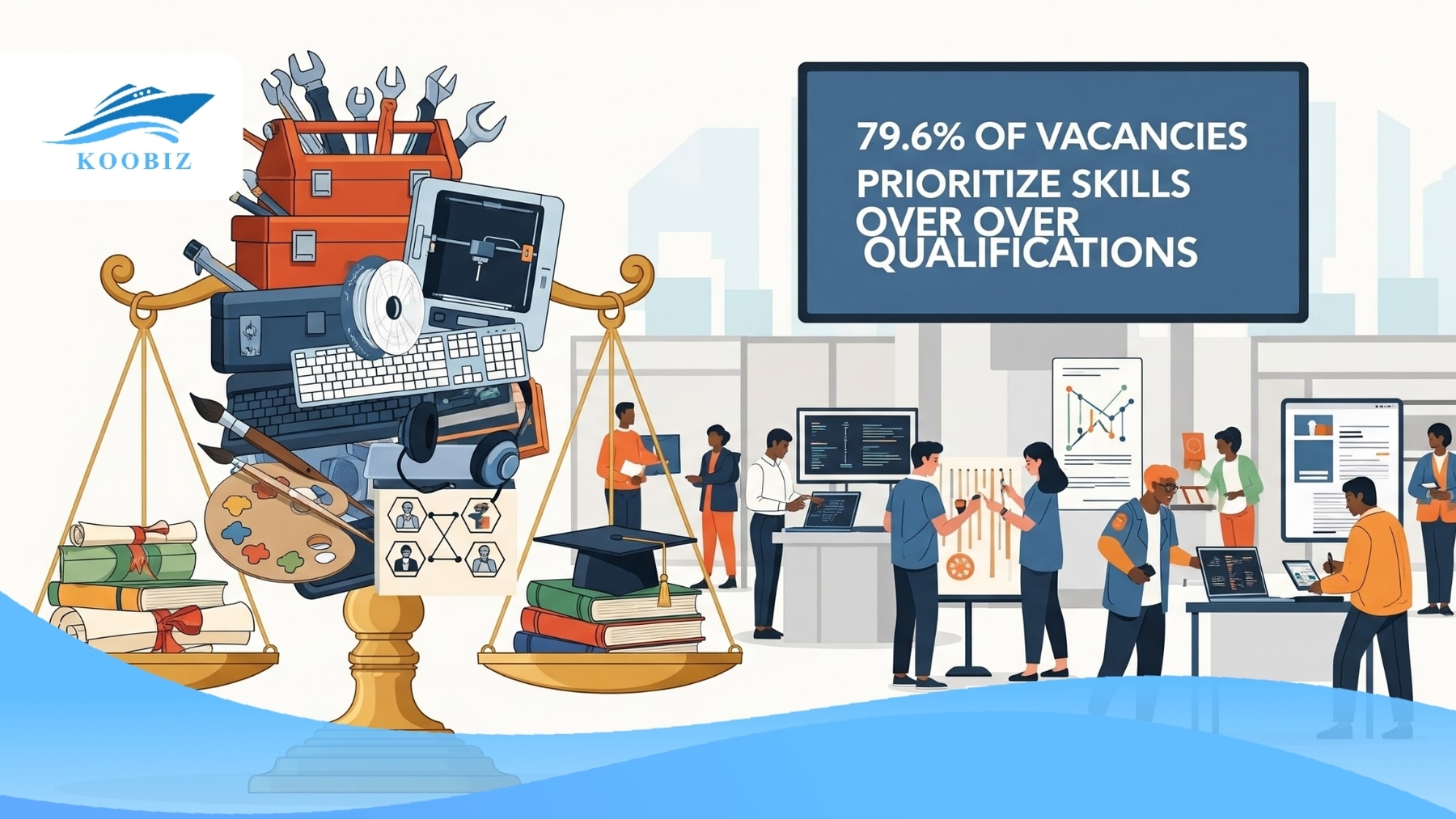
    Employers are increasingly placing greater emphasis on practical skills and competencies rather than traditional academic qualifications. In fact, qualifications were not the primary hiring criterion in 79.6% of vacancies.

    Skill is key: 79.6% of vacancies do not require academic qualifications
    Skill is key: 79.6% of vacancies do not require academic qualifications

    This shift has allowed businesses to hire faster, access a wider talent pool, and improve overall employee performance. When looking at experience levels, the vacancies span a wide range:

    • 31.5% required no prior experience.
    • 20.2% needed at least one year of experience.
    • 51.1% targeted mid-level candidates with 2 to 5 years of relevant exposure.

    While the proportion of vacancies remaining unfilled for six months or longer fell to 17.1% overall, it edged up slightly for PMET (Professionals, Managers, Executives, and Technicians) roles to 16.0%. Specialised positions in software development and data science remain among the harder-to-fill roles due to their highly specific technical requirements.

    Remote Work Trends and Local Talent Preference

    The modern workplace continues to evolve. Remote-capable jobs rose to 22.7% of all vacancies in 2025.

    At the same time, employer intent to recruit from overseas declined to 16.5%. This indicates a strong preference for hiring local talent whenever suitable candidates are available. While firms are expected to maintain a cautious approach to hiring in the near term, early 2026 indicators suggest a modest improvement in hiring sentiment.

    Strategic Workforce Planning for SMEs

    For SMEs in Singapore, these labour market signals reinforce the value of proactive workforce planning. Professional accounting and bookkeeping services can assist with accurate payroll forecasting and compliance as businesses scale their teams in line with evolving hiring trends.

    As Singapore’s economy adapts to structural changes and technological shifts, staying informed about vacancy patterns helps businesses align their growth strategies with available talent. Entrepreneurs exploring Singapore company formation or those already operating locally can greatly benefit from expert guidance to integrate these insights into their HR and compliance frameworks.

    Ready to set up your business?

    Contact the Koobiz team for professional support with Singapore company formation, corporate secretary services, accounting solutions, and other corporate needs to navigate talent and operational requirements with confidence.

  • New CPF Life-Cycle Investment Scheme in 2028: What Business Owners Need to Know

    New CPF Life-Cycle Investment Scheme in 2028: What Business Owners Need to Know

    [SUMMARIES]

    Launch Timeline: The CPF Board is introducing a new voluntary life-cycle investment scheme in the first half of 2028 to complement existing CPFIS options.

    Product Features: The scheme will feature simplified, low-cost, diversified products with automatic age-based rebalancing and phased liquidation towards retirement.

    Provider Selection: Commercial product providers will be selected, with industry engagement beginning in March 2026 and providers announced in the first half of 2027.

    Member Benefits: This gives CPF members willing to accept some investment risk a more hands-off approach to potentially higher long-term returns.

    [/SUMMARIES]

    Expanding Retirement Pathways in Singapore

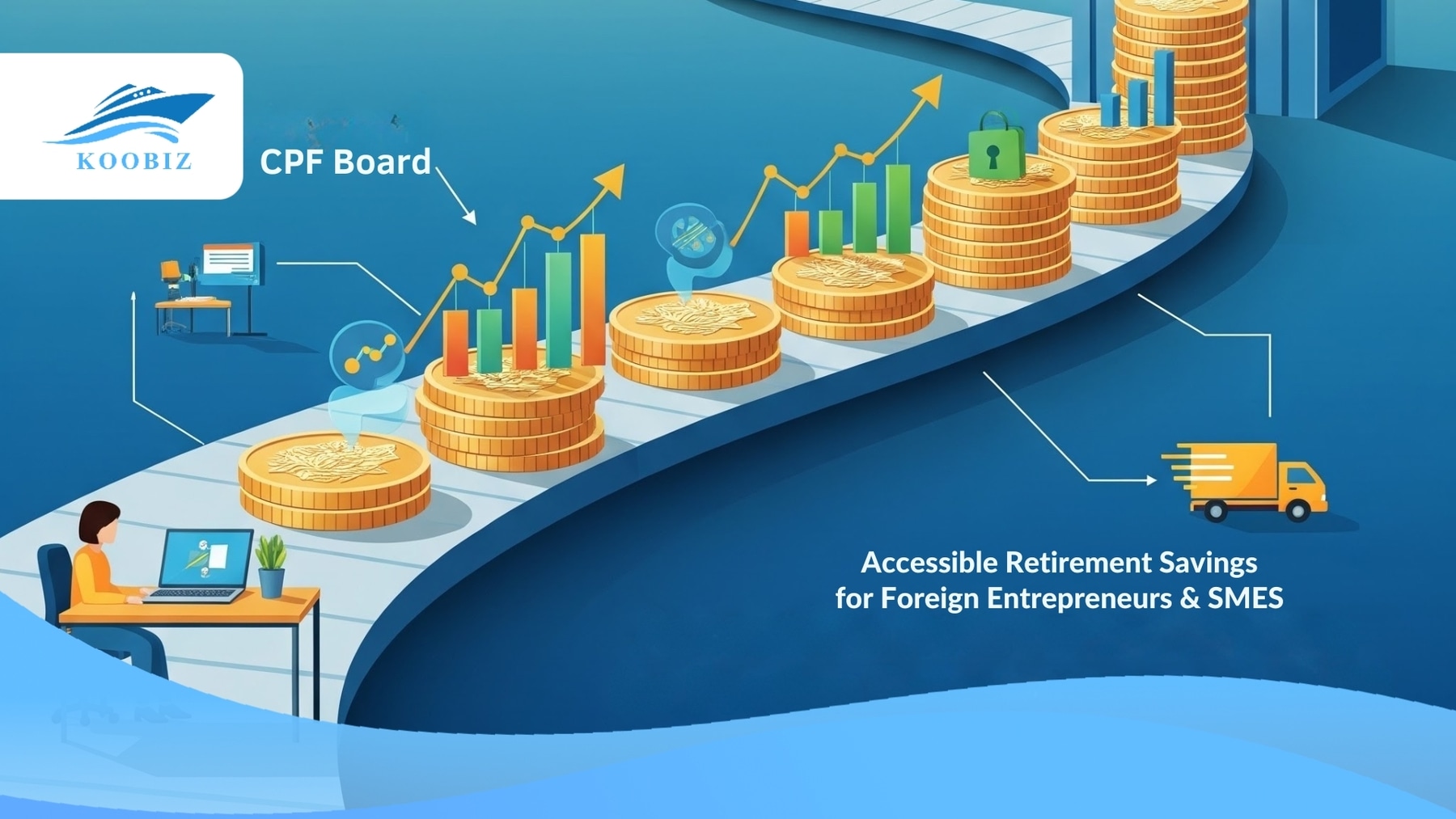
    The CPF Board has announced plans to introduce a new investment scheme in the first half of 2028. Responding to recommendations from the CPF Advisory Panel, this initiative aims to offer CPF members an additional, accessible retirement savings pathway.

    For foreign entrepreneurs and SMEs establishing operations in Singapore, understanding these CPF-related developments is highly valuable. It provides crucial context when structuring competitive employee benefits or planning personal finances as company directors.

    CPF investment and retirement savings in Singapore in 2028
    CPF investment and retirement savings in Singapore in 2028

    How the New Life-Cycle Investment Products Work

    The upcoming scheme targets members who are comfortable taking some investment risk for potentially higher long-term returns, but who prefer not to actively manage their own portfolios.

    Three core mechanics of CPF investment
    Three core mechanics of CPF investment

    Participants will gain access to simplified, low-cost, and diversified life-cycle investment products offered by selected commercial providers. Key mechanics include:

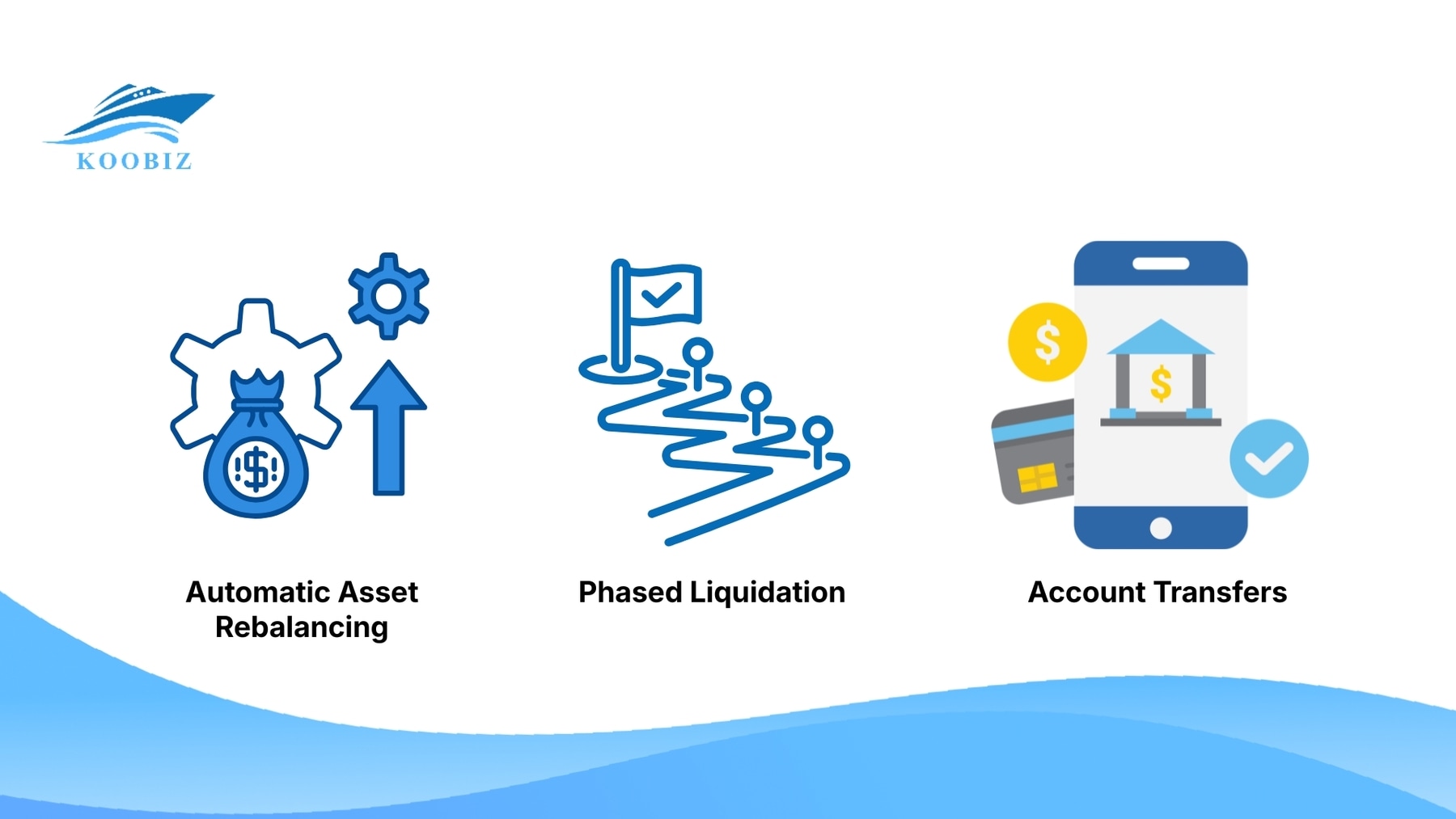
    • Automatic Asset Rebalancing: The products automatically adjust asset allocation along a “glidepath.” They shift from higher-risk assets (such as equities) to lower-risk assets (such as bonds) as the member ages.
    • Phased Liquidation: As members approach their target date (e.g., the Payout Eligibility Age of 65), the assets undergo phased liquidation.
    • Account Transfers: Proceeds from this liquidation will first be transferred to the member’s Retirement Account up to the Full Retirement Sum. Any remaining amount will be directed to the Ordinary Account.

    Participation in this new scheme remains entirely voluntary, and existing CPF Investment Scheme (CPFIS) eligibility criteria will continue to apply.

    Provider Selection and Timeline

    To keep choices straightforward and avoid decision paralysis, the CPF Board intends to select only two to three reputable product providers. These providers will offer a limited number of options with strictly capped all-in fees.

    Furthermore, the Government will provide time-limited support to help launch the scheme and assist members in understanding whether it suits their financial goals.

    • March 2026: Industry engagement begins.
    • First Half of 2027: Selected providers will be officially announced.

    This timeline gives businesses and individuals sufficient runway to evaluate the new option as part of their broader financial planning.

    What This Means for SMEs and Foreign Entrepreneurs

    For SMEs operating in Singapore, staying informed about CPF policy changes is foundational to effective human resource and financial management. As Singapore strengthens its retirement savings ecosystem, these developments offer business owners greater flexibility in long-term planning.

    Professional accounting and bookkeeping services can help companies accurately handle CPF contributions and explore how such life-cycle schemes might fit into overall employee compensation and retention strategies. Entrepreneurs considering or already operating through a Singapore company can benefit from expert advice on integrating these CPF matters into their corporate and personal financial frameworks.

    Contact the Koobiz team for professional support with Singapore company formation, corporate secretary services, accounting solutions, and other corporate needs to ensure your business remains compliant and well-positioned amid evolving policies.

  • Singapore Food Services Progressive Wage Model: Understanding Wage Increases from 2026 to 2028

    Singapore Food Services Progressive Wage Model: Understanding Wage Increases from 2026 to 2028

    [SUMMARIES]

    Entry-level monthly baseline wages will rise from S$2,220 in 2026 to S$2,500 by 2028, with year-on-year increments of up to S$145.

    The schedule aligns with other PWM sectors starting in July each year, simplifying compliance for employers operating across multiple industries.

    Expanded training options and enhanced Workfare Skills Support (WSS) schemes will help workers upskill while providing greater flexibility for employers.

    [/SUMMARIES]

    The recent acceptance by the Singapore Government of recommendations from the Tripartite Cluster for the Food Services Industry (TCF) introduces a structured approach to wage progression in one of the city-state’s key employment sectors.

    For SMEs and foreign entrepreneurs exploring business setup in Singapore—particularly in the fast-paced food and beverage (F&B) space—these updates provide greater predictability around labour costs and workforce development.

    Staying informed on such employment policies is crucial for operational planning and ensuring local compliance during your Singapore company formation process.

    What is the 2026-2028 Food Services PWM Schedule?

    Salary Increase in Singapore F&B Sector: 2026-2029
    Salary Increase in Singapore F&B Sector: 2026-2029

    On 16 March 2026, the Government officially accepted the TCF’s recommendations for the Food Services Progressive Wage Model (PWM). First introduced in March 2023, the model protects and uplifts more than 53,000 full-time and part-time workers across the sector.

    The newly approved three-year schedule runs from 1 July 2026 to 30 June 2029. It sets out clear baseline gross wage requirements that will increase annually.

    To maintain alignment with the majority of other PWM sectors, all food services wage adjustments will take effect from 1 July each year. This strategic timing gives employers operating across multiple PWM-covered industries additional lead time to adjust payroll systems and administrative processes efficiently.

    Approved Wage Requirements by Category

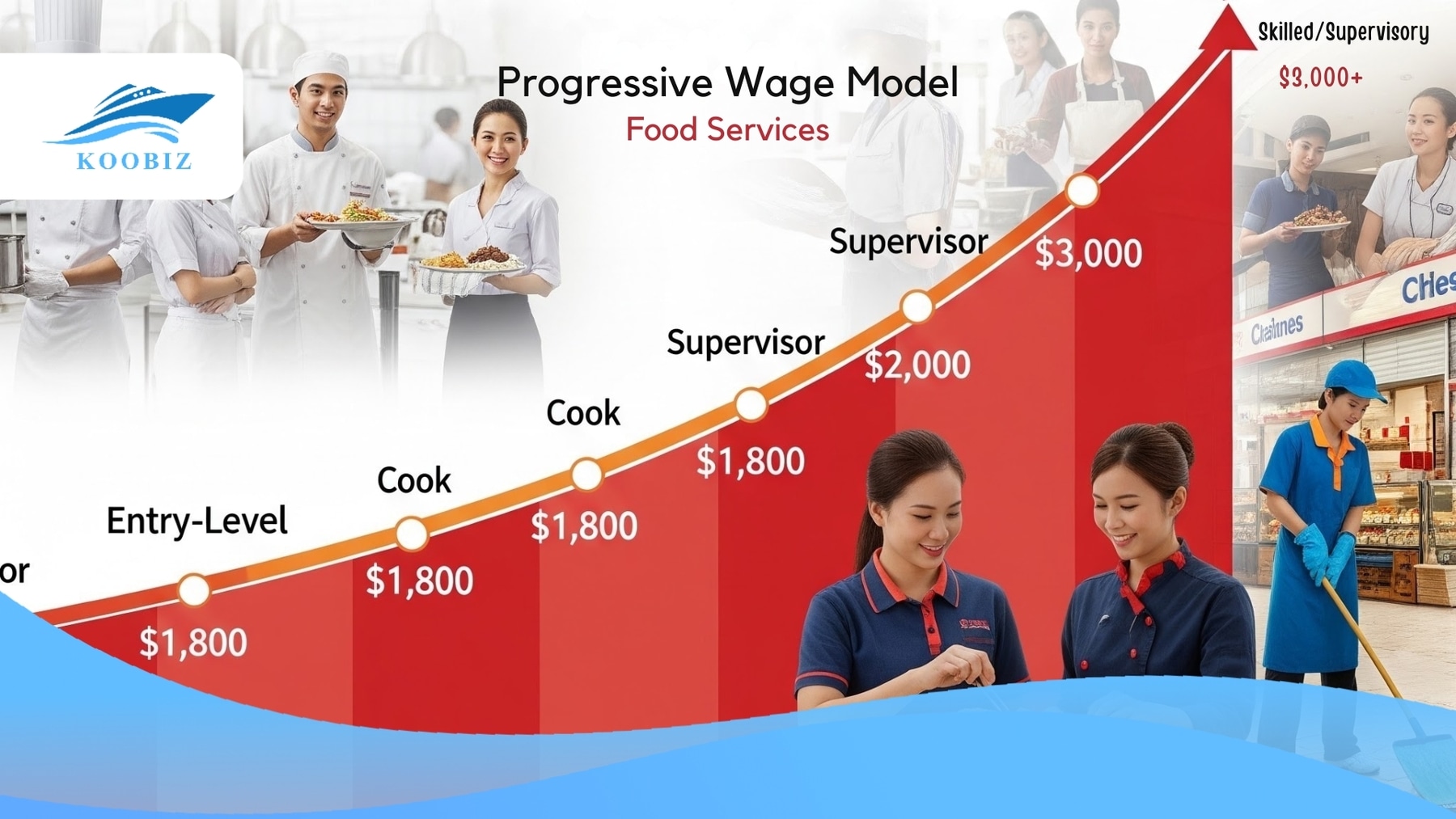
    From 1 July 2026, the entry-level PWM wage requirement rises to S$2,220 per month (up from the previous S$2,080). The baseline monthly gross wage will then progress to S$2,500 by 2028, delivering consistent year-on-year increases of up to S$145.

    To make forecasting easier for your F&B business, here is the breakdown of the mandatory wage increments:

    Category A: Quick Services (QS)

    (Applies to Quick Services Food Establishments & Supermarkets with ready-to-eat food stations)

    Job Role 1 July 2026 2027 2028
    Food/Drink Stall Assistant S$2,220 S$2,360 S$2,500
    Kitchen Assistant (QS) / Counter Attendant S$2,295 S$2,435 S$2,575
    Cook (QS) S$2,470 S$2,610 S$2,750

    Note: Hourly rates for part-time workers (under 35 hours per week) must be adjusted accordingly based on these baseline figures.

    Category B: Full-Service (FS)

    (Applies to Full-Service Food Establishments, Caterers, and Central Kitchens)

    Job Role 1 July 2026 2027 2028
    Kitchen Assistant (FS) / Waiter S$2,320 S$2,460 S$2,600
    Cook (FS) S$2,520 S$2,660 S$2,800
    Waiter Supervisor S$2,875 S$3,020 S$3,165

    Enhanced Training Grants and Workforce Support

    Training Support & Workforce Skills Enhancement
    Training Support & Workforce Skills Enhancement

    To support workforce development alongside wage increases, the TCF has expanded the list of acceptable Workforce Skills Qualification (WSQ) training modules. These fulfil the minimum PWM training requirement of two modules per worker. Relevant qualifications from Institutes of Higher Learning and Private Education Institutions are now officially recognised.

    In addition, the Workfare Skills Support (WSS) scheme has been enhanced to assist employers and employees:

    • WSS (Level-Up): Self-sponsored trainees pursuing longer programmes can receive training allowances of up to S$18,000 per year (full-time) or S$3,600 per year (part-time).
    • Absentee Payroll: Employers sponsoring staff upskilling may qualify for Absentee Payroll support.
    • WSS (Basic): Shorter courses under this enhanced tier offer S$10.50 per hour in training allowances starting 1 July 2026.

    Impact on F&B Business Setup in Singapore

    For foreign entrepreneurs and SMEs establishing operations in Singapore, these structured increases allow for highly accurate payroll budgeting.

    Integrating these requirements into your financial forecasting is essential. Engaging professional accounting and bookkeeping services can help ensure accurate payroll processing and ongoing regulatory compliance as part of your broader corporate services in Singapore.

    Understanding how labour regulations interact with overall business compliance forms an important part of successful long-term operational planning. As Singapore continues to refine its labour policies to support both workers and businesses, proactive compliance remains your best strategy for sustainable operations.

    Need Help Navigating F&B Compliance in Singapore?

    Entrepreneurs considering business setup in Singapore or those already managing local entities can benefit from expert guidance on integrating these requirements into their HR and payroll frameworks. Contact the Koobiz team for professional support with Singapore company formation, corporate secretary services, accounting solutions, and other corporate needs to help navigate regulatory updates with confidence.