[SUMMARIES]
EBITDA Definition: Stands for Earnings Before Interest, Taxes, Depreciation, and Amortization; commonly used to estimate a company’s operating cash-generating ability.
Calculation: EBITDA can be calculated using a top-down approach (from revenue) or a bottom-up approach (from net income) to better isolate core operating profitability.
Strategic Use: Widely used in valuation (EV/EBITDA) and for comparing companies with different capital structures, particularly in markets such as Singapore.
Limitations: EBITDA is not a substitute for cash flow, as it excludes capital expenditures (CapEx) and changes in working capital.
[/SUMMARIES]
Understanding the meaning of EBITDA helps investors look beyond accounting adjustments to better assess a company’s underlying operating performance. This Koobiz guide explains how to calculate EBITDA, outlines the key formulas, and compares related metrics to support a clearer assessment of core profitability.
What Is the Meaning of EBITDA in Finance? Definition and Practical Use
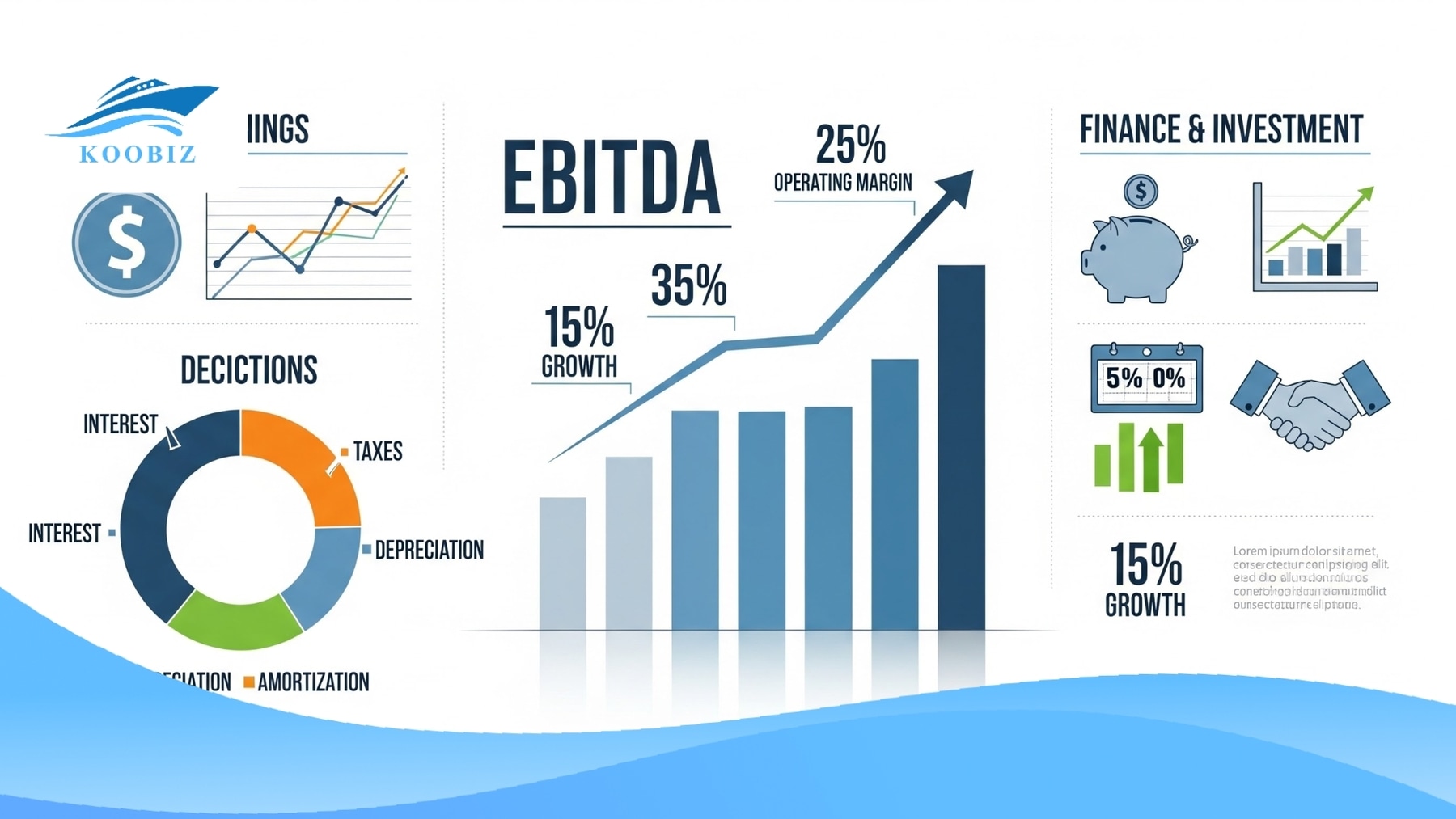
EBITDA is a widely used financial metric for evaluating a company’s core operating performance. The acronym stands for:
- Earnings
- Before
- Interest
- Taxes
- Depreciation
- Amortization
To fully understand EBITDA, it is important to look beyond the acronym itself. EBITDA isolates profits generated from core operations by removing the effects of financing decisions (interest), tax obligations, and accounting treatments such as depreciation and amortization. This allows investors to focus purely on the “business” side of the business, rather than its capital structure or tax jurisdiction. For Koobiz clients expanding into Singapore, understanding this standardized metric is essential for benchmarking against competitors with different tax rates or debt structures.
Important Note on Non-GAAP Status: It is crucial to recognize that EBITDA is a Non-GAAP (Generally Accepted Accounting Principles) metric. Unlike Net Income, it is not strictly defined by IFRS or US GAAP. Consequently, public companies (especially those listed on the SGX) are typically required to provide a reconciliation of non-GAAP measures to the nearest GAAP equivalent in their financial disclosures to ensure transparency.
How to Calculate EBITDA: Formula and Components
There are two commonly used methods to calculate EBITDA. The method used depends on the available financial data and the starting point on the income statement: either the bottom-up approach (from net income) or the top-down approach (from operating income).
Method 1: The Bottom-Up Approach (Standard)
This is the most commonly used method among analysts due to its comprehensive nature. It starts at the very bottom of the income statement (Net Income) and adds back the specific non-operational expenses. It ensures that key non-operating items are properly adjusted.
EBITDA = Net Income + Interest + Taxes + Depreciation + Amortization
Method 2: The Top-Down Approach (Shortcut)
This method is faster and often used when reviewing summarized financial data. It starts with Operating Income (also known as EBIT) and simply adds back the non-cash expenses. It effectively bypasses interest and taxes entirely since they appear below the Operating Income line.
EBITDA = Operating Income (EBIT) + Depreciation + Amortization
Understanding the 4 Components
Regardless of the method used, EBITDA removes the following four elements to standardize profitability comparisons:
- Interest: Expenses related to debt financing are removed. This allows for a fair comparison between a company funded by equity (investors) and one funded by debt (loans), which is particularly relevant in capital-intensive sectors.
- Taxes: Tax jurisdictions vary significantly. By removing taxes, investors can compare a company in Singapore (low corporate tax) against one in the US (higher tax) based purely on operating performance.
- Depreciation: This represents the gradual consumption of tangible assets such as machinery. Since it is a non-cash accounting estimate, adding it back reduces distortions caused by different accounting policies.
- Amortization: Similar to depreciation, but applied to intangible assets like patents or software.
EBITDA Calculation Example: A Practical, Real-World Scenario
To illustrate how EBITDA works in practice, consider a hypothetical Singapore-based logistics company, “Merlion Logistics.”
Applying the formula to real numbers helps clarify how the calculation works. Suppose “Merlion Logistics” reports net income of $200,000 for the fiscal year. However, to reach that figure, the company paid $30,000 in corporate taxes and $20,000 in interest on fleet financing. Additionally, their financial statement lists $40,000 in depreciation for their trucks and $10,000 in amortization for their logistics software.
Step-by-Step Calculation (Bottom-Up)
Using the bottom-up approach, these non-operational expenses are added back to net income to determine EBITDA.
- Start with Net Income: $200,000
- Add Interest: + $20,000
- Add Taxes: + $30,000
- Add Depreciation: + $40,000
- Add Amortization: + $10,000
Total EBITDA = $300,000
Verification (Top-Down Approach)
To verify the result, we can start from operating income (EBIT). First, calculate EBIT: Net Income ($200k) + Interest ($20k) + Taxes ($30k) = $250,000 (EBIT).
- Start with Operating Income (EBIT): $250,000
- Add Depreciation: + $40,000
- Add Amortization: + $10,000
Total EBITDA = $300,000
In this scenario, while the accounting profit (Net Income) is $200,000, the EBITDA of $300,000 shows that the company’s core operations generate higher earnings before financing and non-cash costs are factored in. This figure is commonly used by investors to assess operational efficiency independent of capital structure.
Is EBITDA the Same as Net Income or Operating Cash Flow?
No, EBITDA differs from both metrics in several important ways. While they all measure financial performance, they answer different questions about a business and include different cost factors.
Distinguishing these metrics is important to avoid misinterpreting a company’s financial performance. The table below outlines the key differences at a glance:
| Metric | Includes Interest & Taxes? | Includes Non-Cash Items (Depreciation)? | Best Used For… |
|---|---|---|---|
| EBITDA | No | No | Comparing operational efficiency across companies with different capital structures |
| Net Income | Yes | Yes | Determining the true bottom line profit available to shareholders. |
| Operating Cash Flow | Yes (Cash Paid) | No (Added back) | Assessing liquidity and a company’s ability to meet short-term obligations |
EBITDA vs. Net Income: Which Metric Is Better for Investors?
Net Income includes all costs, making it the most comprehensive measure of profit available to shareholders, while EBITDA is better suited for comparing operational efficiency between firms. For example, a company might have negative Net Income due to high interest payments on a loan but positive EBITDA, indicating that the core business model remains viable. Investors use EBITDA to evaluate performance before financing costs, while Net Income reflects the company’s current, fully burdened profitability.
EBITDA vs. Operating Cash Flow
Operating Cash Flow (OCF) reflects the actual cash inflows and outflows of a business, while EBITDA is an accounting calculation that ignores changes in working capital. A company can report high EBITDA while experiencing negative cash flow if its clients aren’t paying their invoices (high Accounts Receivable). For this reason, Koobiz advises clients to review OCF alongside EBITDA to ensure liquidity.
What is Adjusted EBITDA and Why Do Companies Use It?
Adjusted EBITDA is a non-standard performance metric that removes non-recurring, irregular, or one-time items to present a normalized view of a company’s future earnings potential.
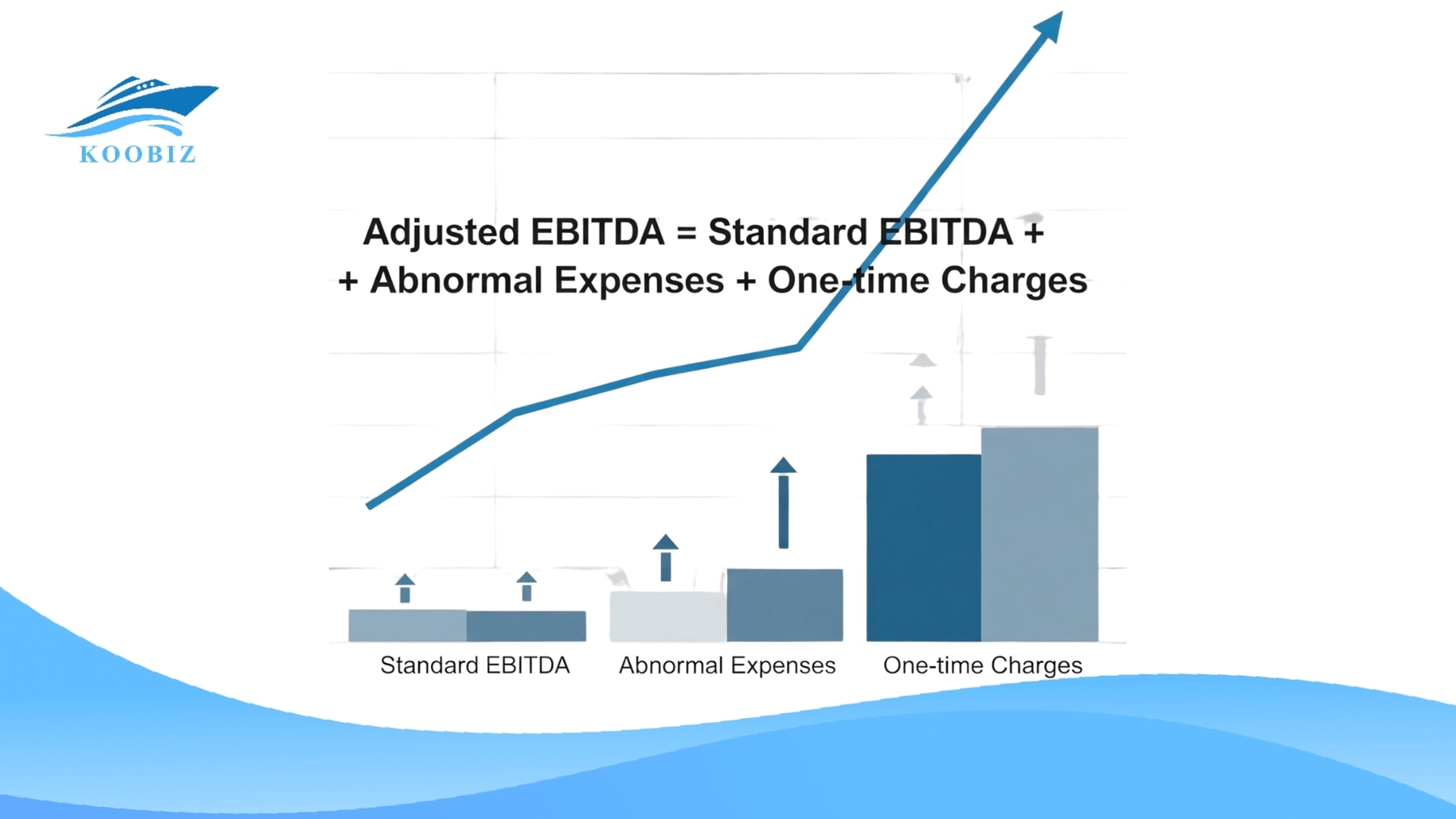
In practice, analysts take the standard EBITDA figure and add back expenses that aren’t part of normal day-to-day operations. This results in the following expanded formula:
Adjusted EBITDA = Standard EBITDA + Abnormal Expenses + One-time Charges
Companies argue that standard EBITDA may not fully reflect ongoing operating performance if there was a lawsuit settlement, a natural disaster, or a one-time restructuring cost during the year. By “adjusting” for these anomalies, they aim to show investors what earnings would look like in a normalized operating year.
Common Adjustments (The “Add-Backs”)
In the Singapore market, particularly for SGX-listed companies or private firms seeking investment, common add-backs typically include:
- Unrealized Forex Gains/Losses: Since Singapore is a trade hub, currency fluctuations can affect reported, non-cash profits.
- Stock-Based Compensation: Tech startups often add this back as it is a non-cash expense.
- Litigation Costs: Legal fees for non-recurring lawsuits are often excluded to present a clearer view of underlying profitability.
Investor Warning: Investors should be cautious of excessive add-backs. Since Adjusted EBITDA is not regulated, management can sometimes use it to obscure underlying operating weakness. Always review the footnotes in financial statements to ensure the adjustments are reasonable and truly non-recurring.
How to Use EBITDA for Business Valuation?
nvestors primarily use EBITDA through valuation multiples, specifically the Enterprise Value (EV) to EBITDA ratio, to compare companies with different capital structures.
Moving from calculation to application, the EBITDA multiple is widely used in M&A analysis(Mergers and Acquisitions). It answers the question: How many years of operating earnings are implied by the acquisition price
Understanding the EV/EBITDA Multiple
To help you interpret this number instantly, we have broken down the valuation metrics into a “Cheat Sheet” profile:
The Formula:
EV / EBITDA = Enterprise Value ÷ EBITDA
- The Signal (What the number tells you):
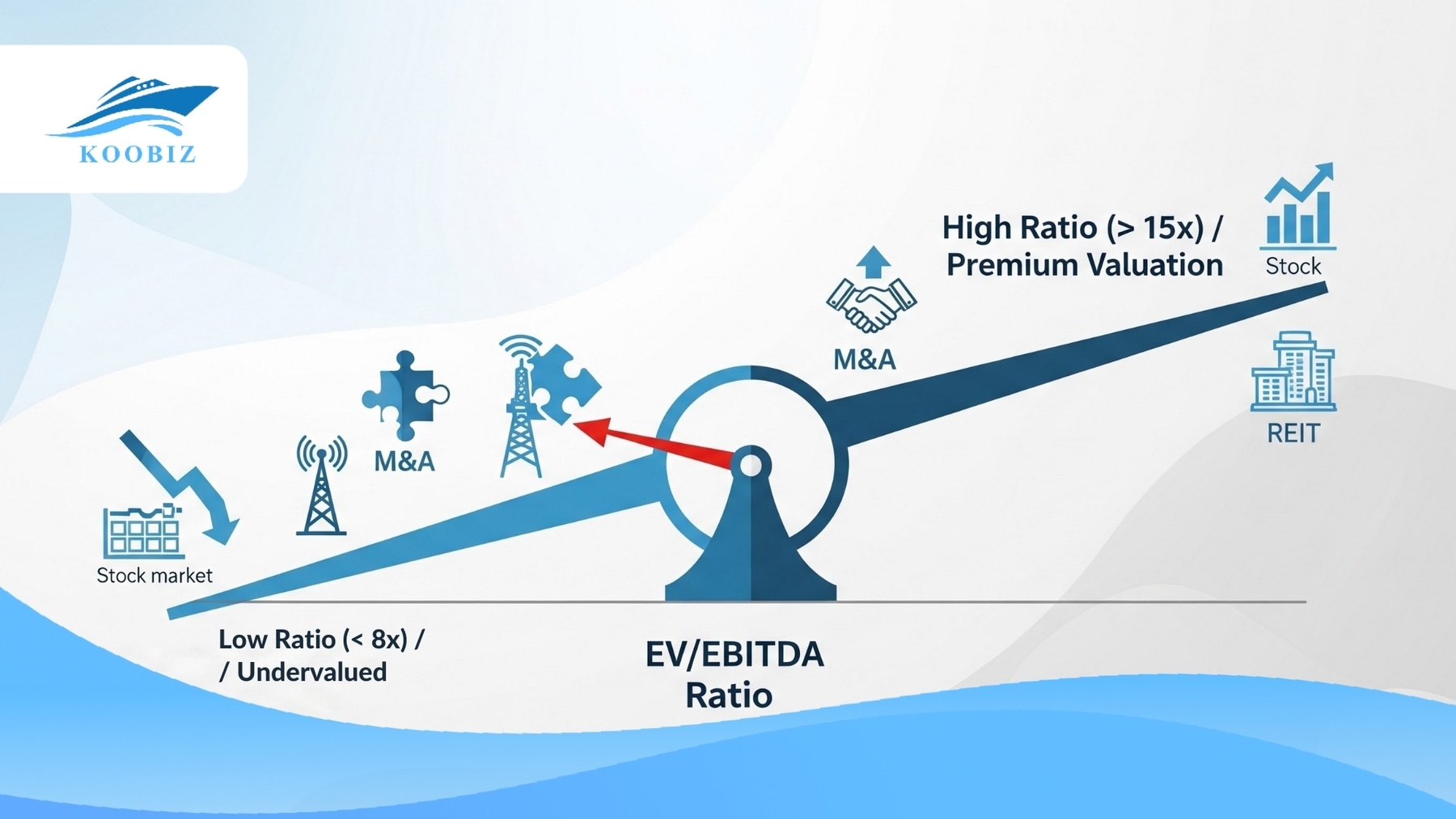
- Low Ratio (< 8x): Suggests the company may be undervalued or potentially a value trap (cheap for a reason, like declining sales).
- High Ratio (> 15x): Suggests a Premium Valuation, implying investors expect high future growth.
- Best Used For: Capital-intensive industries like Telecommunications or Real Estate (REITs)—common sectors in Singapore—where high depreciation expenses reduce the usefulness of the P/E ratio. For instance, analysts frequently use EV/EBITDA to value infrastructure-heavy companies such as Singtel, as it accounts for their massive network depreciation costs better than a P/E ratio.
What Are the Limitations and Dangers of EBITDA?
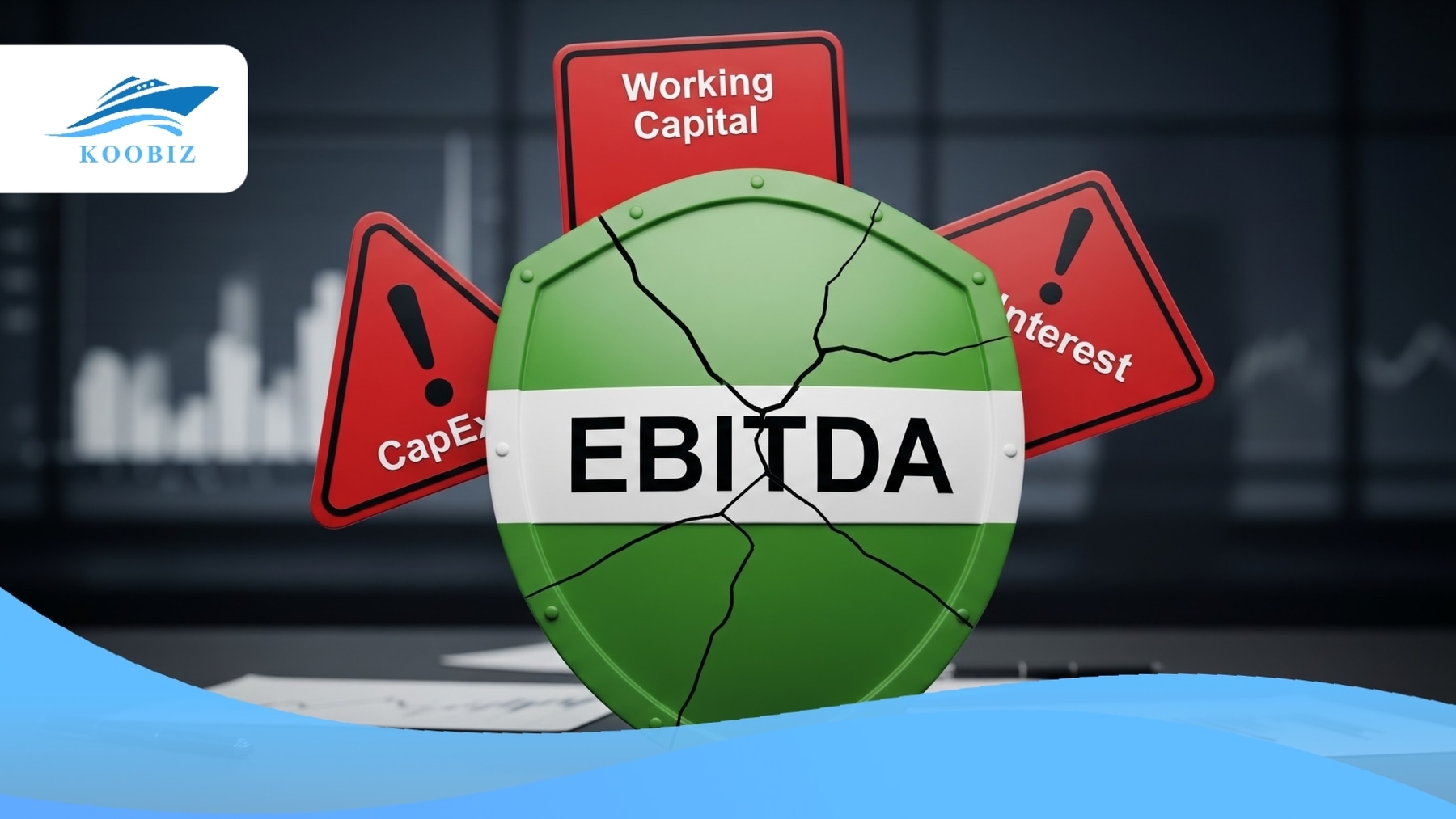
EBITDA has clear limitations because it ignores capital expenditures (CapEx) and changes in working capital, which can overstate a company’s true cash-generating ability.
To use this metric effectively, investors must understand its key limitations. It can present a more favorable picture of financial health than reality because it explicitly excludes real cash outflows.
Blind Spot 1: Capital Expenditures (CapEx)
EBITDA adds back depreciation, effectively assuming that assets do not require regular replacement. For manufacturing or logistics firms, this can be misleading, as machines wear out and require significant cash to replace, which EBITDA ignores.
Blind Spot 2: Working Capital Changes
EBITDA assumes revenue is collected immediately, which is rarely the case in practice. In reality, a company might be booking high sales (high EBITDA) but not collecting the cash (high Accounts Receivable), leading to cash flow pressure that EBITDA does not capture.
Blind Spot 3: Interest Payments
By ignoring interest, EBITDA can make a highly indebted company look just as healthy as a debt-free company, masking underlying solvency risk.
The Warren Buffett Critique: Does EBITDA Overlook Economic Reality?
Warren Buffett is often quoted as asking, “Does management think the tooth fairy pays for capital expenditures?” His critique centers on the fact that EBITDA adds back depreciation. However, machinery and software do wear out and must be replaced. By ignoring depreciation, EBITDA assumes the assets are free, which can materially inflate the perceived value of asset-heavy businesses.
When Should Investors Ignore EBITDA?
Investors should be cautious when relying on EBITDA when analyzing companies with high debt burdens or massive ongoing CapEx requirements. In these cases, Free Cash Flow (FCF) is generally a more appropriate metric If a company boasts high EBITDA but has negative FCF for several years, it may be a warning sign of financial stress that EBITDA alone may obscure.
Conclusion
Understanding the meaning of EBITDA and how to calculate it allows investors to look deeper into a company’s financial health. It serves as a powerful lens for assessing core profitability and facilitating valuation, provided its limitations are properly considered. regarding cash flow and capital expenditures.
At Koobiz, we understand that financial clarity is essential for successful business expansion. Whether you are looking to incorporate a company in Singapore, require assistance with opening a corporate bank account, or need expert tax and accounting services to ensure your EBITDA figures are accurate and compliant, our team is ready to assist. We help translate complex financial requirements into practical business decisions.
Visit Koobiz.com to learn more about our corporate services and how we can support your growth in the Asian market.
Leave a Reply