Author: Stella Pham

  • Structuring Vested Shares for Singapore Startups: A Founder’s Guide to Equity & Vesting Schedules

    Structuring Vested Shares for Singapore Startups: A Founder’s Guide to Equity & Vesting Schedules

    [SUMMARIES]

    Vesting Definition: Vesting is the mechanism by which founders and employees earn full ownership of their shares over time, protecting the company from early departures.

    Standard Schedules: The “4-year vesting with a 1-year cliff” is the gold standard for Singapore startups, ensuring long-term commitment.

    Founder Protection: Reverse vesting is essential for co-founders, allowing the company to buy back unvested shares if a founder leaves prematurely.

    Legal Enforcement: A robust Shareholders’ Agreement (SHA) is mandatory to enforce vesting terms; relying on verbal agreements is a critical legal risk.

    Tax Compliance: Foreign employees leaving Singapore face the “Deemed Exercise” rule during tax clearance, triggering immediate tax liabilities on unvested shares.

    [/SUMMARIES]

    Founders often underestimate equity allocation and handle it informally, only to face costly disputes when a co-founder departs or an investor requests a cap-table audit. At Koobiz, our experience confirms that well-structured equity is more than administrative: it underpins a startup’s longevity and attractiveness to investors. This guide outlines how to structure vested shares, covering standard vesting schedules, reverse vesting for founders, the necessary legal safeguards, and the Singapore IRAS tax implications.

    What are Vested Shares in the context of a Singapore Startup?

    Vesting: Long-term commitment, gradual ownership
    Vesting: Long-term commitment, gradual ownership

    Vested shares refer to equity that becomes fully owned only after a defined period of time or once certain milestones are met. In Singapore startups, vesting typically has several defining features:

    • Conditional ownership: shares are not owned outright on day one. Instead, ownership is progressively earned, which clearly separates vested shares from shares that are merely granted at incorporation.
    • Forfeiture Risks: until vesting is complete, shares remain subject to restrictions. If a founder or employee leaves early, any unvested shares are usually forfeited or bought back by the company at a nominal price.
    • Long-term alignment: vesting ensures equity is awarded in exchange for ongoing contribution, not just future intent, aligning founders’ and employees’ incentives with the company’s long-term growth.
    • Investor expectation: for Singapore-based Venture Capitalists (VCs), vesting is effectively non-negotiable. It provides legal assurance that key individuals are committed to the business, which is essential for a startup to be considered investable.

    What are the standard vesting schedules for Startups?
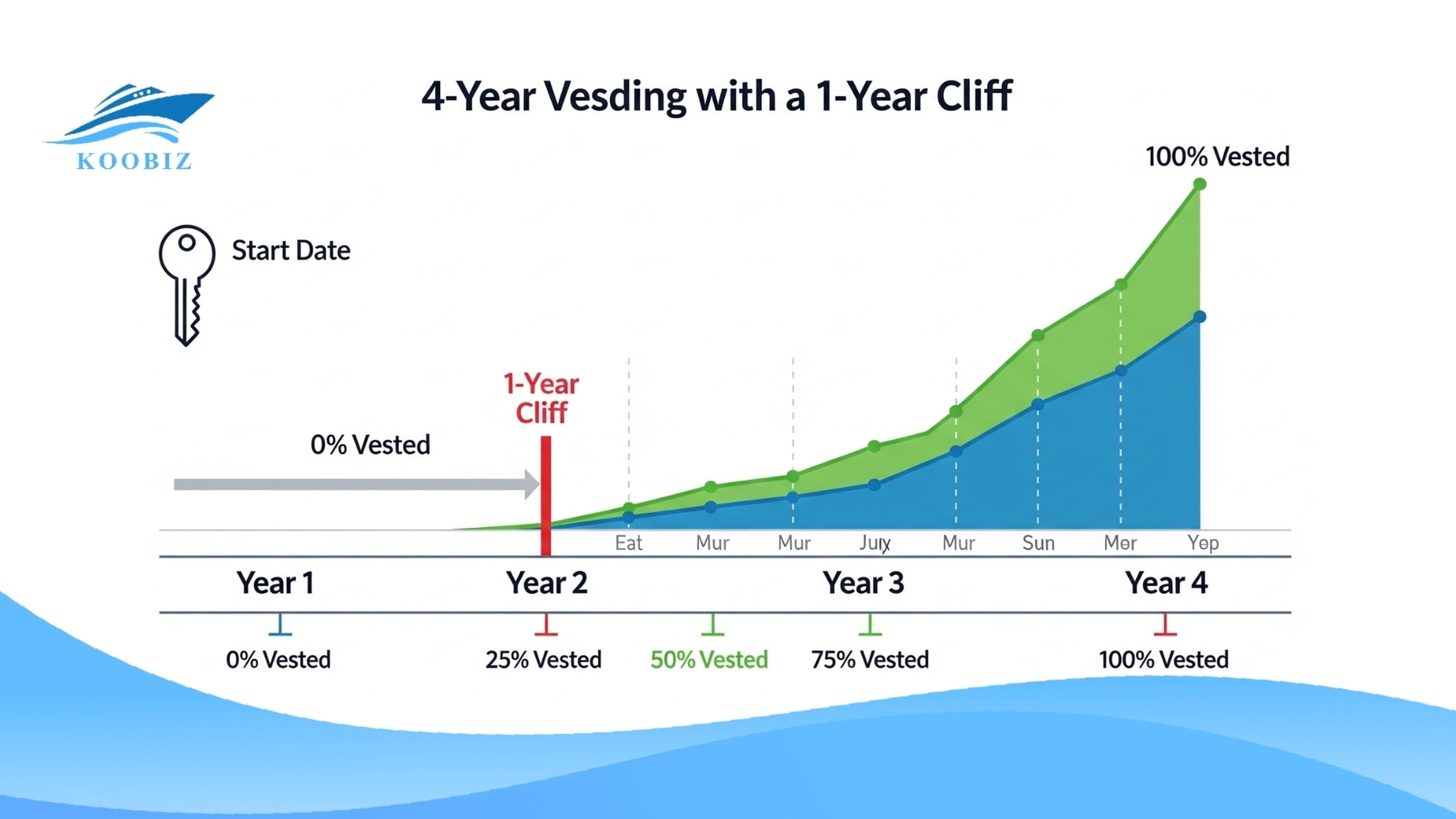
    Standard share vesting: 4 years, 1-year cliff
    Standard share vesting: 4 years, 1-year cliff

    A standard vesting schedule in Singapore and in most global startup ecosystems is built around two core elements: the cliff and the graded vesting period, typically spanning a total of four years.

    Although startups are free to customise their own timelines (with some non-tech companies choosing a shorter three-year schedule), moving too far away from market norms can create friction when hiring talent or raising capital. The widely accepted benchmark remains four-year vesting with a one-year cliff, as it strikes a practical balance between protecting the company and fairly rewarding contributors. Below, we break down each component to explain why this structure has become the industry standard.

    How does the “One-Year Cliff” Work?

    A one-year cliff functions as an initial probation period during which no equity vests. If a founder or employee leaves within the first 12 months, they exit without any ownership.

    In practice, the cliff acts as a safeguard for the company. Early-stage hires don’t always work out, and co-founder splits most often happen in the first year. Without a cliff, equity would start vesting from day one, allowing someone who leaves after only a few months to retain a permanent stake in the cap table — creating what is often referred to as “dead equity.” The cliff ensures shares are earned only after a full year of demonstrated contribution and commitment. Once the one-year mark is reached, it is standard for 25% of the total grant to vest immediately.

    What is Graded Vesting (Monthly vs. Quarterly)?

    Graded vesting refers to the gradual vesting of shares once the cliff period has been satisfied, usually on a monthly or quarterly basis for the remainder of the vesting term.

    • After the one-year cliff, the remaining 75% of the equity typically vests progressively over the next three years (36 months).
    • Monthly vesting: this is the most widely used structure. Shares vest in equal instalments of 1/48th per month, which employees tend to prefer as it provides steady progress and reduces “cliff-hanging” behaviour, where individuals delay resignation until a specific quarter-end.
    • Quarterly vesting: shares vest once every three months. While this can be slightly easier to administer, it is increasingly uncommon in modern tech startups compared to a monthly schedule.
    • In practice, Koobiz recommends monthly vesting after the cliff for most Singapore startups, as it aligns closely with global market standards and investor expectations.

    Reverse vesting vs. Standard ESOP: Which strategy fits founders?

    Reverse vesting is best suited for co-founders to lock in long-term commitment, while ESOPs are used to incentivise employees who join later. Clearly separating these two structures ensures equity is allocated to the right people in the right way.

    Feature Reverse Vesting (Founders) Standard ESOP (Employees)
    Target Audience Co-Founders & Key Partners Employees, Advisors, Consultants
    Ownership Status Immediate: Founder owns shares from Day 1. Future: Employee gets “options” to buy shares later.
    Voting Rights Yes: Voting rights start immediately. No: No voting rights until options are exercised.
    Vesting Mechanic “Un-earning”: Company has right to buy back unvested shares. “Earning”: Employee accrues right to buy shares over time.
    Departure Impact Company repurchases unvested shares. Unvested options are cancelled/forfeited.

    Why is reverse vesting essential for Co-Founders?

    Reverse vesting is critical for co-founders as it shields the company from the “free-rider” risk, situations where a departing founder retains a significant equity stake despite no longer contributing to the business.

    Take a simple example: two founders agree on a 50–50 split. If Founder A exits after six months and no reverse vesting is in place, they still walk away with half of the company. Founder B is then left carrying the entire workload while owning only 50% of the upside, a structure that most investors will immediately flag as problematic. With reverse vesting, the company can exercise its buy-back rights over Founder A’s unvested shares often the full amount if the departure occurs before the cliff and return that equity to the company pool. This keeps the cap table clean and preserves flexibility to bring in a new co-founder or key hire.

    Real-World Scenarios: Vesting in Action

    To visualize how these mechanisms protect your company, let’s explore two common scenarios that Singapore startups face. These examples illustrate the financial impact of the “Cliff” and “Reverse Vesting” in real terms.

    Case 1: The “Early Exit” Employee (Standard Vesting)

    Scenario: You hire Alex as your CTO. You grant him a 1% equity stake (10,000 shares) on a standard 4-year vesting schedule with a 1-year cliff.

    • Month 6: Alex struggles to adapt to the startup pace and resigns.
      • Outcome: Because he has not reached the 1-year cliff, 0 shares have vested. He walks away with nothing, and the 10,000 shares return to the company pool for the next hire.
    • Month 14: Alternatively, Alex performs well for a year but leaves in Month 14 to start his own business.
      • Outcome: He has passed the cliff (12 months = 25% vested) and worked for 2 additional months.
      • Calculation: 2,500 shares (Cliff) + 416 shares (2 months graded vesting) = 2,916 vested shares.
      • Result: Alex keeps 2,916 shares. The remaining 7,084 unvested shares are forfeited/cancelled.

    Case 2: The “Co-Founder Breakup” (Reverse Vesting)

    Scenario: You and your co-founder, Sarah, start a company with a 50/50 split (500,000 shares each). You wisely sign a Shareholders’ Agreement with Reverse Vesting terms.

    • The Situation: Sarah decides to leave the project after just 9 months to pursue a corporate job.
    • Without Reverse Vesting: Sarah would walk away owning 50% of the company (500,000 shares) despite quitting early. You would be left doing all the work for half the reward, making your startup “dead” to investors.
    • With Reverse Vesting:
      • Since Sarah left before the 1-year cliff, 0% of her shares are vested.
      • Action: The company exercises its right to buy back all 500,000 shares at the nominal price (e.g., S$1.00 total). Note: This nominal price must be explicitly defined in your Shareholders’ Agreement (SHA) to prevent legal disputes regarding fair value.
      • Result: You regain control of the equity, which can now be used to find a new co-founder who is committed for the long haul.

    Do you need a shareholders’ agreement to enforce vesting?
    SHA: Binding contract for vesting
    SHA: Binding contract for vesting

    Yes, a properly drafted Shareholders’ Agreement (SHA) is essential to enforce vesting arrangements, as these provisions are rarely addressed in a company’s standard Constitution.

    Many founders setting up in Singapore assume that an email exchange or the default ACRA Constitution will be enough. This is a risky misunderstanding. While the Constitution governs high-level corporate matters, the SHA is the binding private contract that defines how shareholders interact with one another. Without an SHA that clearly sets out vesting schedules, what constitutes “Cause” for termination, and the mechanics and pricing of share buybacks, there is no legal basis to compel a departing shareholder to surrender their shares.

    Although generic founder vesting templates for Singapore are easy to find online, using off-the-shelf documents for something as fundamental as equity can expose the company to serious risk. At Koobiz, our legal team drafts tailored, investor-ready SHAs designed to protect your cap table from the outset.

    Handling Departures: Good Leaver vs. Bad Leaver Provisions
    Good Bad Leaver: Different share valuations
    Good Bad Leaver: Different share valuations

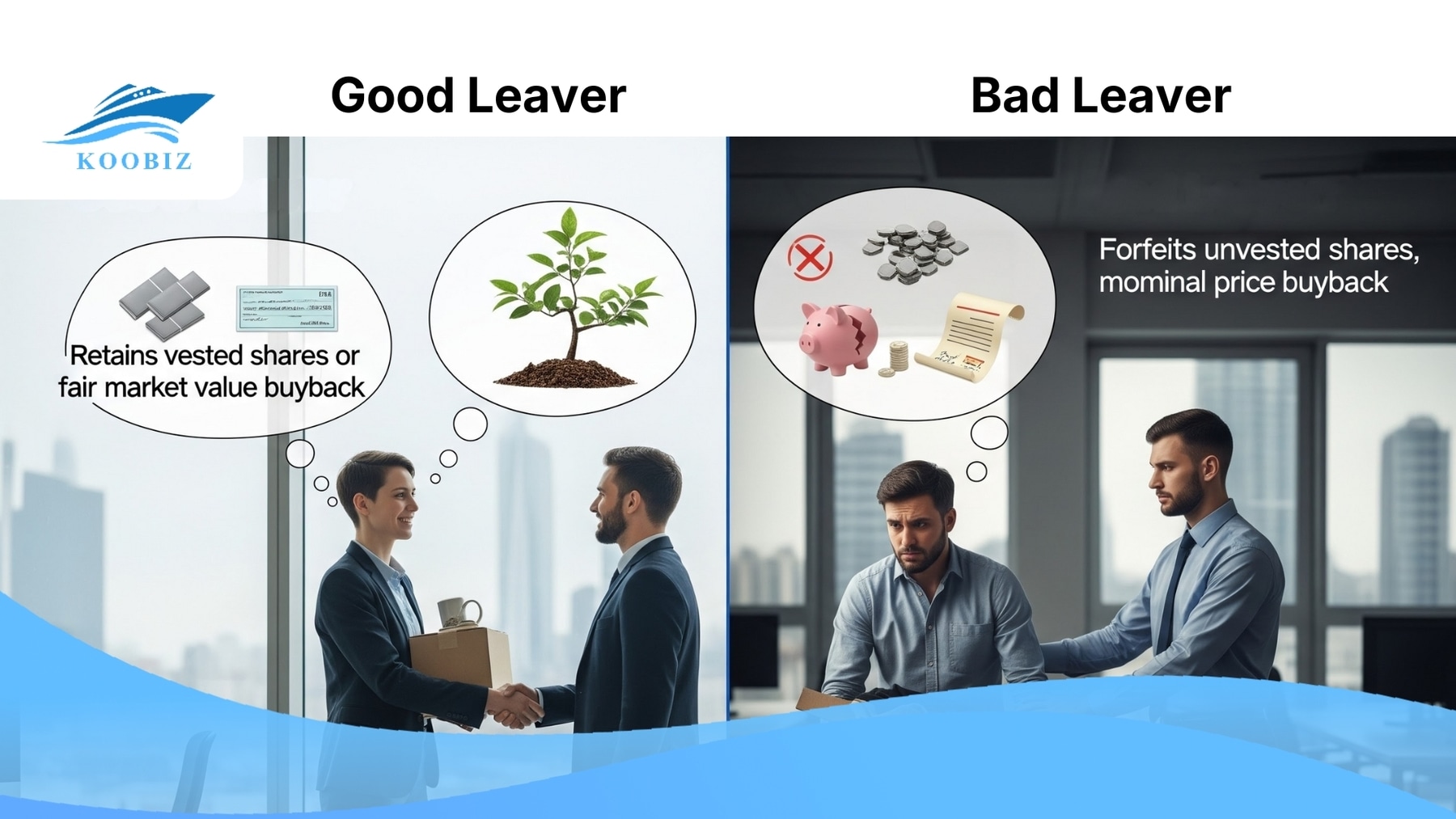
    Leaver provisions are contractual clauses categorized into “Good Leaver” and “Bad Leaver” scenarios, set out the terms – including pricing – under which the company may repurchase vested shares from a departing shareholder..

    In practice, the reason for departure is critical. These provisions ensure that someone dismissed for misconduct or fraud is not treated the same as an individual who exits due to redundancy or restructuring. Clearly defining these distinctions in the Shareholders’ Agreement is essential to preserve fairness among shareholders and safeguard the company’s valuation.

    What constitutes a “Bad Leaver” in Singapore Law?

    A “Bad Leaver” is generally a shareholder who exits due to serious misconduct, fraud, breach of contractual obligations, or voluntarily leaving to join a direct competitor.

    Because these scenarios are meant to deter harmful behaviour, the consequences are typically strict. Under common Singapore legal drafting, a Bad Leaver will immediately forfeit any unvested shares. In addition, the company often has the right to repurchase vested shares at a nominal price (for example, S$1 in total) or at the lower of fair market value and the original subscription price. Importantly, Bad Leaver definitions may also capture breaches of non-compete obligations, provided those restrictions are reasonable and enforceable under Singapore law.

    How are vested shares treated for “Good Leavers”?

    A “Good Leaver” generally refers to a shareholder who exits for reasons outside their control, such as death, permanent disability, or termination without cause, including redundancy.

    In contrast to Bad Leavers, Good Leavers are treated more favourably. They usually retain their vested shares, or where the company elects to repurchase them, the buy-back is carried out at Fair Market Value. This approach ensures that individuals who have made genuine contributions are not financially disadvantaged by circumstances beyond their control.

    What happens to vested shares during an exit or acquisition?

    Vesting schedules commonly incorporate acceleration clauses that apply in liquidity events, enabling shares to vest ahead of the original timeline when the company is sold or acquired.

    These provisions protect both founders and employees by ensuring they participate in the upside of an exit they helped build, even if the standard four-year vesting period has not yet been fully completed. Acceleration generally falls into two categories: Single Trigger and Double Trigger.

    Single Trigger vs. Double Trigger Acceleration

    Single Trigger acceleration allows shares to vest immediately upon the sale of the company, whereas Double Trigger acceleration requires both the sale of the company AND the termination of the employee within a set period.

    • Single Trigger: Favorable to employees. If the company is sold in Year 2, all remaining shares vest instantly. Investors often dislike this as it can cause a mass exodus of talent immediately after acquisition.
    • Double Trigger: The industry standard. Unvested shares only accelerate if the company is acquired (Trigger 1) AND the new owner fires the employee or creates constructive dismissal (Trigger 2). This aligns the interests of the acquirer (retention) and the employee (job security).

    Are Vested Shares Taxable in Singapore?

    Generally, the grant of options or shares is not taxable at the point of grant, but gains from Employee Share Option Plans (ESOP) are taxable when the shares vest or are exercised, depending on the specific plan structure.

    Singapore’s tax regime is attractive, but it is strict regarding employment income. Understanding the nuances between founder equity and employee options is vital to avoid penalties.

    Tax Treatment: Founders vs. Employees

    For founders whose shares are subject to reverse vesting, equity is usually issued at incorporation at a nominal price. As the shares vest, there is typically no tax implication where the holdings are treated as a capital investment, since Singapore does not impose capital gains tax.

    The tax treatment for employees under ESOPs is different. The spread between the shares’ open market value and the exercise price paid is generally regarded as employment income and is therefore taxable. Employers are required to declare these gains to IRAS through Form IR8A. Certain schemes, such as the Qualified Employee Equity-Based Remuneration Scheme (QEEBRS) or Startup Tax Exemption (STE), may provide relief or deferral, although eligibility is subject to strict conditions.

    The “Tax Clearance” Process for Foreign Employees (Deemed Exercise)

    The Deemed Exercise rule is an IRAS requirement that applies to non-Singapore citizen employees who leave Singapore or change employment, obliging them to be taxed on unvested equity as though it had vested immediately before their departure.

    This rule is a common compliance pitfall for foreign employees and is often referred to as ESOP tax clearance for expatriates. When a foreign employee holding unvested options resigns or relocates overseas, the employer must submit Form IR21 (Notification of a Non-Citizen Employee’s Cessation of Employment or Departure from Singapore) to obtain tax clearance. IRAS will then assess the unvested equity at its prevailing market value and impose tax on the deemed gain upfront. This mechanism allows Singapore to tax income earned during the individual’s period of employment in the country. Koobiz’s tax team supports companies through these IRAS filings to ensure full compliance for international staff.

    Disclaimer

    The information provided in this guide is for general informational purposes only and does not constitute legal, tax, or professional advice. Laws and regulations in Singapore, including IRAS tax rules, are subject to change. You should consult with a qualified legal or tax professional before making any decisions regarding your company’s equity structure.

    Structuring your startup’s equity is a foundational step that dictates your future governance and financial health. From setting the right cliffs to drafting watertight Bad Leaver clauses, every detail matters.

    Koobiz is your trusted partner in Singapore for corporate services. Beyond just incorporating your company, we assist with drafting Shareholders’ Agreements, Corporate Secretarial services, and navigating IRAS tax compliance for your equity plans.

    Ensure your startup is built on solid ground. Contact Koobiz today to structure your vested shares correctly from day one.

  • Avoid Annual Return Late Filing Penalty in Singapore: ACRA Compliance Guide

    Avoid Annual Return Late Filing Penalty in Singapore: ACRA Compliance Guide

    [SUMMARIES]

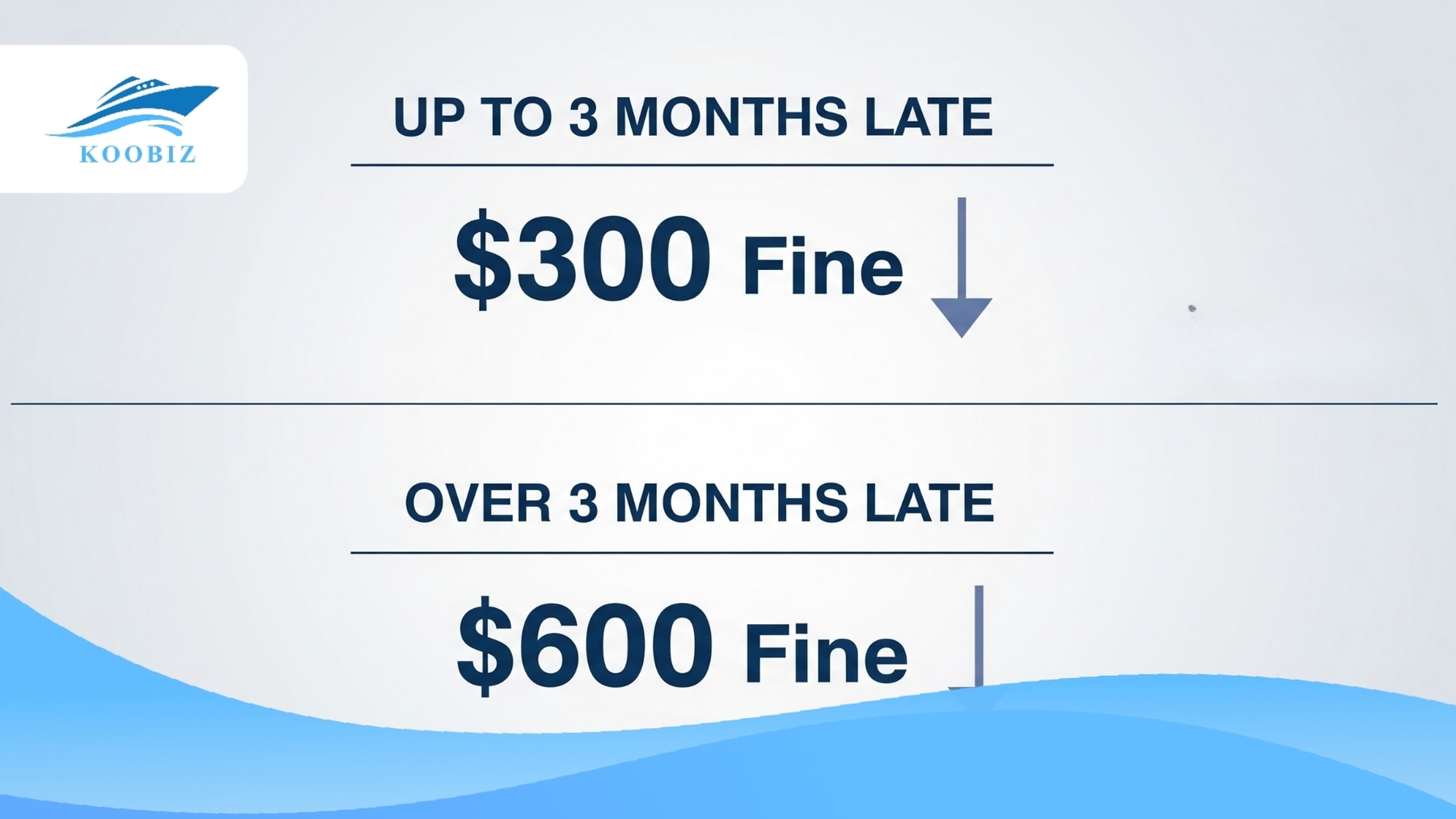
    Penalty Tiers: A fixed $300 fine applies if your filing is up to 3 months late, rising to $600 for delays beyond that.

    Deadlines: For most private companies, the Annual Return must be filed within 7 months after your company’s financial year ends.

    Director Liability: This isn’t just a company fee. Directors may be summoned to court or disqualified if non-compliance persists.

    Immediate Action: The penalty must be paid immediately via BizFile+ at the point of filing to prevent escalation.

    Appeals: Getting a penalty waived is very uncommon. ACRA typically only considers requests in cases of proven system errors, not simple oversight or a busy schedule.

    [/SUMMARIES]

    For business owners in Singapore, receiving a notification about an Annual Return late filing penalty can be a source of significant anxiety. It’s not just about the fee—it’s a compliance issue that, if ignored, can lead to court action and affect a director’s ability to serve.

    At Koobiz, we understand that ACRA requirements can feel overwhelming, especially for new founders or overseas business owners. Whether you operate a local startup or an international subsidiary, understanding your filing deadlines and penalty exposure is essential to keeping your company in good standing.

    This guide is your straightforward resource for fixing and avoiding these penalties. We’ll explain the exact fines, how the system works, the deadlines based on your company’s financial year, and what happens if these legal duties are overlooked. We’ll also clear up the common mix-up between ACRA and tax filings, giving you a clear path to staying compliant.

    What is the ACRA Annual Return Late Filing Penalty?

    ACRA Annual Return Late Filing Penalty Warning
    ACRA Annual Return Late Filing Penalty Warning

    The ACRA Annual Return late filing penalty is a statutory fine imposed on companies that fail to lodge their Annual Return (AR) within the prescribed timeline. Think of it this way:

    • Statutory Mandate: Under Section 197 of the Companies Act, every company is legally required to file an AR to confirm its particulars (officers, address, financial status) are up to date.
    • Automatic Enforcement: The system flags a late filing immediately; no manual review is needed to issue the initial fine.
    • Public Register Integrity: The penalty ensures public records are timely and reliable for anyone checking a company’s status.
    • Distinct from Tax: Unlike IRAS tax returns which focus on income, the Annual Return focuses on corporate governance and solvency. Many Koobiz clients often confuse the two, leading to accidental non-compliance.
    • Director Responsibility: While the fine is charged to the company, the legal duty to ensure it’s filed and paid falls on the directors.

    How Much is the Late Lodgement Fee and Composition Sum?

    Two tiers of late filing penalties: $300 and $600
    Two tiers of late filing penalties: $300 and $600

    There are two primary tiers for the late lodgement penalty: a $300 flat fee for filings made within 3 months of the deadline, and a $600 flat fee for filings made after 3 months.

    Specifically, the cost depends on the duration of the delay. ACRA simplified this framework effective April 30, 2021, to encourage quicker rectification of breaches. Previously, penalties accumulated on a monthly basis, which could lead to confusion. The current 2-tier system is straightforward but punitive enough to discourage negligence.

    • Tier 1 ($300): If you miss your deadline but file the Annual Return within 3 months (90 days) of the due date, the penalty is capped at $300. This is legally referred to as a “Composition Sum”, essentially an offer to settle the offense out of court by paying a fixed amount.
    • Tier 2 ($600): If the delay exceeds 3 months, the penalty doubles to $600. This is the maximum administrative penalty ACRA will impose via the BizFile+ system before potentially escalating the matter to prosecution.

    Importantly, penalties are imposed per breach. In many cases, companies that miss their Annual Return deadline have also failed to hold their Annual General Meeting (AGM) on time. Each breach can attract a separate composition sum. As a result, directors may face up to $1,200 in total penalties, $600 for the AGM breach and $600 for the AR breach. Koobiz advises clients to view the $600 cap not as a safety net, but rather as ACRA’s final administrativewarning before court action is initiated.

    Note: As of late 2025, ACRA continues to enforce this 2-tier framework strictly. Ignoring the Tier 2 penalty often results in a summons to court.

    When is the Annual Return Deadline Due?

    AR submission deadline based on FYE
    AR submission deadline based on FYE

    Your deadline isn’t a fixed calendar date. It’s calculated from your company’s own Financial Year End (FYE).

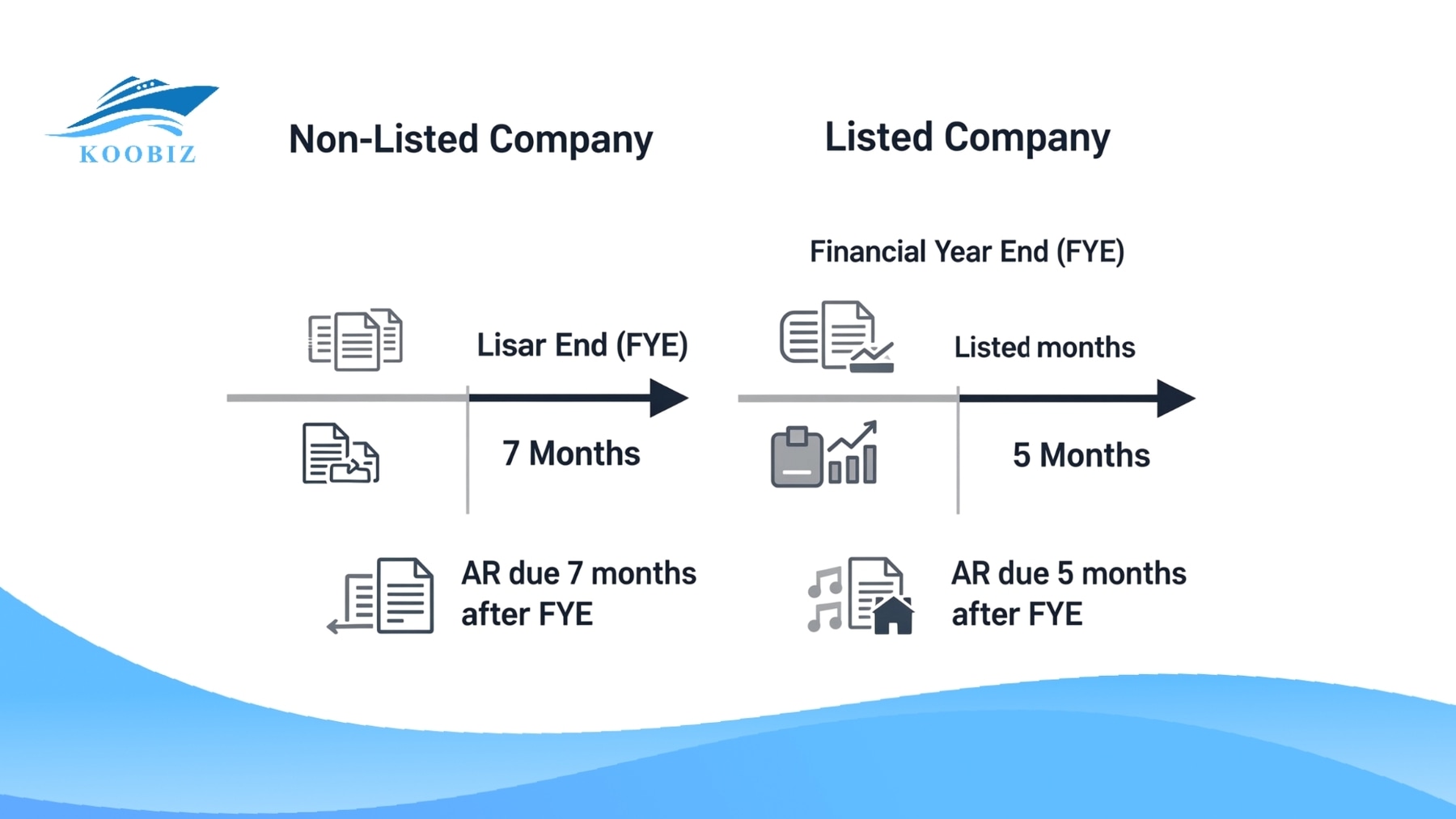
    • For Non-Listed Companies (Private Limited): You must file your Annual Return within 7 months after your FYE. For example, if your FYE is 31 December, your Annual Return is due by 31 July of the following year.
    • For Listed Companies: The timeline is tighter. You must file within 5 months after your FYE.

    Key Detail: The 7-month AR deadline assumes you have complied with AGM requirements. For most private companies, the AGM must be held within 6 months after the FYE. If the AGM is delayed (or forgotten), the AR filing will almost certainly become late as well, triggering penalties for both breaches.

    Real-World Scenarios: Calculating Deadlines and Penalties

    To make these rules easier to digest, let’s look at three common scenarios we encounter at Koobiz. These examples illustrate how the Financial Year End (FYE) dictates the deadline and how the penalty tiers are applied in practice for a standard Private Limited Company.

    Scenario 1: The “Just Missed It” Startup (Tier 1 Penalty)

    • Company: TechStart Solutions Pte. Ltd.
    • Financial Year End (FYE): 31 December 2023.
    • Correct Deadline: 31 July 2024 (7 months after FYE).
    • Actual Filing Date: 15 August 2024.
    • The Breach: The filing is 15 days late.
    • The Penalty: $300.
    • Koobiz Insight: Even a short delay counts. Once the deadline is missed, even by a single day, the filing automatically falls into the “within 3 months” penalty tier. ACRA does not calculate penalties by the number of days late; the full $300 applies immediately.

    Scenario 2: The Major Oversight (Tier 2 Penalty)

    • Company: Global Trade Holdings Pte. Ltd.
    • Financial Year End (FYE): 31 March 2023.
    • Correct Deadline: 31 October 2023.
    • Actual Filing Date: 5 February 2024.
    • The Breach: The filing is over 3 months late (approx. 95 days late).
    • The Penalty: $600.
    • Koobiz Insight:Once the delay crosses the 3-month mark, the penalty automatically increases to $600. More importantly, leaving the breach unresolved for an extended period significantly raises the risk of a court summons, exposing directors to prosecution and potential disqualification.

    Scenario 3: The “Tax vs. ACRA” Confusion

    • Company: Creative Design Agency Pte. Ltd.
    • The Situation: The foreign director successfully filed the Corporate Tax Return (Form C-S) with IRAS by the 30 November deadline and assumed all government compliance was complete.
    • The Mistake: They neglected the ACRA Annual Return, which was due earlier on 31 July.
    • The Outcome: Despite paying their taxes on time, the company was flagged as “Non-Compliant” by ACRA and incurred a $600 late filing penalty because the error was only discovered 5 months later.
    • Lesson: IRAS tax filing and ACRA Annual Return filing are separate obligations with different deadlines. Being compliant with IRAS does not mean you are compliant with ACRA.

    Steps to File Late Annual Return and Pay Penalties via BizFile+

    Follow these three key steps to resolve the issue:

    Step 1: Log in to BizFile+

    Access the BizFile+ portal using your Corppass login. You must be an authorized director, company secretary, or a registered filing agent.

    Step 2: Navigate to Annual Return

    Select “File Annual Return by Local Company” and complete all the required information accurately.

    Step 3: Acknowledge and Pay

    The system will auto-calculate the late fee ($300 or $600). Acknowledge and pay immediately via card or GIRO to complete the filing. Once payment is made, your company’s compliance status will be updated.

    What are the Consequences of Ignoring the ACRA Penalty?

    Severe consequences of ignoring ACRA penalties
    Severe consequences of ignoring ACRA penalties

    Ignoring the penalty escalates the issue from a simple fine to a serious legal problem for the company’s directors.

    Can Directors Face Court Prosecution and Disqualification?

    Yes, directors can face personal court prosecution and, upon conviction, may be disqualified or debarred from acting as a director in Singapore. There are two main risks for directors:

    Under the Companies Act, if a director fails to comply with the requirement to file Annual Returns, ACRA can issue a summons to attend court. The specific consequences include:

    • Court Fines: The court can impose fines significantly higher than the $600 composition sum, potentially up to $5,000 per offense.
    • Disqualification (Section 155): A director faces disqualification for “persistent default.” This occurs if you are convicted of three or more filing offenses within a 5-year period, or have three or more enforcement orders made against you.
    • Debarment (Section 155B): This is a swifter enforcement tool. The Registrar can debar a director if they fail to lodge any document for at least 3 months after the deadline. Unlike disqualification, you do not need multiple convictions; a single prolonged default can trigger this, preventing you from taking on new appointments as a director or secretary.
    • Section 155A: Additionally, a director can be disqualified if they were a director of at least three companies which were struck off within a 5-year period (where the striking off was initiated by ACRA).

    At Koobiz, we stress that director enforcement records are publicly accessible. A disqualification is not a private administrative matter, it permanently damages your professional standing. Such records are routinely reviewed during bank due diligence and compliance checks, making it extremely difficult to open corporate bank accounts or conduct regulated business in Singapore and other major financial centres.

    Will the Company Be Struck Off for Non-Filing?

    • Yes. Where a company repeatedly fails to file its statutory returns, ACRA may presume that the company is no longer carrying on business and initiate strike-off proceedings. Once struck off, the company ceases to exist as a legal entity. All bank accounts are frozen, contractual rights lapse, and remaining assets may vest in the state. Restoring a struck-off company is possible only through a court-led reinstatement process, which is time-consuming, costly, and subject to judicial discretion.

    Can You Appeal for a Waiver of the Late Filing Penalty?

    Yes, but only under extremely specific and rare conditions, such as a proven technical glitch in the ACRA system or a court order extending the deadline.

    While penalties are strict, there is a narrow window for appeal, though “forgetfulness” or “not knowing the law” are never accepted as valid reasons.

    • Invalid Reasons: “My accountant resigned,” “I was overseas,” “I didn’t receive the reminder email,” or “The company made no profit.” These are considered management failures, not valid excuses.
    • Valid Reasons: Proven system failure of BizFile+ (requires screenshots/logs), loss of essential records due to fire or theft (requires police report), or critical illness of the sole director (requires medical evidence).

    Appeals must be lodged via BizFile+ or written to ACRA directly. However, based on Koobiz‘s experience, the success rate for waivers is very low unless the evidence is irrefutable. It is often more cost-effective to pay the composition sum and move on.

    Difference Between ACRA Annual Return and IRAS Tax Filing Penalties

    ACRA penalties target the governance and structural reporting of the entity, whereas IRAS penalties strictly target the reporting of taxable income and corporate tax liability. It is crucial not to conflate the two.

    Feature ACRA (Annual Return) IRAS (Tax Filing – Form C-S/C)
    Primary Focus Governance, shareholders, officers, and solvent financial status. Reporting of taxable income and corporate tax liability.
    Enforcement Authority Accounting and Corporate Regulatory Authority (ACRA). Inland Revenue Authority of Singapore (IRAS).
    Deadline Depends on FYE (e.g., 7 months after FYE for non-listed). Fixed deadline (typically 30 November).
    Late Penalty Fixed tiers: $300 (Tier 1) or $600 (Tier 2). Varies: Composition fines to court prosecution under tax evasion laws.
    Relationship Filing here does not satisfy IRAS requirements. Filing here does not satisfy ACRA requirements.

    According to Singapore regulatory data, a significant portion of compliance breaches involving foreign-owned companies stem from confusing the Annual Return with the Tax Return.

    Conclusion

    Staying compliant in Singapore’s business environment requires attention to detail. The Annual Return late filing penalty is a sign that your company’s administrative health needs a check-up. Whether it’s a $300 fee or the risk of director disqualification, the consequences of inaction are far greater than the effort of staying organized.

    At Koobiz, we help business owners stay fully compliant so they can focus on growth with confidence. From company incorporation and corporate bank account opening to ongoing tax, accounting, audit, and company secretarial services, our team ensures that no deadline is missed. If you are currently facing a late filing issue or require a professional Company Secretary to manage your Annual Returns, contact Koobiz today for a complimentary compliance health check. Avoid unnecessary penalties, let us handle the paperwork for you.

  • Identify Registrable Controllers (Beneficial Owners): RORC Guide for Singapore Directors

    Identify Registrable Controllers (Beneficial Owners): RORC Guide for Singapore Directors

    [SUMMARIES]

    Definition: RORC is a mandatory register of people or entities with over 25% stake or significant control in your company.

    2025 Update: Companies incorporated from 16 June 2025 must file RORC details upon incorporation.

    Timelines:Update your internal register within 7 calendar days of learning new info; file with ACRA within 2 business days after that.

    Ongoing Duty: Directors must now perform an Annual Verification of all controllers’ particulars.

    Risk: Non-compliance can lead to fines (up to SGD $25,000) and legal consequences.

    [/SUMMARIES]

    Running a company in Singapore comes with important transparency duties. One of the most crucial for directors is correctly identifying your company’s Registrable Controllers—often called the ultimate Beneficial Owners.

    The Register of Registrable Controllers (RORC), managed by ACRA, helps prevent financial crime. New rules effective 16 June 2025 have made compliance more urgent.

    At Koobiz, we understand that distinguishing between a shareholder and a “Registrable Controller” is complex. Whether you run a Private Limited Company or an LLP, this guide clarifies the definitions, the 2025 regulatory changes, and the exact steps to ensure full compliance.

    IMPORTANT: 2025 ACRA Regulatory Updates

    Effective 16 June 2025, the Companies and Limited Liability Partnerships (Miscellaneous Amendments) Act 2024 introduced key changes:

    1. Immediate Filing for New Entities: Companies incorporated on or after 16 June 2025 must set up their RORC and lodge information with ACRA on the date of incorporation.
    2. Extended Internal Timeline: The deadline to update the internal register has been extended from 2 business days to 7 calendar days after receiving information.
    3. Annual Verification: Companies must now send an annual notice to every controller to confirm their details are still correct.
    4. New Particulars Required: Controllers must now provide their email address and contact number.

    What is the Register of Registrable Controllers (RORC)?

    Register of Registrable Controllers (RORC)
    Register of Registrable Controllers (RORC)

    The Register of Registrable Controllers (RORC) is a mandatory internal document that records the particulars of a company’s beneficial owners. Its primary goal is ensuring corporate transparency.

    To understand this requirement fully, recognize its key characteristics:

    • Mandatory & Private: You must keep it, but it is not public. It’s held at your registered office or with your corporate secretary (like Koobiz).
    • Dual Obligation: You must keep the register internally and submit the information to ACRA’s private database.
    • Strictly Confidential: Only Singapore government agencies (like the police or tax authority) can access RORC. However, companies must produce the register upon request to ACRA or law enforcement for investigation.
    • Ongoing Duty: It’s not a one-time job. You must keep it current and perform annual checks.

    Who Qualifies as a Registrable Controller?

    A Registrable Controller is someone who, through their influence over the company, meets at least one of these criteria. Directors should look past the share certificate to understand the real relationships. The controller may be the person directing activities behind the scenes or a parent company that owns the local entity.

    Individual vs. Corporate Controllers: Knowing the Difference

    It is vital to distinguish between a natural person and a legal entity when recording information.

    Feature Individual Controller Corporate Controller
    Definition A natural person (human being). A legal entity (Company, LLP, Foreign Corp).
    Role The ultimate “Beneficial Owner”. An intermediate owner in the corporate structure.
    Tracing Requirement The end of the chain. No further tracing needed. You must “look through” this entity to find the individuals behind it.
    Example Mr. Tan owning 30% of shares directly. UK Company B owning 100% of shares.

    Condition 1: Significant Interest (>25% Shares or Voting)

    To have “significant interest,” a controller must meet specific quantitative benchmarks:

    • Owns more than 25% of the company’s shares.
    • Holds more than 25% of the voting rights.
    • Share the right to more than 25% of the capital or profits (for LLPs).

    Note: Exactly 25% does not trigger the requirement; it must be >25%. This applies to both direct interest and “deemed interest” (through nominees).

    Condition 2: Significant Control (Board Appointment & Veto Rights)

    Even without holding a single share, a person is a Registrable Controller if they possess “significant control,” such as:

    • The right to appoint or remove a majority of the directors.
    • The right to exercise, or actually exercising, significant influence or control over the company decisions (e.g., veto rights in a Shareholders’ Agreement).

    Entities Required to Maintain an RORC

    Entities required to maintain RORC and those that are exempt
    Entities required to maintain RORC and those that are exempt

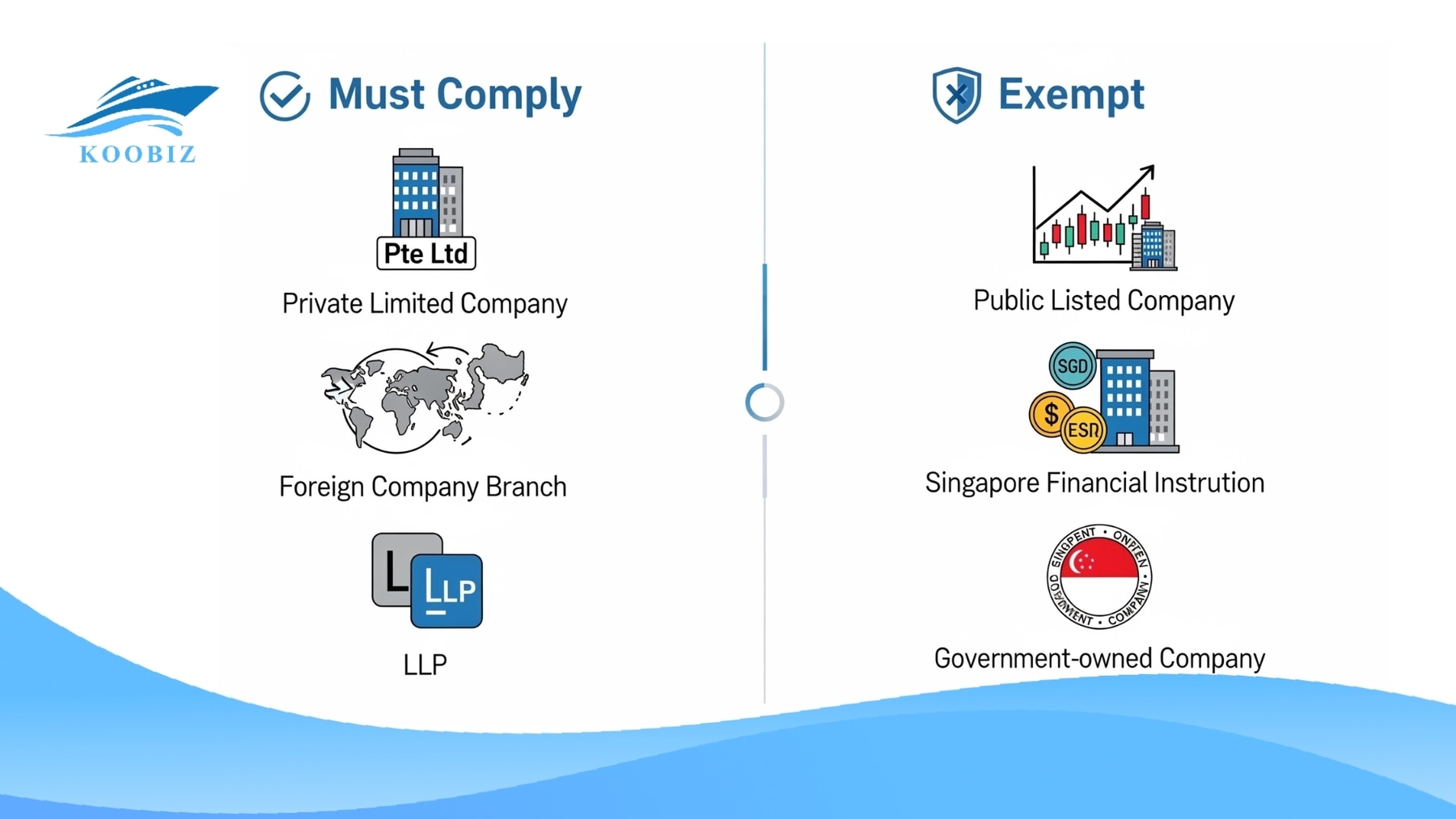
    The requirement applies to all locally incorporated companies and Limited Liability Partnerships (LLPs) unless specifically exempted.

    Who Must Comply:

    1. Private Limited Companies
    2. Foreign Companies (Singapore Branches)
    3. Limited Liability Partnerships (LLPs)

    Who is Exempt:

    • Public Listed Companies: Listed on SGX.
    • Singapore Financial Institutions: Regulated by MAS.
    • Wholly-Owned Subsidiaries of Exempt Entities: E.g., a subsidiary of a Singapore Public Listed company.
    • Government-owned Companies.

    Update: Exempt companies are now required to declare their exemption category specifically in their Annual Return filings. Note that subsidiaries of foreign listed companies are generally not exempt unless the foreign exchange has disclosure regimes comparable to Singapore’s.

    Practical Case Studies & Tracing Ownership

    Cases of identifying RORC controllers
    Cases of identifying RORC controllers

    Identifying a controller is often straightforward, but complex ownership layers require “tracing.”

    Scenario 1: The Multi-Layered Structure (Indirect/Deemed Interest)

    • Structure: Singapore Company A is 100% owned by Foreign Company B. Foreign Company B is 100% owned by Mr. Smith.
    • Analysis:
      • Foreign Company B is a Corporate Controller (Direct Interest).
      • Mr. Smith has a “Deemed Interest” because he controls Company B.
    • Action: Singapore Company A must register both Foreign Company B and Mr. Smith. Many directors miss this step—you must look through the corporate layers.

    Scenario 2: The “Golden Share” Investor (Control Without Ownership)

    • Structure: An Angel Investor owns 10% equity but holds a contractual right to veto board decisions and appoint the CEO.
    • Analysis: Despite low ownership, the veto power constitutes “Significant Control.”
    • Action: The Angel Investor must be recorded as a Registrable Controller.

    Scenario 3: No Identifiable Controller (The Fallback)

    • Situation: A company has 5 equal shareholders (20% each) with no special voting rights. No one meets the >25% threshold or has significant control.
    • Action:
      1. The company must take reasonable steps to verify no controller exists.
      2. As a mandatory fallback, the company must record the particulars of Directors with Executive Control (e.g., CEO, Managing Director).
      3. Important: You cannot leave the register blank. This entry must also be lodged with ACRA.

    Compliance Workflow: How to Identify and Lodge (2025 Updated)

    The compliance process has evolved. Follow this updated workflow to ensure you meet the new 2025 standards.

    Step 1: Identification & Verification Notices

    Directors must take “reasonable steps” to identify controllers. This includes reviewing the Register of Members and sending notices.

    • Initial Notice: Sent to anyone you know or suspect is a controller.
    • Annual Verification Notice (New): You must now send a notice annually to all controllers in your register to confirm if their particulars have changed.
    • Information to Collect:
    • Full name, ID/Passport number, address, nationality, date of birth, date they became a controller, email, and phone number.

    Step 2: Update Internal Register (New 7-Day Rule)

    • Once you obtain a confirmed response, which must now include a signed declaration from the controller, you are required to update the internal Register of Registrable Controllers (RORC) within 7 calendar days. This is a change from the previous requirement, which allowed for a two-business-day window.
    • For New Companies (those incorporated after June 16, 2025), the internal register must be established on the date of incorporation itself rather than at a later time.

    Step 3: Lodge Data with ACRA

    • Timeline: After the internal register has been updated, you must lodge the relevant information with ACRA via BizFile+ within 2 business days.
    • For New Companies: The filing with ACRA must be completed simultaneously with the incorporation filing, so the information is submitted at the same time as the company’s incorporation.
    • Confidentiality: The lodgment is treated as secure information and is not accessible to the public.

    Penalties for Non-Compliance

    ACRA treats RORC non-compliance as a serious offense.

    • Fines: Up to SGD 25,000 for the company and every officer in default.
    • Criminal Prosecution: For severe cases, such as willfully obstructing an investigation or knowingly providing false/misleading information, officers may face criminal charges and imprisonment.
    • Administrative Roadblocks: Failure to file RORC can prevent the company from completing other essential transactions on BizFile+.

    Shareholder vs. Registrable Controller: The Difference

    A shareholder is the legal name on the share certificate. A controller is the person who ultimately benefits from or controls those shares. They can be different people.

    Feature Shareholder Registrable Controller
    Definition Legal owner of shares (on paper). Ultimate “Beneficial Owner” (in reality).
    Threshold Owns any amount (even 1 share). Must hold >25% interest or have significant control.
    Visibility Public (Business Profile). Private (Lodged with ACRA only).

    Example: Mr. A holds 100% shares as a nominee for Mr. B.

    • Mr. A is the Shareholder.
    • Mr. B is the Registrable Controller. The RORC must reflect Mr. B.

    Conclusion

    Maintaining an accurate RORC is a core part of your directorship duties, ensuring your company operates with integrity. With the June 2025 updates, Directors must be more vigilant than ever—ensuring email addresses are collected, annual verifications are sent, and new entities are compliant from Day 1.

    At Koobiz, we specialize in simplifying these corporate complexities. Our team ensures your RORC is accurate, up-to-date, and fully compliant with the latest ACRA amendments.

    Ready to ensure your company is compliant?

    Contact Koobiz today for a comprehensive RORC health check or assistance with your corporate secretarial needs.

    About Koobiz

    Your trusted partner for business expansion in Singapore, offering:

    • Singapore Company Incorporation (Compliant from Day 1)
    • Corporate Secretarial Services (RORC, Annual Returns)
    • Bank Account Opening & Tax Services
  • Social Enterprise Singapore: Strategizing for Profit and Social Impact

    Social Enterprise Singapore: Strategizing for Profit and Social Impact

    [SUMMARIES]

    Practical Definition: An SE is a financially self-sustaining entity where business operations are driven by a core social or environmental mission.

    Differentiation: Unlike charities that rely on donations, SEs generate revenue. Unlike pure commercial businesses, SEs prioritize social impact alongside profits (The Double Bottom Line).

    Strategic Structural Choice: Register as a Private Limited (Pte Ltd) for scalability or a Company Limited by Guarantee (CLG) to maximize community trust.

    Validation: Registration with the Singapore Centre for Social Enterprise (raiSE) is crucial for accessing grants like “Venture for Good.”

    Measurement: Success is measured not just by financial ROI, but by Social Return on Investment (SROI) and impact assessment frameworks.

    [/SUMMARIES]

    For many aspiring changemakers, the traditional dichotomy between “doing good” (charity) and “doing well” (business) is no longer sufficient. In Singapore’s evolving economic landscape, a new hybrid model is gaining traction: the Social Enterprise. This model offers a sustainable path for entrepreneurs who wish to address critical social gaps without relying solely on philanthropic donations.

    The sector is growing rapidly. Since 2015, raiSE Singapore has disbursed millions in funding and empowered over 1,200 social enterprises to achieve sustainable growth.

    At Koobiz, we have observed a significant rise in inquiries regarding this unique business structure. Whether you are looking to support marginalized communities, promote environmental sustainability, or preserve cultural heritage, establishing a social enterprise requires a precise balance of mission and margin. This guide serves as your comprehensive roadmap to understanding, establishing, and scaling a social enterprise in Singapore.

    What Defines a Social Enterprise in Singapore?

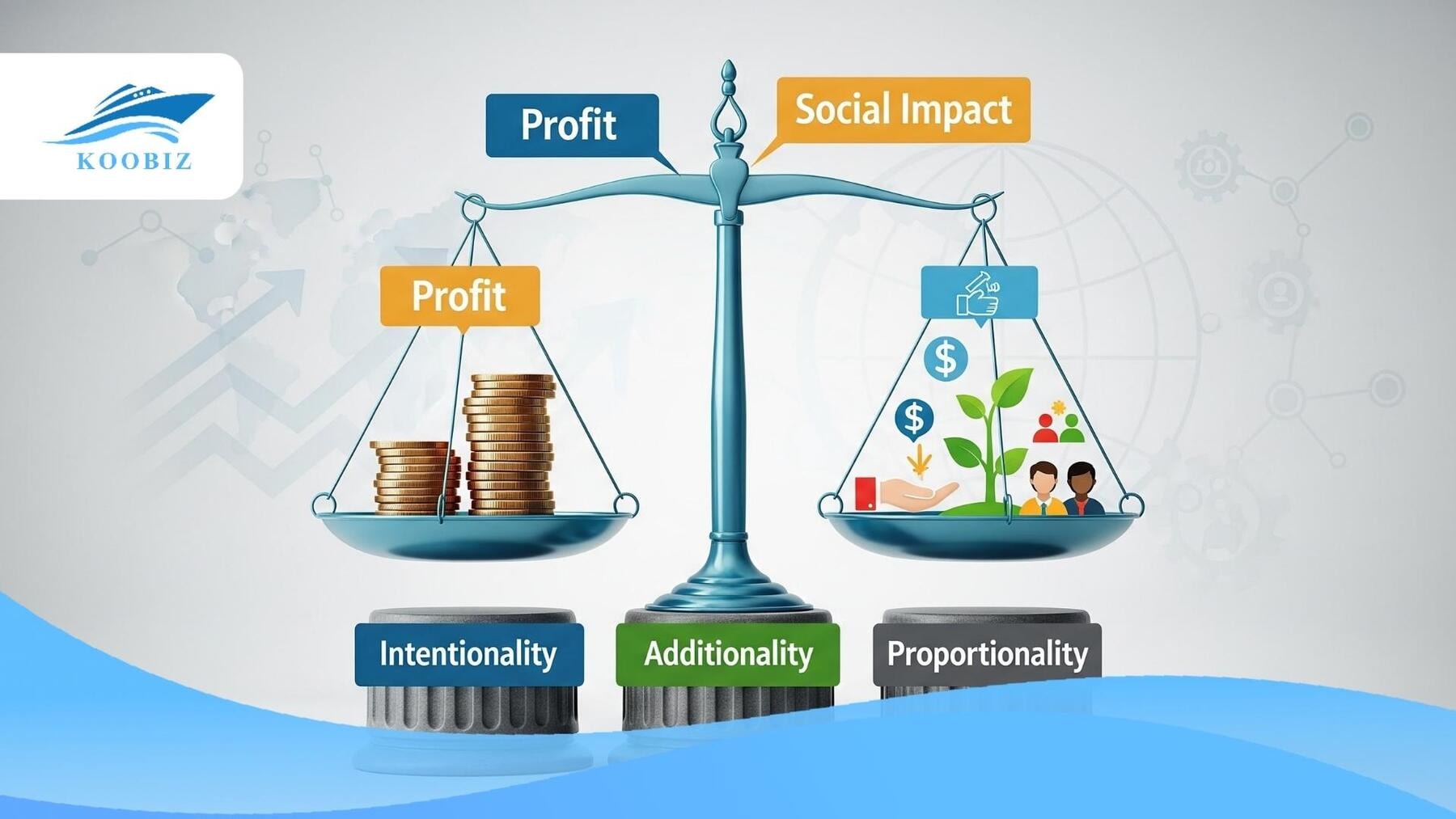
    A Social Enterprise (SE) in Singapore is a business entity that uses commercial strategies to maximize improvements in human and environmental well-being, rather than maximizing profits for external shareholders. Unlike a conventional company where profit is the end goal, for an SE, profit is a means to an end—that end being a specific social outcome.

    3 raiSE Pillars: Intentionality, Additionality, Proportionality
    3 raiSE Pillars: Intentionality, Additionality, Proportionality

    To understand this deeply, we must look at the framework provided by the Singapore Centre for Social Enterprise (raiSE). A legitimate SE is defined by three Core Evaluation Pillars: Intentionality, Additionality, and Proportionality.

    1. Intentionality: The social mission is not incidental; it is formally codified in the corporate constitution and operational strategy from inception.
    2. Additionality: The business provides specific value to a beneficiary group that would not otherwise exist.
    3. Proportionality: Resources and profits are allocated fairly between business growth and social impact.

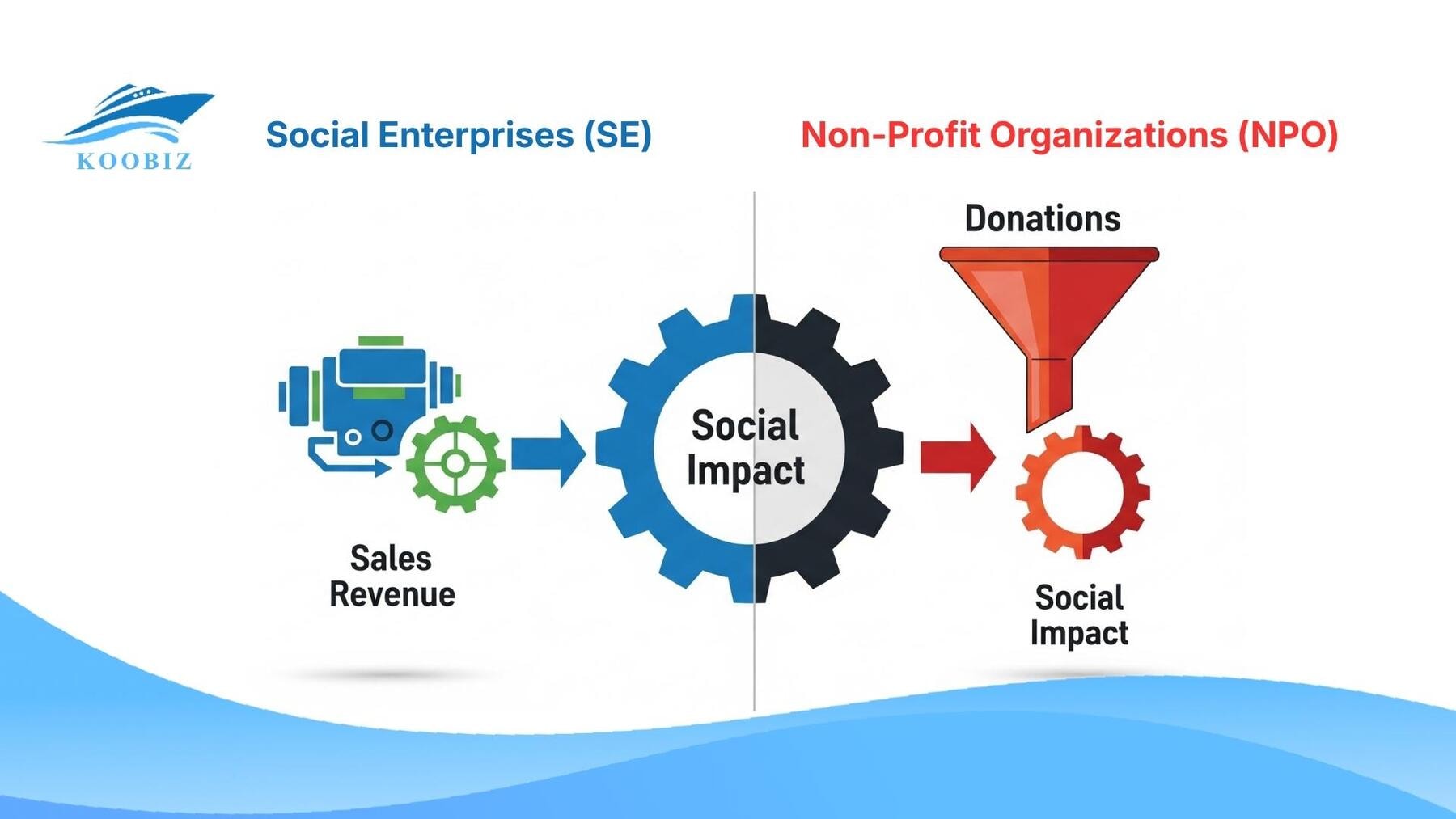
    Differentiating Social Enterprises (SE) from Non-Profit Organizations (NPO)

    Differentiating Social Enterprises (SE) from Non-Profit Organizations (NPO)
    Differentiating Social Enterprises (SE) from Non-Profit Organizations (NPO)

    No, a social enterprise is distinct from a non-profit organization (NPO). While both aim to do good, they differ fundamentally in how they sustain themselves.

    • Financial Sustainability: Unlike NPOs, which are often vulnerable to donor fatigue, SEs utilize a revenue-centric model by trading goods and services in the competitive market.
    • Operational Mindset: An NPO focuses on fundraising to fund programs. An SE operates with a business mindset, competing in the open market (e.g., a cafe hiring youth-at-risk) to fund its social mission.
    • Resilience: This financial independence allows SEs to be more sustainable in the long run, whereas charities may struggle during economic downturns when donations dry up.

    Social Enterprise vs. Charity vs. Commercial Business

    Social Enterprises (SEs) operate at the intersection of philanthropic impact and commercial viability, while traditional charities rely on philanthropic capital to drive their social mandates.

    To visualize where a social enterprise sits in the ecosystem, it is helpful to compare these three entities across key operational metrics.

    Feature Social Enterprise Charity / Non-Profit Commercial Business
    Primary Goal Social Impact + Financial Sustainability Social Impact Financial Profit
    Funding Source Sales Revenue, Grants, Investment Donations, Grants Sales Revenue, Investment
    Surplus Allocation Reinvested into scaling operations and amplifying social impact. 100% Reinvested/Spent on Cause Distributed to Shareholders
    Fiscal Obligations Subject to corporate tax, with eligibility for Tax-Exempt status upon fulfilling specific IPC/Charity criteria. Tax-Exempt (usually) Taxable

    Koobiz often advises clients that while SEs function like commercial businesses in terms of operations—needing marketing, sales, and HR strategies—their decision-making process is fundamentally different. In a commercial business, a decision is made if it increases profit. In an SE, a decision is made if it increases profit without compromising the social mission, or ideally, while enhancing it.

    How to Set Up a Social Enterprise in Singapore?

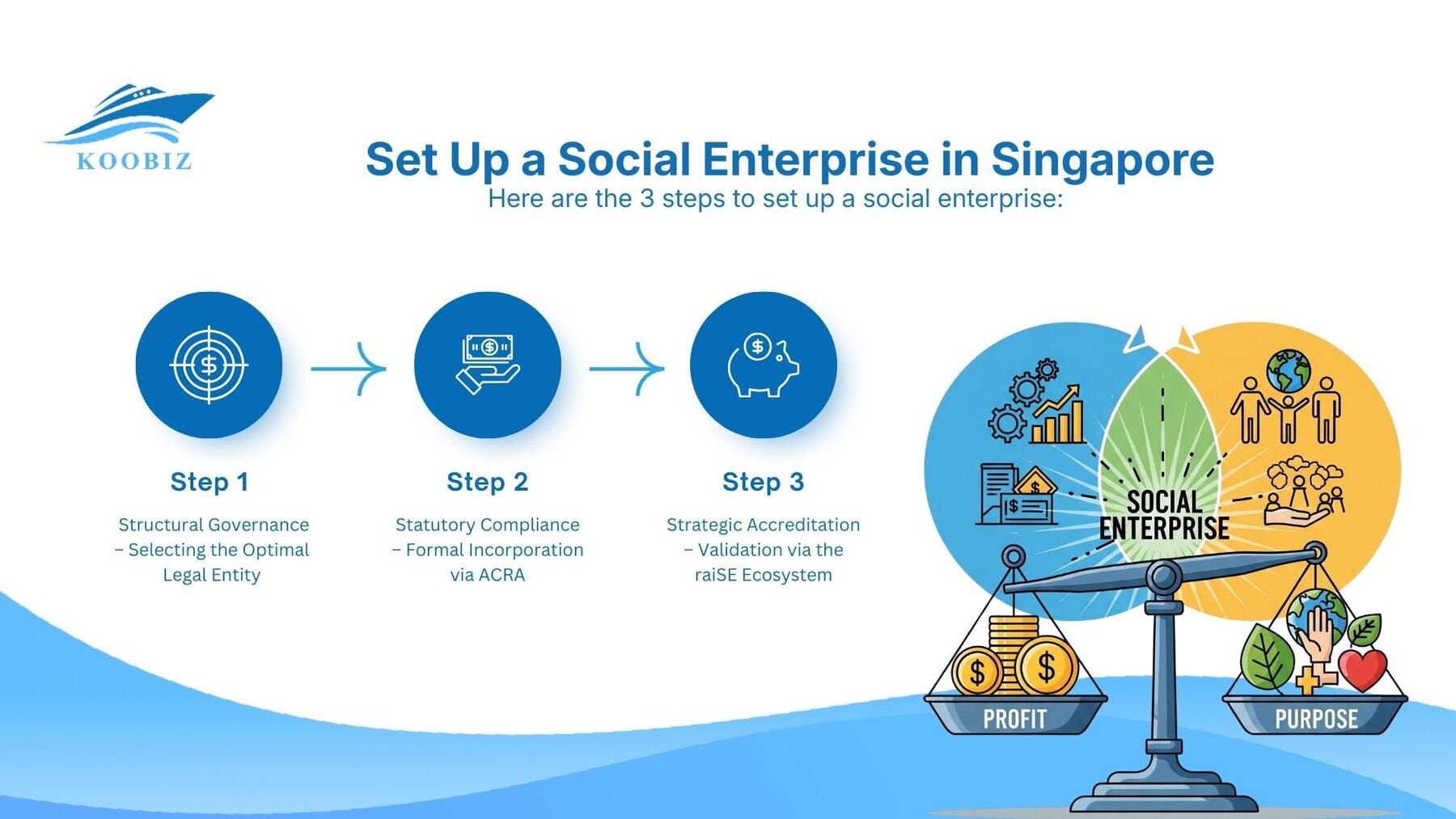
    Establishing a Social Enterprise (SE) requires a strategic two-tier approach: formal legal incorporation followed by sector-specific accreditation.

    Set Up a Social Enterprise in Singapore
    Set Up a Social Enterprise in Singapore

    Step 1: Structural Governance – Selecting the Optimal Legal Entity

    There are two primary legal structures adopted by social enterprises in Singapore: the Private Limited Company (Pte Ltd) and the Company Limited by Guarantee (CLG). Your choice depends on your vision for ownership and funding.

    Private Limited Company (Pte Ltd): This is the most common structure for SEs (shares limited by liability).

    • Pros: Enables a share-based capital structure, significantly lowering the barrier for impact investors and VC participation.
    • Cons: It is a taxable entity, and there can be public skepticism about “profiting from a cause.”
    • Best for: SEs that have a strong product/service to sell and aim for rapid growth (e.g., an eco-tech startup).

    Company Limited by Guarantee (CLG): This is a non-profit entity classification often used for charities, but also for SEs. It has members instead of shareholders.

    • Pros: Commands high public and donor trust due to its non-distribution constraint, ensuring all surpluses are locked for social mandates.
    • Cons: Cannot raise capital by selling shares; administrative compliance can be stricter.
    • Best for: SEs focused heavily on community building where profit is purely incidental.

    Koobiz Pro Tip: If you intend to raise private capital (VC or Angel investment) later, a Pte Ltd is almost always the required structure. Investors cannot take equity in a CLG.

    Step 2: Statutory Compliance – Formal Incorporation via ACRA

    Once you have decided on your structure, you must formally incorporate your entity with the Accounting and Corporate Regulatory Authority (ACRA).

    This is the standard business registration process in Singapore. Whether you chose Pte Ltd or CLG in Step 1, you will receive a Unique Entity Number (UEN). The Unique Entity Number (UEN) acts as your corporate identity, essential for establishing banking relationships and executing commercial contracts.

    Step 3: Strategic Accreditation – Validation via the raiSE Ecosystem

    Registering with raiSE is the definitive step that validates your business as a recognized Social Enterprise in the Singapore ecosystem.

    raiSE was set up to develop the social enterprise sector in Singapore. Membership is not automatic; applicants must submit a proposal detailing their social objectives and business model. Being a raiSE member provides credibility. It signals to consumers and partners that your claim of “doing good” has been vetted by a third-party authority. Furthermore, membership unlocks access to mentorship, business clinics, and crucial funding schemes.

    Key Grants and Funding Schemes for Social Enterprises

    There are several key funding avenues available for Singapore-based social enterprises, primarily anchored by the Venture for Good (VFG) grant and private impact investing networks.

    Capital Strategy: Leveraging Grants and Impact Investment. While commercial startups focus on exponential ROI, SEs prioritize long-term systemic impact to attract targeted impact capital. Singapore’s government and private sectors have bridged this gap with specific schemes.

    Venture for Good and Other raiSE Grants

    Venture for Good (VFG): A cornerstone funding mechanism designed for capacity scaling, infrastructure procurement, and strategic marketing.

    • Venture For Good (New & Existing): This grant supports the setup and expansion of SEs. Historically, it has provided capital (e.g., up to SGD 300,000 depending on the tranche and impact potential) to cover manpower, equipment, and marketing.
    • Capacity Building Grants: These are smaller grants aimed at helping SEs improve operational efficiency, such as adopting new technology or training staff.

    Important Note: Grant amounts and eligibility criteria are subject to change. Always verify the latest tranches and application windows on the official raiSE website.

    To secure these grants, the SE must demonstrate a viable business model. The Singapore government seeks to invest in fiscally resilient models rather than subsidizing non-viable projects. This is where professional financial projection—a service Koobiz specializes in—becomes vital for the application.

    We have established the “what” (Definition) and the “how” (Setup and Funding) of a Social Enterprise. However, to truly succeed, one must navigate the operational complexities that arise after the company is formed. The following section delves into the micro-semantics of sustainability, measurement, and advanced strategic challenges.

    Measuring Success: The Concept of the Double Bottom Line

    The Double Bottom Line is a business metric that measures fiscal performance alongside positive social impact, ensuring that the enterprise remains sustainable on both financial and humanitarian fronts.

    While traditional firms focus on fiscal solvency, SEs adopt a Double Bottom Line framework to balance net profit with verified social dividends. Conversely, if you help thousands but go bankrupt, the mission dies. Success necessitates an Integrated Reporting dashboard where Social Impact KPIs are audited with the same rigor as financial statements.

    Tools for Social Impact Measurement

    Social impact measurement tools involve frameworks like the Theory of Change and Social Return on Investment (SROI), which help quantify the qualitative changes an enterprise creates.

    • Theory of Change (ToC): A causal framework mapping the trajectory from Resource Inputs to Systemic Social Transformation.
    • Social Return on Investment (SROI): A methodology that monetizes qualitative social value, providing stakeholders with a tangible ratio of impact-per-dollar spent.For example, “For every $1 invested in this program, $3 of social value is created in the community.” Using these tools is essential when reporting to stakeholders and grantmakers.

    Advanced Challenges for Social Entrepreneurs in Singapore

    Social entrepreneurs must navigate a complex risk landscape, characterized by institutional skepticism and operational friction inherent in hybrid models. To navigate this landscape, it is vital to understand the following distinct challenges:

    The “Purity Test” and Public Skepticism

    One major challenge is the perception of “profiting from a cause.” To mitigate reputational risk, SEs must articulate a narrative where profitability is a proxy for impact scalability, rather than a sign of mission dilution. Entrepreneurs must communicate transparently that profit is the fuel for the mission, not a sign of greed.

    Balancing Impact Scale vs. Mission Drift

    Strategic Integrity vs. Mission Drift: Scaling necessitates a delicate equilibrium to prevent mission-atrophy, where commercial imperatives overshadow social mandates. For example, a cafe set up to train youth-at-risk might be tempted to hire experienced baristas to speed up service and increase sales, thereby neglecting its original training mission.

    Talent Acquisition and Retention

    The Talent Paradox: SEs must attract high-caliber professionals by offering a Value Proposition centered on ‘Social ROI’ to bridge the gap in financial compensation.Retaining this talent requires building a strong culture where the “social ROI” compensates for the gap in financial compensation.

    Financial Governance: Managing Hybrid Cash Flows

    SEs navigate a multifaceted fiscal environment, balancing taxable commercial revenue with restricted-use grant funding. Managing this requires sophisticated accounting to ensure compliance with both tax authorities and grant providers.

    Comparison: B Corp Certification vs. Social Enterprise Status

    B Corp Certification is a global standard for high levels of social and environmental performance, while raiSE Social Enterprise status serves as the foundational local credential for navigating the Singapore ecosystem.

    Feature B Corp Certification raiSE Social Enterprise Status
    Geographic Scope Global

    Recognized worldwide; beneficial for exporting products.

    Singapore-Centric

    Local validation; key for navigating the SG ecosystem.

    Rigor Comprehensive Audit

    A data-intensive evaluation across ESG parameters: Governance, Workers, Community, and Environment.

    Mission-Centric Vetting

    A proposal-driven evaluation focused on the triad of Intentionality, Additionality, and Proportionality.”

    Primary Benefit International Prestige

    Builds trust with global consumers and investors.

    Grant Access

    Unlock national funding (Venture for Good) and incubation support.

    Necessity Optional

    A powerful value-add but not required to operate.

    Essential

    The standard validation for operating as an SE in Singapore.

    Can a Social Enterprise Distribute Dividends to Shareholders?

    Yes, a social enterprise can distribute dividends, but it is often governed by a Dividend Cap or Asset Lock mechanism to preserve mission integrity.

    While a Private Limited (Pte Ltd) entity has the legal autonomy to distribute 100% of dividends, raiSE compliance often mandates a surplus reinvestment threshold.However, to maintain raiSE membership or qualify for certain tax exemptions (if applicable to specific charitable arms), you may need to commit to reinvesting a significant percentage (e.g., 50% or more) of profits back into the company or the cause. This fiscal discipline is the key differentiator between a dedicated Social Enterprise and a traditional firm practicing Corporate Social Responsibility (CSR).

    Examples of Successful Social Enterprises in Singapore

    Case Studies: Exemplifying the Double Bottom Line in Singapore.

    1. The Social Space

    • The Mission: Providing employment to individuals who face higher barriers to employment (e.g., ex-offenders, persons with disabilities).
    • The Business: A multi-concept lifestyle store featuring a cafe, a fair-trade retail area, and a nail salon.
    • Strategic Success Factor: Leveraging a premium, ‘lifestyle-centric’ brand to ensure operational self-sufficiency.

    2. Edible Garden City

    • The Mission: Improving Singapore’s food resilience and promoting environmental sustainability.
    • The Business: Designing, building, and maintaining urban farms for hotels, schools, and residences.
    • Why it works: They tapped into the national “30 by 30” food security goal, securing government and corporate contracts while educating the public.

    3. Foreword Coffee

    • The Mission: Empowering persons with disabilities and special needs by providing training and employment in the specialty coffee industry.
    • The Business: A chain of specialty coffee outlets.
    • Why it works: They focus on ability, not disability, proving that an inclusive workforce can deliver top-tier service and product quality.

    Conclusion

    Closing Insights: Architecting a Legacy of Impact and Profit. Building an SE requires navigating the technicalities of ACRA registration, understanding the nuances of the Pte Ltd vs. CLG structure, and rigorously measuring your Double Bottom Line. However, for those who succeed, the reward is the creation of a legacy that offers both economic value and positive societal change.

    The Koobiz Advantage: Your Institutional Partner in Social Innovation. We understand the challenges you face, and that is why we offer specialized services to handle the backend of your social enterprise. From Singapore company formation and ensuring your M&A aligns with social enterprise requirements, to opening corporate bank accounts and managing tax, accounting, and audit compliance, Koobiz is your trusted partner. We help you build a compliant, efficient foundation so you can focus on balancing profit with purpose.

    Visit Koobiz.com today to start your journey of impact.

  • Best business banking accounts in Singapore (2025): Features, fees, and reviews

    Best business banking accounts in Singapore (2025): Features, fees, and reviews

    [SUMMARIES]

    Best for Local SMEs: OCBC Business Growth Account offers the most balanced features with instant setup for eligible local companies.

    Best for Digital Startups: Aspire serves as an all-in-one financial operating system, ideal for companies needing speed and integrated corporate cards.

    Best for Global Trade: Wise Business and Airwallex provide superior exchange rates (mid-market) compared to traditional banks.

    Best Licensed Digital Bank: ANEXT Bank offers a middle ground with digital-first speed and SDIC insurance protection.

    Key Decision Factor: Choose traditional banks (DBS, UOB) for safety and cash facilities, or fintechs for lower fees and ease of use.

    Koobiz Tip: Foreign owners can open accounts remotely with fintechs, but traditional banks may require a physical presence or specific nominee director arrangements.

    [/SUMMARIES]

    Choosing a financial partner goes far beyond simply holding funds – it’s about managing cash flow efficiently, keeping operating costs low, and gaining access to the right business tools. In Singapore’s competitive 2025 landscape, business owners must weigh the reliability of traditional local banks against the flexibility of modern fintech platforms. Whether your focus is on lower fees, multi-currency support, or smooth Xero integration, this guide breaks down the leading options to help you decide with confidence. As a corporate services provider, Koobiz has guided hundreds of local and foreign founders through this exact decision as part of their company incorporation journey.

    Quick verdict: Top business accounts by category

    In Singapore’s 2025 landscape, a few clear leaders stand out – Aspire, OCBC, Wise, and DBS – each excelling in a different business use case. Before diving into the details, we’ve grouped these options by the practical needs of modern companies, because not all business accounts serve the same purpose. A high-transaction trading firm, for example, requires very different features from a lean, digital-first consultancy.

    1. Best for New Startups & Digital Nomads: Aspire

    Aspire isn’t a traditional bank but rather a financial operating system. It leads this category thanks to its smooth incorporation process, zero minimum balance requirements, and an interface designed specifically for digital-first founders.

    2. Best for Established SMEs: OCBC

    The OCBC Business Growth Account continues to be the benchmark for Singapore-registered companies seeking a full-service bank account, without the steep initial deposit thresholds that were once the norm.

    3. Best for Global Trade & E-commerce: Wise Business / Airwallex

    If your business pays suppliers in China or serves clients in the US, traditional bank FX spreads can quickly erode your margins. Platforms like Wise and Airwallex use mid-market exchange rates, helping you save up to 3% on each transaction.

    4. Best for Cash- Heavy Businesses: DBS / UOB

    For retail or F&B businesses that regularly deal with physical cash, the wide network of ATMs and cash deposit machines offered by DBS and UOB clearly sets them apart as the leading choice.

    Best Traditional Business Bank Accounts: The “Big Three” Reviewed

    There are three major local banks in Singapore:DBS, OCBC, and UOB that offer the highest level of security, regulatory protection, and comprehensive lending facilities.

    Despite the rapid growth of fintech platforms, these “Big Three” banks remain the most trusted options for safeguarding corporate funds, backed by strong balance sheets and full MAS regulation. At Koobiz, we typically advise clients to use fintech solutions for day-to-day transactions while maintaining a traditional bank account for long-term reserves and added credibility.

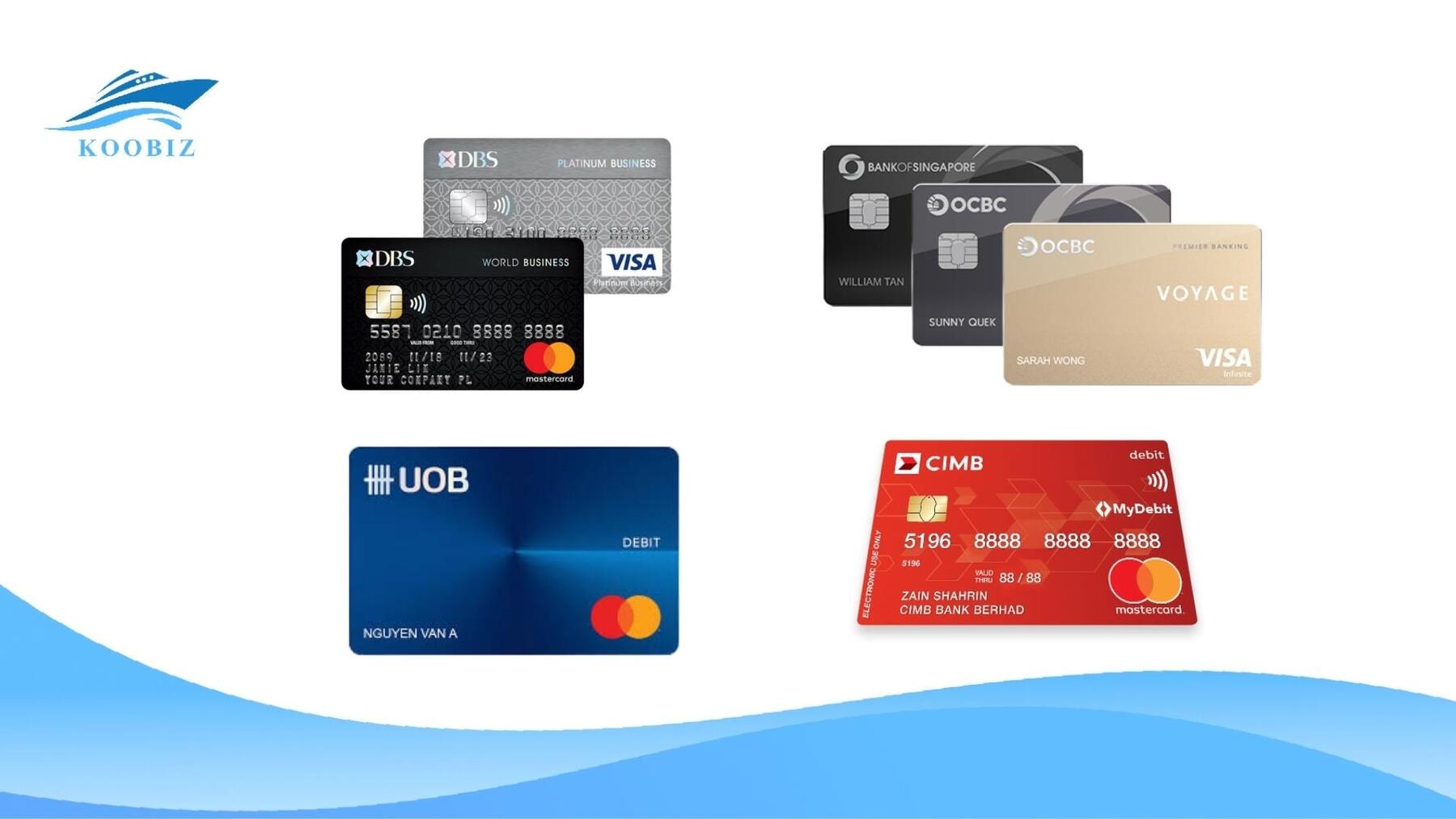
    OCBC Business Growth Account

    The OCBC Business Growth Account is a go-to option for SMEs as it removes many of the traditional entry hurdles of corporate banking. Eligible Singapore-registered companies – usually those with only local directors and shareholders – can benefit from instant online account opening.

    • Key feature: Low initial deposit of just SGD 500, often waived for the first six months under promotional offers.
    • Fees: No monthly fee initially, with a standard charge of around SGD 10 per month if requirements are not met thereafter.
    • Best for: Newly incorporated companies with local directors seeking a fast, reputable banking solution.

    DBS Business Multi-Currency Account

    Previously branded as the Digital Account, the DBS Business Multi-Currency Account stands out for its advanced digital integration through the DBS IDEAL platform. As Southeast Asia’s largest bank, DBS also offers exceptional network reliability and strong ecosystem connections.

    • Key feature: The IDEAL mobile app is highly robust, enabling biometric authorization for transactions.
    • Fees: Generally subject to an annual fee, with tiered pricing options available.
    • Best for: Companies looking to automate back-office operations and connect banking data directly to ERP systems via APIs.

    UOB eBusiness Account

    The UOB eBusiness Account is built to keep transaction costs low, making it a compelling option for businesses that process a high volume of local payments. Beyond cost efficiency, UOB’s strong footprint across ASEAN is a major advantage for companies expanding into markets like Malaysia, Thailand, or Vietnam.

    • Key feature: Generous free FAST/GIRO transaction limits designed for day-to-day operational efficiency.
    • Fees: A competitive fee structure that offers rebates as transaction volumes increase.
    • Best for: Trade and manufacturing businesses that rely on frequent local transfers and dependable regional banking connectivity.

    Best Digital & Fintech Business Accounts for Startups

    A new wave of challengers – Aspire, Wise, Airwallex, and licensed digital bank ANEXT – has reshaped business banking by cutting out paperwork and significantly reducing FX costs. Built with a digital-first approach, these platforms offer fully online account opening that can take just days, or even hours. For this reason, Koobiz frequently helps foreign founders set up these accounts as their main operational solution while their traditional bank applications are still in progress.

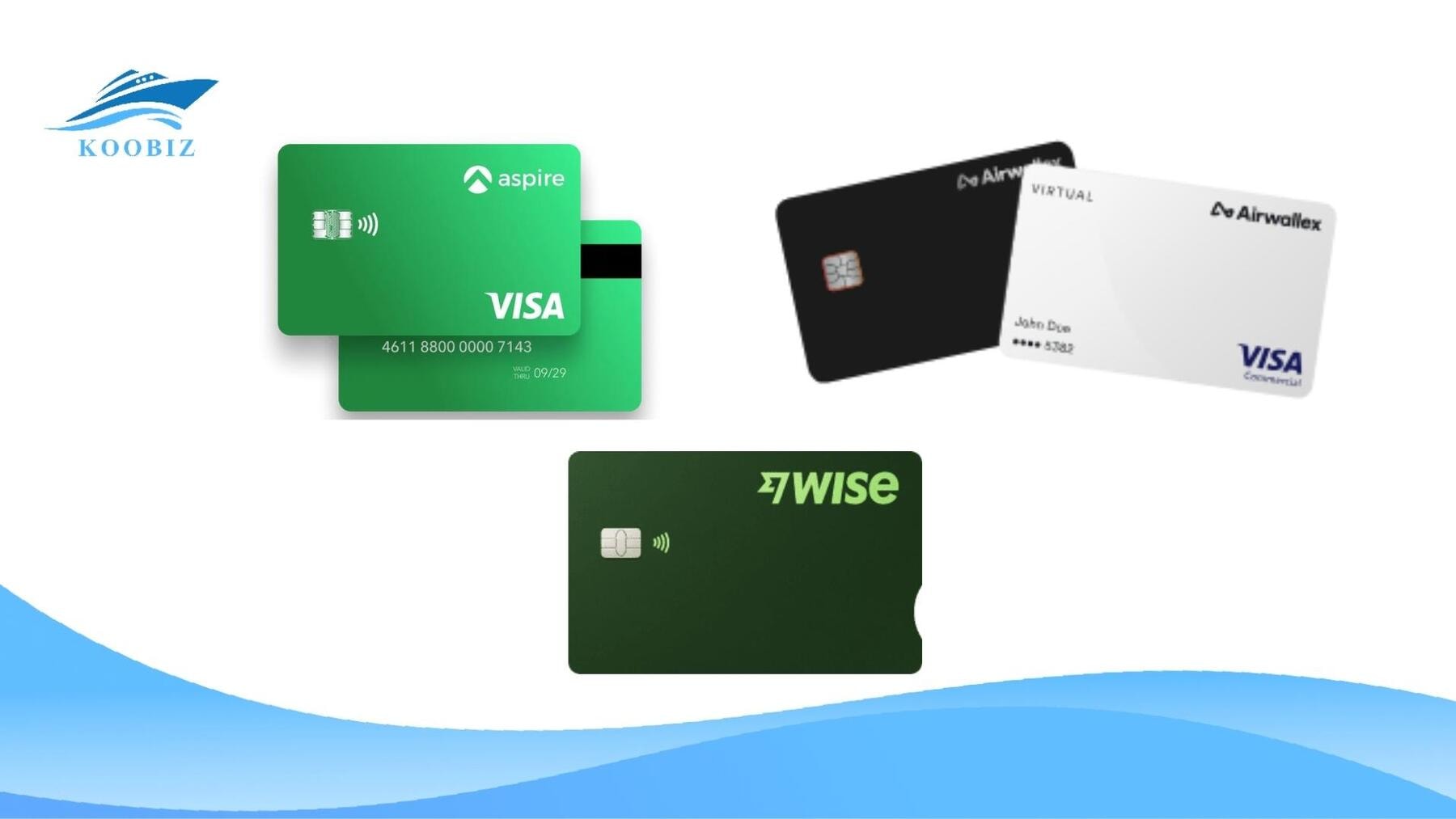
    Aspire Business Account

    Aspire positions itself as a full finance operating system rather than just a bank account, combining banking, expense management, and invoicing in one platform. What sets it apart is the issuance of corporate cards that offer cashback on digital advertising spend, such as Facebook or Google Ads.

    • Pros: No minimum balance requirements, free local transfers, and built-in corporate card controls.
    • Cons: Not a licensed bank — funds are held in safeguarded trust accounts and are not SDIC insured, and chequebooks are not available.
    • Ideal user: Tech startups and digital agencies with significant online advertising spend.

    Wise Business

    Wise Business is the undisputed leader for international transfers, offering the mid-market exchange rate without hidden markups.

    For companies with remote teams or overseas suppliers, Wise serves as a multi-currency wallet that holds 50+ currencies simultaneously.

    • Pros: Transparent fees (usually 0.5% – 1%), local account details for receiving USD, GBP, EUR, and AUD like a local.
    • Cons: Does not offer business loans or credit facilities.
    • Ideal User: Freelancers, exporters, and companies with a distributed global workforce.

    ANEXT Bank (Licensed Digital Bank)

    Unlike Aspire or Wise, ANEXT is a fully licensed digital bank regulated by MAS, meaning it offers deposit insurance.

    It bridges the gap between fintech speed and bank-grade security.

    • Pros: SDIC insured up to SGD 100k, remote opening for foreigners, no minimum balance.
    • Cons: Newer player with fewer integrated software features compared to Aspire.
    • Ideal User: SMEs who want the safety of a licensed bank but the ease of a digital interface.

    Traditional Banks vs. Digital Banks: Which Should You Choose?

    To help you decide between the stability of a traditional bank and the speed of a digital challenger, we have compared them side-by-side based on the factors that matter most to Singapore business owners.

    Feature Traditional Banks (DBS, UOB, OCBC) Digital Banks/Fintechs (Aspire, Wise, ANEXT) Winner
    Account Opening Slower (1-4 weeks, often requires physical presence/interview) Instant (1-3 days, 100% online verification) Digital Banks
    Minimum Balance High (SGD 5,000 – 10,000 typically required to waive fees) None ($0 minimum balance required) Digital Banks
    Fees & FX Rates Higher (Admin fees + FX markup of 1-3%) Lowest (Transparent fees + Mid-market rates) Digital Banks
    Safety & Insurance High (Fully MAS licensed & SDIC insured up to SGD 100k) Varied (ANEXT is SDIC insured; others safeguard funds but lack SDIC) Traditional Banks / ANEXT
    Product Range Complete (Cheques, Business Loans, Gov Grants, Cash Deposit) Limited (Transfers, Cards; ANEXT offers loans) Traditional Banks
    Integration Basic (Direct feeds often cost extra or require forms) Seamless (Native integration with Xero, Slack, Google Pay) Digital Banks

    The Koobiz Recommendation:

    You often do not have to choose just one. At Koobiz, we advise a hybrid approach: open a traditional account (like OCBC) for your main capital reserves and business loans, and open a fintech account (like Aspire or Wise) for daily operational expenses and foreign transactions to save on fees.

    Critical Fee Comparison: Minimum Balance & Transaction Costs

    The biggest cost drains for small businesses are usually fall-below fees for not maintaining the required balance and charges on outgoing transactions. These are often overlooked by new founders, yet they can quietly add up to hundreds of dollars in avoidable costs each year.

    1. Minimum Balance & Fall-below Fees:
      • Traditional Banks: Typically require a minimum daily average balance ranging from SGD 5,000 to SGD 10,000. If you fall below this, you are charged ~SGD 35/month. However, starter accounts (like OCBC Business Growth) waive this for the first 6 months.
      • Fintechs/Digital Banks: Aspire, Airwallex, and ANEXT generally have $0 minimum balance requirements and no fall-below fees, making them risk-free for early-stage startups.
    2. Transaction Costs:
      • Local Transfers (FAST): Most digital accounts offer these for free. Traditional banks may charge small fees after a certain number of free transactions.
      • International Transfers: This is the biggest differentiator. Traditional banks often charge a cable fee (SGD 20-30) plus an FX markup (1-3%). Fintechs usually charge no cable fee and a much lower markup (0.4-1%).

    Understanding Hidden Costs and Banking Limitations

    Hidden banking costs are the charges rarely highlighted in brochures, including early account closure penalties, foreign transaction admin fees, and cheque processing charges. Understanding these finer details in banking terms is essential to avoid unexpected deductions from your company funds, as banks often generate revenue well beyond the headline monthly fees through these operational charges.

    Are Multi-Currency Accounts Worth the Conversion Fee?

    Yes, multi-currency accounts are absolutely worth the conversion fee if your business handles more than SGD 5,000/month in foreign transactions.

    Specifically, using a single-currency (SGD) account for foreign trade forces a double conversion (Foreign Currency -> SGD -> Foreign Currency) every time you pay and receive, leading to losses of 3-5% on the spread.

    • Detail: A multi-currency account (like DBS Business Multi-Currency or Wise) allows you to hold USD or EUR directly. You can receive payment in USD, hold it, and pay a US supplier later without ever converting to SGD.
    • Evidence: For a business with $100,000 annual foreign turnover, avoiding a 2% spread saves $2,000 in pure profit.

    Can You Open a Business Account Online Without Visiting Singapore?

    Yes, for fintech accounts like Aspire and Wise; however, for traditional banks, it depends heavily on the bank’s policy and the nationality of the directors.

    While the “Big Three” have introduced remote opening capabilities, they often require a video interview or the physical presence of the authorized signatory, especially for foreign-owned companies.

    • The Nuance: Fintechs use e-KYC (electronic Know Your Customer) technology to verify passports and proof of address remotely. Traditional banks are stricter due to anti-money laundering (AML) regulations.
    • Koobiz Solution: For our foreign clients, we often facilitate the necessary resolutions and act as the local liaison to smooth out the remote opening process where possible.

    What Happens if Your Business Account Application is Rejected?

    If your application is declined, the first step is to pinpoint the underlying red flag – most commonly an unclear business plan, a high-risk industry classification, or a complex ownership structure. Singapore banks are highly risk-averse, but a rejection is not final; it simply means you need to adjust your approach.

    1. Step 1: Reassess your stated business activities and SSIC code to ensure they accurately reflect how you operate.
    2. Step 2: Apply to a fintech platform such as Aspire or Wise right away to keep your business running, as their risk framework differs from traditional banks.
    3. Step 3: Engage a corporate services provider. At Koobiz, we help refine your application by clearly presenting your source of funds and business model in a way that meets bank compliance expectations.

    About Koobiz

    Navigating the banking landscape in Singapore can be complex, especially with the strict compliance requirements of 2025. Koobiz is your trusted partner for Singapore corporate services.

    We specialize in:

    • Company Incorporation: Setting up your Pte Ltd correctly from day one.
    • Bank Account Opening Support: Advising on the best bank for your needs and assisting with the document preparation to maximize approval chances.
    • Compliance & Accounting: Handling your annual filing, tax, and bookkeeping so you can focus on growth.

    Ready to launch your business in Singapore? [Visit Koobiz.com today for a free consultation].

  • Top 10 Neobanks for Business in Singapore (2025): Digital Banks vs Fintechs

    Top 10 Neobanks for Business in Singapore (2025): Digital Banks vs Fintechs

    [SUMMARIES]

    Two Main Categories: Understand the critical difference between MAS-licensed Digital Wholesale Banks (like ANEXT, GLDB, MariBank) and Fintech Payment Institutions (like Aspire, Wise).

    Top Picks for SMEs: Aspire remains the top “All-in-One” Finance OS, while Wise dominates for international transfers and ANEXT/MariBank are best for loans and interest.

    Eligibility: Most neobanks allow remote opening for foreigners, though requirements for directors vary.

    Safety: Digital banks have SDIC protection (up to SGD 100k), while major fintechs use strict safeguarding measures under MAS regulations.

    [/SUMMARIES]

    Opening a business bank account in Singapore has historically been a hurdle for startups and foreign entrepreneurs due to strict compliance checks by traditional banks. However, the rise of Neobanks for business in Singapore has revolutionized the landscape, offering faster approval times, lower fees, and seamless digital interfaces. Whether you are looking for a comprehensive Digital Bank with a full banking license or a flexible Fintech solution for global payments, navigating the top options is crucial for your financial efficiency. At Koobiz, we help clients navigate these options during the incorporation process, and this guide compares the top 10 players to help you decide.

    What defines a Business Neobank in Singapore?

    A Business Neobank in Singapore is a digital-first financial service provider that operates without physical branches, offering banking services primarily through mobile apps or web platforms.

    To understand the landscape correctly, you must distinguish between two regulatory categories defined by the Monetary Authority of Singapore (MAS). Specifically, there are Digital Wholesale Banks (DWB), such as ANEXT, GLDB, and MariBank, which hold full banking licenses to serve non-retail customers (SMEs), offering deposit insurance and loans. In contrast, Major Payment Institutions (MPI), like Aspire, Wise, and Airwallex, are fintech companies licensed to handle payments, e-money issuance, and cross-border transfers but do not lend money directly from deposits. Understanding this distinction is the first step to choosing the right partner for your new entity.

    The Best Neobanks for Business in Singapore: Grouping & List

    There are two main groups of neobanking solutions available to Singapore businesses: the versatile Fintech Payment Institutions and the fully licensed Digital Wholesale Banks.

    Below is the detailed breakdown of the top 10 players dominating the market in 2025.

    1. Aspire (Best for SMEs & Startups)

    Aspire is currently the leading all-in-one finance operating system for modern businesses in Southeast Asia. It stands out by combining a business account with corporate cards, expense management, and payable management in one interface. For many startups, Aspire is the go-to choice because of its high approval rate and seamless digital onboarding.

    2. Wise Business (Best for International Transfers)

    Wise Business is the optimal choice for companies that frequently pay overseas suppliers or receive foreign currency. It offers mid-market exchange rate without hidden markups making it 3-5 times cheaper than traditional banks. Also providing local account details for over nine major currencies, allowing Singapore to receive payments globally.

    3. Airwallex (Best for E-commerce & Global Scale)

    Airwallex creates a powerful ecosystem for e-commerce businesses and tech companies scaling globally. Airwallex offers a payment gateway on your website, combined with high-limit corporate cards and efficient FX services, making it particularly strong for Amazon or Shopify sellers that need to repatriate funds to Singapore.

    4. Revolut Business (Best for Forex & Team Cards)

    Revolut Business excels with granular control over team spending. It allows companies to hold and exchange 25+ currencies and issue physical or virtual cards with preset spending limits, operating as a licensed payment institution in Singapore and well-suited for frequent-travel teams.

    5. ANEXT Bank (by Ant Group)

    ANEXT Bank is a Digital Wholesale Bank licensed by MAS, focusing specifically on serving SMEs with accessible financing. ANEXT offers dual-currency (SGD/USD) accounts and the unique ability to offer financing options to small businesses based on alternative data, not just financial history.

    6. Green Link Digital Bank (GLDB)

    Green Link Digital Bank (GLDB) focuses on supply chain finance within the B2B segment.It leverages technology to provide efficiency and digital onboarding to MSMEs, particularly those involved in supply chain and trade.

    7. MariBank (Best for Shopee Sellers & Interest)

    MariBank, a licensed Digital Bank, backed by Sea Group (Shopee), offers competitive interest rates on business deposits (often credited daily) and integrates seamlessly with the Shopee ecosystem, making it a top contender for e-commerce merchants.

    8. Volopay (Best for Expense Management)

    Volopay focuses primarily on spend management software attached to a corporate fund. Its primary value proposition is the software that automates expense approvals, receipt matching, and reimbursement workflows, making it ideal for larger SMEs with complex spending patterns.

    9. Statrys (Best for Personalized Support)

    Statrys is a robust alternative for SMEs that require a more personalized touch. While digital-first, they are known for having dedicated account managers. They offer multi-currency business accounts and are particularly friendly to companies with Hong Kong and Singapore links.

    10. Wallex (Best for B2B FX & High Volume)

    Wallex is a B2B-focused fintech specializing in cross-border payments and FX, supporting 40+ currencies and offering customized rates for high-volume transactions, making them a strong alternative to traditional bank FX desks.

    Comparison: Fees, FX Rates, and Minimum Balance

    Feature Aspire Wise Business Airwallex ANEXT Bank Traditional Banks (e.g. DBS)
    Account Type Fintech (MPI) Fintech (MPI) Fintech (MPI) Digital Wholesale Bank Traditional Bank
    Monthly Fee Free Free Free Free SGD 18 – 40 (waived with min balance)
    Min. Balance $0 $0 $0 $0 SGD 3,000 – 10,000
    FX Rate Mid-market + ~0.7% Mid-market + ~0.43% Interbank + 0.2% – 0.6% Competitive Market Rate Spread of ~1.5% – 2.5%
    Opening Fee Free ~SGD 54 (One-time) Free Free Free

    Most traditional banks require an initial deposit of SGD 3,000 to SGD 10,000 and charge fall-below fees. In contrast, neobanks like Aspire and Wise typically have no minimum deposit requirement and no monthly maintenance fees, making them highly cost-effective for new companies. Regarding FX rates, Wise and Airwallex charge a transparent fee (usually 0.4% – 0.6%) above the mid-market rate, whereas banks may include a spread of 1% – 2.5%.

    Is a Neobank Safe? Understanding MAS Protection

    Yes, using a Neobank in Singapore is generally safe, provided you understand the specific regulatory protections applicable to each type of institution.

    Digital Wholesale Banks like ANEXT, GLDB, and MariBank are members of the Deposit Insurance Scheme, meaning SGD deposits are insured by SDIC for up to SGD 100,000 per depositor.

    However, Fintechs like Aspire and Wise are not banks; they operate under the Payment Services Act. They safeguard user funds by segregating them in trust accounts at tier-1 banks (like DBS or UOB). This ensures your funds are segregated from the fintech’s operating money, protecting them even if the fintech becomes insolvent.

    Neobanks vs. Traditional Banks (DBS/OCBC/UOB): Which Should You Choose?

    How to Choose: A Simple Decision Framework

    To make the right decision, compare your business requirements against the strengths of each banking type:

    Choose a Neobank (e.g., Aspire, Wise, ANEXT) if:

    • Speed is critical: Start invoicing in 1-3 days.
    • You are a Foreigner: Fully remote opening process without flying to Singapore.
    • You run an Online Business: Multi-currency accounts to transact globally (e.g., E-commerce).
    • Cost Efficiency: No monthly fees and minimum deposit requirements.

    Choose a Traditional Bank (e.g., DBS, UOB, OCBC) if:

    • You handle Cash: Requiring physical branches or ATMs to deposit daily cash earnings.
    • You need Credit Facilities: Requiring Letters of Credit, overdrafts, or complex trade financing.
    • You need Cheques: Strictly required payment via cheque.
    • Reputation Matters: A “Big Three” bank for trust and credibility in order to transact.

    Pro Tip / Recommendation:

    For most new startups, we recommend a hybrid approach: Open a Neobank account immediately to get operations running. Then, once your business has 6 months of transaction history, apply for a traditional bank account to access deeper financial products.

    Critical Features to Consider for Singapore SMEs

    Beyond basic transfers, there are three critical features that modern Singapore SMEs must evaluate to ensure operational efficiency.

    Multi-Currency Accounts for Cross-Border Trade

    For Singapore businesses, holding USD, EUR, and regional currencies is vital. A multi-currency account prevents forced conversion (double FX loss) when receiving payments from clients and paying suppliers in their local currency.

    Integration with Xero and Accounting Software

    Seamless integration with accounting software like Xero or QuickBooks is a unique attribute of top neobanks, allowing transactions to flow automatically into your accounting books, saving hours of manual data entry.

    Corporate Cards and Expense Management

    Issuing virtual cards instantly for software subscriptions (SaaS) or marketing ads is a game-changer, separating business expenses from personal credit cards and allowing business owners to set strict budget limits per card.

    Can Foreigners Open a Business Neobank Account in Singapore?

    Yes, foreigners can open business neobank accounts in Singapore thanks to advanced remote verification technology.

    However, the process requires a registered Singapore entity. Most neobanks will require the company’s ACRA Business Profile and identity verification of the directors and Ultimate Beneficial Owners (UBOs). If you are a foreign entrepreneur, Koobiz can assist not only with the Singapore company incorporation but also in providing a Nominee Director if required to meet statutory compliance, thereby smoothing the banking application process.

    How to Open a Business Account: Step-by-Step

    Opening a business account involves a standardized digital process that generally consists of 3 to 4 key steps ensuring compliance with Anti-Money Laundering (AML) regulations.

    Let’s explore the process:

    1. Preparation of Documents: Ensure you have your latest ACRA Business Profile (bizfile), Constitution (M&A), and passports/ID of all directors and shareholders.
    2. Digital Application: Visit the website (e.g., Aspire, Wise, ANEXT) and register using Corppass (if available) or via manual email entry.
    3. e-KYC Verification: Directors will need to perform identity verification, often via a live selfie check or by uploading proof of address (utility bills/bank statements from their home country).
    4. Business Activity Review: You may need to provide a website, invoices, or contracts to prove the legitimacy of your business. Once approved, your account details are generated instantly.

    About Koobiz

    Navigating the financial landscape of a new market can be daunting. Koobiz is your trusted partner for doing business in Singapore. We specialize in company incorporation, accounting, tax filing, and audit services. Beyond compliance, we offer strategic consultancy to help you successfully open bank accounts with both top-tier traditional banks and flexible neobanks.

    Ready to launch your business in Singapore? Visit koobiz.com to consult with our experts today.