[SUMMARIES]
Total Relief Cap: There is a firm limit on how much total personal tax relief you can claim. For the 2026 tax year, this cap is set at S$80,000 per person.
Course Fees Relief Cessation: The S$5,500 tax relief for course fees is no longer available for expenses you paid in 2025.
Updated WMCR: For children born or adopted from January 1, 2024 onwards, the Working Mother’s Child Relief is now a fixed cash amount instead of a percentage of the mother’s income.
CPF Top-Up Limits: You can get tax relief for topping up your or your loved ones’ CPF accounts, but it’s capped at S$16,000 total (S$8,000 for yourself, S$8,000 for others). Note that top-ups matched by a government grant no longer qualify.
Donation Multiplier: The 250% tax deduction for qualifying donations to IPCs remains a powerful tool for reducing chargeable income through Dec 31, 2026.
[/SUMMARIES]
For the 2026 Year of Assessment (YA), maximizing income tax relief singapore means adapting to new rules. With the removal of the SG60 Rebate and Course Fees Relief, the focus shifts to core strategies like retirement contributions and family support. Koobiz presents this essential guide to help you claim every eligible deduction.
⚠️Critical Warning: The S$80,000 Cap
No matter how many reliefs you qualify for, the total amount you can subtract from your income is capped at S$80,000. If you have a high income, it’s crucial to calculate your total reliefs before making extra voluntary contributions to avoid putting money where it won’t give you a tax benefit.
Understanding Singapore Personal Income Tax 2026
Singapore uses a progressive tax system. This means the tax rate you pay increases as your taxable income rises. Tax reliefs are simply tools to lower your “chargeable income”—the final amount the tax authority (IRAS) uses to calculate your tax bill.
Your residency status is key. If you live in Singapore for 183 days or more in a year, you are taxed at lower resident rates. Effective tax planning starts with knowing your income level and which tax bracket you fall into. Koobiz emphasizes that strategic tax planning begins with knowing exactly where you fall on the income ladder.
Who Needs to File Tax in 2026?
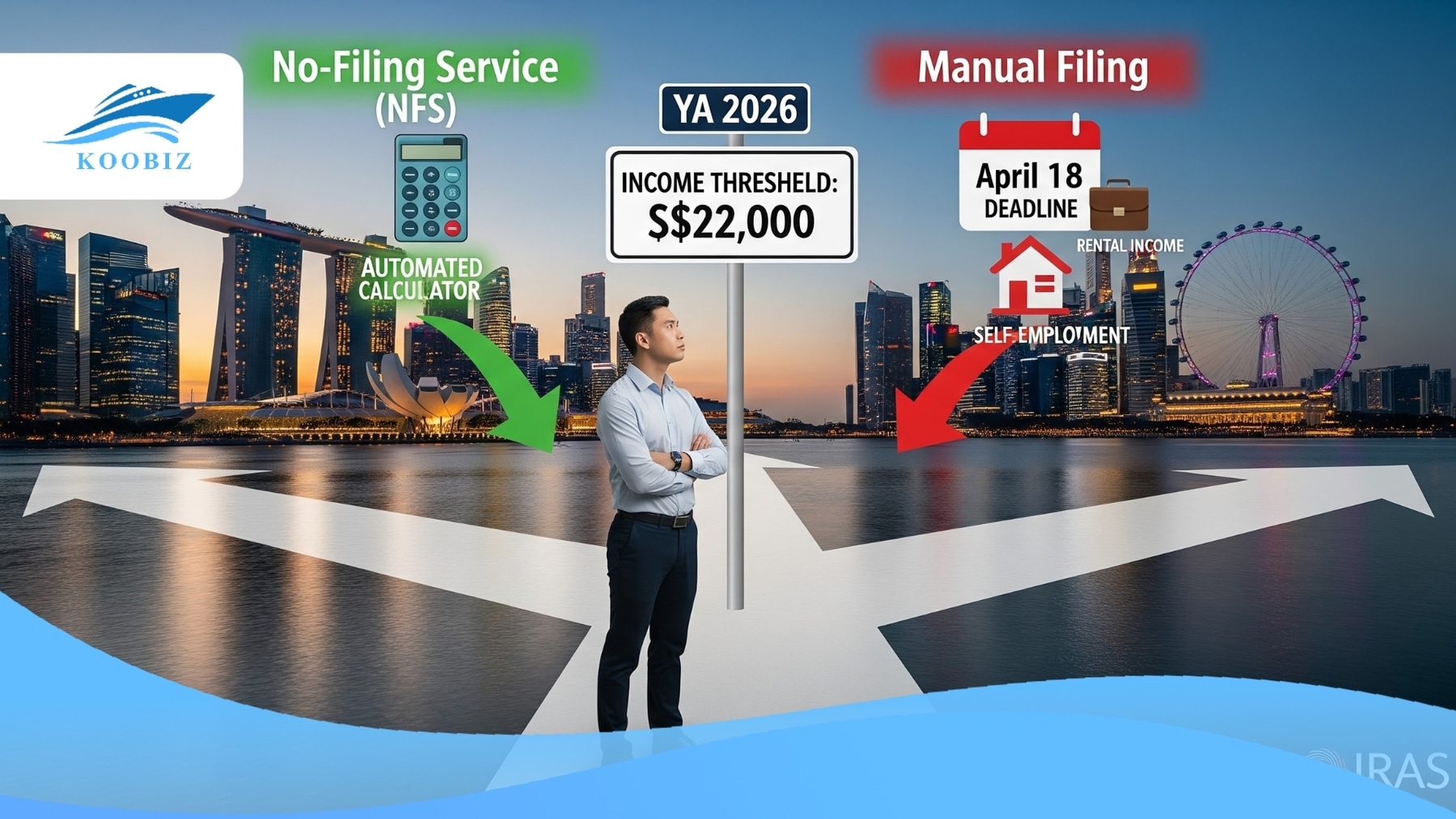
You generally need to file a tax return if your total annual income in 2025 exceeded S$22,000. You must also file if IRAS sends you a notice, or if you need to claim certain reliefs that aren’t applied automatically. According to data from the Singapore Ministry of Finance in 2025, over 60% of taxpayers now benefit from the No-Filing Service (NFS), where their taxes are computed automatically based on data from employers and government agencies. However, individuals with rental income or self-employment earnings must still manually verify their details on the myTax Portal by the April 18 deadline.
Resident Tax Rates for YA 2026
The tax rates for residents remain the same. Your first S$20,000 of income is not taxed. The rates then increase step-by-step, with the highest rate applied to income over S$1,000,000.
| Chargeable Income (S$) | Tax Rate (%) | Gross Tax Payable (S$) |
|---|---|---|
| First 20,000 | 0% | 0 |
| Next 10,000 | 2% | 200 |
| Next 10,000 | 3.5% | 350 |
| Next 40,000 | 7% | 2,800 |
| Next 40,000 | 11.5% | 4,600 |
| Next 40,000 | 15% | 6,000 |
| Next 40,000 | 18% | 7,200 |
| Next 40,000 | 19% | 7,600 |
| Next 40,000 | 19.5% | 7,800 |
| Next 40,000 | 20% | 8,000 |
| Next 180,000 | 22% | 39,600 |
| Next 500,000 | 23% | 115,000 |
| Above 1,000,000 | 24% | – |
For example, someone earning S$120,000 would typically owe about S$7,950 in tax before any reliefs. However, by maximizing income tax relief singapore strategies, that same individual could potentially drop into a lower effective tax bracket, saving thousands of dollars in final payments.
Core Family and Individual Reliefs for YA 2026
The main personal reliefs fall into categories like Earned Income Relief, Child Reliefs, and Parent Reliefs. These are designed to help with the costs of living and supporting dependents. For many families, these reliefs provide the biggest reduction to their taxable income. Most are applied automatically if IRAS has your updated family details.
Working Mother’s Child Relief (WMCR) Fixed-Dollar Update
The relief for working mothers has changed for children born or adopted from January 1, 2024. It is now a fixed amount instead of a percentage of the mother’s salary.
| Child Order | Born Before 1 Jan 2024 (Old Scheme) | Born On/After 1 Jan 2024 (New Scheme) |
|---|---|---|
| 1st Child | 15% of mother’s earned income | S$8,000 |
| 2nd Child | 20% of mother’s earned income | S$10,000 |
| 3rd Child + | 25% of mother’s earned income | S$12,000 |
This transition aims to provide more equitable support to lower- and middle-income working mothers. According to the National Population and Talent Division (NPTD) report of 2024, this policy shift was designed to simplify tax planning for young families while ensuring that tax benefits are not disproportionately skewed toward high earners.
Parent and Handicapped Parent Relief
You can claim this relief if you support a parent, grandparent, or great-grandparent who earned less than S$8,000 in the previous year. The amount depends on whether you live together:
- Living Together:
- S$9,000 per parent
- S$14,000 per handicapped parent
- Not Living Together:
- S$5,500 per parent
- S$10,000 per handicapped parent
Only one person can claim relief for a specific dependent, so siblings should agree on who will claim it, especially if one is in a higher tax bracket where the savings are greater. Koobiz advisors often suggest that siblings discuss this early to maximize the household’s total tax savings, especially if one sibling is in a higher tax bracket.
Retirement Savings: CPF and SRS Strategies
The primary methods for retirement-based tax reduction are the CPF Cash Top-up and the Supplementary Retirement Scheme (SRS), which together can reduce your chargeable income by up to S$51,700 for Singaporeans. To understand the best path, one must compare the immediate tax savings against the liquidity constraints of these accounts.
| Feature | CPF Cash Top-Up (SA/RA) | Supplementary Retirement Scheme (SRS) |
|---|---|---|
| Tax Relief Cap | Max S$16,000 (S$8k self + S$8k loved ones) | Max S$15,300 (Citizens/PR) / S$35,700 (Foreigners) |
| Interest Rate | ~4.0% p.a. (Risk-free) | 0.05% p.a. (Must invest to grow) |
| Withdrawal | Only at Retirement Age (Age 55/65 rules) | Anytime (Subject to penalties if early) |
| Tax on Withdrawal | Tax-Exempt | 50% Tax Concession (at retirement age) |
| Penalty | N/A (Locked in) | 5% penalty + 100% tax (if withdrawn early) |
As we move into 2026, the income tax relief singapore benefits of these schemes are more critical than ever, especially with the $80,000 cap in mind. Koobiz recommends that taxpayers calculate their total family reliefs first before deciding how much to “fill” their retirement accounts to avoid exceeding the cap.
CPF Cash Top-up Relief (S$16,000 Max)
You can get tax relief for topping up your own or your loved ones’ CPF Retirement or Special Accounts. The total relief is capped at S$16,000 per year, split equally between yourself and others. Specifically, a major update for YA 2026 is that cash top-ups that receive a matching grant under the Matched Retirement Savings Scheme (MRSS) are no longer eligible for tax relief. This ensures that taxpayers do not “double-dip” by receiving both a government grant and a tax deduction for the same dollar. According to CPF Board statistics from 2025, over 300,000 members utilized the cash top-up scheme to boost their retirement nest egg while simultaneously lowering their tax obligations.
Maximizing the Supplementary Retirement Scheme (SRS)
The SRS is a voluntary scheme where every dollar you contribute gives you a dollar of tax deduction. It’s particularly useful for higher earners, as it allows you to defer tax until retirement when your income (and tax rate) may be lower. At retirement, only 50% of the money you withdraw is taxed. For a foreigner earning a high salary, maximizing SRS contributions can lead to significant immediate tax savings. Koobiz highlights that for a foreigner earning S$250,000, a full SRS contribution can result in immediate tax savings of over S$6,000. It is a vital tool in the income tax relief singapore arsenal for those looking to optimize their wealth management.
Charitable Giving and NSman Benefits
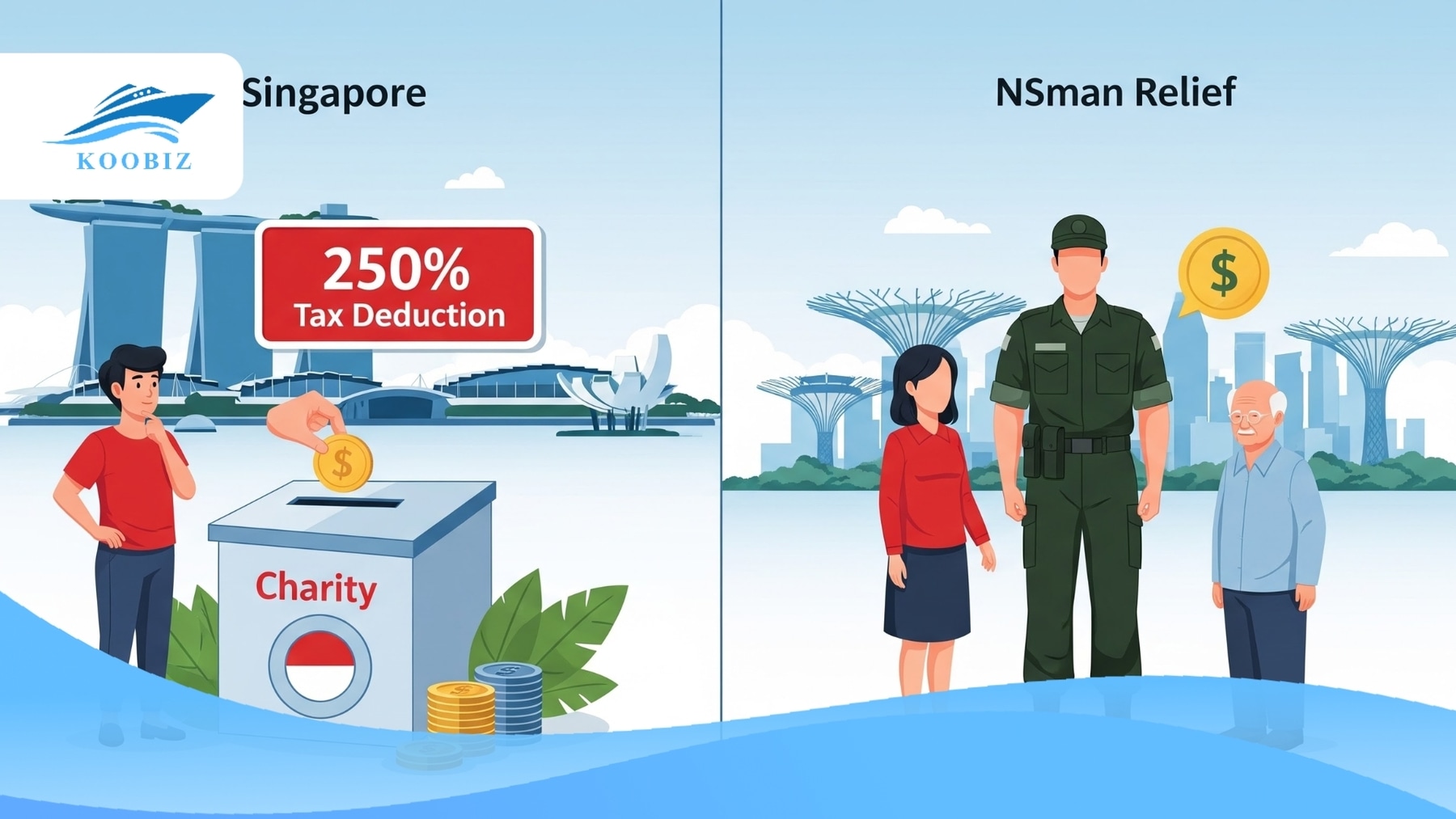
Donating to approved charities and having served National Service (NS) can also lower your tax bill. The government uses these reliefs to encourage charitable giving and recognize national service. To illustrate this, the 250% donation deduction remains one of the most generous tax incentives in the Singapore system.
Pro Tip: Always check the Charity Portal before making large donations to ensure the organization is an approved Institution of a Public Character (IPC). Only donations to IPCs qualify for the 250% tax deduction.
How the 250% Donation Deduction Works
When you donate to an approved charity, you don’t just subtract the donation amount. You get to subtract 250% of it. So, a S$1,000 donation reduces your taxable income by S$2,500. This scheme is extended until the end of 2026. If your total reliefs hit the S$80,000 cap, the extra benefit from donations can be carried forward to use in future years. According to a Commissioner of Charities report in late 2025, individual donations saw a 12% increase year-on-year, largely driven by taxpayers seeking to offset higher income brackets while supporting local causes.
NSman Relief for Self, Wife, and Parents
NSman relief is a unique aspect of income tax relief singapore, providing a token of appreciation for those who have served or support those who serve in the Singapore Armed Forces, Police Force, or Civil Defence. The amounts are:
- NSman (Self): S$1,500 – S$5,000 (depending on rank & active service status)
- Wife of NSman: S$750
- Parent of NSman: S$750
While the individual amounts are small, they are often automatically credited and provide a steady, reliable reduction in tax for the majority of male Singaporean citizens.
Important Changes: What You Can No Longer Claim
The main difference for YA 2026 is the removal of broad-based education reliefs and one-off rebates. Koobiz advises reviewing your tax liability early, as the absence of these credits may result in a higher final bill than expected.
| Benefit | YA 2025 (Previous) | YA 2026 (Current) | Action Required |
|---|---|---|---|
| Course Fees Relief | Claim up to S$5,500 | ❌ REMOVED | Check for employer training grants or SkillsFuture usage. |
| SG60 Tax Rebate | 60% Off (Max S$200) | ❌ REMOVED | Budget for full tax payment; no automatic discount this year. |
Note: The shift in policy moves away from personal tax deductions toward direct subsidies like SkillsFuture and the Enterprise Innovation Scheme.
Niche Caregiver and Household Reliefs

There are specialized reliefs for caregivers and households, though options have narrowed with the removal of the Foreign Domestic Worker Levy (FDWL) Relief. The Grandparent Caregiver Relief remains the primary benefit for working mothers relying on family support.
Grandparent Caregiver Relief (GCR)
Grandparent Caregiver Relief allows a working mother to claim S$3,000 if her parent, grandparent, or in-law is looking after her children. Use this checklist to confirm your eligibility:
GCR Eligibility Checklist:
- ✅ Claimant: Must be a Working Mother (fathers are not eligible).
- ✅ Caregiver: Your parent, grandparent, or parent-in-law (including from spouse’s side).
- ✅ Caregiver Status: Must not be engaged in any trade, business, or employment.
- ✅ Child: Singapore Citizen, aged 12 or below in 2025 (or unmarried/handicapped children).
Koobiz Note: This relief is “stackable.” A mother of two with a retired mother-in-law providing care can claim this S$3,000 on top of her WMCR and other child reliefs.
Foreign Domestic Worker Levy (FDWL) Relief Removal
It is important to remember that the Foreign Domestic Worker Levy (FDWL) Relief was completely removed starting from YA 2025. Specifically, this means for your YA 2026 filing, you can no longer claim a tax deduction for the levies paid for your helper. The government replaced this broad tax relief with more targeted subsidies, such as the Home Caregiving Grant, which provides direct cash assistance to families caring for those with permanent disabilities or frailty. According to the Ministry of Social and Family Development (MSF), this shift ensures that financial support reaches those with the highest caregiving needs, regardless of their income tax bracket.
Strategic Planning: The S$80,000 Personal Relief Cap
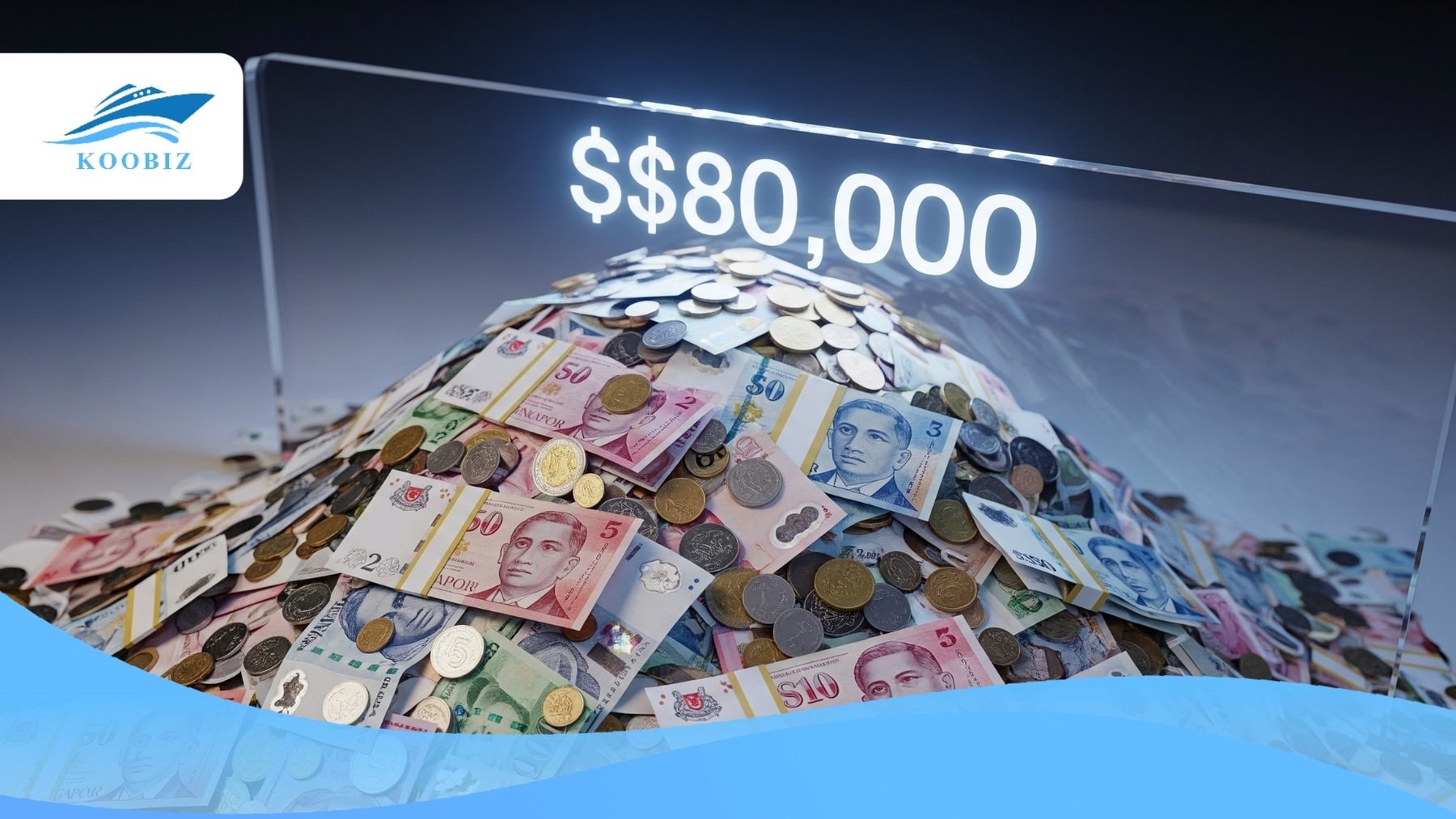
The S$80,000 cap is a hard limit on all your personal reliefs combined. If your Earned Income Relief, Child Relief, Parent Relief, CPF, and SRS add up to more than S$80,000, you will only get S$80,000 of benefit. This rule ensures higher earners still pay a fair share of tax.
A common mistake is making large voluntary CPF or SRS contributions late in the year without realizing you’ve already reached the cap through other reliefs. This results in locking away money without getting the expected tax reduction.
Case Study: The “Maxed Out” Taxpayer
Consider a high-earning working mother in 2026 with three children (all born before 2024) and two elderly parents living with her. We assume she has an Annual Earned Income of S$120,000.
Her reliefs would be calculated as follows:
- Earned Income Relief: S$1,000
- WMCR (Percentage based):
- 1st Child (15% of S$120k): **S$18,000**
- 2nd Child (20% of S$120k): **S$24,000**
- 3rd Child (25% of S$120k): **S$30,000**
- WMCR Subtotal: S$72,000
- Parent Relief: S$9,000 x 2 (living with her) = **S$18,000**
Total Relief Calculation:
S$1,000 + S$72,000 + S$18,000 = **S$91,000**
In this scenario, she has already exceeded the S$80,000 cap (S$91,000 > S$80,000) before even considering her mandatory CPF contributions or SRS. Specifically, any additional cash top-ups to her CPF or SRS accounts would provide zero tax relief for YA 2026. Koobiz suggests that such individuals should focus on other wealth management strategies, such as tax-efficient investments or corporate structuring, rather than seeking further personal tax reliefs.
About Koobiz Services
Navigating the complexities of income tax relief singapore and broader financial regulations requires a partner who understands the local landscape. Koobiz (koobiz.com) is a premier professional services firm specializing in:
- Company Formation: Seamless incorporation services for entrepreneurs looking to establish a presence in Singapore’s vibrant economy.
- Banking Account Advisory: Expert guidance on opening corporate and personal bank accounts with leading financial institutions in Singapore.
- Tax, Accounting, and Audit: Comprehensive compliance services, from GST filing and corporate tax optimization to statutory audits.
Whether you are an individual taxpayer looking to optimize your personal tax bill for YA 2026 or a business owner seeking to leverage the Enterprise Innovation Scheme, Koobiz provides the expertise needed to navigate Singapore’s regulatory environment with confidence. Visit koobiz.com today to learn how we can support your financial growth.
Leave a Reply